
Latest News
World Refugee Day: about 6.5 million Afghans are refugees across globe

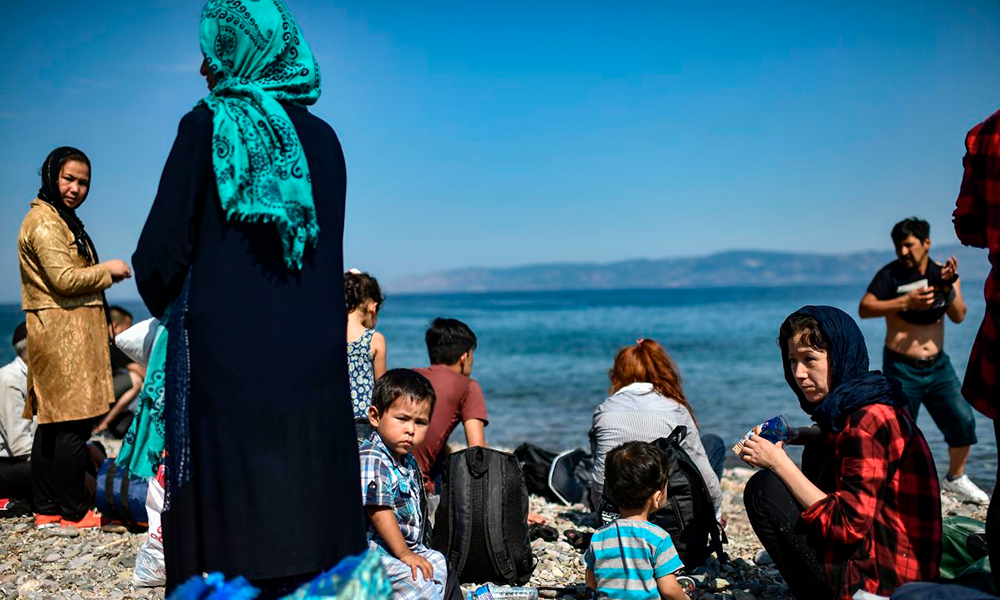
Afghanistan’s Ministry of Refugees and Repatriation (MoRR) says that an estimated 6.5 million Afghans are living as migrants or asylum seekers in about 70 countries.
Addressing a press conference on the occasion of World Refugee Day (June 20), Abdul Basit Ansari, a spokesman for the MoRR, said that Iran, Pakistan, and Turkey host the largest number of Afghan refugees.
“Currently, about 6.5 Afghans are living as migrants in more than 70 countries, and that most of them have migrated to Pakistan, Iran, and Turkey,” Ansari said.
He added that more than four million Afghans, have been forced to flee their homes due to ongoing clashes across the country.
Meanwhile, at an event organized by the Afghan government and the UN Refugee Agency (UNHCR) to mark World Refugee Day, President Mohammad Ashraf Ghani, reaffirmed the government’s strong commitment to enabling voluntary repatriation in safety and dignity, and sustainable reintegration of Afghan refugees.
“They are an integral part of Afghanistan and without them, the Afghan nation is incomplete”, Ghani said.
The UNHCR in a statement stated that Afghans constitute the world’s largest protracted refugee situation around the globe, with millions displaced at different time intervals.
According to the statement 2020 recorded about 132,700 Afghan refugees, though an overall reduction in numbers in 2020, Afghans still remain the third-largest population displaced across borders with a total of about 2.6 million refugees.
More than 85 percent of Afghan refugees are hosted in Iran and Pakistan, the statement noted.
“Afghan refugees and diaspora abroad have accumulated a wealth of human capital, skills, and assets with which they can play an important role in the nation-building, and reconstruction and development of Afghanistan,” President Ghani said.
Speaking on the occasion of World Refugee Day, Caroline Van Buren, UNHCR’s Representative in Afghanistan commended Government’s efforts in including returnees and displaced Afghans in the national priority programs particularly health, education, and livelihood sectors.
“Inclusion and addressing the vulnerabilities of returnees displaced population through coordinated and comprehensive area-based humanitarian and development investments to build the resilient communities is at the heart of our (government and UNHCR’s) strategies in Afghanistan,” she said.






Latest News
Kabul’s Omid Sabz Township declared state-owned, occupants told to seek compensation from seller
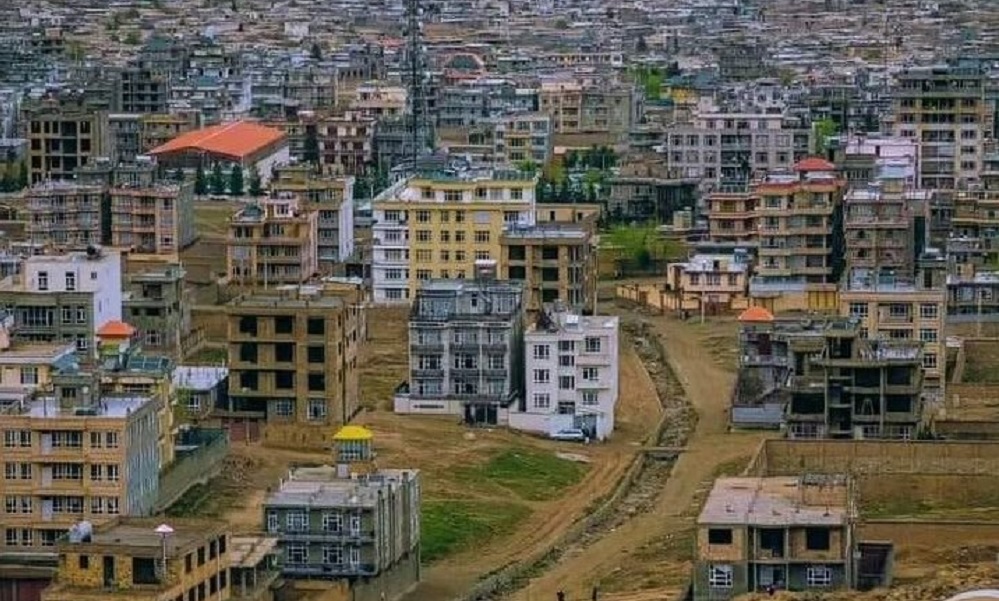
Afghanistan’s Ministry of Justice says that more than 1,500 jeribs of land known as Omid Sabz Township (Haji Nabi Township) in Kabul has been legally determined to be state-owned, and that current occupants should seek compensation from the party that sold them the land.
Barakatullah Rasouli, spokesperson for the Ministry of Justice, said the Special Court for State Land Grabbing Cases ruled that the land is officially registered and surveyed in the state’s name across five cadastral plots and has never been transferred to any individual or legal entity.
The court also ordered that the property be handed over to the Commission for the Prevention of Land Grabbing and the Restitution of Grabbed Land for implementation of the ruling.
The Ministry of Justice stressed that the commission is legally responsible for enforcing the Special Court’s rulings in cases involving state-owned land.
Latest News
Turkmenistan reviews TAPI pipeline progress at government energy meeting
TAPI’s gas supply will come from the Galkynysh field, one of the world’s largest natural gas deposits, with estimated reserves exceeding 27 trillion cubic metres.
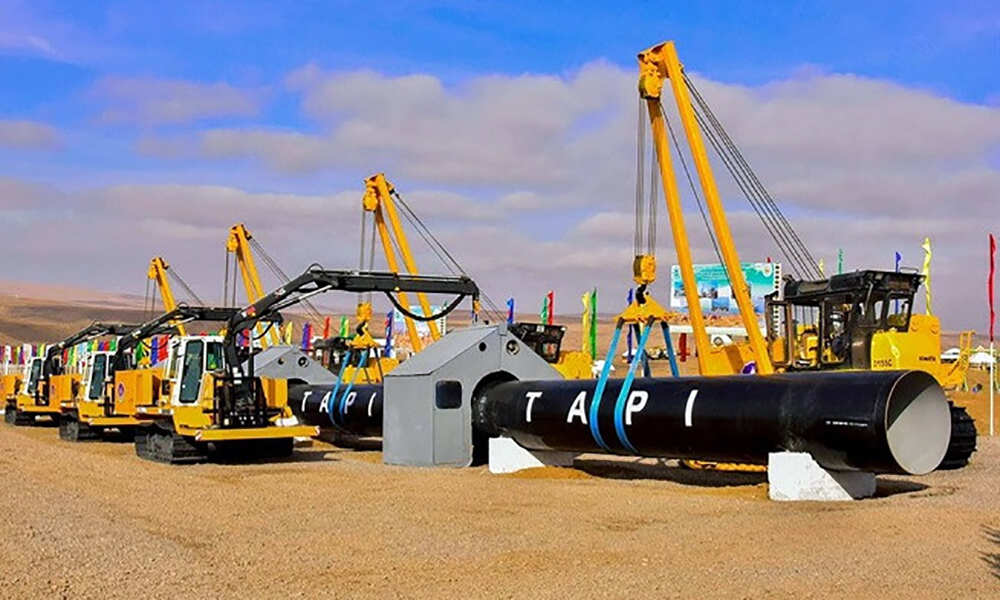
Turkmenistan has reviewed progress on the Turkmenistan-Afghanistan-Pakistan-India (TAPI) gas pipeline and reaffirmed its commitment to expanding hydrocarbon production during a government meeting of the country’s oil and gas sector.
According to a statement issued by state-owned Turkmennebit on Monday, the meeting assessed the performance of Turkmenistan’s oil and gas industry during the first seven months of 2026. Senior officials from Turkmennebit, Turkmengaz, Turkmengeology, TAPI Pipeline Company Ltd. and other energy enterprises presented reports on ongoing projects and sector developments.
The statement said particular attention was given to construction of the Serhetabat-Herat section of the TAPI pipeline, with officials emphasizing that work is being carried out in line with international standards.
Participants also discussed priorities for the sector’s future growth, including expanding geological exploration, increasing production drilling to identify new hydrocarbon reserves, boosting oil and natural gas output, and improving the quality of extracted resources.
The 1,800-kilometre TAPI pipeline is designed to transport up to 33 billion cubic metres of natural gas annually from Turkmenistan’s Galkynysh gas field to Afghanistan, Pakistan and India. The project is regarded by Ashgabat as a key route for diversifying its gas exports while strengthening regional energy cooperation and economic integration.
TAPI’s gas supply will come from the Galkynysh field, one of the world’s largest natural gas deposits, with estimated reserves exceeding 27 trillion cubic metres. In April 2026, Turkmengaz and China’s CNPC launched the fourth phase of the field’s development, a project expected to add up to 10 billion cubic metres of commercial gas production annually through new production facilities and additional wells.
The pipeline has also attracted renewed international attention. In June, the Belfer Center for Science and International Affairs at Harvard Kennedy School said TAPI is re-emerging as an important regional energy project, highlighting its potential to connect Turkmenistan’s vast gas resources with growing demand in South Asia.
Latest News
Mullah Baradar visits flood-hit Nuristan, pledges continued support for victims
A delegation of private sector representatives also accompanied Baradar during the visit and provided cash assistance to families affected by the floods.
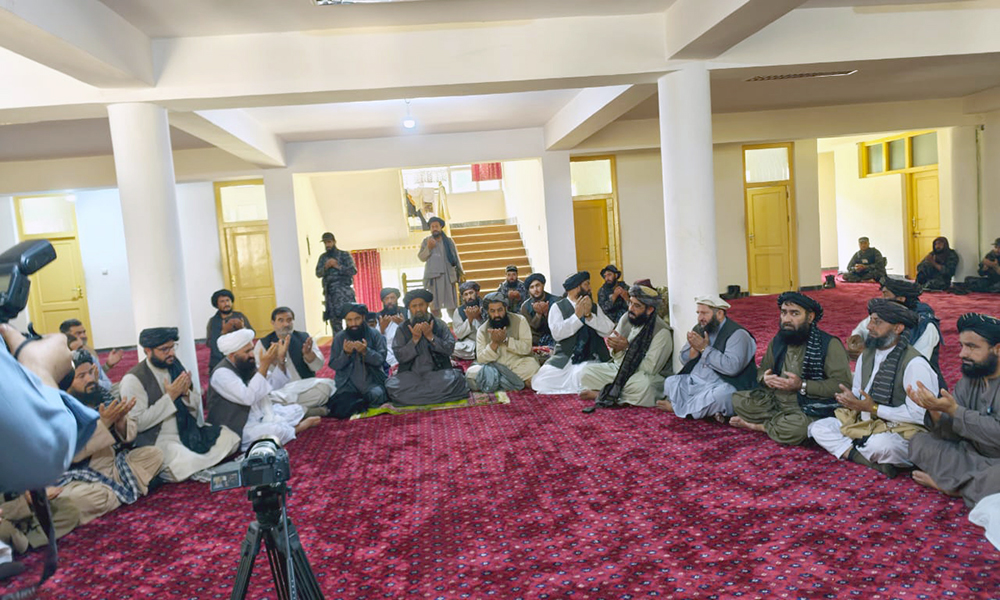
Deputy Prime Minister for Economic Affairs Mullah Abdul Ghani Baradar on Monday visited the eastern province of Nuristan to express solidarity with families affected by the recent deadly floods and reaffirm the Islamic Emirate’s commitment to supporting those impacted.
According to a statement from the Deputy Prime Minister’s Office, Baradar offered condolences to the families of those killed in the floods, praying for the victims to be granted paradise and wishing a swift recovery to those injured.
He said that immediately after the disaster, officials from the relevant government institutions were dispatched to the affected areas and used all available resources to carry out rescue operations and assist flood victims.
Baradar assured affected families that the Islamic Emirate would continue to provide assistance using all available means, emphasizing that government officials consider it their responsibility to respond to the needs of the people in a timely manner.
A delegation of private sector representatives also accompanied Baradar during the visit and provided cash assistance to families affected by the floods.
According to the statement, local religious scholars, tribal elders and flood-affected residents welcomed the delegation’s visit and expressed appreciation for the government’s support during a difficult time. They also shared their concerns and requests with the deputy prime minister.
Baradar pledged that the relevant authorities would take the necessary steps to address the issues raised by local residents.
The visit comes as Afghan authorities continue relief and recovery efforts in Nuristan following recent floods that caused fatalities, injuries and widespread damage to homes and infrastructure.


Tahawol: Worsening security crisis in Khyber Pakhtunkhwa

Saar: Trump’s claim over Iran talks

Kabul’s Omid Sabz Township declared state-owned, occupants told to seek compensation from seller

Turkmenistan reviews TAPI pipeline progress at government energy meeting

Mullah Baradar visits flood-hit Nuristan, pledges continued support for victims

Pakistan’s governance system has ‘collapsed’: Mohsin Naqvi

India offers 1,000 online scholarships for Afghan students for 2026-27 academic year

Cricket world pays tribute to Afghanistan fast bowler Shapoor Zadran

Turkey spent over $120 million to prepare airport for Qatar-donated U.S. presidential aircraft

Thousands pay final respects as Afghan cricketer Shapoor Zadran buried in Kabul
Tahawol: Worsening security crisis in Khyber Pakhtunkhwa
Saar: Trump’s claim over Iran talks

Tahawol: US cancelling strikes on Iran

Saar: Strained relations between Kabul and Islamabad

Saar: Trade shifts from Pakistan to Central Asia and Iran discussed
-
 Latest News4 days ago
Pakistan’s governance system has ‘collapsed’: Mohsin Naqvi
-
 Sport4 days ago
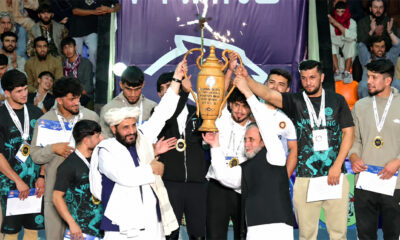
Qosh Tepa crowned champions of inaugural Afghanistan Wrestling Premier League
-

 Latest News4 days ago
World Bank: Afghanistan’s economic growth too weak to improve living standards
-

 Sport5 days ago
Afghanistan Wrestling Premier League crowns inaugural champion in tonight’s grand final
-
 Latest News2 days ago
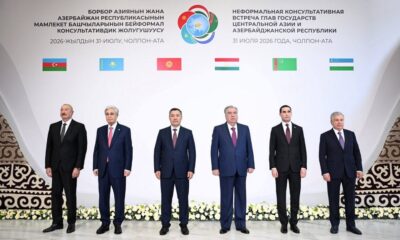
Uzbek president calls for Central Asia-Afghanistan development space
-

 World2 days ago
US to make visa bond program permanent for people from dozens of countries
-

 Regional5 days ago
Seven police officers killed in fresh militant assault on Pakistan checkpoint
-
 Business4 days ago
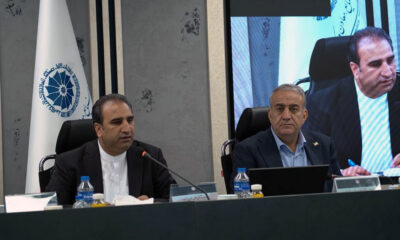
Afghanistan invites Iranian investors to expand economic cooperation