
Latest News
World Bank says 26 poorest nations in worst financial shape since 2006
Most of the countries in the study are in sub-Saharan Africa, from Ethiopia to Chad and Congo, but the list also includes Afghanistan and Yemen, read the report.

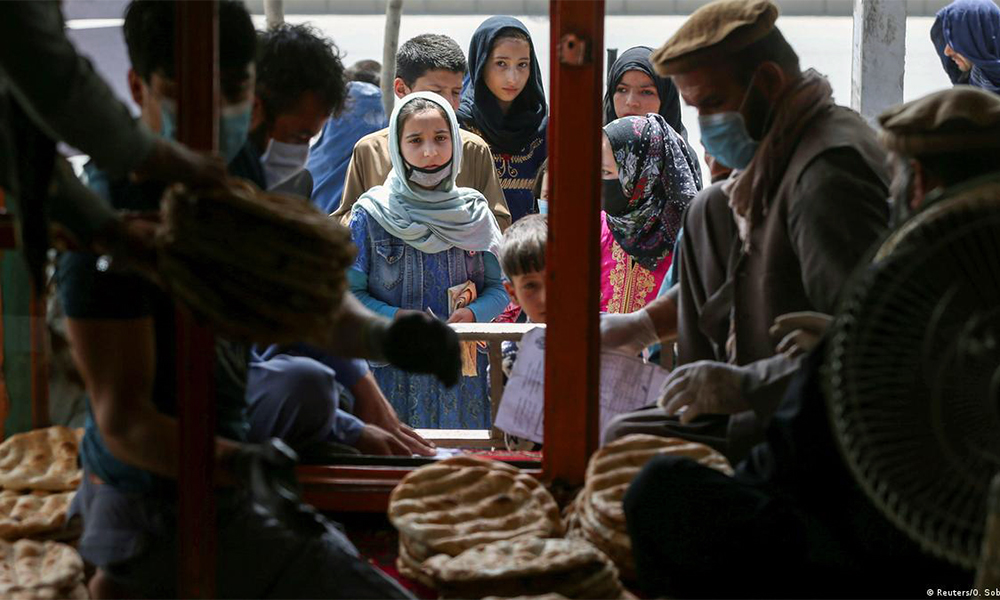
The world’s 26 poorest countries, home to 40% of the most poverty-stricken people, are more in debt than at any time since 2006 and increasingly vulnerable to natural disasters and other shocks, a new World Bank report showed on Sunday.
The report finds that these economies are poorer today on average than they were on the eve of the COVID-19 pandemic, even as the rest of the world has largely recovered from COVID and resumed its growth trajectory, Reuters reported.
Released a week before World Bank and International Monetary Fund annual meetings get underway in Washington, the report confirms a major setback to efforts to eradicate extreme poverty and underscores the World Bank’s efforts this year to raise $100 billion to replenish its financing fund for the world’s poorest countries, the International Development Association (IDA).
The 26 poorest economies studied, which have annual per-capita incomes of less than $1,145, are increasingly reliant on IDA grants and near-zero interest rate loans as market financing has largely dried up, the World Bank said. Their average debt-to-GDP ratio of 72% is at an 18-year high and half of the group are either in debt distress or at high risk of it.
Most of the countries in the study are in sub-Saharan Africa, from Ethiopia to Chad and Congo, but the list also includes Afghanistan and Yemen, read the report.
Two-thirds of the 26 poorest countries are either in armed conflicts or have difficulty maintaining order because of institutional and social fragility, which inhibit foreign investment, and nearly all export commodities, exposing them to frequent boom-and-bust cycles, the report said.
“At a time when much of the world simply backed away from the poorest countries, IDA has been their lifeline,” World Bank chief economist Indermit Gill said in a statement. “Over the past five years, it has poured most of its financial resources into the 26 low-income economies, keeping them afloat through the historic setbacks they suffered.”
IDA normally is replenished every three years with contributions from World Bank shareholding countries. It raised a record $93 billion in 2021 and World Bank President Ajay Banga is aiming to exceed that with more than $100 billion in pledges by Dec. 6.
Natural disasters have also taken a greater toll on these countries over the past decade. Between 2011 and 2023, natural disasters were associated with average annual losses of 2% of GDP, five times the average among lower-middle-income countries, pointing to the need for much higher investment, the World Bank said.
The report also recommended that these economies, which have large informal sectors operating outside their tax systems, do more to help themselves. This includes improving tax collections by simplifying taxpayer registration and tax administration and improving the efficiency of public spending.








Latest News
Fazal Ur Rehman says Pakistan’s ‘attacks’ on Afghanistan are unjustifiable
“If you justify attacks on Kabul by claiming your enemies are present there, then why is your response different when India targets its enemies inside Pakistan?” he said.

Senior Pakistani religious leader and politician Maulana Fazal Ur Rehman has condemned attacks on Afghanistan carried out under the pretext of targeting militant groups, calling such actions unjustifiable and counterproductive.
He urged both Kabul and Islamabad to resolve their disputes through dialogue and political engagement rather than military means.
Speaking at a gathering of Pakistani religious scholars titled “Pakistani Ummah Unity,” Fazal Ur Rehman, who heads the Jamiat Ulema-e-Islam (JUI-F) party, criticized Pakistan’s security approach toward Afghanistan.
Addressing Pakistan’s military leadership, he questioned the rationale behind cross-border actions, asking why attacks are justified against Afghanistan when similar logic is rejected in response to Indian strikes inside Pakistan.
“If you justify attacks on Kabul by claiming your enemies are present there, then why is your response different when India targets its enemies inside Pakistan?” he said.
Fazal Ur Rehman warned that continued tensions between Afghanistan and Pakistan serve the interests of neither country and risk further destabilizing the region.
He stressed that dialogue, mutual respect, and political understanding remain the only sustainable solutions to long-standing disputes between the two neighbors.

Turkish intelligence agents have captured a senior member of Daesh near the Durand Line, reportedly preventing planned suicide attacks in Turkey and other countries, according to Turkey’s state-run Anadolu Agency on Monday.
The suspect, identified as Mehmet Goren, is a Turkish citizen. He was apprehended during a covert operation and transferred to Turkey. Details on the timing of the operation or the involvement of Afghan and Pakistani authorities were not disclosed.
According to the report, Goren had risen through the ranks of Daesh and was allegedly tasked with carrying out suicide bombings in Turkey, Pakistan, Afghanistan, and Europe.
Daesh has a history of deadly attacks in Turkey, including the January 1, 2017 shooting at an Istanbul nightclub that killed 39 people.
Anadolu Agency reported that Goren’s arrest also provided intelligence on the group’s recruitment strategies and planned activities.
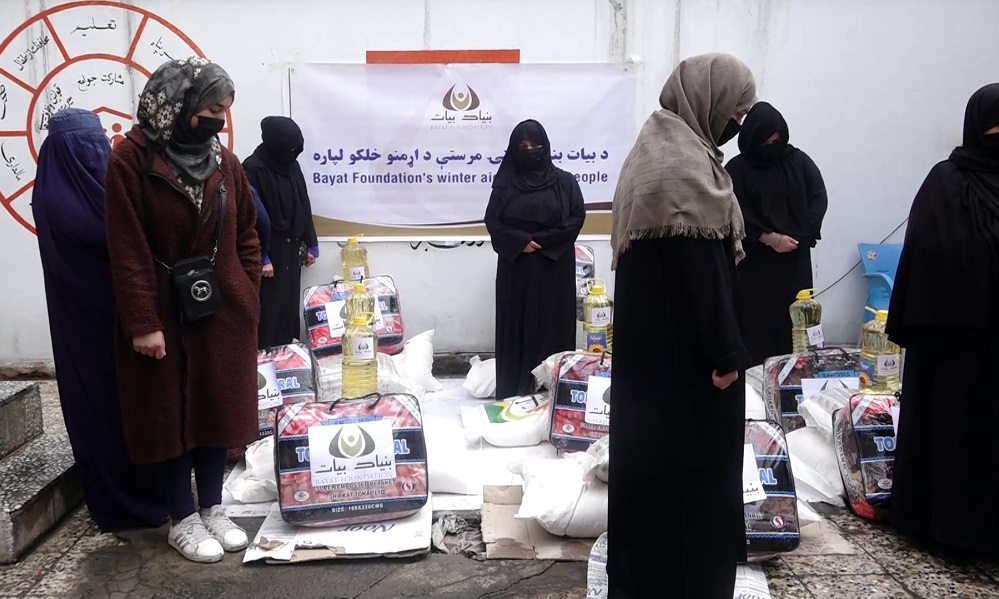
Dozens of needy families in Kabul’s fifth district have received essential winter assistance from the Bayat Foundation, as part of ongoing efforts to ease hardship during the cold season and worsening economic conditions.
According to foundation officials, the aid package includes staple food items such as flour, rice, and cooking oil, along with warm blankets to help families cope with freezing temperatures. Haji Mohammad Ismail, Deputy Head of Bayat Foundation, said the distribution began in Kabul and will soon be expanded to other provinces.
“Our assistance includes flour, rice, cooking oil, and blankets,” Ismail said. “Today, we started distributing these items in Kabul’s fifth district, and God willing, the aid will reach other provinces in the near future.”
Afghanistan continues to face widespread poverty, unemployment, and food insecurity, with many families struggling to meet basic needs, particularly during winter when access to work and heating becomes more difficult.Humanitarian organizations and charitable foundations have stepped up relief efforts to support those most affected.
Beneficiaries welcomed the assistance, describing it as a lifeline. “May God bless you for helping the poor. We had nothing and no work,” said one recipient. Another added, “Thank you for your help. Our flour was almost finished.”
Bayat Foundation officials stressed that winter aid distributions will continue in Kabul and other provinces in the coming days, as part of their broader commitment to supporting needy families across the country.


Fazal Ur Rehman says Pakistan’s ‘attacks’ on Afghanistan are unjustifiable

Trump administration recalls dozens of diplomats in ‘America First’ push

Pakistan agrees to $4 billion arms deal with Libyan National Army

Tahawol: Return of 6.8 million Afghan refugees to IEA rule

Saar: Pakistan army chief’s allegations against Afghanistan

Afghanistan economy under pressure as Pakistan shocks reshape trade flows

Gaza death toll tops 70,000, health ministry says

Iran rerouting more oil to China through Indonesia to dodge US sanctions

Islamic Emirate declines to attend Tehran meeting on Afghanistan

Cotton Industry in Crisis: Balkh farmers call for urgent action on exports
Tahawol: Return of 6.8 million Afghan refugees to IEA rule
Saar: Pakistan army chief’s allegations against Afghanistan

Tahawol: CSTO’s security concerns over Afghanistan

Saar: UNAMA’s activities in Afghanistan reviewed

Tahawol: Iran’s pledges to facilitate trade with Afghanistan discussed
-

 Latest News2 days ago
Afghanistan signs 30-year deal for marble mining in Daikundi
-
 Latest News3 days ago
Pakistan summons Afghan diplomat over deadly attack in North Waziristan
-
 Latest News4 days ago
Afghan border forces prevent illegal entry of hundreds into Iran
-
 Latest News3 days ago
Afghan health minister calls for medical cooperation between Kabul and New Delhi
-

 Latest News4 days ago
Japan allocates nearly $20 million in humanitarian aid for Afghanistan
-

 Latest News3 days ago
Karzai urges reopening of girls’ schools and universities for Afghanistan’s bright future
-

 Business5 days ago
Afghanistan-Kazakhstan banking ties discussed in Kabul meeting
-

 Latest News2 days ago
Bush Institute criticizes Trump administration’s Afghan immigration freeze