
World
Why Palestinians can count on American students but not Arab allies to protest

Palestinians may be gratified to see American university campuses erupt in outrage over Israel’s offensive in Gaza, but some in the embattled enclave are also wondering why no similar protests have hit the Arab countries they long viewed as allies, Reuters reported.
Demonstrations have rocked U.S. universities this week, with confrontations between students, counter protesters and police, but while there have been some protests in Arab states, they have not been nearly as large or as vociferous.
“We follow the protests on social media every day with admiration but also with sadness. We are sad that those protests are not happening also in Arab and Muslim countries,” said Ahmed Rezik, 44, a father of five sheltering in Rafah in Gaza’s south.
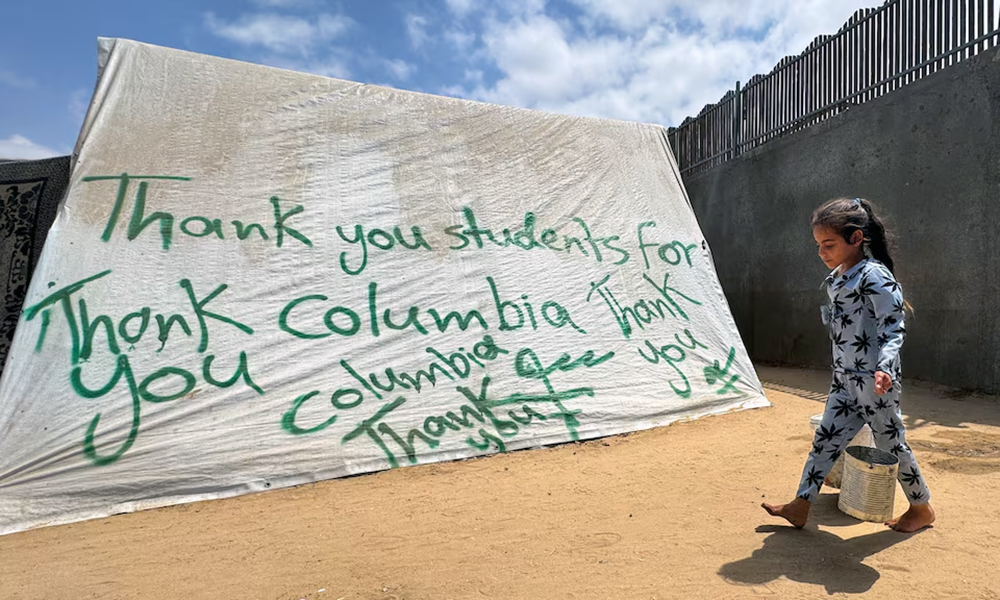
“Thank you students in solidarity with Gaza. Your message has reached us. Thank you students of Columbia. Thank you students,” was scrawled across a tent in Rafah, where more than a million people are sheltering from Israel’s offensive.
Reasons for the comparative quiet on Arab campuses and streets may range from a fear of angering autocratic governments to political differences with Hamas and its Iranian backers or doubts that any protests could impact state policy, read the report.
American students at elite universities may face arrest or expulsion from their schools, but harsher consequences could await Arab citizens protesting without state authorisation.
And U.S. students may feel more motivation to protest as their own government backs and arms Israel, while even those Arab countries that have full diplomatic relations with it have been strongly critical of its military campaign.
When asked about the conflict, Arabs from Morocco to Iraq have consistently voiced fury at Israel’s actions and solidarity with Gaza’s embattled inhabitants, leading to muted Ramadan celebrations across the region last month.
Some rallies to support Palestinians have erupted, notably in Yemen where the Houthis have joined the conflict with strikes on shipping in the Red Sea.
And Arabs around the region have also shown their horror at the war and support for their fellow Arabs in Gaza on social media, even if they have not taken to the streets.
But whatever the reason for the lack of public protests, some people in Gaza are now drawing unfavourable comparisons between the tumult in the United States and the public reaction they can see in other Arab countries.
“I ask Arab students to do what the Americans have done. They should have done more for us than the Americans,” said Suha al-Kafarna, displaced by the war from home in northern Gaza.
In Egypt, which made peace with Israel in 1979 and where President Abdel Fattah al-Sisi has largely outlawed public protests, the authorities fear that demonstrations against Israel could later turn against the government in Cairo.
At state-sanctioned protests over the war in October, some demonstrators veered off the agreed route and chanted anti-government slogans, prompting arrests.
“One cannot see the lack of large public protests against the war and the muted reaction on the Egyptian street in isolation from a broader context of crackdown on all forms of public protest and assembly,” said Hossam Bahgat, head of the Egyptian Initiative for Personal Rights.
At the American University in Cairo security forces are less likely to intervene on campus and there have been some protests. But a student activist there who requested anonymity said they could still face consequences for demonstrating.
“Being arrested here is nothing like being arrested in the U.S. It’s completely different,” he said, adding that there was “the factor of fear” preventing many from taking to the streets.
In Lebanon, where success in studies has become even more personally important to many young people after years of political and economic crises that have shrunk their shot at future prosperity, that calculation is even tougher.
Several students Reuters approached at campus protests in Beirut declined to be interviewed, saying they feared repercussions from university authorities.
The complex histories of Lebanon and other Arab states such as Jordan that host many Palestinian refugees also play into the question of public protests.
In Lebanon, some people blame Palestinians for triggering the 1975-90 civil war. Others fear any overt displays of support for Palestinians might be hijacked by the Iran-backed Hezbollah, which has been trading fire with Israel since the start of the Gaza conflict, Reuters reported.
“The Arab world is not reacting like Columbia or Brown (U.S. universities) because they don’t have the luxury to do so,” said Makram Rabah, a history professor at the American University of Beirut.
Besides, he added, with public opinion already largely backing the Palestinian cause it was not clear what protests there would achieve.
“The dynamics of power and the way you change public perception are just different in the Arab world compared to the U.S.,” he said.
For Tamara Rasamny, a Lebanese-American arrested and suspended for participating in a sit-in at Columbia a month before getting her degree, that reality has come home hard.
She was meant to deliver a speech at her graduation, and thought about whether it would have been more powerful to send a message there or through her possible arrest.
“And then I thought, my speech is literally about being brave, courageous and speaking up – so I thought if I’m not even listening to my own words, who am I to say anything? That was my logic, and it was worth it,” she told Reuters from New York.
Rasamny said she knew it might not have been possible to express herself this way had she been at home in Lebanon.
“I feel in Lebanon it would be more frustrating to watch what’s unfolding because there hasn’t really been an outlet to do much about it – like take to the streets,” she said.




Venezuelan opposition leader Maria Corina Machado on Friday promised political change after slipping out of the country in secret to collect the Nobel Peace Prize, as the shock waves intensified from the Trump administration’s seizure of an oil tanker earlier this week.
That escalation came on the heels of a large-scale U.S. military buildup in the southern Caribbean as President Donald Trump campaigns to oust Venezuelan leader Nicolas Maduro, pushing relations to their most volatile point in years, Reuters reported.
The effects could ripple through the region, with Venezuelan oil exports falling sharply and crisis-stricken Cuba, already straining to power its grid, at risk of losing supply.
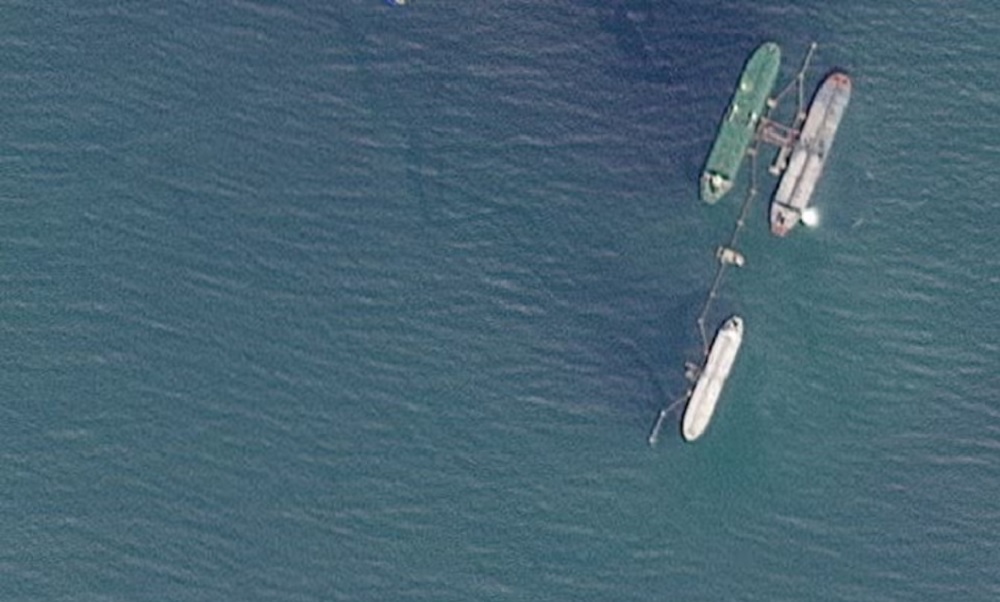
The U.S. seizure of the Skipper tanker off Venezuela’s coast on Wednesday marked the first U.S. capture of Venezuelan oil cargo since sanctions were imposed in 2019.
The vessel is now heading to Houston, where it will offload its cargo onto smaller ships, Reuters reported.
The Trump administration does not recognize Maduro, in power since 2013, as Venezuela’s legitimate leader.
Washington has signalled more seizures are planned as part of efforts to choke off sanctioned oil flows, and subsequently imposed new sanctions on three nephews of Maduro’s wife and six tankers linked to them.
The U.S. military presence in the Caribbean has grown as Trump in recent weeks has discussed potential military intervention in Venezuela, based on accusations that the country ships narcotics to the United States. The Venezuelan government has denied the accusations.
So far there have been over 20 U.S. military strikes in the Caribbean and Pacific against suspected drug vessels this year, in which nearly 90 people have been killed, alarming human rights advocates and stirring debate among U.S. lawmakers.
While many Republicans have backed the campaign, Democrats have questioned whether the campaign is illegal and urged more transparency, including the release of a full, unedited video, opens new tab of strikes on a suspected drug-trafficking boat.
MACHADO DEFIES BAN, URGES TRANSITION
Machado defied a decade-long travel ban and a period in hiding to travel to Oslo on Thursday, noting that she would soon bring the Nobel Peace Prize back home to Venezuela.
She said Maduro would leave power “whether there is a negotiated changeover or not,” vowed she is focused on a peaceful transition, and thanked Trump for his “decisive support.”
Machado is aligned with U.S. hardliners who accuse Maduro of ties to criminal networks – claims that U.S. intelligence has reportedly questioned.
When asked at a press conference in Oslo if she believed U.S. intervention was needed in Venezuela, Machado replied, “We are asking the world to help us.”
Venezuela condemned the tanker seizure as “blatant theft” and “international piracy,” saying it would file complaints with international bodies.
At the same time, Venezuelan lawmakers took a step to withdraw the country from the International Criminal Court, which is currently investigating alleged human rights abuses in the South American country.
Adding to the friction, the Venezuelan government announced the suspension of a U.S. migrant repatriation flight on Friday. A U.S. official countered that deportation flights would continue.
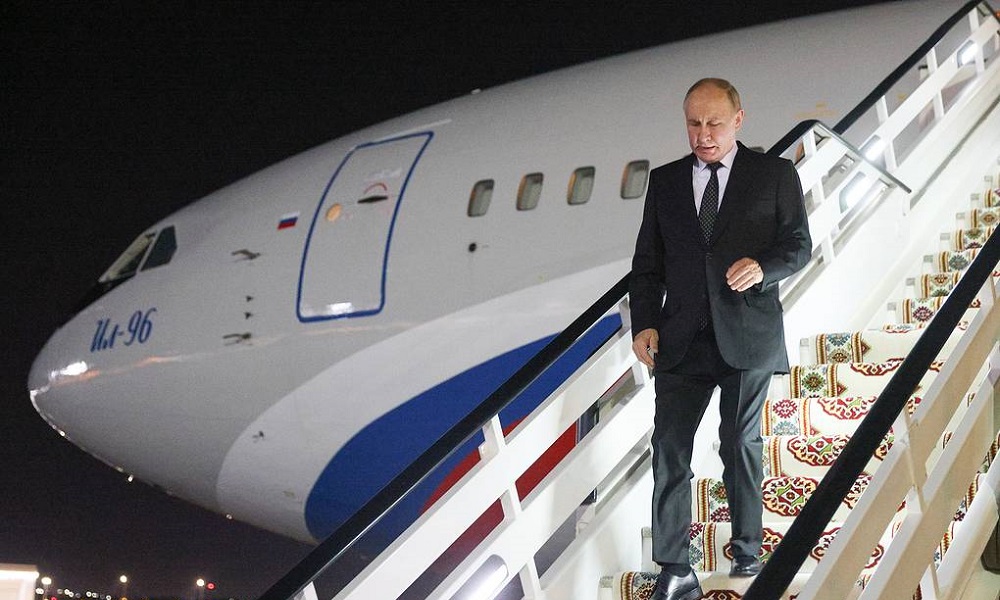
Russian President Vladimir Putin has arrived in Turkmenistan’s capital for a two-day visit.
According to TASS, the presidential aircraft of the Rossiya Special Flight Detachment landed near the presidential terminal of Ashgabat International Airport, commonly referred to as the “small bird” for its distinctive design.
During his visit, Putin will attend an international forum titled “Peace and Trust: Unity of Goals for a Sustainable Future” and hold several bilateral meetings.
The Kremlin has confirmed talks with Turkish President Recep Tayyip Erdogan, while the Iranian Embassy has announced that a meeting with President Masoud Pezeshkian is also planned.
The Ashgabat forum will also be attended by Turkmen President Serdar Berdymukhamedov, along with the presidents of Armenia, Iraq, Kazakhstan, Kyrgyzstan, Uzbekistan and Tajikistan, as well as the prime ministers of Azerbaijan, Hungary, Georgia and Pakistan.
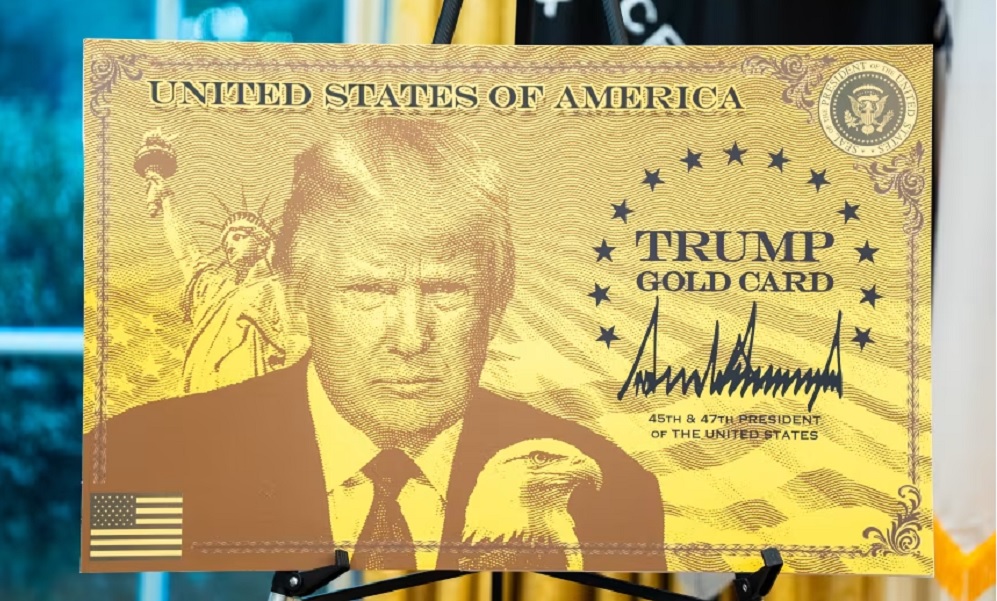
President Donald Trump’s administration officially launched his “Trump Gold Card” visa program on Wednesday to provide a pathway, with a steep price, for non-U.S. citizens to get expedited permission to live in the United States.
The website Trumpcard.gov, complete with an “apply now” button, allows interested applicants to pay a $15,000 fee to the Department of Homeland Security for speedy processing, Reuters reported.
After going through a background check or vetting process, applicants must then make a “contribution” — the website also calls it a “gift” — of $1 million to get the visa, similar to a “Green Card,” which allows them to live and work in the United States.
“Basically it’s a Green Card, but much better. Much more powerful, a much stronger path,” Trump told reporters at the White House. “A path is a big deal. Have to be great people.”
Commerce Secretary Howard Lutnick said some 10,000 people have already signed up for the gold card during a pre-registration period and he expected many more to do so. “I would expect over time that we’d sell, you know, thousands of these cards and raise, you know, billions, billions of dollars,” Lutnick told Reuters in a brief interview.
Lutnick said the gold card program would bring people into the United States who would benefit the economy. He compared that to “average” Green Card holders, whom he said earned less money than average Americans and were more likely to be on or have family members on public assistance. He did not provide evidence for that assertion.
Trump’s administration has pursued a broad crackdown on immigration, deporting hundreds of thousands of people who were in the country illegally and also taking measures to discourage legal immigration.
The gold card program is the Trump version of a counter balance to that, designed to make money for the U.S. Treasury in the same way the president, a former New York businessman and reality television host, has said his tariff program has successfully done.
Lutnick noted that there was also a corporate version of the gold card that allowed companies to get expedited visas for employees they wanted to work in the United States, for a $2 million contribution per employee.


Saar: Iran’s regional meeting on Afghanistan discussed

ACL: Jawanan Perozi 1-0 Arman FC; Abu Muslim Farah 2-0 Sarsabz Yashlar

Continued aid to Afghanistan vital for regional security: Kazakh president

Islamic Emirate declines to attend Tehran meeting on Afghanistan

Sirajuddin Haqqani: A government that intimidates its people is not a true government

Pakistan will lose big market in both Afghanistan, Central Asia: Sarhadi

Afghanistan records $580m in fruit exports in six months

Tashkent: Central Asian leaders say regional stability hinges on Afghanistan

Afghan Abdalyan beat Sri Lanka A by 3 wickets in Rising Stars Asia Cup opener

Afghanistan U19 cricket team defeats India A U19
Saar: Iran’s regional meeting on Afghanistan discussed

Saar: Calls to avoid using Afghan soil against nations

Tahawol: UNSC meeting outcome regarding Afghanistan discussed

Saar: Ongoing Kabul–Islamabad tensions discussed

Tahawol: Pakistan’s warning on Afghanistan reiterated
-
 Latest News2 days ago
Muttaqi: Afghanistan’s progress requires both religious and modern education
-

 Sport4 days ago
ILT20: Desert Vipers edge Gulf Giants in historic super over thriller
-

 Regional4 days ago
Six Pakistani soldiers killed in TTP attack in Kurram District
-
 Business4 days ago
Trade bodies warn almost 11,000 Afghan transit containers stuck at Karachi port
-
 World4 days ago
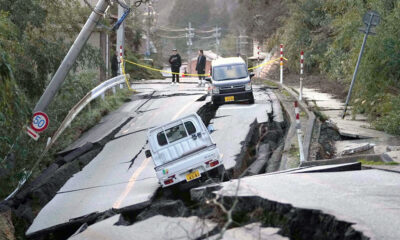
Powerful 7.6 earthquake hits northern Japan, tsunami warnings issued
-
 Latest News3 days ago
Trump calls Afghanistan a ‘hellhole’ country as US expands immigration restrictions
-

 Sport3 days ago
Commanding wins for Arman FC and Sarsabz Yashlar in Afghanistan Champions League
-
 Latest News5 days ago
Pakistan’s top general calls on IEA to pick between ties with Islamabad or TTP