
Latest News
Watchdog reports a dramatic increase in civilian casualties


The Afghanistan Independent Human Rights Commission (AIHRC) on Sunday said in a new report that in the first six months of this year, 5,321 civilians have been killed or injured, a substantial increase against the same period last year.
According to the report, the AIHRC said in 1,594 different security incidents, a total of 5,321 civilians have been killed or injured in the first six months of 2021. Among these civilian casualties, 1,677 were killed, and 3,644 were injured.
This was in comparison to 2,957, including 1,213 killed and 1,744 injured, in the first six months of last year.
The AIHRC stated that a total of 154 women were killed and 350 wounded between January and June this year.
The number of women civilian casualties in the first six months of 2020 was 297 in total which included 126 killed, and 171 injured.
The watchdog reported that this meant there was a 69 percent rise in women civilian casualties in the first six months of 2021 in comparison with the first six months of 2020.
In the first half of 2021, the number of child casualties was 1,456 – 373 children were killed, and 1,083 others were injured.
The number of child casualties in the first six months of 2020 was 630 (225 killed, and 405 injured).
The comparison of the above figures clearly shows that war principles and International Humanitarian Law have been violated. The number of child casualties increased by 131% in the first six months of 2021 compared to the first six months of 2020.
AIHRC stated that according to its findings, out of the total number of civilian casualties in Afghanistan in the first six months of 2021, the Taliban is responsible for 56 percent, pro-government forces are responsible for 15 percent, Daesh is responsible for seven percent, and unknown perpetrators are responsible for 22 percent.
The Taliban is responsible for 2,978 civilian casualties (917 killed, and 2,061 injured) in the first six months of 2021, read the statement.
Unknown perpetrators were responsible for another 1,190 civilian deaths and injuries in the first half of this year, including 425 civilians killed and 765 civilians injured. These attacks have not been claimed by any groups or individuals.
In addition, 16 civilians have been harmed due to rocket attacks from Pakistan to Afghanistan territory in the first six months of 2021. This includes two civilians killed, and 14 others injured.
Daesh meanwhile was responsible for 343 civilian casualties (104 killed, 239 killed) in the first six months of 2021. In the first six months of last year, Daesh was responsible for 429 civilian casualties (145 killed, 284 injured).
A comparison of both periods shows 20 percent reduction in 2021.
The watchdog found that the use of IEDs, roadside mines and car bombs in the first half of the year accounted for 37 percent of the total civilian casualties.
The number of civilian casualties caused by explosions tripled in the first six months of 2021 compared with the same period in the previous year.
Targeted killings also increased sharply in the first six months compared to last year.
This year it accounted for 30 percent of the total number of civilian casualties. This includes 1,634 civilian casualties (696 killed, 938 injured).
The number of civilian casualties caused by targeted killings during the same period in 2020 was 945 in total which included 533 killed and 412 injured.
This shows a 110 percent increase in the number of civilian casualties caused by targeted killing in the first six months of this year compared with the same period in the previous year.
Rocket fire, sucide attacks, airstrikes, night raids and ground engagements were other key types of war tactics used, which led to civilian casualties.
This was followed by the Central Zone, Kabul, Wardak, Kapisa, Parwan, Panjsher, Ghazni, Bamiyan, Daikundi.
In addition to this, the AIHRC found that 39 power pylons were destroyed by unknown people in the first six months of 2021 in different provinces including Kabul, Parwan, Baghlan, and Kunduz.
In addition, the ongoing armed conflict in the current year has resulted in destruction of 130 bridges and culverts, 13 schools, and three clinics only in the first six months of 2021.
“The above statistics are alarming and obvious examples of violating war principles,” the watchdog said in the statement.
The AIHRC once again called on all parties to the conflict to respect the demands of the AIHRC and to implement its recommendations; otherwise, the responsibilities and consequences of violations will lie with the violators, causing civilians casualties and destruction of public facilities and the personal properties.
Their list of recommendations were as follows:
1. AIHRC believes that dialogue and negotiations are the most humane, logical, and effective ways to resolve conflicts and we are reiterating it more seriously and stressing our previous stances in this regard. The country’s problems can be solved behind the negotiating table, not on the battlefield;
2. The Commission once again calls on the United Nations, domestic and international organizations and institutions influencing the war and peace in Afghanistan, as well as the international community, to use all their resources, opportunities, and capacities to end the current violence and devastating war before it leads to more human catastrophes;
3. We call on the Taliban, more specifically and emphatically, to care the suffering of the Afghan people, respect the interests of the country, the collective rights and aspirations of its citizens; in order to resolve disputed issues and achieve a just peace, they should return to the negotiation table and meaningful dialogue and pave the way for a long-term ceasefire and peace;
4. All parties to the Afghan war are required to respect international humanitarian law and standards, as well as not diverge from the laws and regulations of war during armed conflict. Any infringement of these regulations will result in severe penalties for the violators, who will be tried fairly and judicially in all circumstances;
5. According to international humanitarian law, the deliberate and systematic killing and harming of civilians is a clear example of war crimes and crimes against humanity, and if such approaches are motivated by hatred of certain ethnic, religious, or social groups, they are considered genocide and cannot be forgiven. The Government of Afghanistan and the relevant international organizations must seriously prosecute the perpetrators of such crimes;
6. The use of people as human shield as well as war in residential areas, clearly causes enormous harm to civilians, particularly children and women, and is an evident violation of international humanitarian law. Neither side in the fight should employ such cruel and brutal tactics. Furthermore, hostage-taking, assassination, targeted killings, and extrajudicial trials cannot be justified, and no military unit should engage in such tactics;
7. We specifically call on the Taliban to treat detainees and prisoners in accordance with international humanitarian law, and to guarantee that no captives or detainees are punished or brutally killed as a result of the extrajudicial measures, and prevent retaliatory actions by their men;
8. Emotional remarks and the issuance of instructions contrary to international human rights and humanitarian principles by some Afghan government officials have raised serious concerns among civil society organizations, the AIHRC, and the country’s intellectual community; we urge the leadership of the Government of Afghanistan to refrain from such destructive and extra-legal approaches;
9. The Taliban leadership is strongly urged to investigate all cases of violations of international humanitarian law in areas under their control and to prevent further harm to the country’s civilian people by stopping anti-human rights actions by their militants and commanders. The leadership of the Taliban must explain to the Afghan people the results of its work in this regard;
10. We urge the government’s armed opposition to align its definition of civilians with international humanitarian law principles and to refrain from attacking Afghan government civil servants, civil society activists, human rights defenders, aid organizations, journalists, religious scholars, and dissidents. The armed opposition’s leadership must understand that continuing to violate international human rights and humanitarian standards would have major consequences for them;
11. We urge the armed opposition’s leadership, particularly the Taliban, to prevent the destruction of specially protected facilities in regions under their control, such as hydroelectric dams, historical and cultural sites, power generation sources, and hazardous energy sources. In addition to preventing the destruction and looting of public and private assets, the dominant groups in the region must also prohibit third-party looting and destruction of these resources;
12. According to AIHRC and international organizations, the Taliban’s use of roadside bombs and improvised explosive devices is a major cause of civilian casualties. Therefore, we urge the Taliban to stop this military tactics;
13. We urge the Afghan government to review its war policies and procedures, resolve the issues that result in civilian casualties, and hold the government’s military perpetrators accountable;
14. We call on responsible organs in the Afghan government to take planned, continuous, and systematic measures to improve the security of all citizens of the country, particularly ethnic-religious minorities, religious scholars, human rights defenders, media activists, and civil activists;
15. We urge the government and aid agencies to provide additional support to the injured, displaced people, and victims’ relatives. We further urge the Taliban to permit the presence and activity of aid organizations in areas under their control, so that the impoverished people and displaced persons affected by the fighting can be helped;
16. Afghanistan is a member of the International Criminal Court (ICC). The Commission urges the International Criminal Court not to be swayed by political pressures from any authority in undertaking a serious and comprehensive investigation into the international crimes committed in Afghanistan. It also calls on the United Nations to send a UN fact-finding mission to investigate the recent horrific incidents against civilians in Afghanistan in a fair and non-political manner, as requested by the AIHRC. We also call on the Government of Afghanistan to welcome the presence of this delegation and to pave the way for a more thorough investigation.






The Asian Football Confederation (AFC) has announced the postponement of several major club fixtures in its West Region competitions due to the rapidly deteriorating security situation in the Middle East.
In a statement released Monday, the AFC confirmed that the AFC Champions League Elite 2025/26 Round of 16 first-leg matches in the West Region — originally scheduled for Monday, March 2, and Tuesday, March 3 — will be rescheduled.
The decision affects top clubs from countries including Saudi Arabia, Iran, Qatar, the United Arab Emirates, Iraq, and Uzbekistan, many of whom were preparing for high-stakes knockout ties.
The postponements also extend to the AFC Champions League Two 2025/26 and the AFC Challenge League 2025/26, where West Region quarter-final first-leg matches set to take place between March 3 and 4 have been delayed until further notice.
These competitions feature emerging and mid-tier clubs from across West and Central Asia, for whom continental progression carries significant financial and sporting importance.
The move comes amid escalating military tensions across parts of the Middle East, with airstrikes and cross-border hostilities raising concerns about travel safety, airspace closures, and the security of players and supporters.
Several countries in the region have experienced heightened alert levels, leading to logistical complications for international sporting events.
Clubs from nations directly or indirectly affected by the conflict — including teams from Iran, Saudi Arabia, Qatar, and the United Arab Emirates — now face uncertainty over revised travel plans, fixture congestion, and potential impacts on domestic league schedules.
However, the AFC confirmed that matches involving clubs from the East Region — including sides from Japan, South Korea, China, Thailand, Australia, and other East and Southeast Asian nations — will proceed as originally scheduled across all AFC club competitions.
“The AFC will continue to closely monitor this rapidly evolving situation and remains resolute in ensuring the safety and security of all players, teams, officials, and fans,” the governing body said in its statement.
The postponements underscore how escalating geopolitical tensions are now reverberating beyond politics and security, disrupting one of Asia’s premier sporting competitions and affecting clubs, supporters, and broadcasters across the continent.
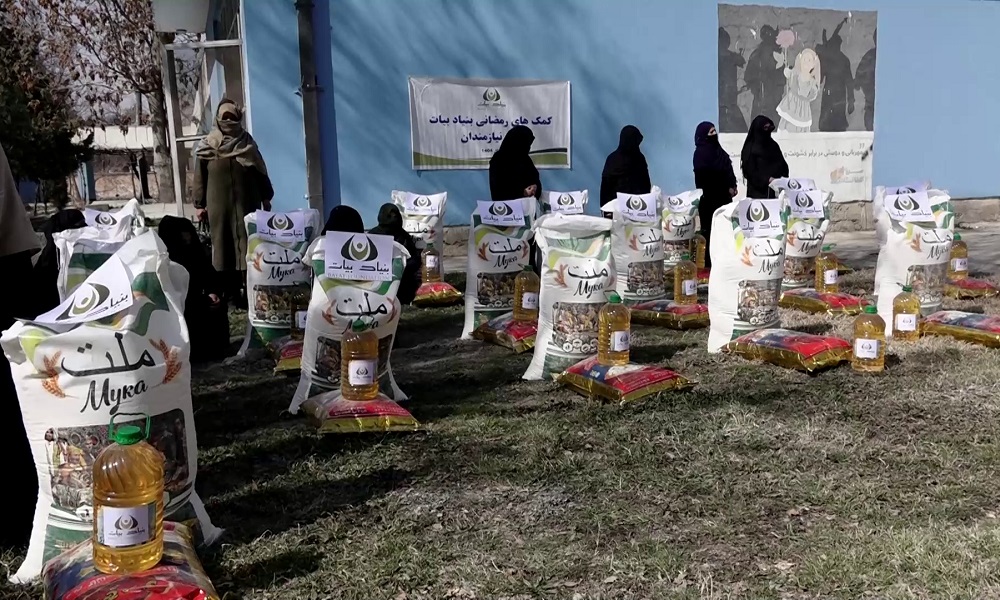
As Afghanistan continues to grapple with a severe humanitarian crisis compounded by economic hardship and heightened military tensions in the region, the Bayat Foundation has stepped up efforts to support vulnerable families in Kabul through its annual Ramadan assistance program.
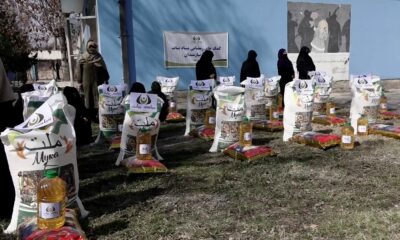
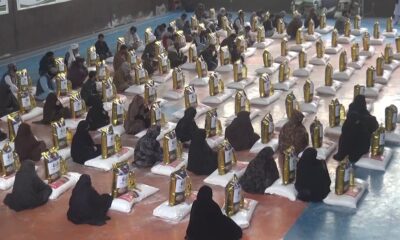
This week, the foundation distributed food packages to dozens of struggling households in Kabul’s District 18. The packages include essential staples such as rice, flour, and cooking oil — basic necessities that many families are increasingly unable to afford amid high levels of unemployment, reduced incomes, and rising living costs.
Afghanistan remains one of the world’s most fragile humanitarian settings. Years of conflict, recurring natural disasters, economic isolation, and widespread poverty have left millions dependent on aid.
According to humanitarian agencies, a significant portion of the population faces food insecurity, with many families forced to skip meals or rely on limited assistance to survive. The situation has been further strained by recent regional tensions, which have disrupted trade routes and deepened economic uncertainty.
Speaking during the distribution, Haji Mohammad Esmail, Deputy Director of the Bayat Foundation, emphasized the organization’s ongoing commitment to assisting those in need.
“Continuing our annual Ramadan assistance [campaign], we are once again distributing aid this year. Today, we are in Kabul’s 18th district, providing food packages — including flour, oil, and rice — to a number of eligible families whose list was prepared by our team. Our assistance will continue both in Kabul and other provinces.”
For many recipients, the support offers not just food, but a measure of stability during an otherwise precarious time.
“I have no breadwinner at home; I am the one providing for my family. We are seven members,” said one woman receiving assistance. “Thank you — may God help you for assisting us poor people.”
Founded by Afghan businessman and philanthropist Dr Ehsanullah Bayat, the Bayat Foundation has been active in humanitarian and development work across Afghanistan for years. In addition to its annual Ramadan food drives, the organization has supported communities affected by earthquakes, floods, and harsh winters, provided healthcare initiatives, and contributed to educational and infrastructure projects in underserved areas.
As the holy month of Ramadan continues, the foundation says distributions will expand to other districts of Kabul and additional provinces, aiming to reach as many vulnerable families as possible during a period traditionally marked by charity, solidarity, and compassion.
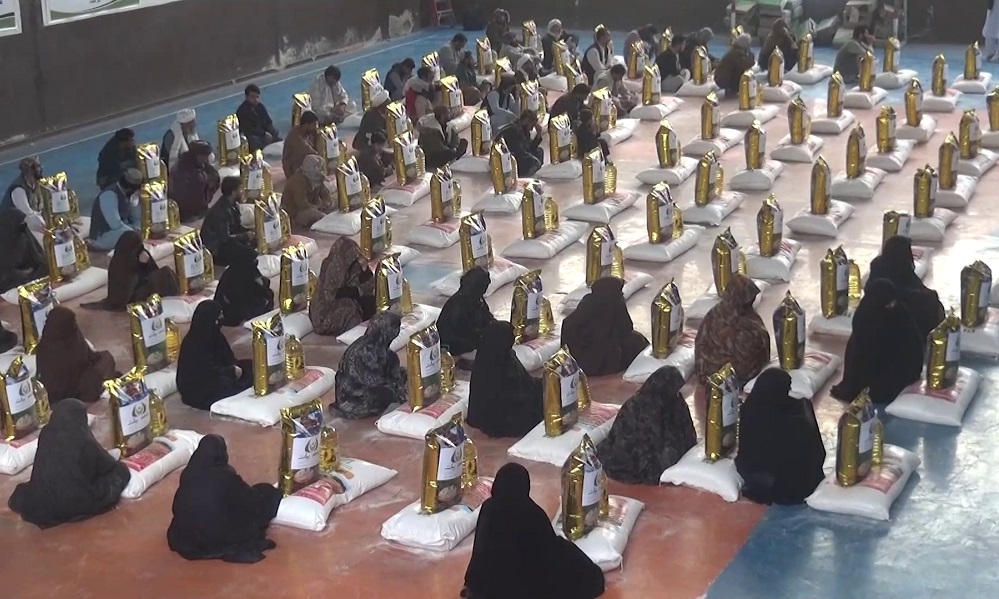
The Bayat Foundation has distributed Ramadan food assistance to dozens of needy families in Herat province, seeking to ease the burden on households struggling with deepening economic hardship.
Foundation officials said the food parcels — containing rice, flour, and cooking oil — have been delivered to impoverished families across the province.
The packages are designed to cover at least one month of essential food needs during the holy month of Ramadan, a time when many low-income families face increased expenses.
Afghanistan continues to confront widespread poverty, high unemployment, and food insecurity, with humanitarian agencies warning that millions remain in urgent need of assistance.
In Herat, local authorities say demand for basic food support remains particularly high, especially among returnees, daily wage laborers, and families without steady income.
Speaking during the distribution process, Sayed Noor Ahmad Shah Sadat, the Bayat Foundation’s representative in Herat, said the initiative is part of the organization’s annual Ramadan campaign.
“Today, on the occasion of the holy month of Ramadan, the Bayat Foundation provided assistance to deserving families. These packages include rice, flour, and oil. The goal of this program is to support poor families and help meet their basic needs, especially during Ramadan,” he said.
Recipients described the aid as timely and essential.
Jan Mohammad, a beneficiary, said the food parcels would sustain his family for weeks. “These packages help us a lot. They cover our needs for at least a month. I hope this continues. We are poor people — we have nothing,” he said.
Humaira, another recipient, emphasized the importance of ongoing support. “The poor should always be considered. If this assistance continues, no Muslim will be forced into hardship,” she said.
Faqir Ahmad, also among those assisted, expressed gratitude, noting that the supplies would meet his family’s needs for a month.
Local officials welcomed the initiative and encouraged other organizations to expand similar efforts. Baz Mohammad Sarwari, head of the Telecom Regulatory Authority in Herat, praised the foundation’s work.
“The Bayat Foundation is distributing aid to deserving families, and this is truly commendable. We hope these efforts continue and call on other humanitarian organizations to assist the needy,” he said.
Founded by Afghan businessman and philanthropist Dr Ehsanullah Bayat, the Bayat Foundation has long been involved in humanitarian activities across Afghanistan. In addition to its annual Ramadan food drives, the organization has provided emergency relief to communities affected by natural disasters, supported healthcare initiatives, and assisted returnee migrants and other vulnerable groups.
The foundation says its Ramadan campaign is ongoing not only in Herat but also in several other provinces, aiming to reach thousands of families in need across the country.


Saar: Afghan forces’ operation against Pakistani military

AFC postpones Champions League matches amid escalating Middle East tensions

Ayatollah’s wife dies from injuries sustained in airstrike on Tehran residence

Bayat Foundation assists needy families in Kabul amid ongoing humanitarian crisis

Needy families in Herat receive much-needed Ramadan aid from Bayat Foundation

Pakistani military jet downed in Afghanistan’s Jalalabad, pilot captured alive

IEA releases three Pakistani soldiers to mark Ramadan

Afghan Air Force conducts airstrikes in Islamabad, other cities

AFC Futsal Asian Cup: Afghanistan to face Iran in crucial Group D clash

Afghanistan’s Chief of Armed Forces underscores readiness and equipment for national defense
Saar: Afghan forces’ operation against Pakistani military

Tahawol: Afghanistan and the Region Under the Shadow of Rising Tensions

Tahawol: Joint Israeli-US attacks on Iran discussed

Saar: Afghan retaliatory operations against Pakistan discussed

Tahawol: Carrying out retaliatory operations against Pakistan discussed
-
 Latest News3 days ago
Pakistani military jet downed in Afghanistan’s Jalalabad, pilot captured alive
-
 Latest News4 days ago
Afghan Air Force conducts airstrikes in Islamabad, other cities
-
 Latest News3 days ago
IEA: Special circle in Pakistan has launched mission to destabilize region
-

 World5 days ago
India’s Modi backs Israel in address at Israeli parliament
-
 Latest News3 days ago
Turkey launches initiative to diffuse Afghanistan-Pakistan tension
-

 Latest News17 hours ago
Afghan air force strikes key Pakistani military installations in retaliatory operation
-

 Regional4 days ago
Narendra Modi holds high-level talks after historic address to Knesset
-

 Latest News4 days ago
Afghans say they are united against Pakistan aggression