
Latest News
Voices raised over killings as #StopHazaraGenocide trends on Twitter

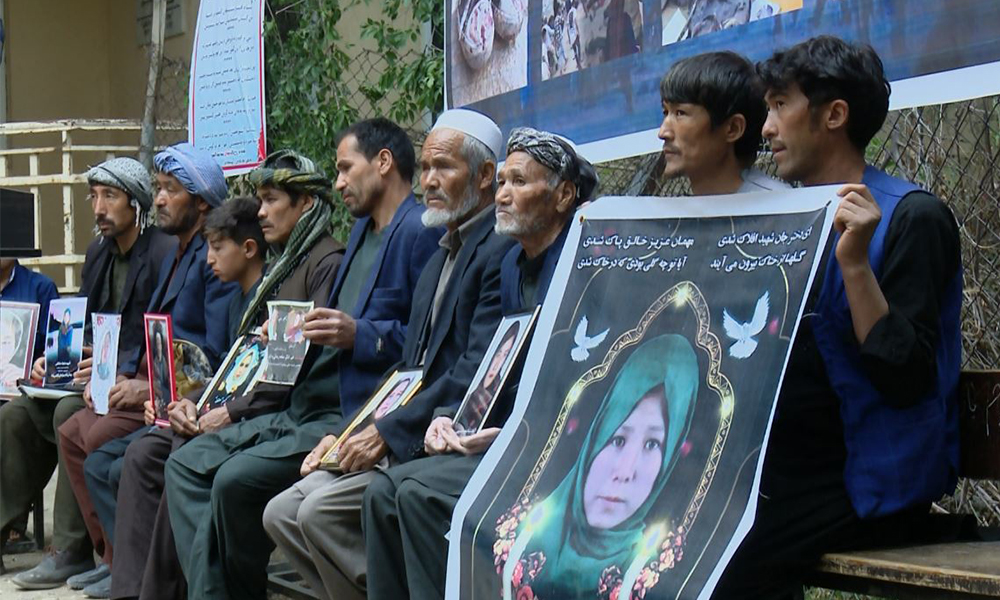
Following a surge in targeted attacks against civilians in the predominately Shiite Hazara community in the western suburbs of Kabul city, tens of thousands of people have taken to social media calling on the Afghan government to recognize the attacks as acts of genocide.
The hashtag #StopHazaraGenocide has been trending over the past few days and by Saturday night had topped 100,000 tweets alone.
This comes amid ongoing attacks against the Hazara community – attacks that have over the past few years left hundreds of civilians dead and hundreds more wounded.
One Afghan woman said on Twitter “The systematic killing of Hazaras in Afghanistan is a clear example of genocide.”
Another Twitter user said: “Every day Hazara are digging a new mass grave to bury their loved ones. The hills of Kabul turned into a wasteland of despair where newborns, schoolgirls and mothers have been laid forever.
“Those who work for human rights and peace must today stand up and help us to #StopHazaraGenocide,” he said.
Another Twitter user stated: “The normalization of violence against Hazaras, the denial of the systematic persecution of a community simply because they belong to a particular ethnicity is the untold & rather unpopular truth of what is happening with Hazaras in Afghanistan.”
Dozens posted tallies around the death toll going back to 2018 – while many said that these attacks had been carried out by the Taliban, Daesh and other terrorist groups in the presence of US and NATO forces.
Referring to the UN convention on the Prevention and Punishment of the Crime of Genocide, a number of people stated that the attacks on Hazaras must be recognized as an act of genocide.
According to the UN Genocide Convention Article 11, any of the following acts committed with intent to destroy, in whole or in part, a national, ethnical, racial or religious group, as such: Killing members of the group; Causing serious bodily or mental harm to members of the group; Deliberately inflicting on the group conditions of life calculated to bring about its physical destruction in whole or in part; Imposing measures intended to prevent births within the group; Forcibly transferring children of the group to another group can be counted as genocide.
A number of Afghans stated that though all people in Afghanistan have been victims of terrorism, “the Hazaras have been constantly targeted for their ethnicity.”
Musa Zafar, an Afghan author, stated: “If you ask which ethnic group has suffered the most casualties in Afghanistan in the last twenty years, you can expect Pashtuns as an answer. Pashtuns have been killed on both sides of the conflict. Their children have been deprived of basic rights. But the targeted killings of Hazaras are an example of genocide.”
“The world should know that the Taliban and their like-minded terrorists are committing genocide along with countless other crimes [in Afghanistan],” he said.
A member of the Afghan Republic peace team, Mohammad Amin Ahmadi, said Saturday the voice of victims must be heard.
“It is a reality that the Hazara people are subject to genocide because they are being killed for their ethnic and religious identity,” Ahmadi said.
Shuja Zaky, TOLONews Anchor, stated that “targeting civilians anywhere and on all sides is condemned and deeply disturbing. But targeted attacks on Hazaras have gravely increased this concern.”
MP Arif Rahmani stated: “The world should not close its eyes to this systematic genocide.”
Parwiz Shamal, an Afghan journalist, said: “In Afghanistan, all ethnic groups have been harmed – Hazaras, Tajik Pashtuns, Uzbeks … but the fact cannot be ignored that seniors, young people, and children – even newborn babies – of no ethnic group like the Hazaras have been targeted just because of their ethnicity and have been slaughtered.”
This growing hashtag campaign, #StopHazaraGenocide comes after four private passenger vehicles were targeted in explosions in the densely Hazara-populated area in the west of Kabul city this week.
Dozens of people including Ariana News Anchor Mina Khairi, who was a Hazara herself, were killed in the bombings.
Tomas Niklasson, Acting Special Envoy of the European Union for Afghanistan, on Thursday spoke out about this and said that “targeting Hazaras” must be stopped.
Niklasson meanwhile also met with survivors of the deadly bombing at the Sayed-ul-Shuhada school in early May. Over 90 people, mostly schoolgirls, were killed when explosions were detonated at the school in Dasht-e-Barchi in Kabul – which is also a densely populated Hazara community.
Niklasson stated that crimes were committed and that these must be investigated.
“Targeting Hazaras must stop and crimes [must] be investigated,” he said.
He also noted that some people want to stop the grieving of Sayed-ul-Shuhada students, but that “their memory can be honored by pursuing dreams.”
“Those taken away too early can’t be brought back. But their memory can be honored by pursuing dreams that some want to stop,” he stated.
So far, no group including the Taliban has claimed responsibility for the attack.
Recently the Afghanistan Independent Human Rights Commission (AIHRC) called on the Afghan government to grant special protection to Hazaras and the community in Dasht-e-Barchi.
The AIHRC said in a statement that it was the government’s duty to protect the Hazara community against crimes against humanity, ethnic cleansing, and genocide.
“The Afghan government has an obligation under International Humanitarian Law (IHL) and International Human Rights Law to protect the population at risk of war crimes, crimes against humanity, ethnic cleansing or genocide and international law obliges the government to take measures to end and prevent genocide and war crimes, crimes against humanity and persecution on the basis of ethnicity and gender,” the statement read.
“In October 2020, just over six months ago, more than 40 students died in an attack on Kawsar Danish tutoring center. In May 2020, almost a year ago 11 mothers were murdered with their unborn babies, two boys were, and an Afghan midwife was killed, with five mothers injured; this is femicide and infanticide,” the statement highlighted.
The AIHRC stressed that the Afghan government should fulfill its obligations under the International Covenant on Civil and Political Rights “which includes acknowledging massacres targeting Hazaras.”
“The Afghan government should immediately communicate a human rights-based protection plan for Dasht-e-Barchi and West Kabul. This should include plans for collective reparations,” the organization said.
One of the world’s most persecuted peoples
In a recent opinion article, in The Diplomat, by two political commentators, who are both former Afghan refugees, Sitarah Mohammadi and Sajjad Askary said the Hazara community “wears the sad reputation of being one of the world’s most persecuted peoples.”
They pointed out that while Hazaras now make up roughly a quarter of Afghanistan’s population of 38 million, they were once the largest Afghan ethnic group, constituting nearly 67 percent of the total population.
“The decline is due to the sad history of the Hazaras. Sanctioned state persecution against the Hazara began in the late 19th century. Since that time about 60 percent of the Hazara population has been eliminated in different ways: killed, sold into slavery, or forced into exile,” they wrote.
The Taliban’s massacre of thousands of Hazaras in Mazar-e Sharif in 1998 remains one of the most notorious atrocities in Afghanistan’s 40-year conflict, Mohammadi and Askary wrote.
They stated that members of Afghanistan’s Hazara community remain continually vulnerable to violence and that Hazara culture promotes democratic values of social liberalism and progressive thinking, and the community has embraced expanded educational opportunities.
“These cultural distinctions are at odds with the predominantly conservative religious views of wider Afghan society, and particularly with the Taliban. The Hazaras’ success, strides and liberation pose a threat to ethnocentric circles,” they wrote.
According to Mohammadi and Askary, the genocidal persecution of the Hazara people is maintained in contemporary attitudes throughout Afghanistan.
“Attacks against newborn Hazara babies, pregnant mothers, school children, girls, and youth are a matter of record. Hazaras have faced violence at educational centers and schools, fitness centers, wedding halls, and maternity wards.”
They also noted that “understandably, the persecution of the Hazaras has resulted in thousands seeking refuge across international borders in Europe, the U.K., and Australia.”
Mohammadi and Askary stated that emerging power dynamics in a post-withdrawal Afghanistan leave the Hazaras uniquely vulnerable to ongoing violence and that as the foreign military presence decreases, the need for increased international engagement with Hazara civil society organizations grows more crucial.
They stated that a vulnerable community is relying on its international friends to maintain humanitarian protection and institutional engagement as it confronts the dangers of a destabilized and chaotic time.







Latest News
UNDP, UN Women launch financing initiative for Afghan women entrepreneurs
UN Women Special Representative Susan Ferguson said expanding women’s access to finance was critical to enabling women-led businesses to grow.

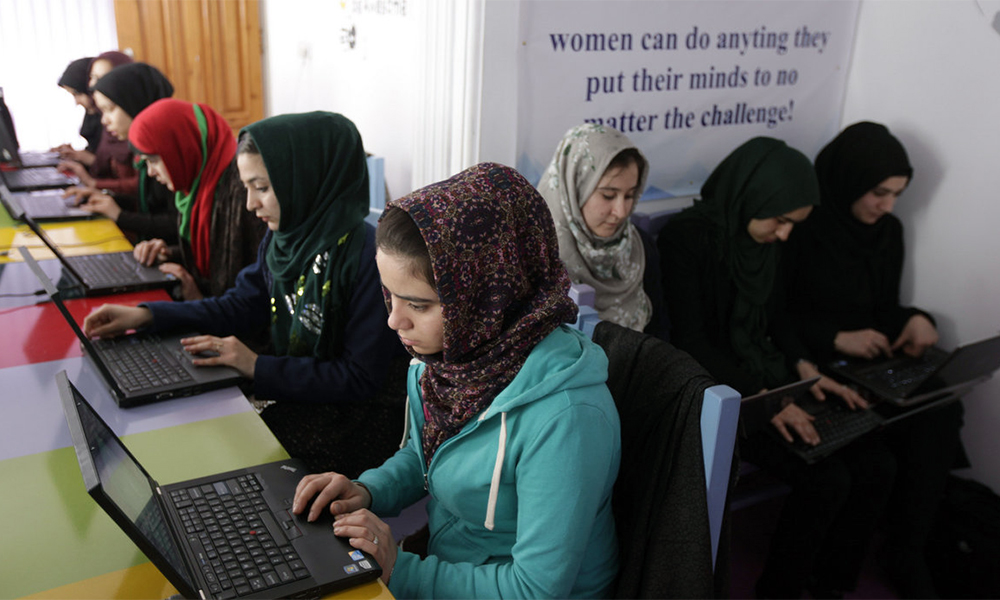
The United Nations Development Programme (UNDP) and UN Women have launched a joint initiative to expand access to finance and business support for Afghan women entrepreneurs.
The Afghanistan Women’s Fund for Resilient Enterprises (AWFRE) will provide Sharia-compliant, collateral-free financing alongside financial and digital literacy training, mentoring, business planning and support to access markets.
An initial joint investment of $1.7 million will support about 1,500 women entrepreneurs over the next year, indirectly benefiting more than 14,000 people through stronger businesses, household incomes and economic activity.
The initiative comes amid a significant financing gap for Afghan women entrepreneurs. Fewer than 7% of women in Afghanistan have a bank account or use mobile money services, leaving many women-led businesses dependent on personal savings, loans from family and friends, or the sale of personal assets.
More Afghan women are turning to entrepreneurship to earn income and support their families. More than 10,000 Afghan women now hold business licences, around ten times the number five years ago, while the Afghanistan Chamber of Commerce estimates another 120,000 are trading without licences.
“The challenge for Afghan women entrepreneurs is not a lack of enterprise, but limited access to the finance, skills and networks they need to grow,” said Turhan Saleh, UNDP Resident Representative in Afghanistan.
UN Women Special Representative Susan Ferguson said expanding women’s access to finance was critical to enabling women-led businesses to grow.
“Afghan women are finding ways to build businesses, despite the many obstacles they face,” Ferguson said. “Expanding access to finance can help women entrepreneurs turn their ideas and skills into stronger businesses, more jobs and greater economic security for their families and communities.”
UNDP and UN Women are seeking an additional $10 million to expand the programme, which would allow another 10,000 women entrepreneurs to access financing and business support and indirectly benefit an estimated 70,000 people.
The initiative aims to help women entrepreneurs expand their businesses, access new markets and develop more sustainable sources of income.




UNDP, UN Women launch financing initiative for Afghan women entrepreneurs

Aimal Wali Khan calls Dera Ismail Khan attack a ‘state failure’

Trump rejects Iranian proposal to open Hormuz and end fighting

Abu Muslim Farah defeat Khurasan Faryab 2-0 in ACL season six

Saar: Concerns over Pakistan’s political crisis discussed

Saudi energy group signs major Afghanistan deals covering gas exploration and pipeline plans

Trump floats idea of renaming Atlantic or Pacific Ocean

US hits Egyptian bank branches with Iran sanctions as war marks six months

Nepal flood rescue mission enters critical phase as thousands remain missing

Iranian clubs to face Gulf opponents at neutral venues in Asian Champions League Elite
Saar: Concerns over Pakistan’s political crisis discussed

Exclusive interview with Abdul Latif Mansoor, Minister of MRRD

Tawsia: Overview of Afghanistan’s iron mines

Tahawol: Discussion on fresh Pakistani airstrikes on Afghanistan

Saar: Calls for international support for Afghanistan discussed
-

 Latest News4 days ago
Ariana Afghan Airlines ranks seventh among 45 Central Asian airlines
-

 Latest News5 days ago
UN reiterates call for respect for international law after Kunar airstrikes
-

 Regional4 days ago
US and Iran hold first talks since June after Trump’s ‘annihilation’ threat
-

 Regional3 days ago
Iran airlines cancel flights as US sanctions hit
-

 Latest News4 days ago
Silk Road highway in Wakhan corridor now reaches the China border
-

 Sport5 days ago
Afghan boxing referee heads to China for international festival
-
 Business4 days ago
Afghanistan, Turkmenistan agree to establish joint road transport commission
-
 Latest News4 days ago
India condemns Pakistani airstrikes on Afghanistan