
Latest News
Uzbekistan’s electricity supply to Afghanistan drops by 60%

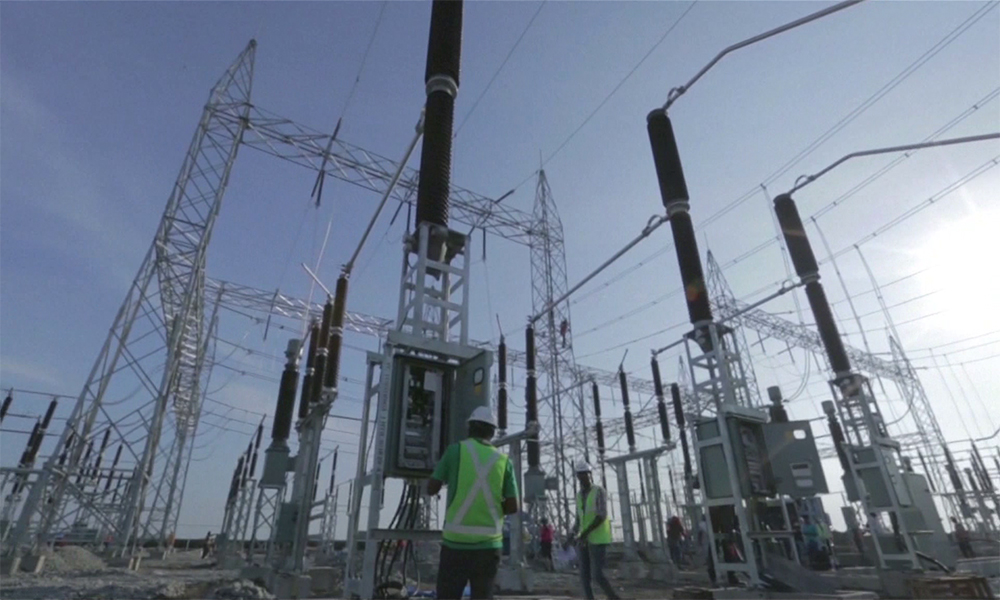
Da Afghanistan Breshna Sherkat (DABS) has announced that Uzbekistan has reduced its electricity exports to Afghanistan by 60% “without coordination.”
DABS said in a statement on Wednesday that Uzbek officials said the reason for this was due to technical problems.
The statement quoted Uzbek officials as saying that a technical problem had arisen at the Marjan power station, which had reduced the amount of electricity for exports to Afghanistan.
Uzbek officials have said the problem is being attended to and that hopefully the electricity supply to Afghanistan will return to normal within the next two or three days.
DABS said that due to the reduction of electricity imported from Uzbekistan, electricity in 16 provinces has been cut and that widespread power outages are in place.
Afghanistan relies heavily on imported electricity from Central Asian countries.
Kabul in particular faces major power shortages during both winter and summer.
The drop in supply meanwhile comes just days after DABS officials called on politicians, former government officials and businessmen to settle their outstanding bills with the power supply company.
The company issued a statement saying that Breshna’s one-month deadline had expired for debtors and that they should not miss their last opportunity to pay their electricity debts.
Abdul Rahman Rahmani, head of the business department, said that financial problems and non-payment of bills had created major problems for DABS.
Rahmani said that getting payment in full from former politicians, officials and members of the public was the only way to resolve the power supply company’s financial woes.





Latest News
IEA defense minister meets Chinese envoy, emphasizes security and regional stability
Both sides concluded by emphasizing the need to build mutual trust, deepen bilateral cooperation, and expand regional partnerships.
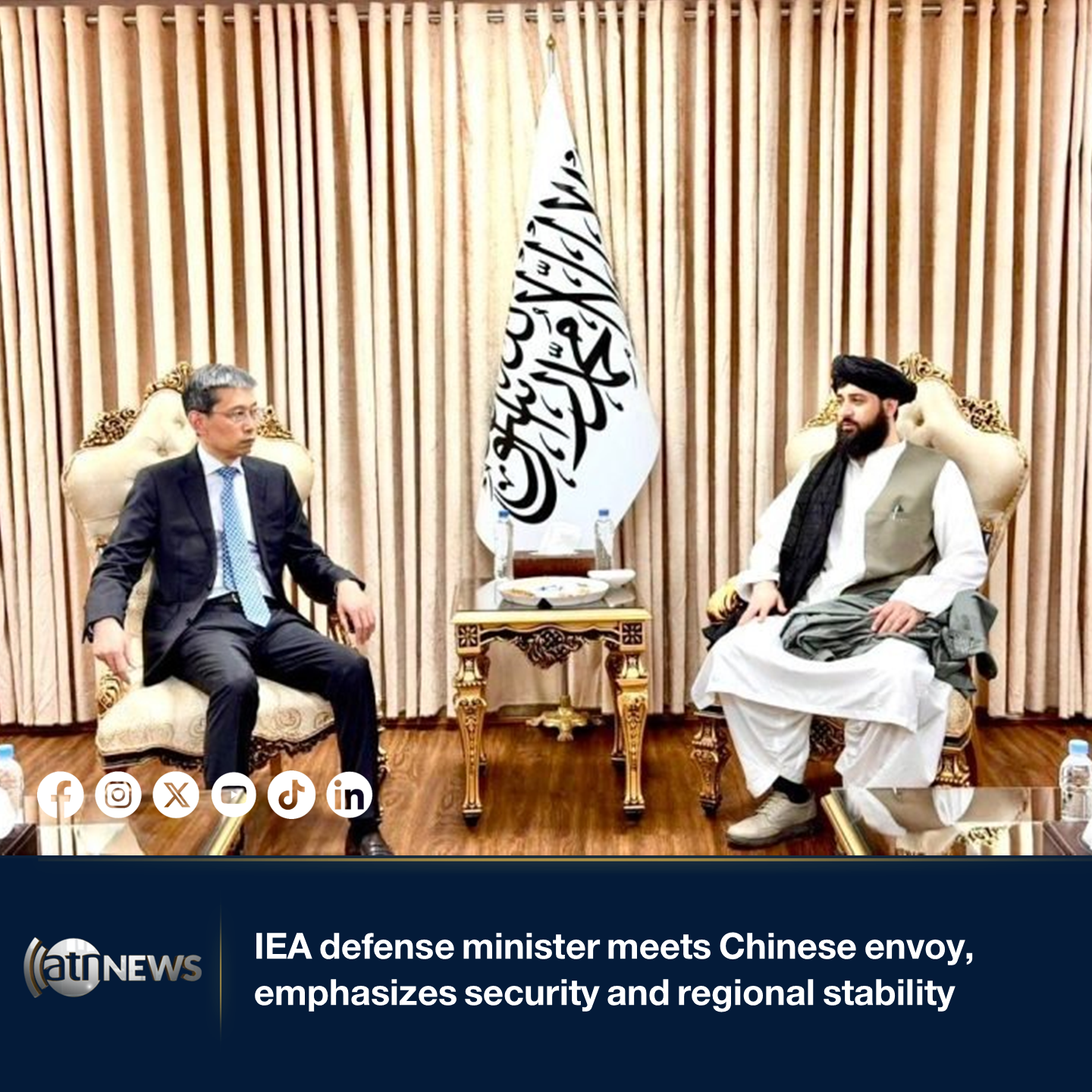
Afghanistan’s Defense Minister, Mohammad Yaqoob Mujahid, held talks with China’s Ambassador to Kabul, Zhao Xing, focusing on security cooperation and regional stability, officials said.
According to Defense Ministry spokesperson Enayatullah Khwarazmi, the meeting covered bilateral relations, political engagement, and evolving regional developments. Both sides discussed ways to enhance coordination on shared concerns, particularly maintaining stability and preventing cross-border security threats.
The Chinese envoy outlined Beijing’s position on the Urumqi discussions and reiterated China’s readiness to expand cooperation with Afghanistan. He emphasized dialogue-driven approaches and expressed support for initiatives aimed at promoting long-term regional peace and economic collaboration.
Mujahid said that with internal security largely consolidated, Afghanistan is now prioritizing regional stability. He stressed that dialogue remains the most effective path to addressing challenges and reaffirmed the country’s commitment to safeguarding national sovereignty.
He added that the current approach is based on patience, mutual respect, and understanding, while underscoring that defending the country against any form of aggression remains a legitimate right and national responsibility.
Both sides concluded by emphasizing the need to build mutual trust, deepen bilateral cooperation, and expand regional partnerships.
International Sports
FIFA appoints record number of match officials for 2026 World Cup
A total of 52 referees, 88 assistant referees and 30 video match officials have been selected from across all six confederations and 50 member associations.

FIFA has announced the full list of match officials for the upcoming FIFA World Cup 2026, confirming what will be the largest refereeing team in the tournament’s history.
A total of 52 referees, 88 assistant referees and 30 video match officials have been selected from across all six confederations and 50 member associations, following a rigorous evaluation process that spanned more than three years.
The selection was based on FIFA’s “quality first” principle, with officials assessed on their consistency and performances in domestic leagues, international competitions and previous FIFA tournaments.
Pierluigi Collina said the chosen officials represent the highest standard in global football officiating. He noted that candidates were closely monitored over several years, taking part in seminars and major tournaments while undergoing regular performance reviews.
“This will be the biggest World Cup in history,” Collina said, referring to the expanded 48-team format and 104 matches set to be played across three host countries. He added that the officiating team has grown significantly compared to the 2022 tournament in Qatar, reflecting the increased scale of the competition.
Collina also highlighted the continued inclusion of women referees, with six female match officials selected, building on progress made during the previous World Cup.
Officials will undergo final preparations at a training camp in Miami starting on May 31, where they will receive support from fitness coaches, medical staff and match analysts to ensure they are in peak physical and mental condition ahead of the tournament.
Massimo Busacca said preparations began immediately after the conclusion of the 2022 World Cup, with a structured programme of workshops, monitoring and technical development designed to maintain the highest standards.
During the tournament, referees will continue daily training sessions, supported by detailed match analysis and on-field simulations involving local players.
Technology is also set to play a central role, with FIFA confirming the use of goal-line technology, an enhanced version of semi-automated offside systems and connected ball technology.
In a first for the World Cup, fans will also be able to view matches from the referee’s perspective using newly introduced body cameras, enhanced by artificial intelligence to improve video quality.
Following the Miami training camp, video match officials will relocate to Dallas, home of the International Broadcast Centre, while referees and assistant referees will remain in Miami for the duration of the tournament.
FIFA said additional measures aimed at increasing match tempo and reducing time-wasting—approved earlier this year by the International Football Association Board—will also be implemented.
With preparations now entering the final phase, FIFA says it is confident that “Team One” will be ready to meet the demands of what is expected to be a historic and groundbreaking World Cup.
Click here for full list of appointed match officials for the FIFA World Cup 2026.
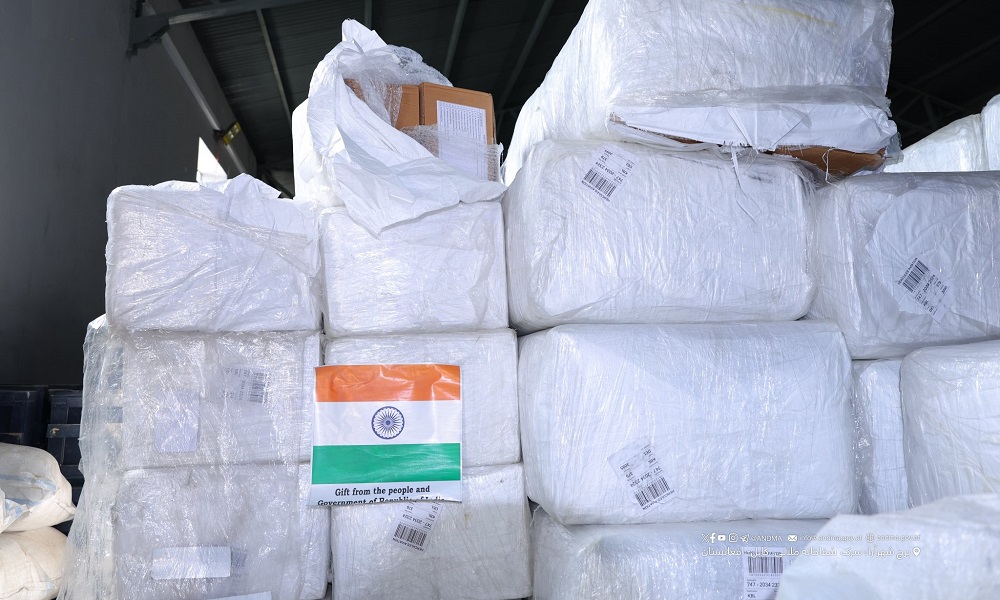
India has delivered three tons of humanitarian assistance to Afghanistan to support families impacted by recent flooding, the Afghanistan National Disaster Management Authority (ANDMA) said on Thursday.
Officials confirmed the aid shipment was received the same day and includes essential relief items such as 300 medical kits, 50 kitchen sets, 495 blankets, and 165 tarpaulins.
ANDMA expressed appreciation for India’s continued humanitarian support, noting that the assistance will help address urgent needs in flood-affected areas.
The authority added that a formal assessment is underway and that the aid will be distributed in a transparent and equitable manner to the most affected and vulnerable families.
Flooding has repeatedly affected several regions of Afghanistan, leaving communities in need of immediate relief and longer-term recovery support.


Iran war doubles Russia’s main oil revenue to $9 bln in April, Reuters calculations show

IEA defense minister meets Chinese envoy, emphasizes security and regional stability

Russian special envoy Dmitriev in US, meeting Trump administration members, sources say

ATN seals Ariana Snooker Championship deal for five seasons

Tahawol: China to host 2nd round of Kabul–Islamabad talks discussed

IEA Supreme Leader issues Eid-ul-Fitr message urging unity and support for Islamic system

IEA supreme leader orders replacement of foreign terminology in official documents

14 Pakistani soldiers killed after military post falls along Durand line: MoD

Afghan airstrikes target Pakistani military sites in retaliation for air attacks

Turkmenistan, Afghanistan discuss steps to speed up land acquisition for TAPI pipeline
Tahawol: China to host 2nd round of Kabul–Islamabad talks discussed

Saar: Fragile ceasefire in the Middle East reviewed

Tahawol: Two‑week truce agreement between Iran-US reviewed

Saar: US–Iran two-week ceasefire agreement discussed

Tahawol: Ongoing negotiations between Kabul-Islamabad discussed
-
 Latest News5 days ago
IEA supreme leader orders replacement of foreign terminology in official documents
-
 Latest News5 days ago
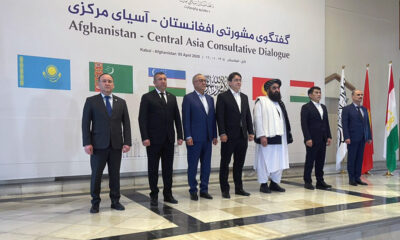
Afghanistan hosts inaugural Afghanistan–Central Asia Consultative Dialogue to strengthen regional cooperation
-
 Latest News3 days ago
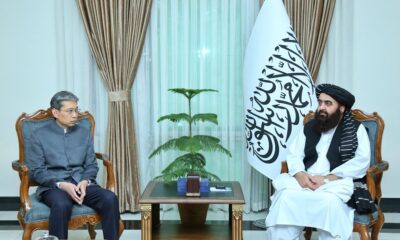
China seeking to build trust between Afghanistan and Pakistan
-
 Regional5 days ago
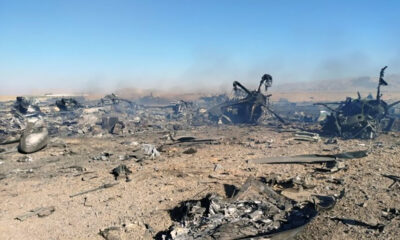
Iran claims it shot down US C-130 support aircraft in Isfahan
-

 International Sports4 days ago
IPL 2026: Lucknow hold nerve in final over to defeat Sunrisers
-
 Latest News4 days ago
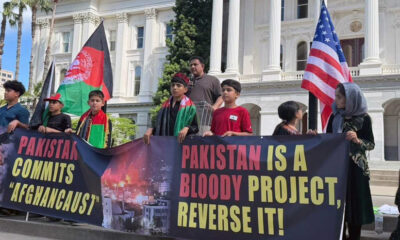
Afghan community in California condemns Pakistani strikes amid growing global protests
-
 Business3 days ago
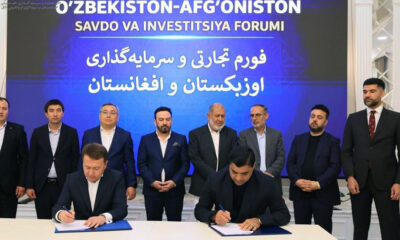
Afghanistan, Uzbekistan sign $400 million trade deals in push to deepen ties
-
 Regional4 days ago
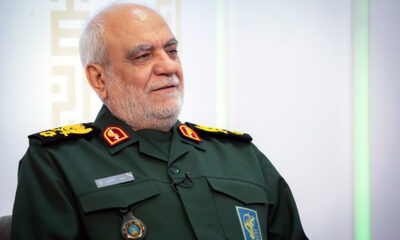
IRGC intelligence chief killed as wave of strikes continues against Iran’s leadership