
Business
Uzbekistan sends in another shipment of aid to Afghanistan

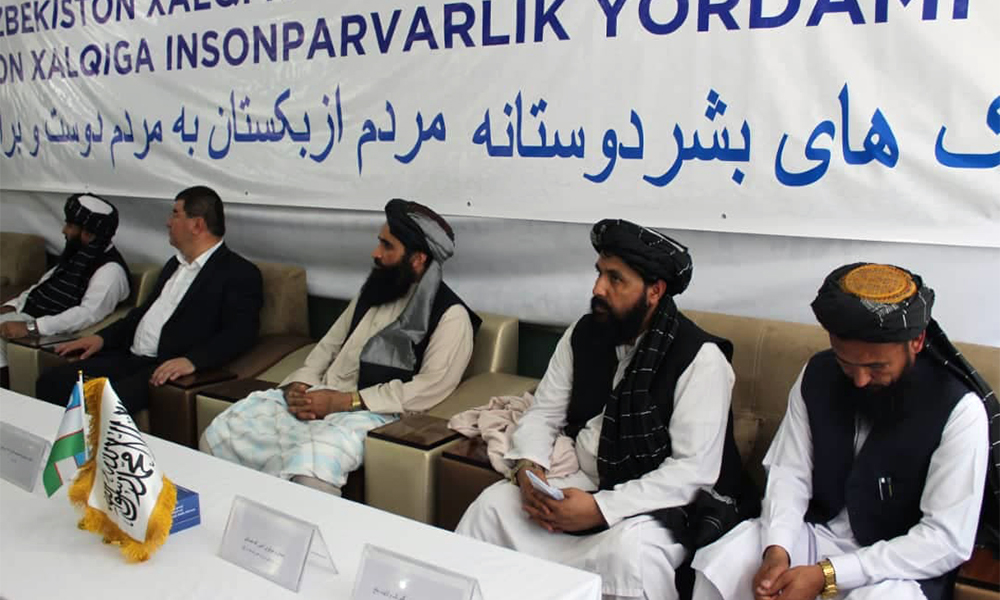
Islamic Emirate of Afghanistan (IEA) said Sunday that Uzbekistan has sent in another shipment of humanitarian aid to Afghanistan in the form of food and clothing.
According to IEA spokesman Zabiullah Mujahid, 4,000 tons of goods arrived in the country.
“By the order of the President of Uzbekistan, 4,000 tons of materials such as flour, wheat, rice, oil, clothing, spices and vaccines were donated to Afghanistan,” Mujahid said, adding that the consignment was handed over to IEA officials by the Special Representative of that country.
Uzbekistan sent 63 humanitarian aid trucks to Afghanistan in December 2021 and 1,300 tons of food, medicine and clothing in September.






Business
Afghan commerce minister highlights trade trust and market stability at Antalya Forum
“The message from the Islamic Emirate of Afghanistan is centered around peace and peaceful coexistence,” Azizi stated.
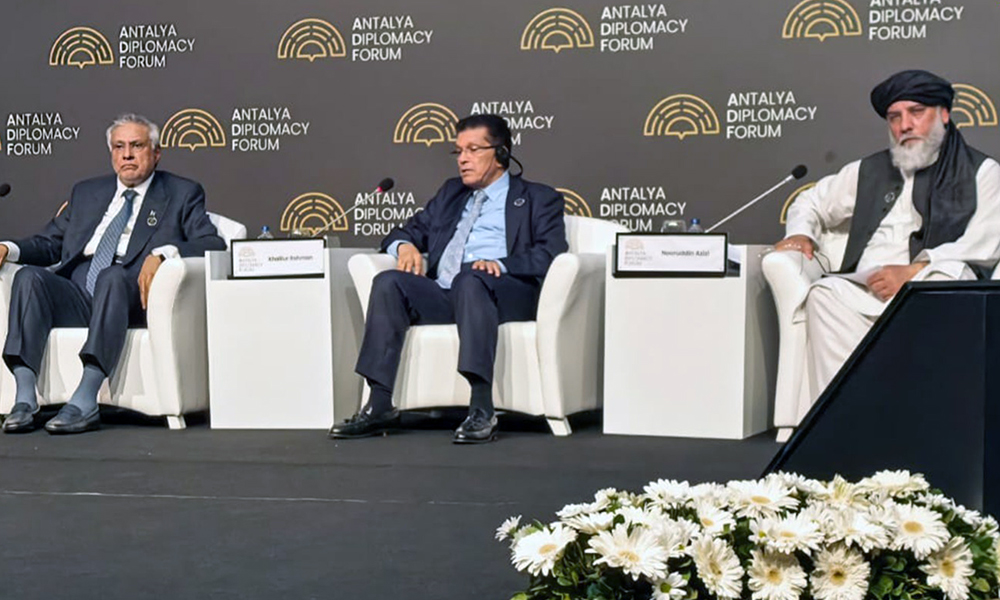
Afghanistan’s Minister of Industry and Commerce, Nooruddin Azizi, underscored the importance of trust in trade and regional stability during a high-level panel discussion titled “Trust in Trade: The Future of Economic Integration and Stability in South Asia” at the 5th Antalya Diplomacy Forum in Türkiye.
In his remarks, Azizi emphasized the critical need for peace, stability, and stronger human connections between nations. He noted that the Afghan people have faced nearly five decades of hardship, and continue to endure challenges, including the ongoing issue of frozen assets, which limit the country’s economic potential.
“The message from the Islamic Emirate of Afghanistan is centered around peace and peaceful coexistence,” Azizi stated, highlighting the alignment of these values with both religious teachings and the aspirations of the Afghan people.
When asked about the impact of recent regional developments on fuel and liquefied gas prices, Azizi reassured attendees that Afghanistan had already taken proactive steps to mitigate potential disruptions. He shared that while global fuel prices had surged, Afghanistan’s fuel price increase remained modest—only 3 to 5 percent.
“This demonstrates effective planning and market management in securing the country’s fuel and gas supplies,” he added.
Azizi also expressed his gratitude for the Antalya Diplomacy Forum, praising Türkiye for its efforts in tackling global and regional challenges, including its stance on the situation in Gaza.
The Antalya Diplomacy Forum, which continues to serve as an essential platform for fostering regional dialogue, remains focused on economic cooperation, political stability, and addressing pressing global issues.
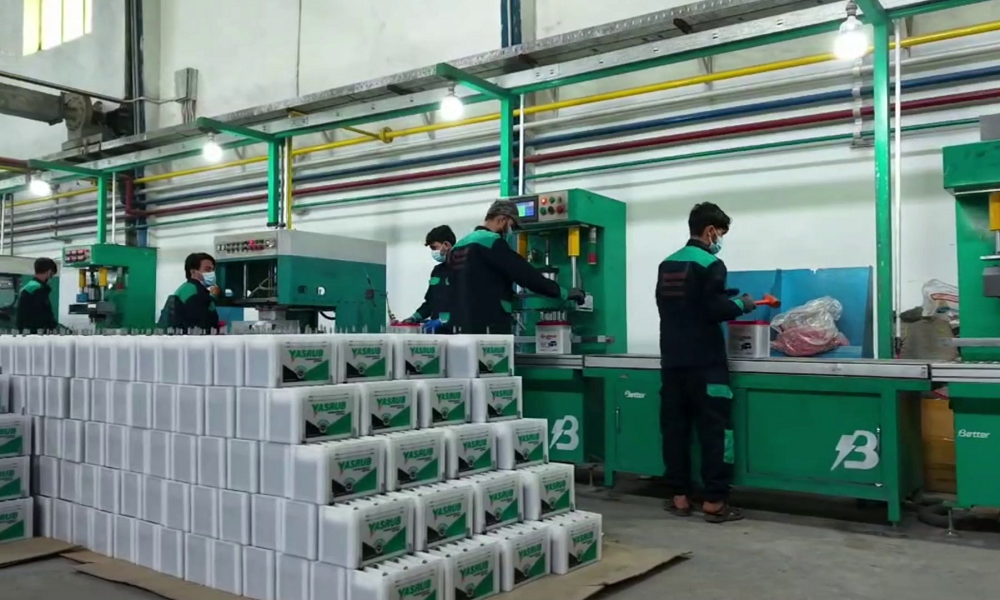
Afghanistan is making steady progress toward self-sufficiency in car battery production, officials from the Chamber of Industries and Mines said.
They noted that with consistent support from the Ministry of Industry and Commerce, particularly in facilitating investment, the country could become both a producer and exporter of car batteries by the end of the current year.
According to the Union of Car Battery Manufacturing Factories, a significant portion of domestic demand is already being met through local production, with full self-sufficiency expected in the near future.
Industry representatives also said Afghan manufacturers have begun exporting car batteries to countries in the Gulf region and parts of Europe, though further expansion depends on improved transport routes and export arrangements.
“Last year, for the first time in Afghanistan’s history, we exported car batteries abroad,” said Abdul Mateen Qalandari, Head of the Secretariat of the Chamber of Industries and Mines. “This year, we expect to export hundreds of containers.”
Manufacturers have called on the Ministry of Industry and Commerce to continue restrictions on lead exports and to prioritize the use of domestically produced car batteries in government procurement contracts.
Officials added that the number of car battery manufacturing factories is expected to reach 20 by the end of the year.
Afghanistan currently produces around 38,000 tons of car batteries annually, and industry leaders say local manufacturers have the capacity to further increase output.
“Factories are producing a wide range of car batteries in different sizes, meeting the needs of the domestic market,” said Abdul Salam Jawad Akhundzada, spokesperson for the Ministry of Industry and Commerce.
Officials from the Ministry of Economy emphasized that the development of domestic industries remains a top priority, adding that efforts are underway to create a more favorable environment for both domestic and foreign investors.
“In the past, car batteries were imported from countries such as Pakistan, Iran, Thailand, and China,” said Abdul Latif Nazari, Deputy Minister for Technical Affairs. “However, imports have now declined, and Afghanistan is on track to achieve self-sufficiency in this sector by the end of the year.”
Business
Uzbekistan launches exchange-based trade system with Afghanistan to boost bilateral commerce
The system is designed to simplify transactions by using secure financial instruments and bank guarantees, which significantly lower risks for both parties.
Uzbekistan has rolled out a new exchange-based trade system with Afghanistan, a move aimed at enhancing economic ties between the two nations. Initiated by the Uzbekistan Chamber of Commerce and Industry, the new mechanism utilizes the existing infrastructure of the Uzbekistan Commodity Exchange (UzEX), allowing exporters to engage in direct trade with the Afghan market while reducing additional banking costs.
The system is designed to simplify transactions by using secure financial instruments and bank guarantees, which significantly lower risks for both parties. Under the new framework, settlements are based on these guarantees, ensuring a smoother and more reliable flow of goods and payments.
According to Davron Vakhabov, Chairman of the Chamber of Commerce and Industry of Uzbekistan, the system was conceived following a directive from President Shavkat Mirziyoyev in September 2025. The President called for integrating the UzEX platform with a private Afghan bank to facilitate the supply of goods to Afghanistan, strengthening bilateral commerce.
To participate in the new trade mechanism, Uzbek exporters must register on the UzEX platform and list their products for exchange trading. Afghan buyers can then execute transactions through an Afghan bank, making an initial payment of 10% of the contract value. Upon successful agreement, the Uzbek supplier ships the goods, accompanied by the necessary documentation. The remaining 90% of the payment is held in bank accounts until the goods reach the Afghan border, at which point the funds are released to the seller.
In an additional layer of financial security, a private Afghan bank places funds in five Uzbek banks—Trustbank, Uzpromstroybank, Infinbank, Asaka Bank, and Agrobank—ensuring that payments are guaranteed for goods delivered.
Vakhabov emphasized that both the Chamber of Commerce and Industry and UzEX are fully committed to assisting Uzbek entrepreneurs in accessing the Afghan market. The introduction of this exchange-based system is expected to strengthen trade between the two countries, fostering economic growth and cooperation in the region.


Gill stars as Gujarat Titans enter IPL top four; Kolkata’s winless run continues

Afghan commerce minister highlights trade trust and market stability at Antalya Forum

Afghanistan and Russia discuss expansion of banking cooperation in Moscow meeting

Afghanistan to airlift 30,000 pilgrims to Saudi Arabia in 96 flights for Hajj 2026

CSTO leaders meet in Bishkek to address regional security, focus on Afghanistan

IEA supreme leader orders replacement of foreign terminology in official documents

Russia deems US military presence in Afghanistan unacceptable

Afghanistan hosts inaugural Afghanistan–Central Asia Consultative Dialogue to strengthen regional cooperation

TAPI gas pipeline advances 25 km in Afghanistan

Afghani strengthens nearly 10% against US dollar amid banking sector reforms

Tawsia: Uzbekistan’s interest in investing in Afghanistan discussed

Tahawol: Russia’s readiness to mediate between Kabul-Islamabad discussed

Saar: Pakistan Army Chief’s trip to Iran discussed

Tahawol: Cooperation between Afghanistan and Central Asia discussed

Saar: Calls for recognition of IEA discussed
-
 Latest News4 days ago
Pakistan urged to halt deportation of Afghan refugees as concerns mount
-
 Business4 days ago
Afghanistan, Uzbekistan strengthen ties with $524 million in trade deals
-
 Business2 days ago
Airspace transit fees generate revenue for Afghanistan as flight routes shift
-

 Business2 days ago
Central Asia, Afghanistan crank up Russian fuel imports as MidEast supplies dry up
-

 Latest News4 days ago
IEA slams UN sanctions as ‘unreasonable’ after update to listings
-
 Latest News3 days ago
Afghanistan sends 530 tons of humanitarian aid to Gaza via Egypt
-
 World5 days ago
NATO allies reject US Hormuz blockade, push for diplomatic solution
-
 Latest News4 days ago
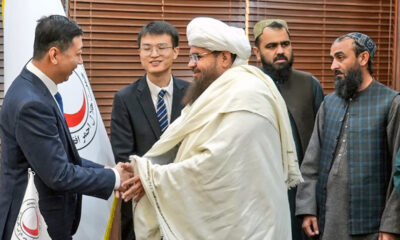
China Red Cross donates $100,000 to support flood victims in Afghanistan