
Latest News
US Senate Committee Chair says troops withdrawal might be reconsidered

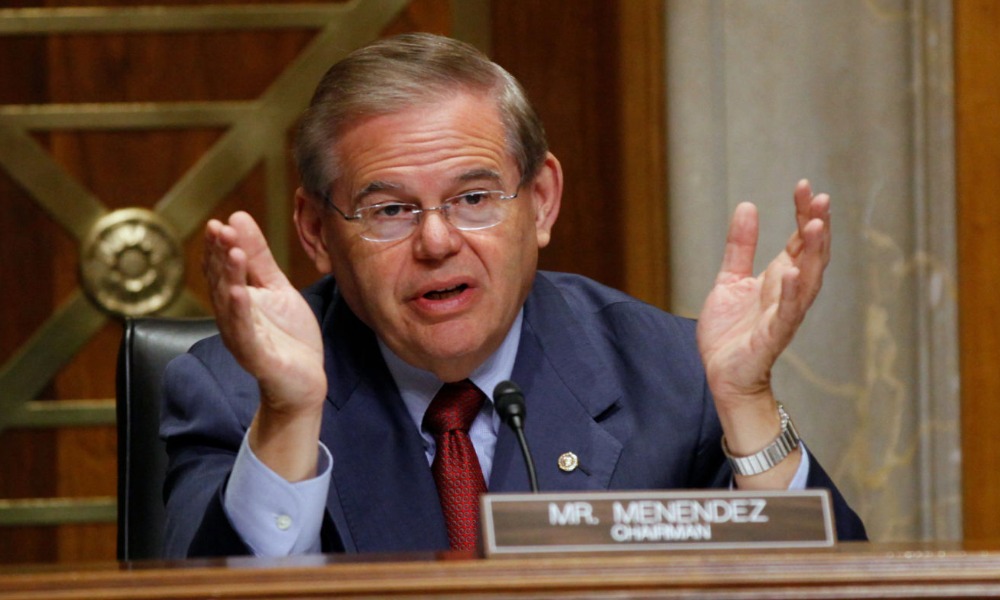
US Senate Foreign Relations Committee Chairman Bob Menendez said Tuesday that the US deadline, May 1, for troop withdrawal from Afghanistan may have to be reconsidered as the Taliban are not abiding by all of their commitments under the Doha deal.
“I am very concerned about the viability of the peace process in Afghanistan,” Menendez said.
Reuters reported Menendez stated that he believes the Taliban is “clearly not abiding” by all of the commitments it made in the US-Taliban agreement signed in Doha in February last year.
Currently, there are about 2,500 US soldiers in Afghanistan.
“If the Taliban are confirmed as not meeting their commitments, which I personally believe they’re not, then we may have to reconsider the May 1 deadline,” Menendez said.
This comes after US Secretary of State Antony Blinken proposed a new peace plan last week.
In a letter to Afghan leaders and the Taliban, Blinken suggested the establishment of a transitional government. It has since emerged that according to the plan, the Taliban would be given a 50 percent representation in the proposed system.
The proposal was however met by mixed reactions among Afghan officials.
First Vice President Amrullah Saleh stated that Afghanistan will never accept demands that could jeopardize the people’s right to vote.
He said the letter “shameful” and that he will “resist it”.
“Let me be clear I will not sign it,” Saleh said.
He also stated that the people of Afghanistan will not accept what he called a “forced and imposed peace on the people of Afghanistan”.
“One of the articles is to form a supreme council for the enforcement of Sharia [law]. In the county where we have several scholars like Imam Abu Hanifa; now two people who graduated from Haqqania School will hand over a certificate of Islam to us. I will never sign at the bottom of that shameful document,” said Saleh.
“We have the right not to hang the fate of 35 million people on someone else’s schedule,” he said adding that “Americans and their Western allies have every right to decide the fate of 2,500 U.S. and a few thousand NATO troops now stationed in our country.”




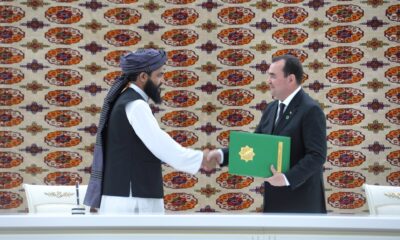


Afghanistan’s Justice Minister Abdul Hakim Sharei says the reclamation of state-owned land seized by land grabbers is a legal matter and should not be linked to ethnicity, religion or language.
Sharei, who also heads the Commission for the Prevention of Land Grabbing, made the remarks at a meeting with officials and representatives of charitable organizations in Kabul.
He said the commission is legally and religiously obligated to enforce rulings issued by the special court handling cases involving seized state land. Once the court determines that a disputed plot belongs to the state, the commission must enforce the decision, he said.
Sharei said the special court bases its rulings on documents, evidence and the law, adding that legal principles must be applied equally to all parties.
The justice minister also called on charitable organizations to work toward establishing a nationwide union and to expand their activities into fundamental and infrastructure projects.
He urged charities to avoid photographing or filming people while distributing aid, saying such practices could undermine the dignity of those receiving assistance.
Representatives of charitable organizations raised concerns over taxes, customs procedures and lengthy administrative processes. The Ministry of Justice said it would work to address the issues following the establishment of a nationwide union.
Latest News
UNAMA calls for greater transparency and accountability in Afghanistan’s security institutions
The report also says fear of reprisals, a lack of trust in authorities and barriers to accessing institutions discourage people from reporting alleged misconduct.
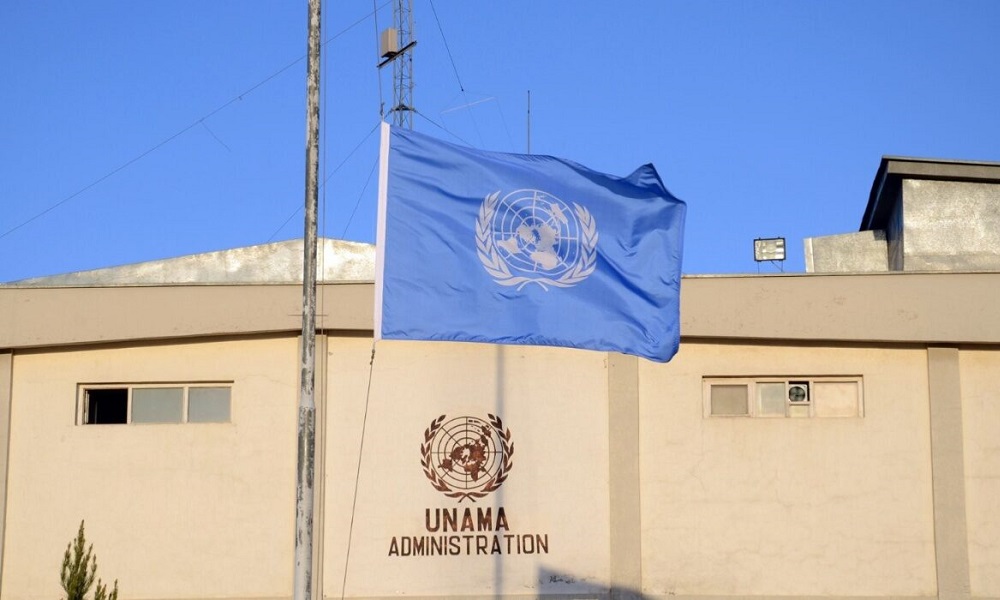
The United Nations Assistance Mission in Afghanistan (UNAMA) has called on the Islamic Emirate of Afghanistan (IEA) to strengthen transparency, oversight and accountability within the country’s security institutions.
In a new 38-page report, UNAMA examines measures taken by the IEA since August 2021 to oversee security institutions and address misconduct by security personnel.
The report says the authorities have taken some steps to promote discipline and oversight, including issuing directives, establishing internal monitoring units and creating new bodies tasked with addressing misconduct by security personnel.
However, UNAMA says these measures have not been accompanied by sufficient public information about complaints, investigations and disciplinary or judicial actions.
The report identifies several bodies responsible for oversight, including the Security and Filtration Commission, the High Directorate of Supervision and Monitoring of Decrees and Edicts, the Ministry of Propagation of Virtue and Prevention of Vice Commission for Hearing Complaints, and the Supreme Court.
“The limited amount of public information on complaints received, investigations conducted, and disciplinary or judicial actions taken by relevant de facto bodies undermine confidence and weaken deterrence,” said Georgette Gagnon, UNAMA’s Deputy Special Representative of the Secretary-General and Officer-in-Charge.
UNAMA documented cases in which IEA authorities arrested and investigated security personnel accused of misconduct and referred some cases to military courts. However, the mission said many complaints reportedly remain unresolved.
The report also says fear of reprisals, a lack of trust in authorities and barriers to accessing institutions discourage people from reporting alleged misconduct. Women, in particular, face additional obstacles because of restrictions affecting their daily lives, UNAMA said.
UNAMA has recommended that the IEA authorities establish and consistently enforce clear rules and codes of conduct for security personnel, in line with international standards. It also called for clearer regulations governing the use of force, arrests, detention, searches and crowd control.
The UN mission further urged the authorities to establish safe, accessible and inclusive complaint mechanisms that allow people to report misconduct without fear of retaliation or discrimination, while protecting victims, witnesses and whistleblowers.
UNAMA also called for regular public reporting on complaints, investigations and disciplinary or judicial measures, as well as stronger systems for collecting and maintaining data on misconduct.
According to the report, greater transparency and consistent accountability could improve professionalism, strengthen public trust in security institutions and contribute to better governance, respect for human rights and Afghanistan’s engagement with the international community.


Justice minister rejects claims of ethnic, religious bias in land reclamation

World has turned its back on Afghan civilians: NRC

Trump took secret flight out of Turkey due to Iran threat, the Washington Post reports

More than 100 killed after strongest quake this century hits western Colombia

Afghanistan beat Ireland by 3 wickets in third ODI

Pakistan’s governance system has ‘collapsed’: Mohsin Naqvi

India offers 1,000 online scholarships for Afghan students for 2026-27 academic year

FIFA’s inaugural YouTube Creator Cup to stream live on Ariana Television and Ariana Sport YouTube channels

ATN secures exclusive rights to broadcast Afghanistan vs Ireland cricket tour

Spain sweep FIFA World Cup player awards after historic triumph

Tahawol: Iran’s acknowledgment of Afghanistan’s cooperation discussed

Saar: Five years of Islamic Emirate rule in Afghanistan reviewed

Tahawol: Afghanistan: An Alternative to the Strait of Hormuz?

Saar: Pakistan-Saudi-Turkey Pact: Regional Impact

Tahawol: Escalating disputes over Iran war discussed
-

 Sport2 days ago
Afghanistan secure direct qualification for 2027 Men’s ODI World Cup
-
 Regional3 days ago
Goods transporters to go on strike from Saturday after talks with Pakistan govt fail
-

 Sport3 days ago
Rashid Khan takes six as Afghanistan thrash Ireland by 92 runs
-
 Business5 days ago
Uzbekistan’s Fergana region strengthens economic ties with Afghanistan
-

 World3 days ago
US Senate passes Russia sanctions championed by Graham; US House next
-
 Latest News2 days ago
Pakistan-backed armed groups in Balochistan using former Afghan government forces: report
-
 Sport4 days ago
Afghanistan ends continental futsal championship with dominant win over New Zealand
-
 Latest News5 days ago
FAO appeals for $38 million to safeguard Afghanistan’s 2027 wheat harvest