
Latest News
US rejects claims its pushing for interim government in Afghanistan

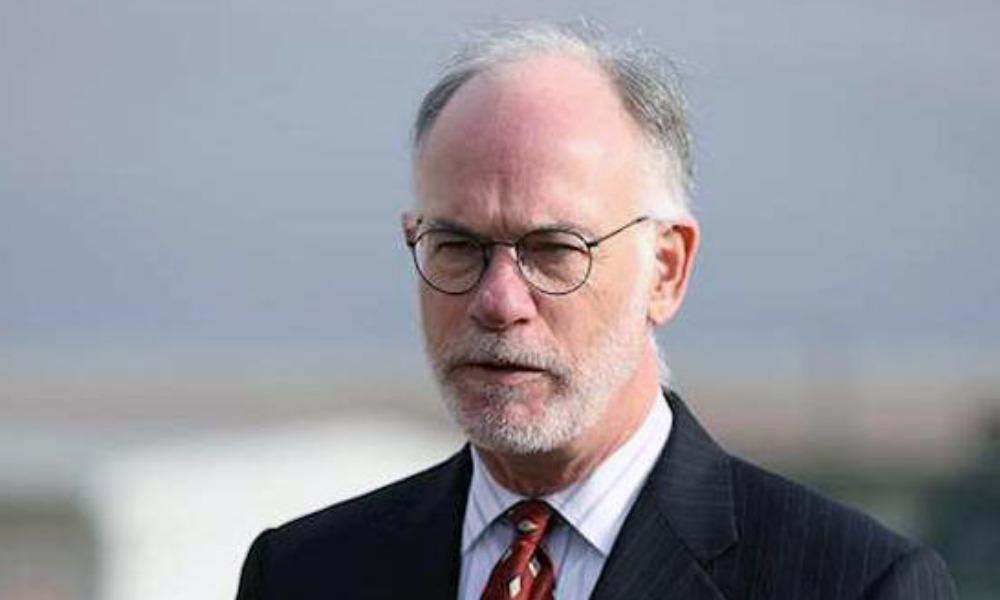
US Chargé d’Affaires to Kabul Ross Wilson said Wednesday afternoon that the United States has not advocated for an interim government nor is it advocating for one.
“We have not advocated, and the United States is not advocating, an interim government,” Wilson tweeted.
He said the United States is committed to bringing about an end to conflict in Afghanistan through a political settlement that ensures the country remains sovereign, unified and democratic, is at peace with itself and its neighbors and can preserve gains made over the last 19 years.
He stated that the first phase of Afghanistan Peace Negotiations in Doha constituted an important step forward, “but much remains to be done”.
“The United States remains firm in its call for an immediate reduction of violence and ceasefire,” he said.
Wilson also stated that he had spoken with the US Special Representative for Afghanistan Reconciliation Zalmay Khalilzad and that he has “and will continue to talk with Afghans about the need to accelerate the talks in Doha and solicited from those we have met their ideas, as well as their concerns.”
“The outcomes of Afghanistan Peace Negotiations are up to Afghans and we believe those outcomes should reflect the wishes and aspirations of the Afghan people,” he said.
Mention was first made about an interim government early last week when sources stated President Ashraf Ghani refused to meet with Khalilzad in Kabul for this very reason.
Sources stated that Khalilzad was urging a shift to an interim government but that Ghani was opposed to the idea.
On Sunday some Afghan politicians said that Ghani has cultivated new “friendships” with some of his critics in order to avoid an interim government and to stay in power.
This comes after Ghani appointed Mohammad Mohaqiq, head of the Wahdat-i-Islami Party, as his senior political and military adviser and introduced Rahila Dostum as a member of the Wolesi Jirga (Upper House of Parliament).
Mohaqiq’s appointment comes after a reported “cold shoulder” in the past after not having been invited to the Presidential Palace for any meetings.
“All political parties think that an interim government should be established. If Ghani thinks that he will be in power for four years it may be a reason for the appointments,” said Sattar Murad, a leading member of Jamayat-e-Islami party.
Sources close to Mohaqiq said that the move to appoint him was based on his abilities and role in the peace process.
The Presidential Palace on Saturday vowed to retain Afghanistan as a republic and only hand over power to an elected successor.



Latest News
IEA rejects Russia’s claims of foreign militants in Afghanistan
He further called on Russian authorities to reassess their understanding of the situation in Afghanistan and to update their reports based on objective facts on the ground.
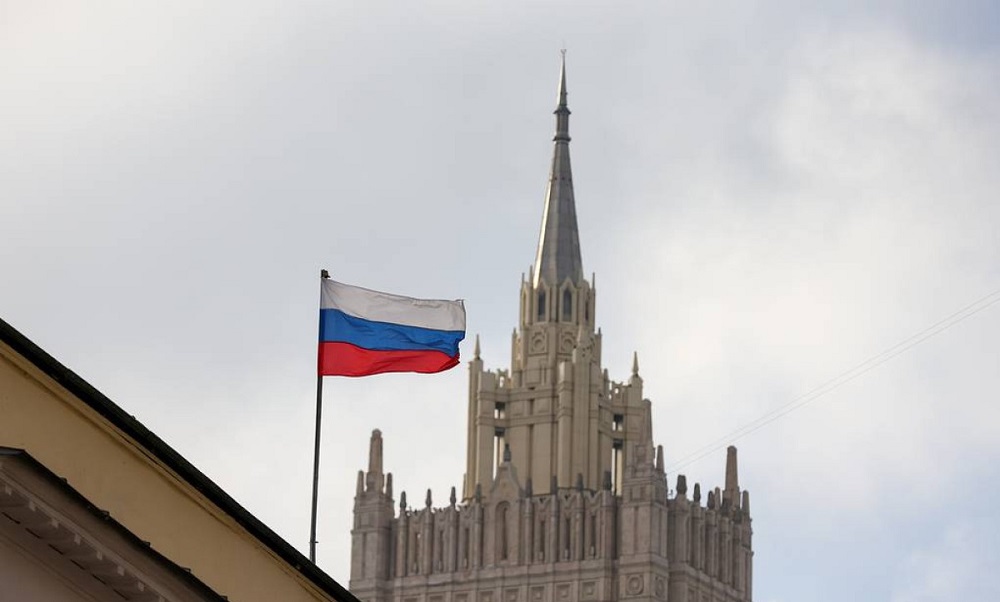
The Islamic Emirate of Afghanistan (IEA) has strongly rejected recent claims by Russia regarding the presence of international terrorist groups inside Afghanistan, calling the allegations unfounded and based on inaccurate information.
Speaking on the issue, Zabihullah Mujahid, the spokesperson of the Islamic Emirate, said Afghanistan is fully secure and no foreign armed groups are operating within the country.
He stressed that the entire territory of Afghanistan is under a single authority, leaving no space for external groups to carry out activities.
“We regret that such claims are made from sources in Russia,” Mujahid said, adding that these allegations date back to the past, including the period of the U.S. occupation, and have no basis in current realities. “We categorically reject these assertions.”
He further called on Russian authorities to reassess their understanding of the situation in Afghanistan and to update their reports based on objective facts on the ground.
Latest News
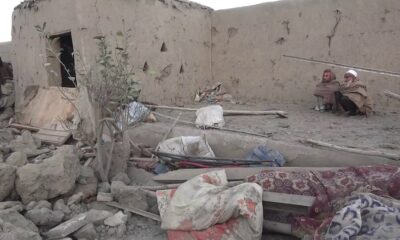
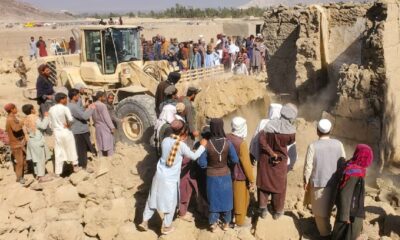
Escalating violence in Pashtun regions during Ramadan raises concerns
He described these incidents as grave violations of international law and acts that have deepened fears among affected communities.

Amid the holy month of Ramadan, violence has continued in several Pashtun areas, raising serious concerns among local communities.
In a post in X, Manzoor Ahmad Pashteen, the founder and head of Pashtun Tahafuz Movement, noted that in Tirah, four Pashtun civilians were reportedly killed and six others injured during operations carried out by the Pakistani army. Protests that followed in Orakzai were also met with force, leaving four more individuals seeking peace and justice injured.
In Afghanistan’s Behsud district, 17 civilians, including women and children, were reportedly killed in airstrikes attributed to Pakistani forces, he stated.
He described these incidents as grave violations of international law and acts that have deepened fears among affected communities.
In recent days, additional casualties have been reported in Rozmak, Shawal (North Waziristan), Mubarak Shahi village (Mir Ali), Speen Wam, Abakhel village, Dosali, Takhte Khel (Lakki Marwat), Azam Warsak (South Waziristan), Bajaur, and Bannu, where clashes between security forces and armed groups have resulted in deaths and injuries among civilians, Pashteen said.
He stated that the ongoing violence reflects longstanding grievances in Pashtun regions. The Pashtun Tahafuz Movement (PTM) has stated that it will continue to oppose what it describes as injustices against Pashtun communities and will stand in solidarity with those affected.
Latest News
UNAMA reports civilian casualties from Pakistani airstrikes in Afghanistan
UNAMA urged all parties to end hostilities, protect civilians, and uphold international law principles of distinction, proportionality, and precaution to prevent further civilian harm.
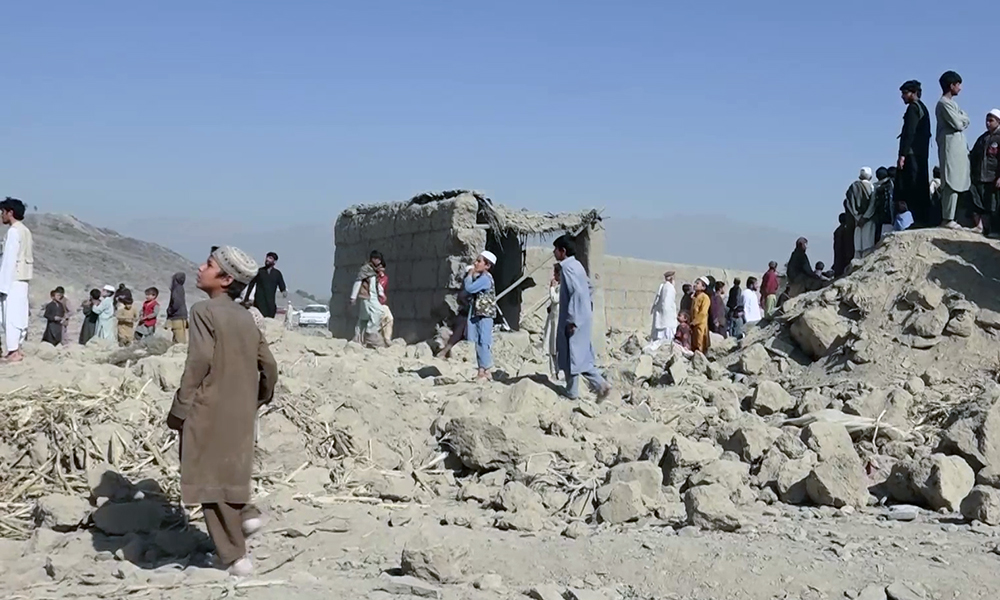
The United Nations Assistance Mission in Afghanistan (UNAMA) has confirmed credible reports of civilian casualties following overnight Pakistani airstrikes inside Afghanistan on 21–22 February.
Airstrikes in Behsud and Khogyani districts of Nangarhar province, carried out between approximately 23:45 on 21 February and 00:15 on 22 February, have reportedly killed at least 13 civilians and injured seven others, including women and children.
Pakistani forces also struck Barmal and Urgun districts in Paktika province.
In Barmal’s Marghai area, an airstrike on 21 February around 23:15 hit a madrassa and partially damaged a nearby mosque.
In Urgun’s Dahna area, an airstrike at approximately 23:30 partially destroyed a vacant private residence. No civilian casualties have been reported from these strikes.
UNAMA urged all parties to end hostilities, protect civilians, and uphold international law principles of distinction, proportionality, and precaution to prevent further civilian harm.


Tahawol: Tahawol: Pakistan’s Attacks on Afghanistan Raise Serious Questions

Saar: Reactions to Pakistan’s airstrikes on Afghanistan discussed

IEA rejects Russia’s claims of foreign militants in Afghanistan

Escalating violence in Pashtun regions during Ramadan raises concerns

UNAMA reports civilian casualties from Pakistani airstrikes in Afghanistan

AFC Futsal Asian Cup 2026: Day One Review

IEA releases three Pakistani soldiers to mark Ramadan

AFC Futsal Asian Cup: Afghanistan to face Iran in crucial Group D clash

Afghanistan’s Chief of Armed Forces underscores readiness and equipment for national defense

Afghanistan welcomes investment and technology partnerships with India
Tahawol: Tahawol: Pakistan’s Attacks on Afghanistan Raise Serious Questions
Saar: Reactions to Pakistan’s airstrikes on Afghanistan discussed

Tahawol: Repeat crimes by Pakistani military in Afghanistan discussed

Saar: Pakistani military regime’s airstrikes on Afghanistan

Tahawol: US military review for attack against Iran discussed
-
 Latest News5 days ago
Afghanistan welcomes investment and technology partnerships with India
-

 Sport5 days ago
Afghan Peaks founder climbs Aconcagua to promote Afghanistan’s mountain potential
-

 Latest News4 days ago
Indian customs seize Chinese walnuts falsely declared as Afghan
-

 Business5 days ago
Pakistan allows re-export of stranded Afghan transit cargo
-
 Latest News4 days ago
Pakistan’s Punjab to send home 20 more Afghans in repatriation drive
-
 Latest News2 days ago
Mujahid: Afghanistan will target perpetrators, not civilians
-

 Latest News3 days ago
Moldova bans Afghan airlines over safety concerns
-
 Latest News2 days ago
Afghanistan vows retaliation after Pakistan launches air strikes