
Latest News
US, NATO working on plan to help secure Kabul airport after withdrawal

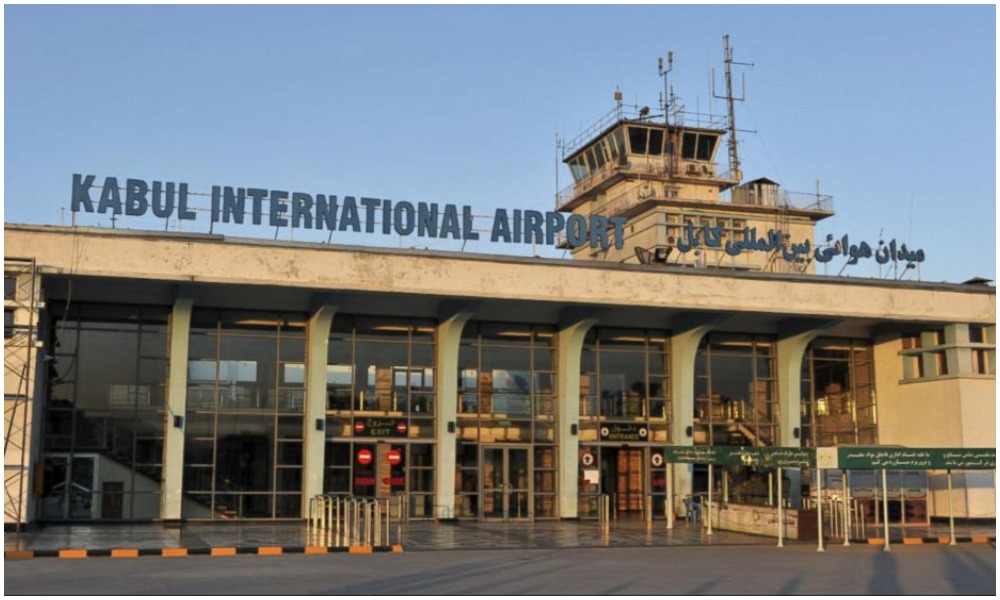
The United States and its NATO allies are exploring a possible international effort to help secure the airport in Afghanistan’s capital after American troops withdraw from the country, the top US general said this week, Reuters reported.
According to US Army General Mark Milley, chairman of the Joint Chiefs of Staff, a secure airport would be essential to ensuring that the United States and European allies could maintain embassies in Afghanistan.
“We are working out the details of how to secure the airport, how to support the Afghan military securing the airport, and what countries are willing to contribute to do that,” Milley told reporters shortly before landing in Washington after talks with NATO allies in Brussels.
President Joe Biden’s April order to pull out all troops by September 11 could inflame Afghanistan’s internal conflict between the internationally backed Afghan government and the Taliban insurgency, Reuters reported.
The Biden administration has stressed that the United States will remain committed to Afghanistan, shifting its focus to diplomacy while continuing robust financial support to Kabul.
But such diplomacy — including efforts to foster a so-far elusive peace agreement between Kabul and the Taliban — would suffer greatly if the United States and its European allies can’t keep embassies open because of security threats inside Afghanistan, reported Reuters
Milley said of the airport: “That is one of the keys to maintaining a diplomatic presence.”
He said NATO chiefs of defense discussed the issue in Brussels on Tuesday. But decisions about any security force deployments by individual countries for the airport would be made later by political leadership, he said.
Milley declined to speculate about the size of any international force at the airport.
“I think NATO and others are working that in various working groups to see what the exact number is going to be. Those numbers aren’t known right now,” he said.




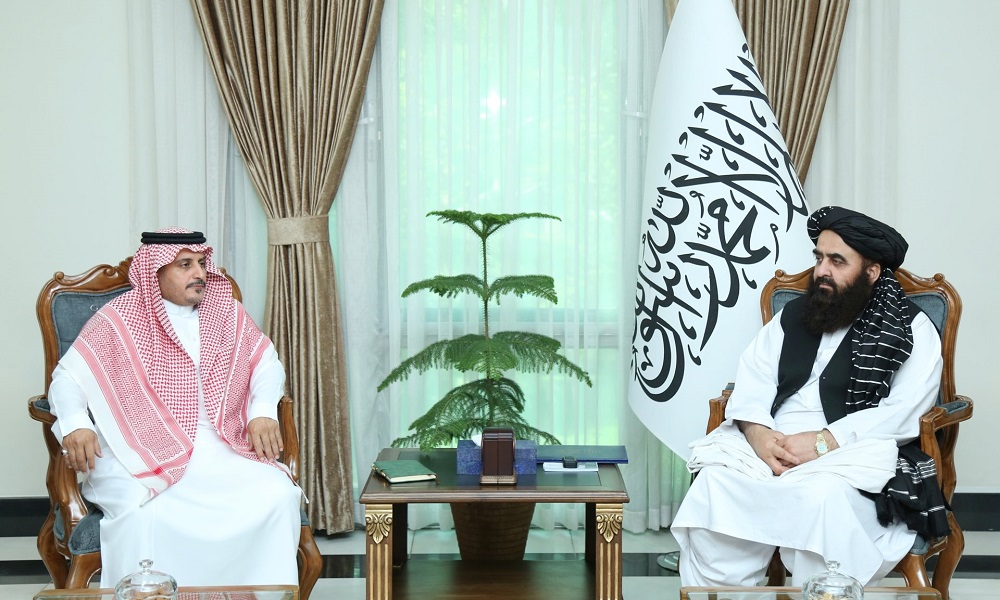
Amir Khan Muttaqi, the Minister of Foreign Affairs of the Islamic Emirate of Afghanistan, and Saudi Arabia’s Ambassador to Kabul, Faisal bin Talq Al-Baqmi, discussed regional developments and recent talks between Afghanistan and Pakistan held in the Chinese city of Urumqi during a meeting on Wednesday.
According to a statement from the Ministry of Foreign Affairs, Muttaqi briefed the Saudi ambassador on the recent negotiations with the Pakistani side in Urumqi and expressed hope that interpretative differences and minor technical issues would not hinder the progress of the negotiation process.
He described relations between Afghanistan and Saudi Arabia as positive and voiced hope that ties between the two brotherly countries would further expand in the political, security, and economic fields.
The Saudi ambassador also said that political and security stability, as well as economic development in Afghanistan, are of great importance to his country, adding that Riyadh supports Afghanistan in these areas.
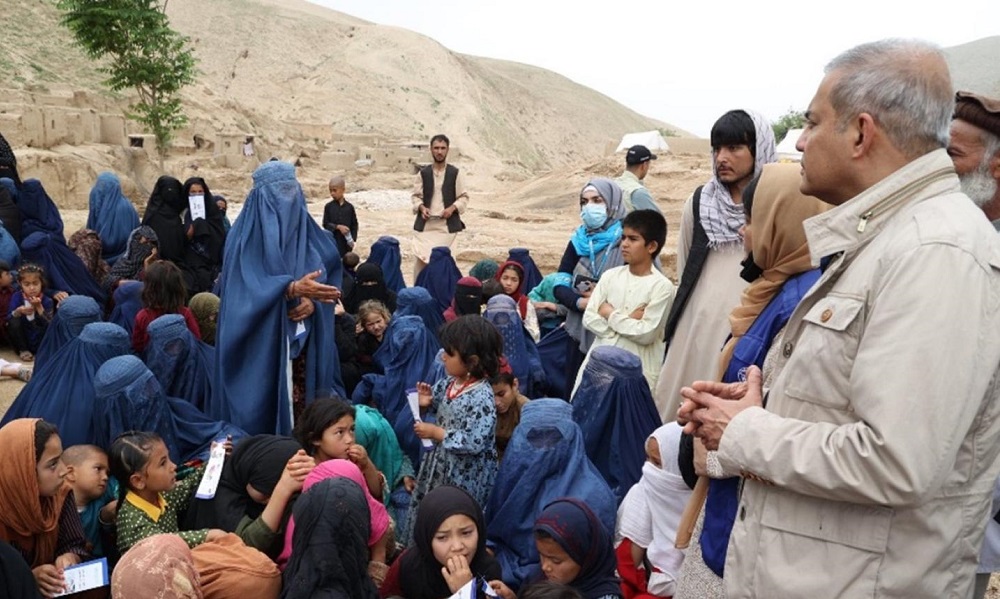
The United Nations said it continued delivering critical support to millions of Afghans in 2025 despite declining global assistance, with funding for basic human needs rising for a third consecutive year.
According to the UN’s Afghanistan results report, funding under the Strategic Framework for Afghanistan 2023–2027 reached $1.7 billion last year, supporting essential services, livelihoods and recovery efforts across the country.
“Millions of Afghans were reached with essential services, economic opportunities, and livelihoods support,” said Indrika Ratwatte, Deputy Special Representative of the Secretary-General and Resident and Humanitarian Coordinator.
The UN said more than 34 million people received healthcare services, while over 4.6 million children were enrolled in public education with UN assistance. Around 45,000 long-term jobs were also created, with women accounting for more than half of those positions.
Despite these gains, Afghanistan continued to face significant challenges in 2025, including reduced humanitarian funding, large-scale population movements, and the impact of climate pressures and natural disasters. These factors placed increasing strain on households, markets and essential services.
The UN noted that Afghan communities demonstrated resilience, working alongside national and international partners to meet urgent needs while laying the groundwork for longer-term stability.
Coordination efforts remained key, with platforms such as the High-Level Coordination Forum enabling dialogue between international stakeholders and the country’s de facto authorities. The Afghanistan Coordination Group also played a central role in aligning donor funding with priority needs.
Looking ahead, the UN said sustained cooperation between national, regional and international partners would be critical to addressing ongoing challenges and supporting a more resilient future for Afghanistan.
Latest News
Kabul faces deepening water crisis as supplies dwindle and demand surges
At the same time, Kabul’s population has surged dramatically — from around 2.5 million in 2001 to an estimated 6 million today — placing unprecedented strain on already limited resources.
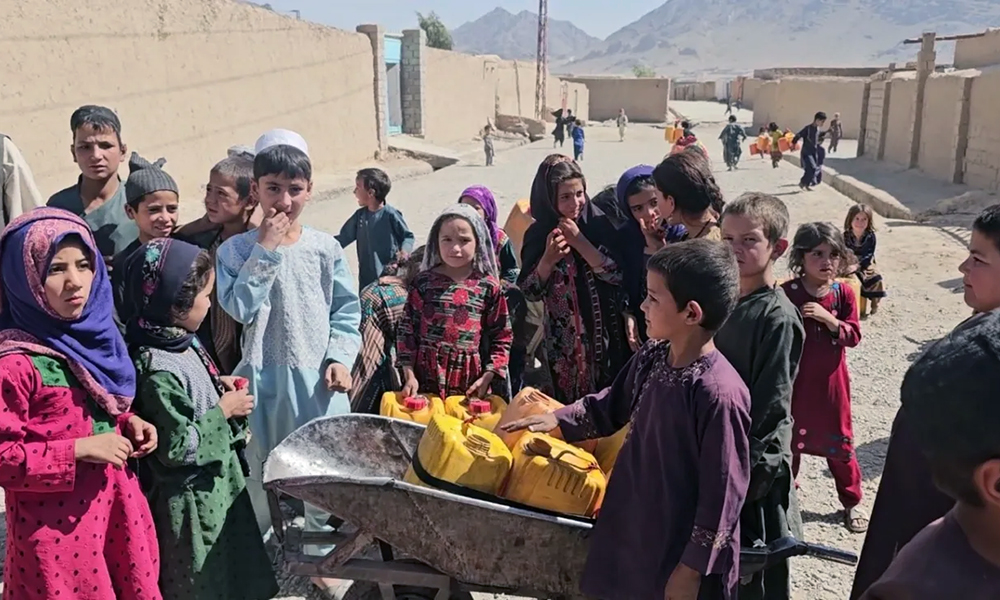
Residents of Kabul are grappling with a worsening water shortage, as falling groundwater levels, rapid population growth and climate pressures push the Afghan capital toward a looming humanitarian crisis.
In poorer neighbourhoods such as Deh Mazang, access to clean water has become a daily struggle. Many residents rely on distant wells or must purchase water delivered by small tankers — an expense that is increasingly out of reach.
“We have no money for food. How can we get water?” said one elderly resident, reflecting growing frustration among communities forced to carry heavy containers across long distances.
Groundwater depletion accelerates
Kabul, situated in the Hindu Kush, depends heavily on groundwater extracted from wells. But years of overuse have caused water levels to drop sharply, with some wells now drilled as deep as 150 metres.
A 2025 report by Mercy Corps found that aquifer levels in the city have fallen by as much as 25 to 30 metres over the past decade, raising concerns that current supplies may soon become unsustainable.
Experts warn that without urgent intervention, Kabul could face severe water shortages within years.
Climate and urban growth worsen shortages
Climate change has intensified the crisis as reduced snowfall and recurring droughts have limited the natural replenishment of groundwater, while heavier, short bursts of rain often lead to flooding rather than absorption into the soil.
At the same time, Kabul’s population has surged dramatically — from around 2.5 million in 2001 to an estimated 6 million today — placing unprecedented strain on already limited resources.
According to water management specialist Najibullah Sadid, the crisis was inevitable even without climate change due to rapid urbanisation and population growth. In many areas, shallow aquifers have already run dry, and expanding urban infrastructure has reduced the land available for water to seep back underground.
Mismanagement and overuse add pressure
Water mismanagement has further compounded the problem. Large-scale users, including commercial enterprises, have been criticised for excessive groundwater extraction, worsening depletion.
Officials acknowledge the severity of the situation and a spokesperson for the Ministry of Water and Energy described Kabul’s water supply as “critical,” citing population growth, declining rainfall and rising consumption as key drivers.
Authorities have introduced restrictions on groundwater use, including quotas for businesses and monitoring systems aimed at limiting excessive consumption.
Infrastructure projects fall short
Efforts to address the crisis include the construction of small check dams and absorption wells to help recharge groundwater, as well as upgrades to existing infrastructure such as the Shah wa Arous and Qargha dams.
However, experts say these measures are insufficient without major long-term investments.
Two key projects — a pipeline from the Panjshir River and the long-planned Shah Toot Dam — could significantly ease shortages by supplying water to millions. But both have been delayed due to funding and planning challenges.
Analysts warn however that without prioritising water infrastructure, Kabul risks a severe crisis that could affect millions of residents.
“Water is essential,” Sadid said. “It is more important than roads.”
As the city continues to expand and climate pressures intensify, the gap between supply and demand is widening — leaving many residents struggling daily for one of life’s most basic necessities.


IEA FM discusses recent Kabul–Islamabad talks in China with Saudi ambassador

UN says aid to Afghans remained steady despite funding pressures in 2025

Kabul faces deepening water crisis as supplies dwindle and demand surges

Experts highlight future of Central Asia-Afghanistan dialogue at Tashkent roundtable

UNAMA and regional cooperation shape pragmatic engagement with Afghanistan

IEA supreme leader orders replacement of foreign terminology in official documents

Russia deems US military presence in Afghanistan unacceptable

Afghanistan hosts inaugural Afghanistan–Central Asia Consultative Dialogue to strengthen regional cooperation

TAPI gas pipeline advances 25 km in Afghanistan

Afghani strengthens nearly 10% against US dollar amid banking sector reforms

Tahawol: Calls to strengthen Afghanistan’s border security

Saar: Discussion on UN sanctions list updates on IEA members

Tahawol: Consequences of US blockade on Strait of Hormuz discussed

Saar: New Afghanistan–Uzbekistan trade agreement discussed

Tahawol: Failure of US–Iran talks in Islamabad discussed
-

 Sport4 days ago
Afghanistan’s new cricket head coach Richard Pybus arrives in Kabul
-
 Latest News5 days ago
7 killed, 13 injured in shooting by unidentified gunmen in Herat
-

 Regional4 days ago
Iranian source says US has agreed to unfreeze Iranian funds held in Qatar, other countries
-
 Latest News2 days ago
China establishes new Xinjiang county near sensitive border region
-
 World4 days ago
US, Iran teams in Pakistan for peace talks amid doubts over Lebanon, sanctions
-
 World3 days ago
At least 30 dead in stampede at Haiti’s historic Laferriere Citadel
-
 World5 days ago
Vance warns Iran not to “play us” as he leaves for talks
-
 Latest News4 days ago
Death toll rises in armed attack in Herat; 11 killed, 8 injured