
Latest News
US imposes new sanctions at Iran’s economy & senior leaders

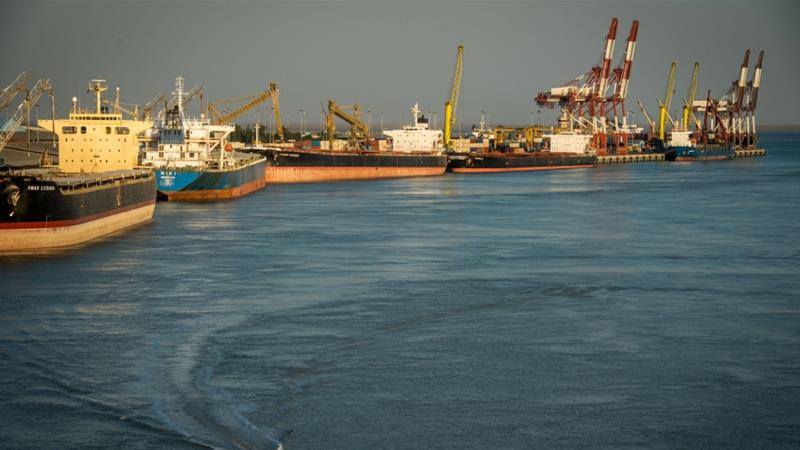
 The United States imposed new sanctions on the Islamic Republic’s metals and some senior leaders, Friday, after Tehran’s attack on Iraqi-based US troops.
According to US Treasury Department, the sanctions are aimed at Iran’s steel industry, eight senior officials and other sectors, namely, construction, manufacturing, textiles, and mining.
The sanctions are meant to force Iranian leaders into negotiations for a new nuclear agreement. Pompeo said at the White House, “We want Iran to simply behave like a normal nation”.
Although these sanctions severely damage Iran’s nation, both economically and politically, Tehran has declined Washington’s propositions.
After Iran hit two American military bases in Iraq, Trump tried to lower tensions with Iran by not striking back; however, he threatened Iran with “immediate” sanctions.
Source: Bloomberg





Latest News
UK criticises Hegseth for downplaying NATO allies’ role in Afghanistan war
The spokesperson noted that more than 450 British military personnel had died in Afghanistan and said their service and sacrifice would never be forgotten.
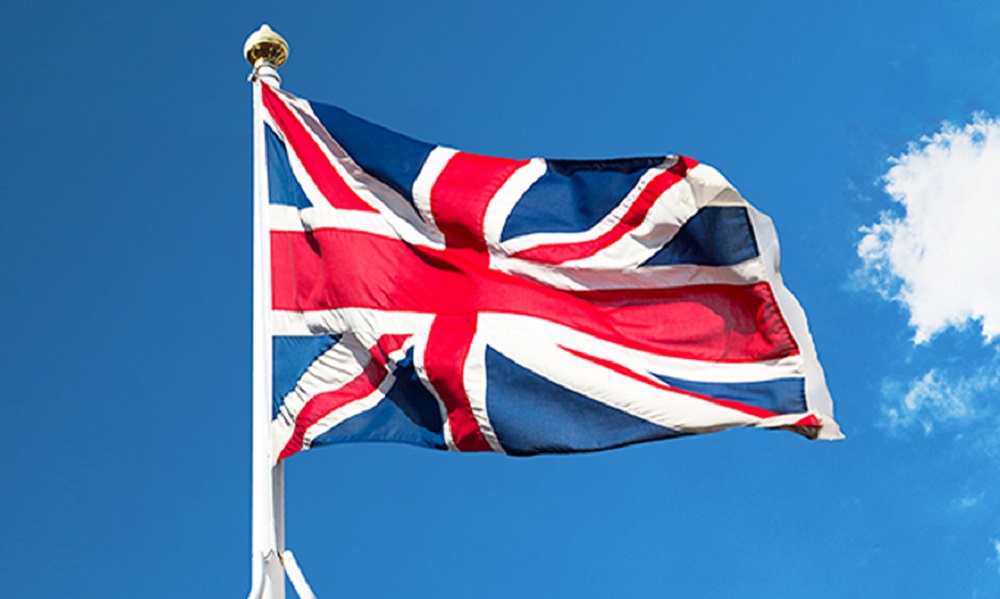
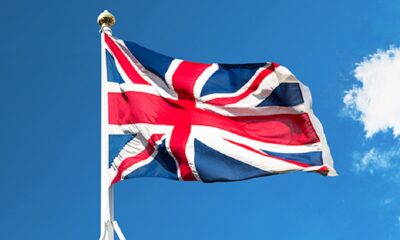
The British government has criticised US Defence Secretary Pete Hegseth for downplaying the contributions of NATO allies to combat operations in Afghanistan, saying his remarks diminish the sacrifices made by British and other allied forces.
The UK government said the contributions of the UK and NATO forces in Afghanistan were well documented, stressing that thousands of British and allied families had made significant sacrifices during the war.
“Their sacrifice and that of other NATO forces was made in the service of collective security and in response to an attack on our ally,” a spokesperson for the British prime minister said, adding that it was wrong to diminish their role.
The spokesperson noted that more than 450 British military personnel had died in Afghanistan and said their service and sacrifice would never be forgotten.
Hegseth, who served as an instructor with the Minnesota Army National Guard in Afghanistan, made the remarks in a speech on Saturday. He said that although 50 countries were represented at the NATO-led coalition headquarters in Kabul, only a small number had participated in combat operations.
He jokingly described the acronym ISAF, referring to the International Security Assistance Force, as meaning “I Saw Americans Fighting”, arguing that the mission had placed a disproportionate burden on US forces.
Nearly 2,500 US service members died during the Afghanistan war, while military personnel from more than 30 other countries also lost their lives, including 457 British troops.
The UK’s response echoed Prime Minister Keir Starmer’s criticism of US President Donald Trump in January, after Trump suggested that NATO troops had stayed away from the front lines in Afghanistan. Starmer described those remarks as “insulting and frankly appalling” and called for an apology.
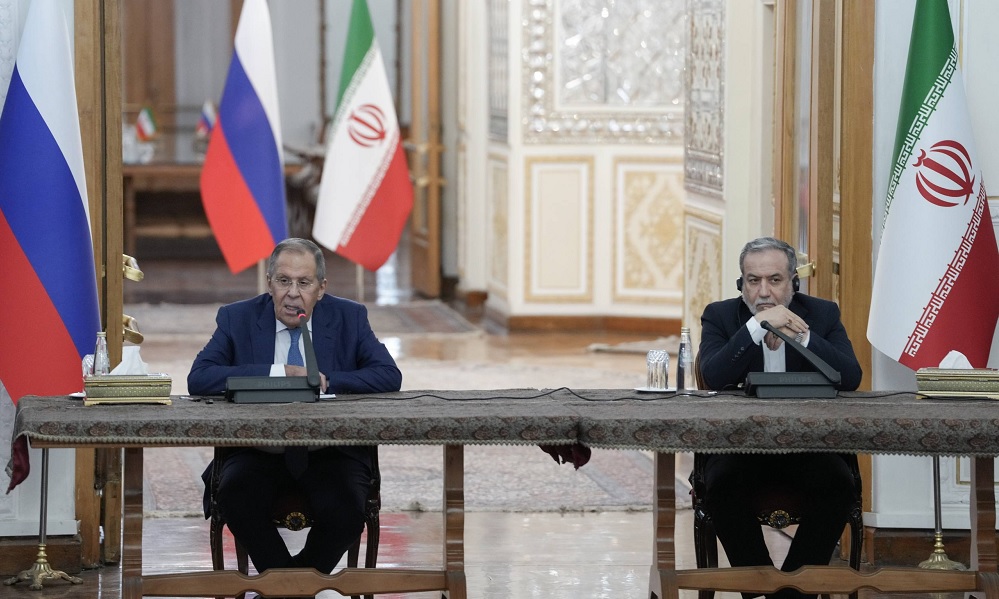
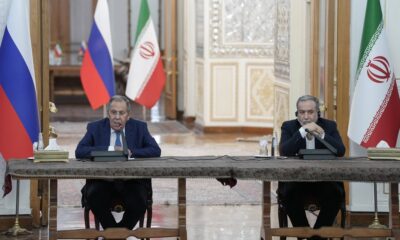
Iranian Foreign Minister Abbas Araqchi says Tehran and Moscow share a common position on Afghanistan, reducing tensions between Kabul and Islamabad, and countering terrorist threats.
Araqchi made the remarks on Monday during a joint press conference with Russian Foreign Minister Sergey Lavrov in Tehran.
Earlier, Russian Ambassador to Pakistan Albert Khorev said Moscow was working to ease tensions between Afghanistan and Pakistan.
Khorev said Afghanistan was discussed during Russian Interior Minister Vladimir Kolokoltsev’s visit to Islamabad, adding that Russia had expressed its readiness to cooperate on the issue.
He said the closure of Durand Line crossings had negatively affected Pakistan’s trade with Russia and Central Asian countries. He also identified US sanctions as an obstacle to expanding trade.
Khorev said resolving tensions between Kabul and Islamabad would benefit the entire region and expressed hope that the Durand Line crossings would reopen as soon as possible.
Latest News
EU condemns restrictions on women and girls in Afghanistan
IEA spokesperson Zabihullah Mujahid has previously said that education for girls above Grade 6 remains under review and that the government is working to resolve the issue.
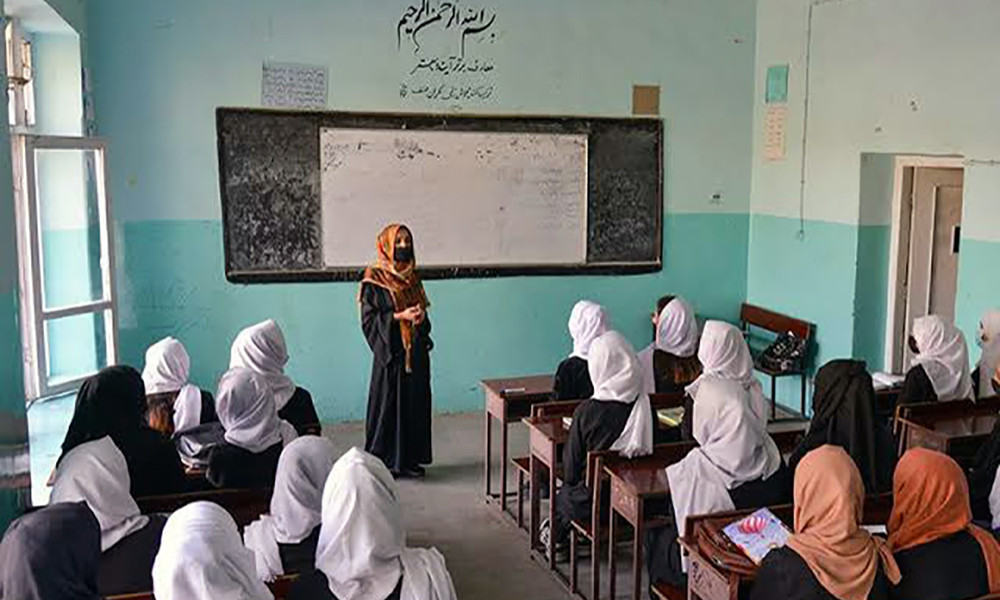
The European Union has condemned human rights violations and gender-based discrimination by the Islamic Emirate of Afghanistan (IEA), calling for an end to restrictions on women and girls, particularly the ban on education beyond Grade 6.
In a statement delivered at UNESCO’s 225th Executive Board meeting on October 19, the EU expressed alarm over the continued deterioration of women’s and girls’ rights in Afghanistan in 2026.
The bloc said Afghanistan remains the only country where girls are prohibited from attending public education beyond Grade 6, a restriction affecting more than 2.2 million girls. It called for the unconditional reversal of the policies.
The EU also welcomed UNESCO’s efforts to provide alternative learning opportunities for Afghan women and girls, while stressing that these initiatives cannot replace formal, inclusive and quality education.
In 2025, the EU and UNESCO launched a €4.7 million partnership aimed at promoting economic empowerment through community-based skills development and literacy training in Afghanistan.
IEA spokesperson Zabihullah Mujahid has previously said that education for girls above Grade 6 remains under review and that the government is working to resolve the issue.
The EU meanwhile also reaffirmed its support for independent Afghan media, civil society organisations and human rights defenders, particularly those working to protect women’s rights, despite the risks and restrictions they face.
It highlighted EU-backed UNESCO initiatives focused on media and information literacy, documentary heritage, freedom of expression and the safety of journalists.
The statement further raised concerns over threats to Afghanistan’s cultural heritage, illegal archaeological excavations, the illicit trafficking of cultural goods and the safety and livelihoods of cultural professionals, particularly women.
The EU commended UNESCO’s work in Afghanistan and welcomed the extension of the United Nations Strategic Framework for Afghanistan until 2030, emphasising the UN’s continued role in the country.
It also reaffirmed its commitment to providing financial support for UNESCO’s activities in Afghanistan, including programmes aimed at education, cultural preservation, media freedom and the protection of fundamental rights.


UK criticises Hegseth for downplaying NATO allies’ role in Afghanistan war

Iran, Russia agree on reducing tension between Afghanistan and Pakistan: Araqchi

Atal’s century and Rashid’s four wickets seal Afghanistan’s 158-run win over Zimbabwe

EU condemns restrictions on women and girls in Afghanistan

Tahawol: US–Iran tensions escalate with mutual threats

Cricket Bonanza: Afghanistan set for packed international schedule

Afghanistan says 28 killed, 32 captured in Nuristan operation

Silk Road highway in Wakhan corridor now reaches the China border

CNN, MS NOW and Politico sue Trump, challenging White House ban

Afghanistan on climate front line as Kabul faces groundwater warning
Tahawol: US–Iran tensions escalate with mutual threats

Saar: IEA–UNAMA relations: five years under review

Violent protests spread across Europe as Albanian PM blames ‘foreign hand’

Tahawol: Afghanistan’s empty seat at OIC Meeting

Saar: Islamic Emirate–Pakistan clashes discussed
-
 Latest News5 days ago
Uzbekistan gains ground in Afghanistan’s flour market as Kazakhstan loses exports
-
 Sport2 days ago
Afghanistan reach Brazil futsal tournament final after beating Cape Verde 4-2
-
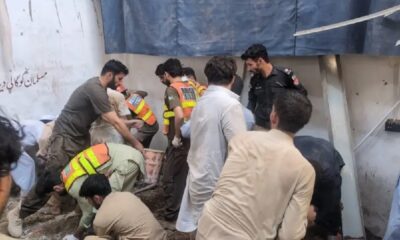
 Regional5 days ago
School roof collapse kills teacher, 21 children in NW Pakistan
-
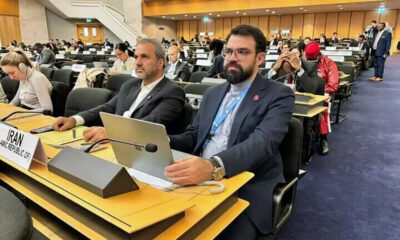
 Latest News5 days ago
Iran says nearly 60,000 Afghan students attend its universities, urges more refugee aid
-
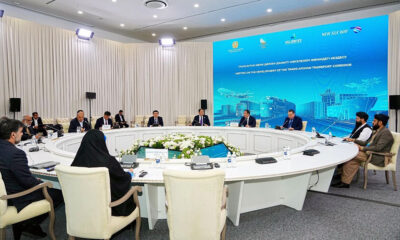
 Business4 days ago
Regional partners seek progress on Trans-Afghan corridor and CASA railway
-
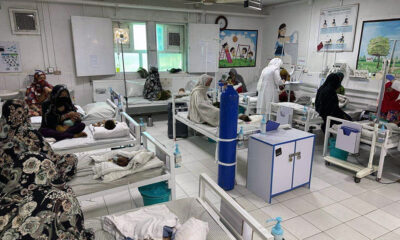
 Latest News4 days ago
Nearly 19.2 million Afghans face winter hunger as child malnutrition set to surge, UN agencies warn
-
 World4 days ago
Trump says he is talking to Russia and China about denuclearization
-
 Regional3 days ago
Trump says US may strike Iran’s ‘Pickaxe Mountain’ nuclear facility