
US Forces reject Taliban’s claim they violated Doha agreement

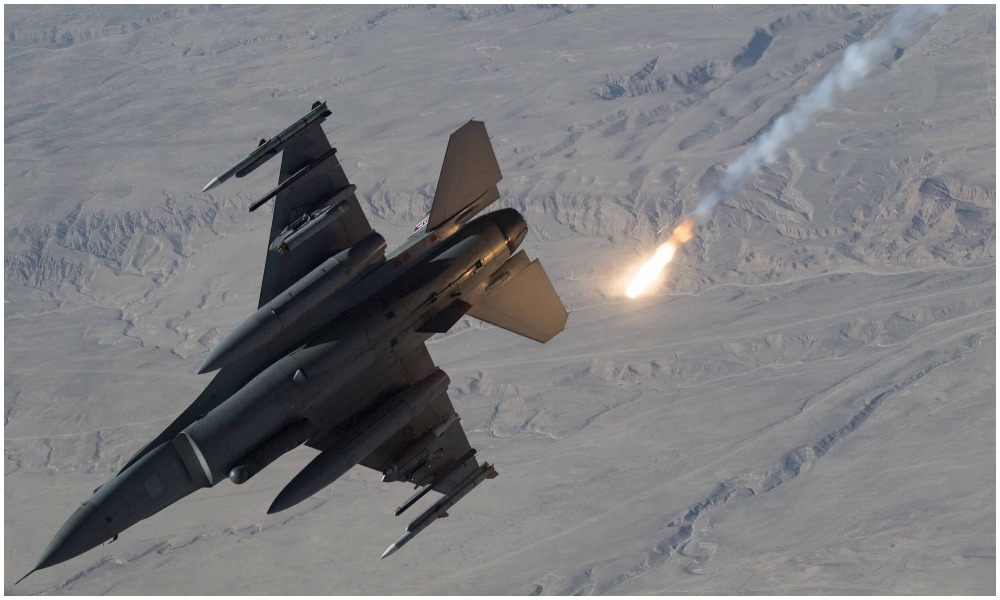
US Forces Afghanistan rejected the Taliban’s claim that the United States violated the US-Taliban agreement but confirmed airstrikes carried out in Helmand and Farah “have been and continue” to be carried out in defense of the Afghan National Defense and Security Forces (ANDSF).
USFOR-A spokesman Colonel Sonny Legget said in a series of tweets on Sunday evening: “We categorically reject the Taliban’s claim the United States has violated the US-Taliban Agreement. US airstrikes in Helmand and Farah have been and continue to be solely in defense of the ANDSF as they are being attacked by the Taliban.”
“These strikes are consistent with both the US-Taliban Agreement and the Joint Declaration between the Government of the Islamic Republic of Afghanistan and the United States.”
1/3 We categorically reject the Taliban's claim the United States has violated the U.S.-Taliban Agreement. U.S. airstrikes in Helmand and Farah have been and continue to be solely in defense of the ANDSF as they are being attacked by the Taliban.
— USFOR-A Spokesman Col Sonny Leggett (@USFOR_A) October 18, 2020
“The entire world has witnessed the Taliban’s offensive operations in Helmand – attacks which injured and displaced thousands of innocent Afghan civilians. We reiterate our call for ALL SIDES to reduce the violence to allow the political process to take hold,” he stated.
Leggett’s statement came just hours after the Taliban issued a veiled threat to the US Forces in Afghanistan accusing the United States of having violated the Doha agreement by carrying out airstrikes last week.
In a statement issued by the group’s spokesman on Twitter, the Taliban said: “American forces have violated the Doha agreement in various forms by carrying out excessive airstrikes following the new developments in Helmand province.”
The Doha agreement was signed in February between the Taliban and the US and was conditions-based.
In their statement Sunday, the Taliban said, according to the agreement, the “American forces are prohibited from carrying out airstrikes or targeting anyone in areas other than combat zones or during active fighting”.
The group stated that over the past few days, drone and other fighter aircraft have carried out strikes in a number of areas in Helmand and in Farah and other provinces “which are all a direct and clear violation of the Doha agreement.”
The Taliban stated that “all contents of the US-Islamic Emirate agreement are unambiguous, but the opposite side violated its commitment on numerous occasions, are engaging in provocative actions and bombing non-combat zones.”


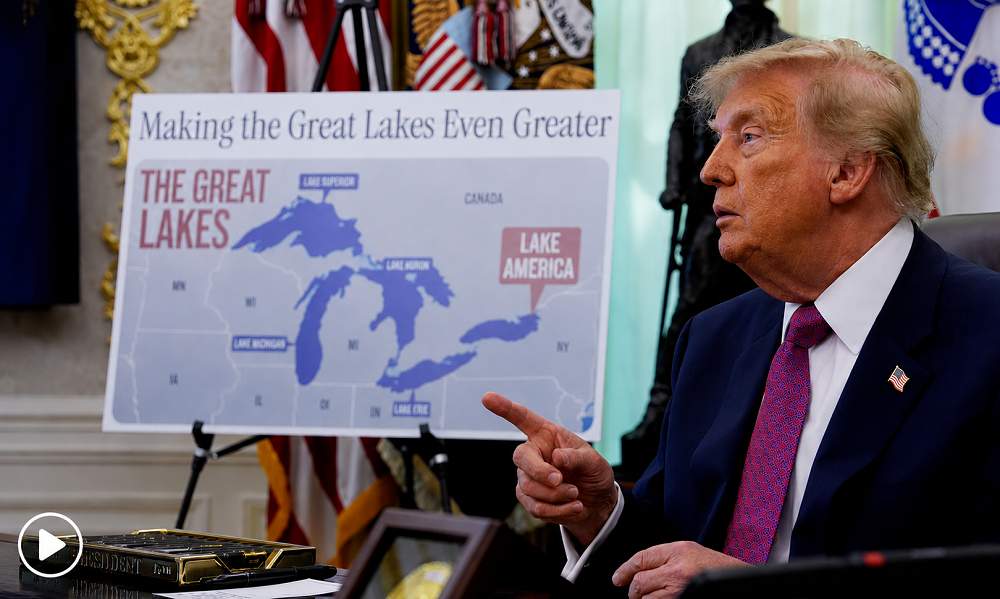
US President Donald Trump has suggested that the Atlantic or Pacific Ocean could be next for a name change, shortly after signing an executive order renaming Lake Ontario as “Lake America.”
Speaking in the Oval Office on Thursday, Trump joked that after renaming a gulf and a lake, the next step could be an ocean.
“We have a gulf and we have a lake,” Trump said. “Now all we need is an ocean. Maybe we’ll have to change the name of the Atlantic and/or the Pacific. Maybe we’ll change them both.”
The remarks came as Trump signed the order changing the name of Lake Ontario on U.S. government maps, following his earlier move to rename the Gulf of Mexico the “Gulf of America.”
Trump has also restored the former name “Mount McKinley” for Alaska’s highest peak, reversing the official use of Denali adopted during the Obama administration.
The latest proposal comes amid increasingly strained relations between Washington and Ottawa. Trump has repeatedly criticised Canada over trade and has previously suggested that the country should be treated as a U.S. state.
While the U.S. government can determine the names used on its own official maps, it cannot compel Canada, other countries or international organisations to adopt the changes.
For now, the Atlantic and Pacific oceans remain firmly on the map under their familiar names — but Trump has made clear he is not ruling out another change.
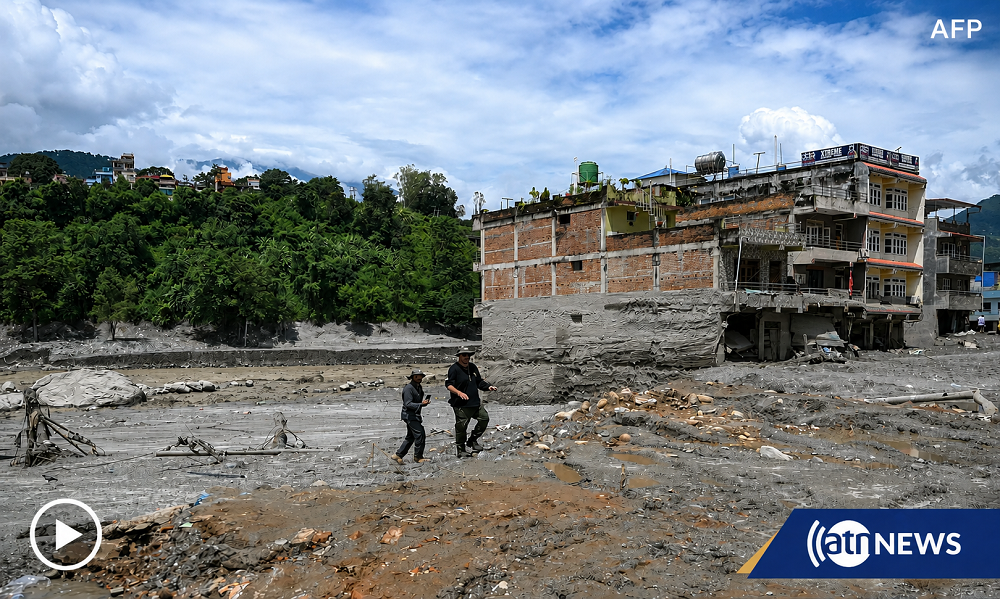
Nepal’s search, rescue and recovery operation has entered a critical phase after devastating flash floods swept through communities along the Bhotekoshi and Trishuli river systems, leaving hundreds dead and thousands of people still unaccounted for.
The latest figures put the death toll at 734, with 2,498 people still missing. More than 8,000 people have been rescued or evacuated, including foreign nationals.
The disaster struck on August 26 when a massive surge of water and debris tore through communities in northern and central Nepal. The precise cause remains under investigation, although the catastrophe has been linked to a glacier collapse or ice-and-rock avalanche in the Himalayan region.
Rescue teams race to reach trapped workers
Among the most urgent rescue operations is the search for workers believed to be trapped inside hydropower tunnels along the Trishuli corridor.
Authorities say 933 hydropower workers are among those reported missing. At the Trishuli 3A hydropower project, rescuers have inserted a pipe into a tunnel and begun pumping air inside as teams work to reach people who may still be alive.
Specialist teams from neighbouring India and China are assisting with the difficult tunnel operations. Access remains extremely challenging, with roads and bridges destroyed, tunnel entrances buried and sections of infrastructure cut off by mud and floodwater.
Helicopters remain vital
With large sections of the affected region inaccessible by road, helicopters have become a crucial part of the rescue effort.
Military and other rescue aircraft are being used to evacuate survivors, transport food and medical supplies and reach communities cut off by the destruction. Poor weather, mountainous terrain and rising river levels, however, continue to hamper operations.
Authorities have also warned residents to remain vigilant as water levels rise in some rivers and new landslides create additional risks.
Search turns to recovery
As hopes of finding survivors continue, rescue teams are also facing the grim task of recovering and identifying victims.
Hundreds of bodies and human remains have been recovered from flood-affected districts, with some carried considerable distances downstream. The scale of the disaster has placed enormous pressure on local identification facilities, while additional forensic and DNA-testing support is being sought.
Families of missing people have gathered at hospitals, rescue centres and military bases, searching lists of survivors and recovered victims for information about relatives who remain unaccounted for.
International assistance grows
International support is also arriving as Nepal begins the enormous task of providing emergency assistance and planning for reconstruction.
India has deployed specialist rescue personnel and relief supplies, while China is assisting with tunnel rescue operations. Other countries and international organisations are also providing humanitarian assistance and specialist equipment.
The destruction of roads, bridges, homes, power infrastructure and hydropower facilities is expected to create a major long-term reconstruction challenge.
A race against time
For rescuers, the immediate priority remains finding those who may still be alive beneath collapsed structures and inside flooded tunnels.
For families, the operation is becoming a desperate search for answers.
Across the devastated river valleys, rescue workers continue digging through mud and debris while helicopters move between isolated communities. But with thousands still missing and the threat of further flooding and landslides, authorities face a race against time to locate survivors and recover those who did not make it.
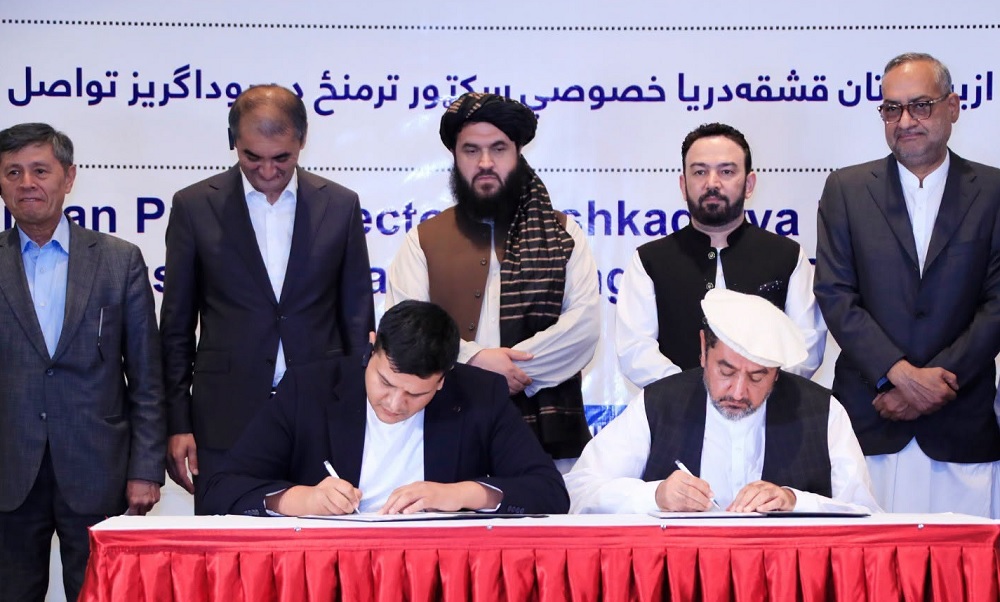
Afghanistan’s Ministry of Industry and Commerce says 20 trade memorandums of understanding (MoUs) worth $267 million have been signed following business meetings between Afghan traders and private-sector representatives and officials from Uzbekistan’s Kashkadarya province.
The agreements were signed on the sidelines of a business networking conference between Afghan private-sector representatives and Kashkadarya in Kabul. Officials from Afghanistan’s Ministry of Industry and Commerce, representatives of Kashkadarya province, Uzbekistan’s ambassador to Kabul, and private-sector representatives from both countries attended the conference.
Ahmadullah Zahid, Deputy Minister of Industry and Commerce, said economic relations and trade between Afghanistan and Uzbekistan have increased following visits by delegations from both sides.
He stressed the need to simplify trade and transit procedures and remove existing obstacles. He also said Afghanistan is ready to discuss the transit of its export goods through Uzbekistan.
Shahret Muradov, Deputy Governor of Kashkadarya, said the province is ready to expand trade and industrial cooperation with Afghanistan and host Afghan delegations and traders.
The agreements cover sectors including food products, clothing, construction, livestock, electronic equipment, and furniture.


Trump floats idea of renaming Atlantic or Pacific Ocean

Nepal flood rescue mission enters critical phase as thousands remain missing

Afghanistan and Uzbekistan sign 20 trade MoUs worth $267 million

US deports Afghan man with family ties to US military to Central African Republic

Afghan and Indonesian officials discuss expanding religious and cultural cooperation

AFC confirms clubs for 2026/27 competitions; draw set for August 18

Only two days to go before Afghanistan and Ireland begin ODI series

Four mediators struggle to secure lasting Pakistan-Afghanistan ceasefire

Heavy monsoon rains claim lives across India as flooding and landslides continue

Kabul opens cardiac hospital for children

Tahawol: Islamic Emirate seeks to normalize US ties

Saar: Discussion on ensuring Afghanistan’s border security

Tawsia: Afghanistan’s efforts to boost production and exports disucssed

Tahawol: Fifth anniversary of America’s defeat in Afghanistan discussed

Saar: Ongoing expulsion of Afghans from Iran and Pakistan discussed
-
 Latest News3 days ago
Pakistan open to state-to-state dialogue with Afghanistan on terrorism
-

 Latest News5 days ago
Germany deports 30 Afghan refugees to Kabul
-
 Latest News5 days ago
Qatar Ambassador holds farewell meeting Turkish diplomat in Kabul
-

 Tahawol5 days ago
Tahawol: Aisha Wahab’s emphasis on US ties with IEA
-

 World4 days ago
Trump administration issues pause on visa appointments for applicants worldwide
-

 Sport3 days ago
ATN secures exclusive rights to broadcast T20I series in India across Afghanistan
-

 International Sports4 days ago
Tottenham face Charlton as ATN brings live EFL Cup action to Afghan fans
-
 World4 days ago
US spy chief visits Russia for meetings, media reports