
Latest News
Upcoming Qatar Talks Can’t Make Final Call on Afghan War: AIHRC

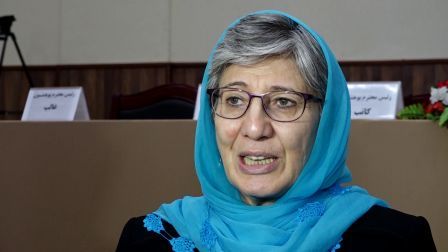
Afghanistan’s Independent Human Rights Commission (AIHRC) says the upcoming peace talks between the Taliban and Afghan politicians would not reach into a final agreement to bring an end to the war unless the Afghan government gets involved in this process.
In mid-April, Doha would host the second round of peace talks between the Taliban and the Afghan politicians in which the representatives of the Afghan government have also been asked to participate. But Kabul is yet to declare its position regarding the meeting.
The Taliban are expected to reach into an agreement with the Afghan politicians in this round of talks. The meeting is also expected to make way for talks with the Afghan government, which is considered to be the main discussion-making body in the peace process.
“The Taliban would not make an agreement with [Afghan] politicians, because it is the Afghan government which has been authorized to take decisions. They have to sign the agreement with the government,” said Sima Samar, chairperson of Afghanistan’s Independent Human Rights Commission (AIHRC).
The AIHRC expressed concern regarding Doha talks as no representative of the commission has been invited yet to participate in the meeting. The commission said the values of human rights might get ignored in the talks.
Separately, Angelina Jolie, academy award-winning actress, and refugee activist pushed for the inclusion of Afghan women in ongoing peace talks during an address to ministers and diplomats at the United Nations on Friday.
“In Afghanistan, thousands of women have recently come together in public risking their lives to ask that their rights and the rights of their children be guaranteed in peace negotiations that so far they have been allow no part of,” Jolie told a ministerial meeting on U.N. peacekeeping.
“The international community’s silent response is alarming, to say the least,” said Jolie, a special envoy for the U.N. refugee agency UNHCR, which she began working with 18 years ago. “There can be no peace or stability in Afghanistan or anywhere else in the world that involves trading away the rights of women.”
Jolie also touted the importance of a United States that is “part of an international community,” after a retreat by U.S. President Donald Trump from U.N. agencies and global agreements that has some countries concerned about his commitment to multilateralism.
“I’m a patriot, I love my country and I want to see it thrive. I also believe in an America that is part of an international community. Countries working together on equal footing is how we reduce the risk of conflict,” she said.
“A country that believes that all men and women are born free and equal cannot be true to itself if it doesn’t defend those principles for all people, wherever they live,” she said.








Latest News
Middle East conflict pushing millions into hunger, WFP says
Households in Afghanistan, Somalia and Sri Lanka are among the most seriously affected and face mounting pressure due to higher fuel costs, food price spikes, income losses and disrupted trade.
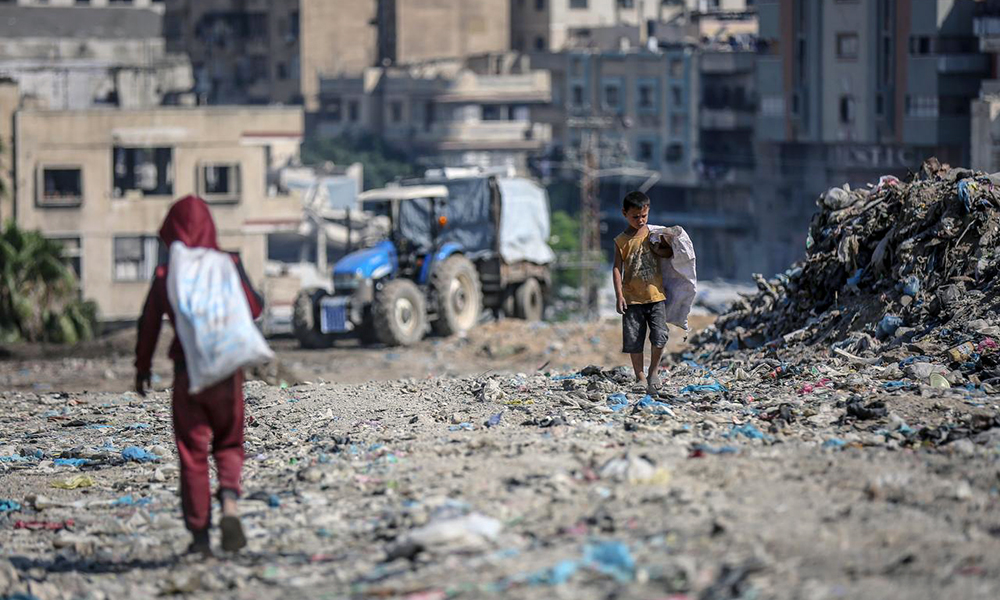
The Middle East conflict is pushing millions of people closer to hunger, as rising fuel and transport costs drive up food prices while funding shortfalls force aid agencies to scale back assistance, the U.N. World Food Programme said on Friday.
Joint U.S.-Israeli strikes on Iran in February triggered a regional conflict stretching across the Gulf and into Lebanon, disrupting key shipping routes, including the Strait of Hormuz, forcing vessels to reroute and sharply constraining global energy flows and supply chains, Reuters reported.
In March, the WFP forecast as many as 45 million people could fall into acute food insecurity if oil prices remained around $100 per barrel through June. That scenario is now unfolding, the agency said, with benchmark crude prices staying above that level since early March.
Households in Afghanistan, Somalia and Sri Lanka are among the most seriously affected and face mounting pressure due to higher fuel costs, food price spikes, income losses and disrupted trade.
In Somalia, 6.5 million people – roughly a third of the population – are expected to face severe hunger in 2026, while Afghanistan could see 17.4 million people affected, the WFP said. The situation is projected to worsen, with an additional 2.5 million Somalis and 2.3 million Afghans at risk of falling into food insecurity if disruptions persist. Both countries are reliant on imported energy and food.
The Middle East crisis comes amid a deep funding shortfall for aid agencies. The WFP said it expected to serve 1.5 million fewer people globally in 2026, and 9 million fewer if the situation persists for six months.
In Somalia, supplies of nutritious food for children under 5 suffering from moderate malnutrition will run out as soon as July, as the WFP faces an 89% funding gap in the country.
“We are running out of food. The food is not available for distribution, and the ones who will experience the impact of this are going to be very vulnerable children,” said Jean-Martin Bauer, the director of WFP’s Food Security and Nutrition Analysis Service.
The situation is being worsened by supply chain issues, with fewer ships stopping in Somalia because of disruptions which have affected shipping in the Indian Ocean, read the report.
Some WFP stocks have also been held up in Salalah Port in Oman, causing critical delays. Soaring jet fuel prices are also leading to higher operational costs for the United Nations Humanitarian Air Service – the only means to safely access hard-to-reach areas, the WFP said.
In Afghanistan, surging fuel prices have driven up aid transport costs as much as fivefold, and delivery times have shot up from 10 days up to as many as 75 days as trucks had to use alternative corridors, the WFP said.
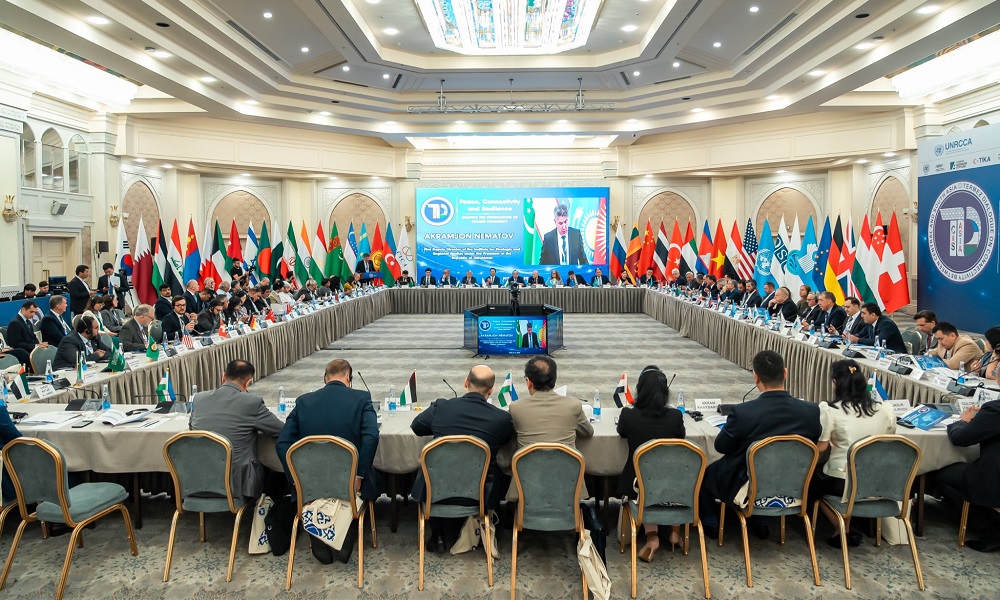
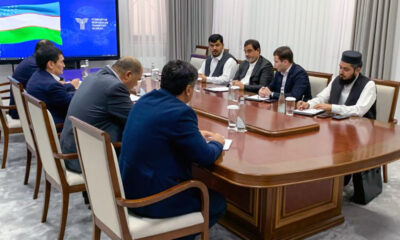
Afghanistan’s Center for Strategic Studies says discussions at the second Termez Dialogue primarily focused on economic cooperation between Central and South Asia through Afghanistan, particularly on strengthening regional economic connectivity.
In a post on X, the center said that around 200 representatives from more than 40 countries and 10 international and regional organizations attended the meeting, which was held on Thursday.
Nooruddin Azizi, Acting Minister of Industry and Commerce of the Islamic Emirate, participated in the event online. Zaker Jalaly and Ghuncha Gul Arman also attended on behalf of the Ministry of Foreign Affairs’ Center for Strategic Studies.
On the sidelines of the meeting, Afghanistan’s Ministry of Foreign Affairs and research institutions from Central Asian countries held detailed discussions on the Afghanistan–Central Asia Think Tanks Forum, which is scheduled to take place in Kabul on June 16.
Latest News
Regional leaders seek stronger trade links through Afghanistan at Termez Dialogue
Uzbekistan’s First Deputy Foreign Minister, Bakhromjon Aloev, said a more prosperous and economically integrated Afghanistan could help promote regional stability after decades of conflict.
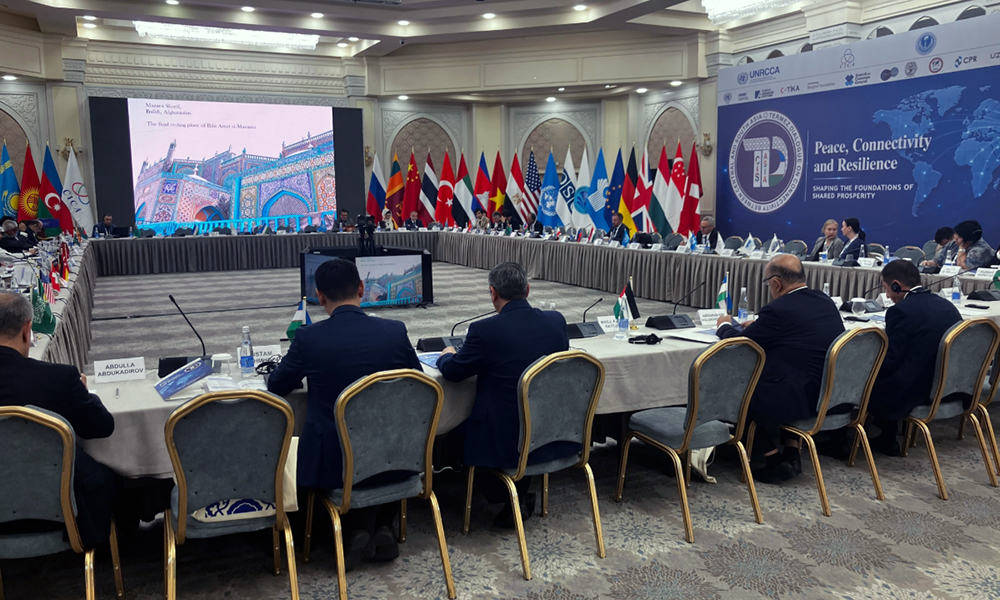
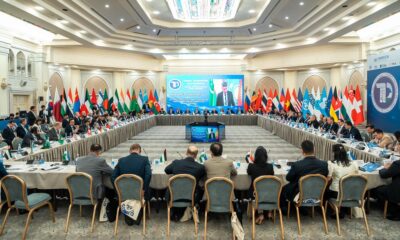
Senior officials from Central and South Asia gathered in Tashkent this week for the second Termez Dialogue, where regional connectivity, trade expansion and Afghanistan’s role as a transit hub featured prominently in discussions.
Participants at the forum broadly agreed that Afghanistan remains central to efforts to strengthen economic ties between Central and South Asia, given its strategic location linking the two regions.
Uzbekistan’s First Deputy Foreign Minister, Bakhromjon Aloev, said a more prosperous and economically integrated Afghanistan could help promote regional stability after decades of conflict. He noted that Central Asian countries are continuing to expand trade and economic engagement with Afghanistan despite ongoing challenges.
According to officials, Uzbek and Afghan entities have signed agreements worth approximately $5 billion since late 2025, underscoring growing commercial ties between the neighboring countries.
Afghanistan’s Minister of Industry and Commerce, Nooruddin Azizi, used the forum to reiterate Kabul’s commitment to expanding regional trade, improving logistics infrastructure and increasing the country’s transit capacity.
Afghan representatives also reportedly urged regional partners to advocate for the easing of international sanctions that continue to limit trade and investment opportunities.
Speaking on the sidelines of the event, the chairman of Afghanistan’s Chamber of Commerce and Investment, Syed Karim Hashemy, argued that existing sanctions disproportionately affect the private sector, which he said accounts for around 70 percent of the country’s economic activity.
He called for greater flexibility in banking and financial restrictions to facilitate cross-border trade and investment.
However, prospects for major international support remain uncertain. The European Union’s Special Representative for Central Asia, Eduards Stirpais, indicated that Brussels is unlikely to significantly alter its policy toward the Islamic Emirate in the near future, citing ongoing concerns over governance and human rights issues.
Despite these challenges, several participants stressed the importance of continued engagement with Afghanistan to advance regional connectivity projects, including the proposed Trans-Afghan Railway, which aims to link Central Asian markets with ports in South Asia.
Established under a 2022 United Nations resolution on strengthening connectivity between Central and South Asia, the Termez Dialogue serves as a platform for regional cooperation aimed at improving trade routes, transport networks and economic integration across the region.


Uzbekistan reports strong surge in trade with global partners led by China

Middle East conflict pushing millions into hunger, WFP says

Iran declares support for Hezbollah with wider peace deal in doubt

Iran World Cup players granted visas to enter the US, says White House official

Tawsia: Signing of $20 million Herat salt mining deal discussed

New Afghanistan-China transport corridor launched via Turkmenistan

Afghanistan signs $46 million deal to develop standard laboratory complexes

Large blast near Beit Shemesh part of pre-planned test: Israeli defense firm

Trump returns from China with stability but little progress

Afghanistan announce squad for India series
Tawsia: Signing of $20 million Herat salt mining deal discussed

Tahawol: Discussion on fear of internal disputes in Iran

Tahawol: Welcoming Qatar’s cooperation with Afghanistan discussed

Saar: Former President’s strong criticism of Pakistan’s policies discussed

Tahawol: China’s efforts to host next round of Urumqi talks
-
 Latest News4 days ago
Russian business official proposes visa-free travel between Russia and Afghanistan
-
 Business3 days ago
Afghanistan’s trade with Central Asia records sharp growth
-
 Latest News4 days ago
China and Pakistan’s special envoys for Afghanistan discuss Urumqi Process
-

 Sport5 days ago
Afghanistan edge Maldives 1-0 in four-nation tournament opener
-

 Sport4 days ago
Six Afghan cricketers selected for 2026 Lanka Premier League
-

 Sport23 hours ago
Gaikwad set to replace injured Kohli for Afghanistan ODI Series
-

 Latest News3 days ago
Three Afghans among four farmworkers burned alive in Italy; two Pakistanis arrested
-
 Latest News4 days ago
Russia-Afghanistan military deal focuses on repair of Soviet-made equipment, Kabulov says