
Latest News
UNAMA chief briefs Security Council on Afghanistan situation
Roza Otunbayeva said challenges remain and that it is the responsibility of the IEA to indicate whether they want Afghanistan to be reintegrated into the international system and, if so, whether they are willing to take the necessary steps

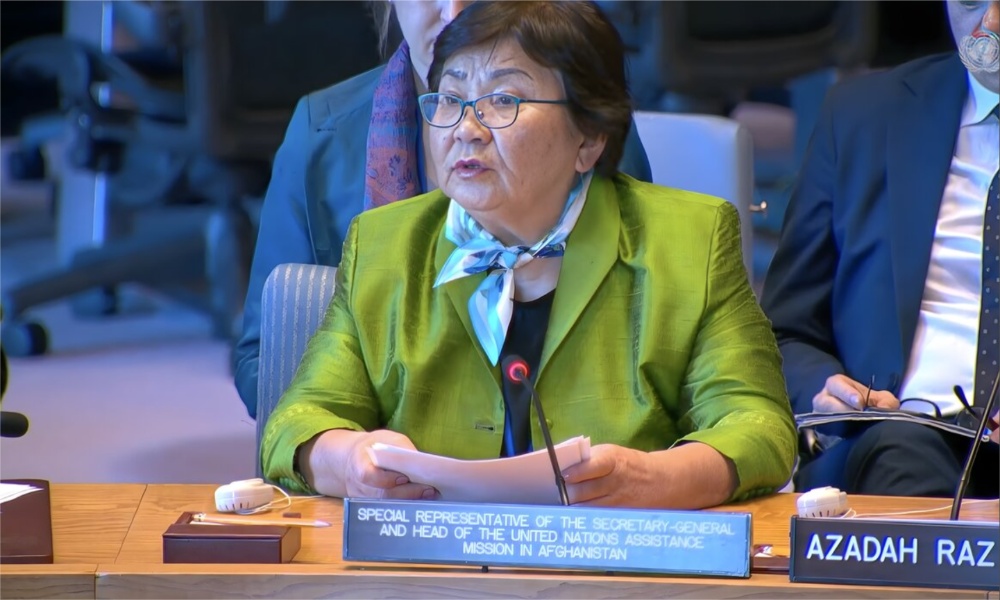
In a briefing to the United Nations Security Council by the Secretary-General’s Special Representative for Afghanistan, Roza Otunbayeva, said UNAMA’s focus for the past few months has been to establish a political pathway to enable Afghanistan to be fully reintegrated in the international system.
However, she said “challenges remain” adding that “it is the responsibility of the de facto authorities to indicate whether they want Afghanistan to be reintegrated into the international system and, if so, whether they are willing to take the necessary steps.
“The de facto authorities have so far treated the Afghan state’s international obligations selectively, rejecting some on the basis they allegedly impinge on the country’s sovereignty or violate their traditions.
“But to be very clear, these international obligations affect not only the possibility of progress along the political pathway but, most crucially, the wellbeing of Afghanistan’s entire population, whose voices must be included in the political pathway,” she said.
Otunbayeva said while Afghans in the country have welcomed the absence of conflict under Islamic Emirate rule, more and more are expressing concerns about Afghanistan’s further isolation from the rest of the world. “Afghans increasingly resent the intrusions on their private lives by the de facto authorities,” she said.
She stated that Afghans continue to face a severe humanitarian crisis defined by decades of conflict, entrenched poverty, climate-induced shocks, large population growth and increasing protection risks, especially for women and girls.
In 2025, more than 50 percent of the population — some 23 million people — require humanitarian assistance. But this assistance is rapidly decreasing.
“The defunding of assistance is already having and will continue to have a significant impact on the Afghan people. In the past month, more than 200 health facilities have closed, impacting some 1.8 million people, essential malnutrition services for children have been limited and implementing partners have significantly reduced their footprint and coordination capacity,” she stated.
Otunbayeva added that despite the challenges Afghan women face, they have continued to meaningfully and comprehensively participate in the humanitarian response. Humanitarian partners remain committed to upholding the principle of women’s participation.
She also noted that while there have been some instances of interference in aid delivery, the Islamic Emirate authorities in Kabul and in the provinces “have generally cooperated with the UN and partners to enable provision of assistance and resolve cases of interference”.
Otunbayeva touched on the state of the economy and said while it grew around 2.7 percent in 2024, the current growth cannot compensate for the drop in foreign aid and the growing population.
“In the longer term, the de facto authorities’ positive vision of economic self-sufficiency cannot reach its full potential unless ongoing obstacles to its reintegration into the international system are resolved.”
She went on to highlight a number of challenges including those relating to human rights, women’s rights, and girls’ education adding that UNAMA has also been closely observing the Islamic Emirate’s enforcement of its Law on the Prevention of Vice and Promotion of Virtue and its negative economic effects and impacts on Afghans’ human rights and private lives.
“The law demonstrates the de facto authorities’ prioritization of ideology over international obligations. It remains a major impediment to implementing the political pathway needed to reintegrate Afghanistan into the international community,” she said.
Otunbayeva went on to state that the “space for engagement is narrowing. There is a growing frustration on the part of some key international stakeholders that political engagement is not working.”
She questioned how the UN could move forward but said the mechanisms to address the issues that prevent Afghanistan’s reintegration with the international community are in place today.
However, “the most helpful development would be a clear signal from the de facto authorities they are committed to the reintegration of Afghanistan with the international community with all that it implies,”she said.
Washington’s envoy to the UN, Dorothy Shea, also addressed the security council and said: “The security threat emanating from Afghanistan is a continuing driver of regional instability.”
She said the US is calling on the IEA to abide by their counterterrorism commitments.
“The United States is skeptical of the Taliban’s (IEA) willingness to engage in good faith in the Doha Process. We cannot build confidence with a group that unjustly detains Americans, has a long history of harboring terrorist groups on its soil, and ignores the basic rights and needs of its own people.”
The Chinese ambassador called on the Islamic Emirate to suppress terrorist groups in Afghanistan while Pakistan and Russia both expressed concern about the weapons that were left behind during the US troop withdrawal.
Pakistan’s envoy to the UN, Munir Akram added that the presence of several terrorist groups in Afghanistan is a threat to the entire region.
“Unfortunately, while fighting ISIS, the Kabul authorities are indifferent to containing other groups that pose a threat to the region and the world, such as Al-Qaeda, TTP, Baloch Liberation Army and Majid terrorist organization, all of which are present in Afghanistan.
“TTP, with more than 6,000 troops, is the largest terrorist group inside Afghanistan and has launched many attacks against Pakistan. They have advanced weapons left behind by foreign soldiers in Afghanistan,” he said.
In response, the Islamic Emirate says it has always tried to interact with the world, but some countries create obstacles.
Hamdullah Fitrat, deputy spokesman for the Islamic Emirate, says that UN decisions should not be influenced by big countries.
The IEA has also repeatedly said it will not allow terrorist organizations the threaten another country from Afghanistan. Authorities have also repeatedly dismissed claims of US weapons falling into the hands of foreign terrorist groups.
The IEA has said all weapons and military equipment that was left behind by the US during their withdrawal are in the possession of the Islamic Emirate and are protected.


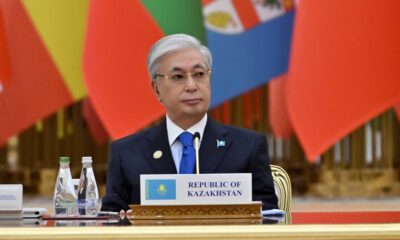

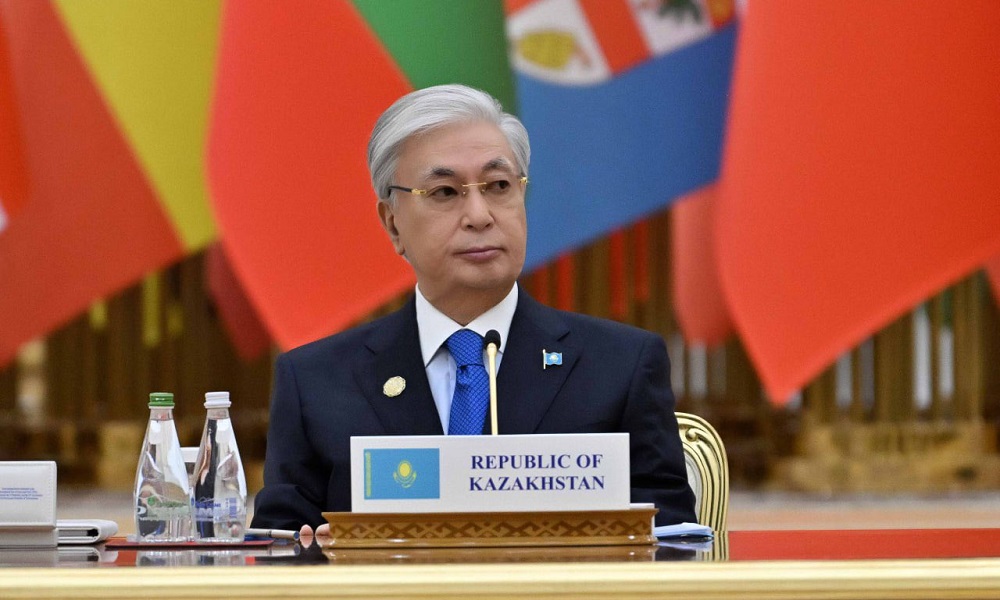
Kazakhstan’s President Kassym-Jomart Tokayev has emphasized the continuation of humanitarian assistance to Afghanistan, stating that the ongoing provision of such aid plays an important role in ensuring regional security.
Speaking at the international conference “Peace and Trust” in Ashgabat, the capital of Turkmenistan, Tokayev described addressing complex humanitarian challenges and the reconstruction of Afghanistan as a necessity.
“To ensure regional security, we consider it essential to continue providing assistance to Afghanistan, including by strengthening international efforts to address complex humanitarian issues and the reconstruction of this country. Kazakhstan remains committed to supporting the people of Afghanistan through humanitarian aid, educational projects, trade development, and food security initiatives,” he said.
Meanwhile, experts believe that sustainable improvement of the humanitarian situation in Afghanistan requires broad cooperation from the international community and support for the country’s economic development.
“Investment can be defined as one of the fundamental drivers of the economic cycle, and whenever Afghan traders do not take their money out of the country and instead invest domestically, it naturally leads to greater growth and dynamism in Afghanistan’s economy,” said Abdul Zahoor Modabber, an economic analyst.
As the humanitarian crisis in Afghanistan continues, reports by international relief organizations indicate that millions of citizens of the country are in urgent need of food, health, and livelihood assistance.
The reduction in funding for aid organizations, the impacts of climate change, and the return of migrants have increased concerns about a further deterioration of the humanitarian situation in the country.
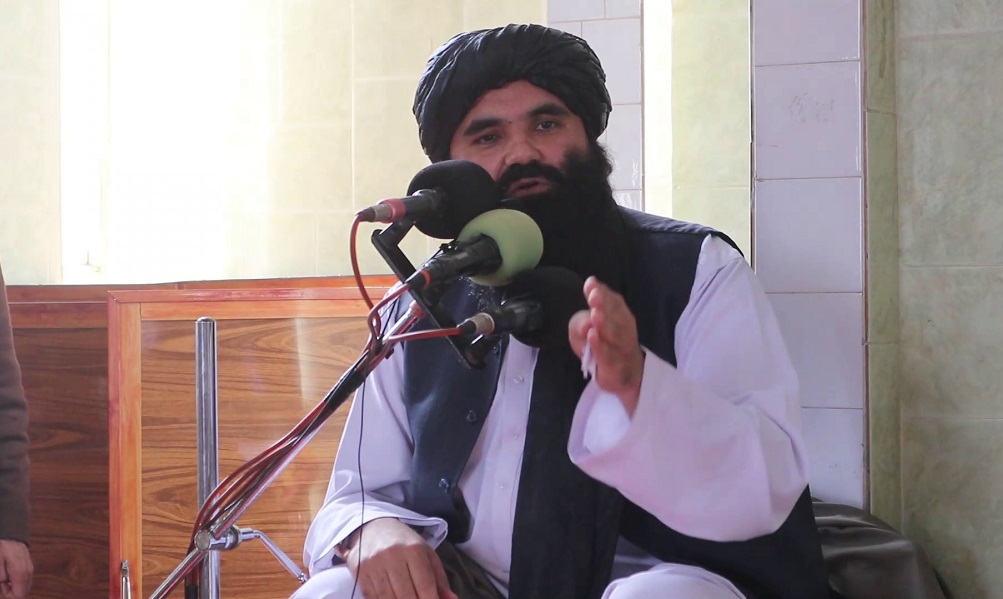
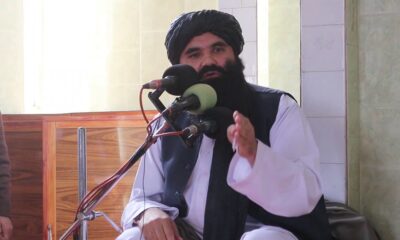
Khalifa Sirajuddin Haqqani, Minister of Interior of the Islamic Emirate of Afghanistan, said during a visit to Khost province on Friday that any government which rules through fear cannot be considered a true government.
“A government is one that is loved by its people, one that serves them with respect and compassion, and from whose behavior people learn ethics and sincerity,” he said.
Haqqani also stressed that Afghans who opposed the Islamic Emirate in the past should be tolerated and treated in a way that helps eliminate hostility and animosity, paving the way for national cohesion.


ACL: Jawanan Perozi 1-0 Arman FC; Abu Muslim Farah 2-0 Sarsabz Yashlar

Continued aid to Afghanistan vital for regional security: Kazakh president

Islamic Emirate declines to attend Tehran meeting on Afghanistan

Sirajuddin Haqqani: A government that intimidates its people is not a true government

Afghanistan’s health minister likely to visit India next week

Pakistan will lose big market in both Afghanistan, Central Asia: Sarhadi

Afghanistan records $580m in fruit exports in six months

Tashkent: Central Asian leaders say regional stability hinges on Afghanistan

Afghan Abdalyan beat Sri Lanka A by 3 wickets in Rising Stars Asia Cup opener

Afghanistan U19 cricket team defeats India A U19

Saar: Calls to avoid using Afghan soil against nations

Tahawol: UNSC meeting outcome regarding Afghanistan discussed

Saar: Ongoing Kabul–Islamabad tensions discussed

Tahawol: Pakistan’s warning on Afghanistan reiterated

Saar: UN’s meeting on Afghanistan reviewed
-
 Latest News2 days ago
Muttaqi: Afghanistan’s progress requires both religious and modern education
-

 Sport4 days ago
ILT20: Desert Vipers edge Gulf Giants in historic super over thriller
-

 Regional4 days ago
Six Pakistani soldiers killed in TTP attack in Kurram District
-
 Business4 days ago
Trade bodies warn almost 11,000 Afghan transit containers stuck at Karachi port
-
 World4 days ago
Powerful 7.6 earthquake hits northern Japan, tsunami warnings issued
-

 Latest News3 days ago
Trump calls Afghanistan a ‘hellhole’ country as US expands immigration restrictions
-

 Sport3 days ago
Commanding wins for Arman FC and Sarsabz Yashlar in Afghanistan Champions League
-
 Latest News5 days ago
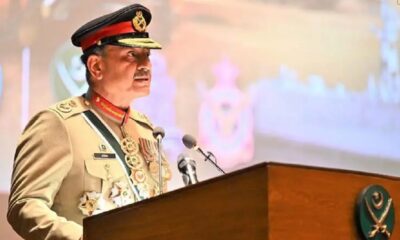
Pakistan’s top general calls on IEA to pick between ties with Islamabad or TTP