
World
UN expert decries practice of taking boys from their mothers at camps in Syria

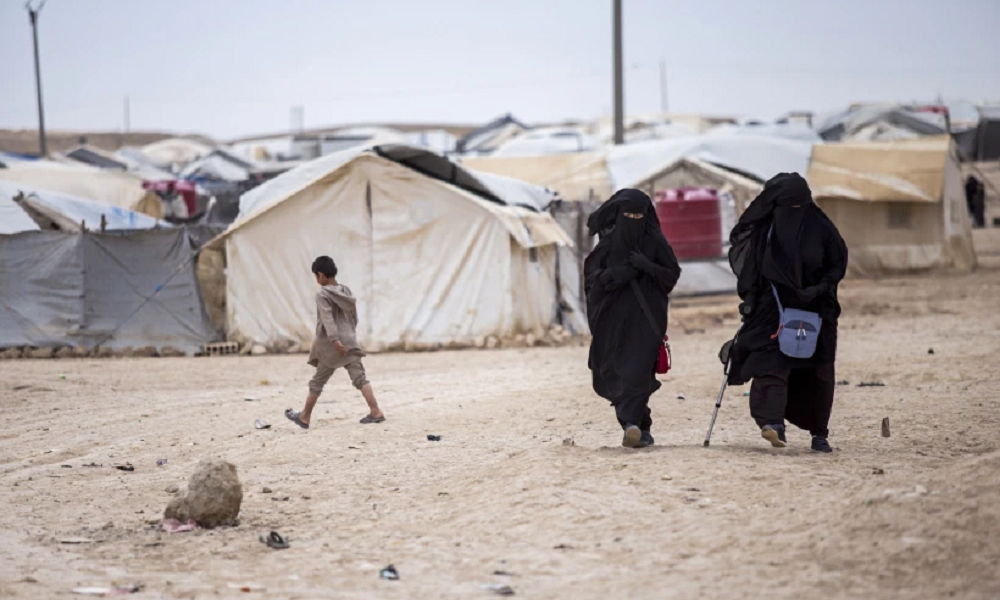
A U.N.-backed human rights advocate says hundreds of boys — some as young as 11 — held in detention camps run by U.S.-backed, Kurdish-led forces in northeastern Syria have been wrongly separated from their mothers on the “unproven” belief that they pose a security risk.
Fionnuala Ni Aolain, an independent U.N. rapporteur on the protection of rights while countering terrorism, aired concerns Friday about lingering “mass arbitrary detention” in the infamous al-Hol camp and others like it that she saw during her trip to the region this week — billed as the first visit of its kind by an independent human rights expert, Associated Press reported.
For years, human rights advocates have been calling on foreign countries — in Europe, north Africa and beyond — to repatriate their nationals from the camps housing family members of Islamic State group militants, especially children who were not involved in the atrocities carried out by the extremist group.
The group rose to power amid an uprising-turned-civil war that erupted 12 years ago and has left hundreds of thousands dead. At one point the militants controlled large swaths of Syria and Iraq, but Kurdish forces backed by an international anti-ISIS coalition, as well as Iraqi and Syrian government troops, recaptured that territory by 2019.
Ni Aolain said her team’s experts have calculated that since 2019, some 7,000 people have been repatriated by some 36 countries — more than three-quarters of them women and children.
But tens of thousands of others remain left behind in the detention centers — and no immediate sign of getting out, let alone traveling to the countries that they or their families came from.
Fearing that a new generation of militants will emerge from al-Hol Camp, the Kurdish officials who govern eastern and northern Syria have been experimenting with a rehabilitation program aimed at pulling children out of extremist thought — by removing them from their families and whisking them away for training in tolerance and other education.
The Kurdish officials fear that kids who grow up in the camp could give rise to a new generation of violent extremists.
Ni Aolain lashed out at the use of “dehumanization language” against so-called “Cubs of the Caliphate” — a reference to children from areas formerly under Islamic State control — “to describe 2-year-olds, 3-year-olds, 4-year-olds, 5-year-olds born on this territory by no choice of their own.”
Ni Aolain said conditions were “dire” in al-Hol, which she said was currently home to more than 49,000 people. She expressed concerns about security, access to health care, and “scarcity of water” in camps where temperatures rose to 50 degrees Celsius and tents were providing shelter.
“The second issue I want to highlight is the separation of hundreds of adolescent boys from their mothers without any legal procedure, in what I describe as ‘summary separation’ based on an unproven security risk that male children pose upon reaching the age of adolescence,” Ni Aolain said.
“Every single woman I spoke to made clear that it was the snatching of the children that provided the most anxiety, the most suffering, the most psychological harm,” she said, alluding to the ”distress” felt by many of the boys.
“The taking of these boys may in itself constitute a disappearance practice under international law, which is in direct contravention of multiple human rights obligations,” said Ni Aolain, who is faculty director of the Human Rights Center at the University of Minnesota Law School.








World
Trump plans expanded immigration crackdown in 2026 despite backlash
The plans come amid rising public unease over aggressive tactics, including neighborhood raids and the detention of some U.S. citizens.

U.S. President Donald Trump is preparing to significantly expand his immigration crackdown in 2026, backed by billions of dollars in new funding, even as political opposition grows ahead of next year’s midterm elections.
ICE and U.S. Customs and Border Protection are set to receive an additional $170 billion through September 2029, enabling the administration to hire thousands of new agents, expand detention facilities and increase enforcement actions, including more workplace raids. While immigration agents have already been surged into major U.S. cities, many economically critical workplaces were largely spared in 2025.
The plans come amid rising public unease over aggressive tactics, including neighborhood raids and the detention of some U.S. citizens. Trump’s approval rating on immigration has fallen from 50% in March to 41% in mid-December, according to recent polling.
The administration has also revoked temporary legal status for hundreds of thousands of Haitian, Venezuelan and Afghan migrants, expanding the pool of people eligible for deportation.
About 622,000 immigrants have been deported since Trump took office in January, short of his goal of 1 million deportations per year.
White House border czar Tom Homan said arrests will increase sharply next year as staffing and detention capacity grow. Critics warn that expanded workplace enforcement could raise labor costs and deepen political and economic backlash ahead of the elections.
World
US, Russian officials meet in Florida for more Ukraine talks
Kyiv says it will not cede land that Moscow’s forces have failed to capture in nearly four years of war.
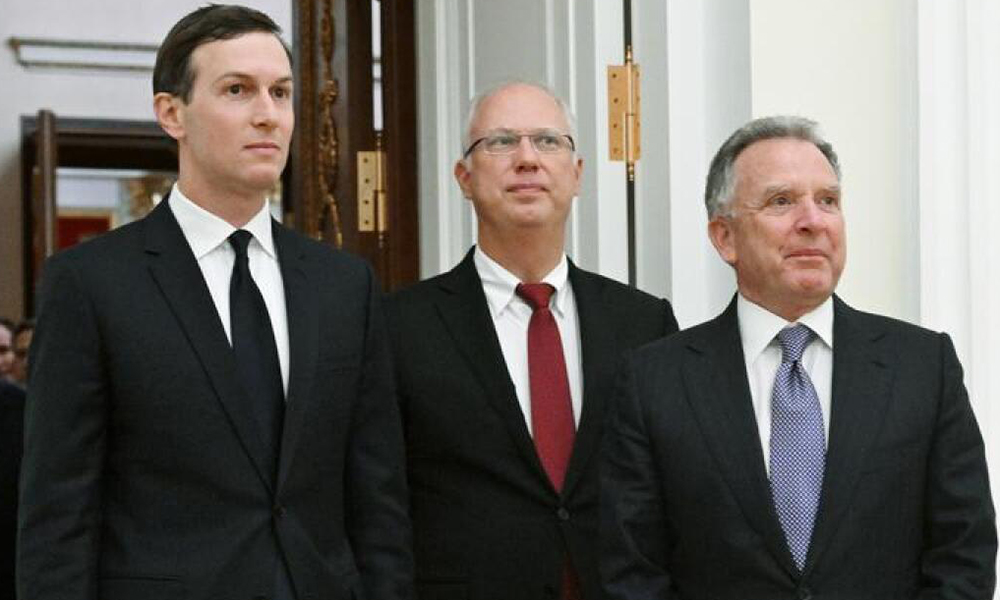
U.S. negotiators met Russian officials in Florida on Saturday for the latest talks aimed at ending Russia’s war in Ukraine, as President Donald Trump’s administration tries to coax an agreement out of both sides to end the conflict, Reuters reported.
The Miami meeting followed U.S. talks on Friday with Ukrainian and European officials, the latest discussions of a peace plan that has sparked some hope of a resolution to the conflict that began when Russia launched its full-scale invasion in February 2022.
Russian President Vladimir Putin’s special envoy Kirill Dmitriev told reporters after meeting U.S. special envoy Steve Witkoff and Trump’s son-in-law Jared Kushner that the talks were constructive and would continue on Sunday. A White House official said the talks had concluded for the day.
“The discussions are proceeding constructively. They began earlier and will continue today, and will also continue tomorrow,” Dmitriev said.
Marco Rubio, Trump’s top diplomat and national security advisor, had said he might also join the talks.
U.S., Ukrainian and European officials earlier this week reported progress on security guarantees for Kyiv as part of the talks to end the war, but it remains unclear if those terms will be acceptable to Moscow.
A Russian source told Reuters that any meeting between Dmitriev and the Ukrainian negotiators had been ruled out.
In Kyiv, Ukrainian President Volodymyr Zelenskiy said on Saturday that Ukraine would back a U.S. proposal for three-sided talks with the United States and Russia if it facilitated more exchanges of prisoners and paved the way for meetings of national leaders.
“America is now proposing a trilateral meeting with national security advisers — America Ukraine, Russia,” Zelenskiy told local journalists in Kyiv.
U.S. intelligence reports continue to warn that Putin intends to capture all of Ukraine, sources familiar with the intelligence said, contradicting some U.S. officials’ assertions that Moscow is ready for peace.
Putin offered no compromise during his annual press conference in Moscow, insisting that Russia’s terms for ending the war had not changed since June 2024, when he demanded Ukraine abandon its ambition to join NATO and withdraw entirely from four Ukrainian regions Russia claims as its own territory, Reuters reported.
Kyiv says it will not cede land that Moscow’s forces have failed to capture in nearly four years of war.
Ukraine’s top negotiator Rustem Umerov said U.S. and European teams on Friday held talks and agreed to pursue their joint efforts.
“We agreed with our American partners on further steps and on continuing our joint work in the near future,” Umerov wrote on Telegram of the discussions in the United States, adding that he had informed Zelenskiy of the outcome of the talks.
The White House did not immediately respond to a request for comment.
Rubio told reporters on Friday that progress has been made in discussions to end the war but there is still a way to go.
“The role we’re trying to play is a role of figuring out whether there’s any overlap here that they can agree to, and that’s what we’ve invested a lot of time and energy and continue to do so. That may not be possible. I hope it is. I hope it can get done this month before the end of the year.”
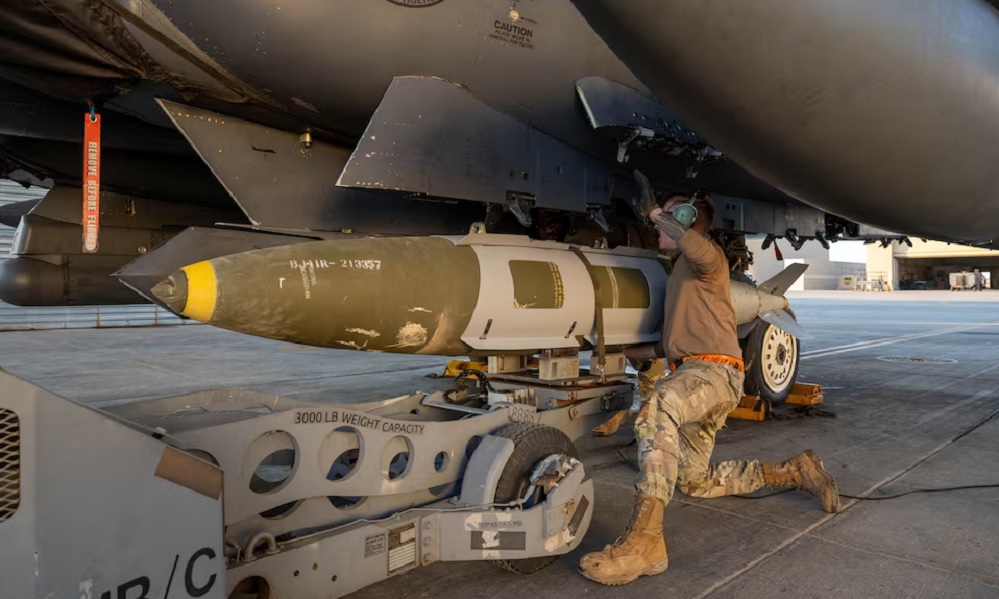
The U.S. military launched large-scale strikes against dozens of Daesh targets in Syria on Friday in retaliation for an attack on American personnel, U.S. officials said.
A U.S.-led coalition has been carrying out airstrikes and ground operations in Syria targeting Islamic State suspects in recent months, often with the involvement of Syria’s security forces, Reuters reported.
President Donald Trump had vowed to retaliate after a suspected ISIS attack killed U.S. personnel last weekend in Syria.
Defense Secretary Pete Hegseth said the strikes targeted “ISIS fighters, infrastructure, and weapons sites” and that the operation was “OPERATION HAWKEYE STRIKE.”
“This is not the beginning of a war — it is a declaration of vengeance,” Hegseth said. “Today, we hunted and we killed our enemies. Lots of them. And we will continue,” he added.
Trump said on social media that the Syrian government fully supported the strikes and that the U.S. was inflicting “very serious retaliation.”
U.S. Central Command said the strikes hit more than 70 targets across central Syria, adding that Jordanian fighter jets supported the operation.
One U.S. official said the strikes were carried out by U.S. F-15 and A-10 jets, along with Apache helicopters and HIMARS rocket systems.
Syria reiterated its steadfast commitment to fighting Daesh and ensuring that it has “no safe havens on Syrian territory,” according to a statement by the foreign ministry.
Two U.S. Army soldiers and a civilian interpreter were killed on Saturday in the central Syrian town of Palmyra by an attacker who targeted a convoy of American and Syrian forces before being shot dead, according to the U.S. military. Three other U.S. soldiers were also wounded in the attack.
About 1,000 U.S. troops remain in Syria.
The Syrian Interior Ministry has described the attacker as a member of the Syrian security forces suspected of sympathizing with Daesh.
Syria’s government is led by former rebels who toppled leader Bashar al-Assad last year after a 13-year civil war, and includes members of Syria’s former Al Qaeda branch who broke with the group and clashed with Daesh.
Syria has been cooperating with a U.S.-led coalition against Daesh, reaching an agreement last month when President Ahmed al-Sharaa visited the White House.


Tahawol: Return of 6.8 million Afghan refugees to IEA rule

Saar: Pakistan army chief’s allegations against Afghanistan

Turkish intelligence captures a Daesh member near the Durand Line

Dozens of needy families in Kabul receive winter aid from Bayat Foundation

Nearly seven million Afghan refugees return home since Islamic Emirate’s takeover

Afghanistan economy under pressure as Pakistan shocks reshape trade flows

Gaza death toll tops 70,000, health ministry says

Afghanistan offers tax breaks, free land to attract Indian investors

Iran rerouting more oil to China through Indonesia to dodge US sanctions

Islamic Emirate declines to attend Tehran meeting on Afghanistan
Tahawol: Return of 6.8 million Afghan refugees to IEA rule
Saar: Pakistan army chief’s allegations against Afghanistan

Tahawol: CSTO’s security concerns over Afghanistan

Saar: UNAMA’s activities in Afghanistan reviewed

Tahawol: Iran’s pledges to facilitate trade with Afghanistan discussed
-
 Latest News3 days ago
Afghan border forces prevent illegal entry of hundreds into Iran
-

 Latest News3 days ago
Pakistan summons Afghan diplomat over deadly attack in North Waziristan
-

 Latest News2 days ago
Afghan health minister calls for medical cooperation between Kabul and New Delhi
-

 Latest News1 day ago
Afghanistan signs 30-year deal for marble mining in Daikundi
-

 Latest News3 days ago
Japan allocates nearly $20 million in humanitarian aid for Afghanistan
-
 Latest News2 days ago
Karzai urges reopening of girls’ schools and universities for Afghanistan’s bright future
-
 Health5 days ago
Afghanistan seeks India’s support in standardizing traditional medicine
-
 World5 days ago
US readies new Russia sanctions if Putin rejects peace deal, Bloomberg News reports