
Latest News
UN chief tells donor community that one million Afghan children are on verge of death

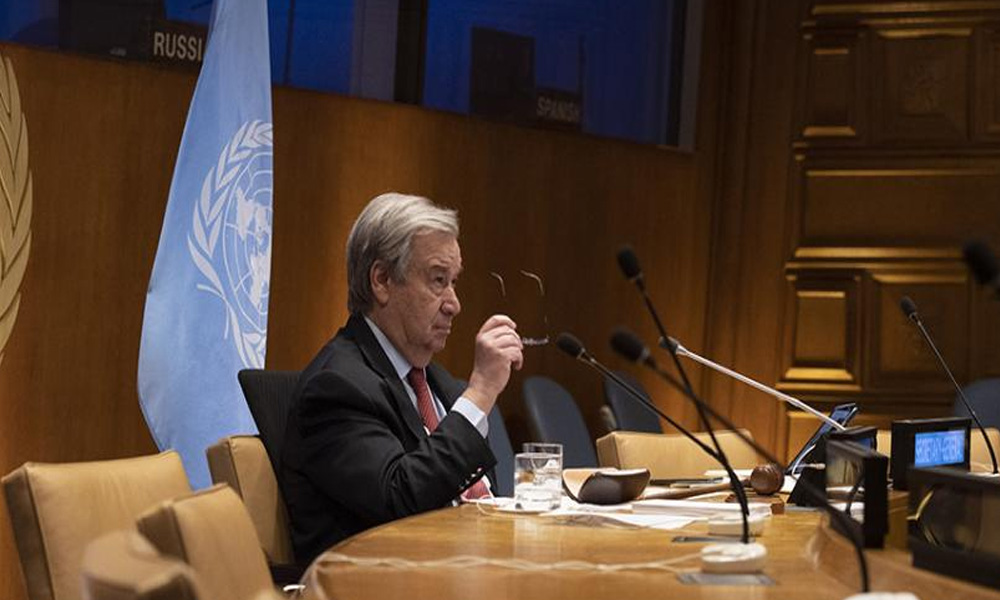
UN Secretary-General Antonio Guterres warned Thursday that nine million people in Afghanistan are at risk of famine and that about 95 percent of people in the country do not have enough food to eat.
Addressing delegates attending the UN’s high-level Pledging Event on Afghanistan, Guterres said the massive humanitarian response in Afghanistan since August 2021 “undoubtedly saved many lives over the winter”.
He thanked donor nations for their contributions but added that despite collective efforts, the already dire humanitarian situation in Afghanistan has deteriorated alarmingly over the past few months.
He warned that UNICEF estimates that without immediate action, a million severely malnourished children are on the verge of death.
He also stated that as global food prices skyrocket, as a result of the war in Ukraine, “this spells catastrophe for both Afghans struggling to feed their families”, and for UN aid operations.
Without immediate action, we face a starvation and malnutrition crisis in Afghanistan, he said adding that people are already selling their children and their body parts, in order to feed their families.
Guterres noted that “Afghanistan’s economy has effectively collapsed” and that “there is very little cash”.
He went on to state that more than 80 percent of the population is in debt and that key workers in vital services, including schools and hospitals, have not been paid for months.
Listing the hardships faced by Afghans he went on to state that businesses cannot operate; international aid agencies can barely function; and local partners face even greater hurdles.
In addition, livelihoods have evaporated and farmers cannot buy seeds or fertilizers, he said.
“The UN Development Programme has warned that unless we take action, 97 percent of Afghans could be living below the poverty line by the middle of this year. Humanitarian needs have tripled since last June. Yes, tripled.
And they are growing, day by day and month by month,” he warned.
Guterres stated that the international community must find ways to spare the Afghan people from the impact of the decision to halt development support to Afghanistan, and to freeze nearly $9 billion in Afghan assets overseas.
He said the international community “must make cash available, so the Afghan economy can breathe, and the Afghan people can eat.
“Wealthy, powerful countries cannot ignore the consequences of their decisions on the most vulnerable.
“The first step in any meaningful humanitarian response must be to halt the death spiral of the Afghan economy.
“Without that, even the best-funded and most effective aid operation will not save the people of Afghanistan from an unimaginable future,” he warned.
“We stayed, we delivered, and we are determined to keep delivering. Humanitarian aid is providing a fragile lifeline for millions of Afghans,” he said.
Last year, UN humanitarian partners reached nearly 20 million people across the country with life-saving assistance including food, clean water, health care, protection, shelter, education and winterization.
So far this year, the World Food Programme has reached more than 14 million people with food, nutrition and resilience support.
In February alone, UNICEF reached close to four million people across the country with health services. UNICEF personnel screened nearly one million children for malnutrition in February alone and UNHCR, working in areas prioritized for the return of refugees and internally displaced people, has provided support to more than half a million people so far this year.
Guterres stated that UNFPA reached more than a quarter of a million people between August and December last year with reproductive health and protection services, while OCHA’s funding mechanisms, including the Central Emergency Response Fund and the Afghanistan Humanitarian Fund, were integral to getting funds quickly to where they were most needed.
“Our funding appeal for Afghanistan this year is $4.4 billon – the world’s largest appeal for a single country.
“Together with our partners, we aim to reach 22 million people with food, water, health care, protection, shelter, education and other forms of life-saving aid.
“So far, the appeal is currently less than 13 percent funded,” he said.
In line with this, Guterres appealed to the donor community to “provide unconditional and flexible funding as soon as possible”.
He also voiced his disappointment that high school girls have been barred from going to school.
“I deeply regret that girls’ education above sixth grade remains suspended – a violation of the equal rights of girls that damages the entire country and leaves girls more exposed to violence, poverty and exploitation.
“There is simply no justification for such discrimination.
“Educated girls become educated women who lift their families and communities into a better future.
“I call on those with influence to use it to pressure the de facto authorities to fulfil their promise to reopen schools for all students, without discrimination or further delay,” he stated.
However, he said that while waiting for girls to return to school, the world cannot use this issue as a bargaining tool. He said there is no rationale for withholding humanitarian aid based on this decision by the de facto authorities. “The Afghan people cannot be doubly punished,” he said.
In conclusion, he said: “In the weeks and months ahead, I count on coordinated action to find creative solutions to set the Afghan economy back on its feet.”




Latest News
Lavrov calls for technical, logistical support for Kabul to combat terrorism
Lavrov also praised what he described as the Islamic Emirate’s control over Afghanistan, saying the authorities had brought the country’s territory under control and were “governing it quite successfully.”
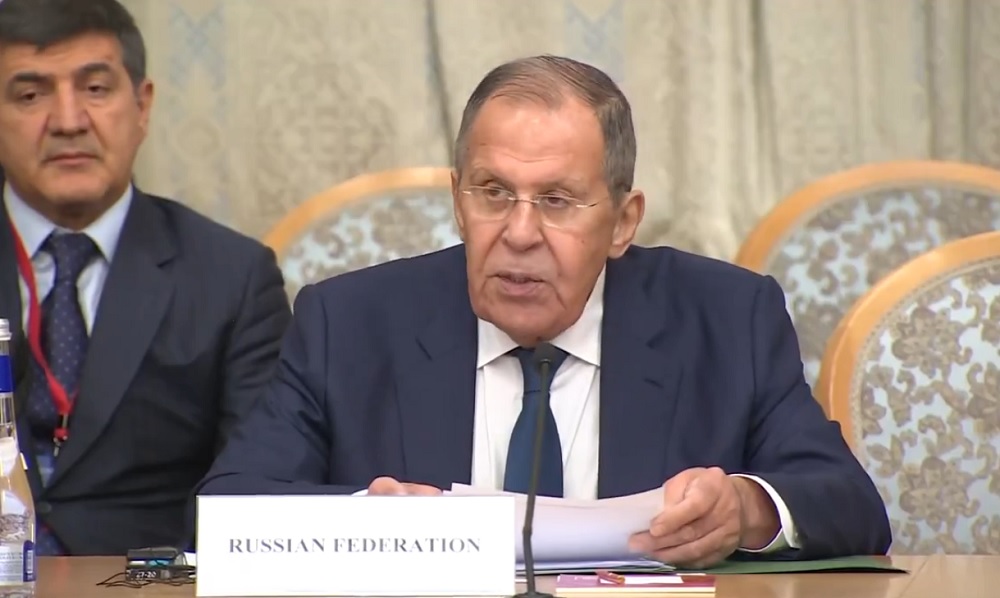
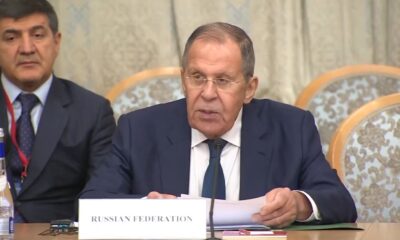
Russian Foreign Minister Sergey Lavrov has called for greater technical and logistical support for Kabul to strengthen Afghanistan’s capacity to combat terrorism.
Speaking at the Moscow Format meeting on Afghanistan on Monday, Lavrov said it was in the mutual interest of participating countries to help enhance Afghanistan’s counterterrorism capabilities.
“It is in our mutual interest to help strengthen Kabul’s counter-terrorism capabilities by providing logistical and technical assistance, as well as expert support,” Lavrov said.
Lavrov also praised what he described as the Islamic Emirate’s control over Afghanistan, saying the authorities had brought the country’s territory under control and were “governing it quite successfully.”
He said Afghan security forces were engaged in an “uncompromising struggle” against Islamic State and other militant groups, claiming that hundreds of militants had been killed and several high-profile attacks, including those targeting foreign nationals and diplomatic missions, had been thwarted.
The Russian foreign minister called for continued cooperation between intelligence and law-enforcement agencies, saying closer coordination could further strengthen Kabul’s ability to combat terrorism.
Lavrov also pointed to what he described as progress in Afghanistan’s fight against drug trafficking, citing UN assessments that opium production has fallen by 90 percent since 2022.
He said Russia would continue providing humanitarian assistance to Afghanistan, adding that another shipment was expected to arrive in the country within the next one or two months.
Lavrov also reiterated Moscow’s opposition to any NATO military presence in Afghanistan or neighboring countries, describing the deployment of NATO military infrastructure in the region as “categorically unacceptable.”
He warned that such a presence could contribute to further instability and conflict, citing what he described as the experience of recent decades.
The Moscow Format consultations on Afghanistan were launched in 2016 and bring together countries involved in Afghanistan and regional affairs.
The latest meeting was attended by special representatives and senior officials from Afghanistan, India, Iran, Kazakhstan, China, Kyrgyzstan, Pakistan, Russia, Tajikistan and Uzbekistan. Belarus and Egypt participated as invited guests.
Latest News
Iranian envoy says Afghanistan and Iran face common opportunities and threats
He said Iran and Afghanistan should closely examine their common challenges and take practical steps to safeguard the interests of both countries and the wider Muslim community.
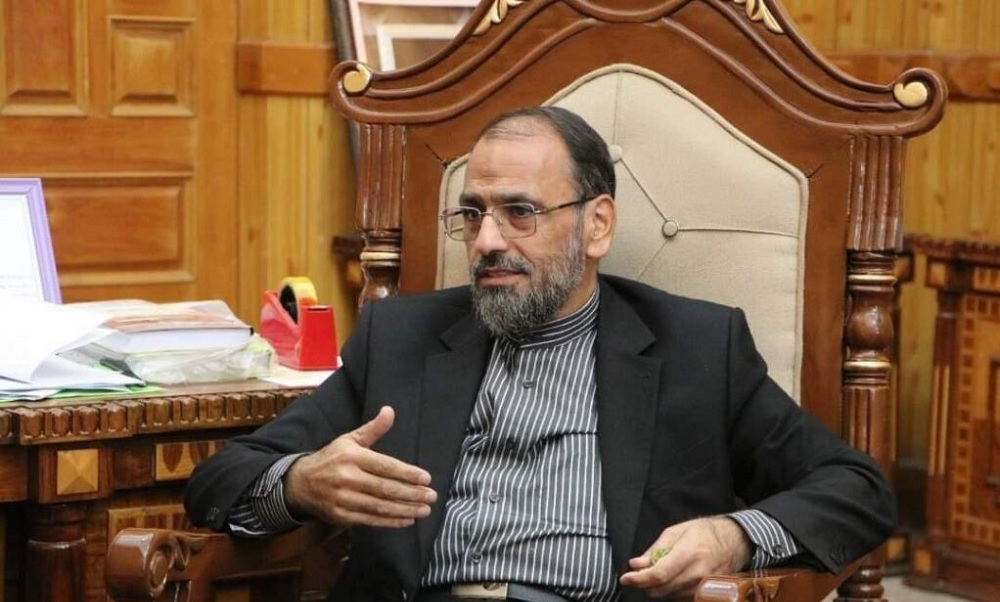
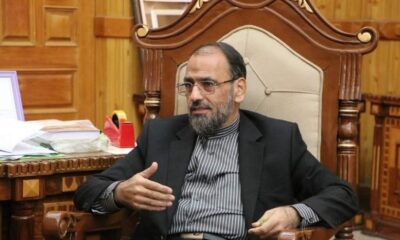
Seyed Hassan Mortazavi, Iran’s deputy ambassador in Kabul, says Iran and Afghanistan are facing common opportunities and threats amid current regional and global developments, making close cooperation between the two countries essential to address these issues.
Speaking to Radio Dari, Mortazavi said his recent visits to Kandahar and Balkh provinces and meetings with local officials were aimed at following up on shared issues more closely and strengthening relations between the two countries.
He said Iran and Afghanistan should closely examine their common challenges and take practical steps to safeguard the interests of both countries and the wider Muslim community.
Mortazavi described Kandahar as particularly important due to the presence of the Islamic Emirate’s leadership, saying Iran, like other regional countries, follows key issues not only in Kabul but also in Kandahar.
He added that during his several-hour meeting with Kandahar Governor Mullah Shirin, the two sides discussed bilateral and regional issues, including security, economic matters and border cooperation.
Mortazavi also said he met with Islamic Emirate spokesman Zabihullah Mujahid in Kandahar, where they discussed bilateral cooperation in the media sector.
Regarding his visit to Balkh and meeting with the province’s governor, Yusuf Wafa, Mortazavi said the talks covered not only issues of mutual interest in Mazar-e-Sharif but also broader matters concerning relations between Iran and Afghanistan.
He added that the two sides stressed ensuring mutual security, opposing destabilizing and security-threatening actions, and strengthening joint efforts to combat terrorism and security threats.
Economic issues and regional economic cooperation were also discussed during the meeting with the Balkh governor, he said.
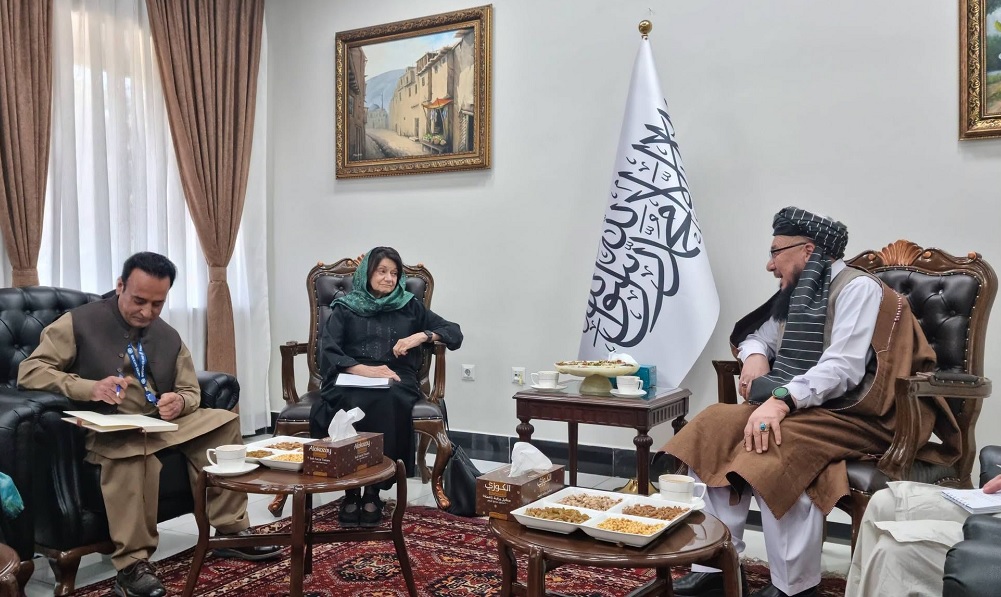
UN Deputy Secretary-General for Political and Peacebuilding Affairs Rosemary DiCarlo met with Afghanistan’s Deputy Minister of Urban Development and Housing Sheikh Madar Ali Karimi Bamiani during her visit to Kabul, with the two sides discussing a range of key issues concerning Afghanistan.
The meeting focused on governance, regional peace and stability, housing, the return of Afghan migrants, the Kuchi issue, and the closure of transit and transportation routes between Afghanistan and Pakistan, according to Bamiani’s office.
The two sides also exchanged views on other social challenges facing Afghanistan.
DiCarlo emphasized the United Nations’ continued support and cooperation with the people of Afghanistan, saying the UN will remain alongside the Afghan people and will not forget them.


Lavrov calls for technical, logistical support for Kabul to combat terrorism

Cricket Bonanza: Afghanistan set for packed international schedule

Trump picks John Coale as special presidential envoy for hostage affairs

Iranian envoy says Afghanistan and Iran face common opportunities and threats

UN political affairs chief meets Afghan urban development deputy minister in Kabul

Saudi energy group signs major Afghanistan deals covering gas exploration and pipeline plans

Khalilzad: Afghanistan ready to attract major investment

Messi returns to Inter Miami after Argentina retirement

Imam Abu Hanifa exhibition to draw exhibitors from more than 20 countries

Maryam Nawaz says Punjab faces greater security threats from neighbouring provinces

Tahawol: Doha process seeks new cooperation opportunities

Saar: Moscow forum 8th consultative meeting on Afghanistan

Tahawol: Escalation of internal political crisis in Pakistan discussed

Saar: Continuation of crisis in the Middle East discussed

Tawsia: Review of three key economic developments in Afghanistan
-
 Latest News4 days ago
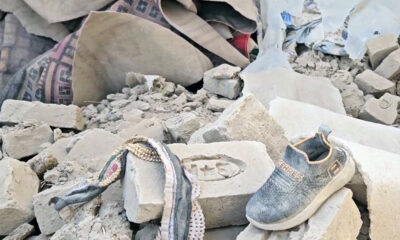
Four members of one family killed in Helmand in Pakistan airstrike
-
 Sport3 days ago
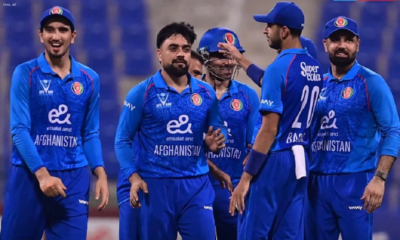
ACB announces Afghanistan squads for Bangladesh, Zimbabwe series
-
 Latest News4 days ago
Moscow to host 8th meeting of Afghanistan consultations on October 5
-
 Latest News3 days ago
Russia expects to ease Afghanistan-Pakistan tensions at Moscow Format meeting
-

 Sport4 days ago
Rashid Khan, Azmatullah Omarzai maintain top spots in ICC ODI rankings
-
 International Sports3 days ago
Afghanistan to face Pakistan, India and Australia at 2027 Cricket World Cup
-
 Regional3 days ago
Saudi-led coalition says Houthis attacked power station for Prophet’s Mosque in Medina
-
 Latest News4 days ago
UNAMA acting chief visits Islam Qala border to assess support for returnees