
Latest News
UK troops should stay until peace talks are over: House of Lords

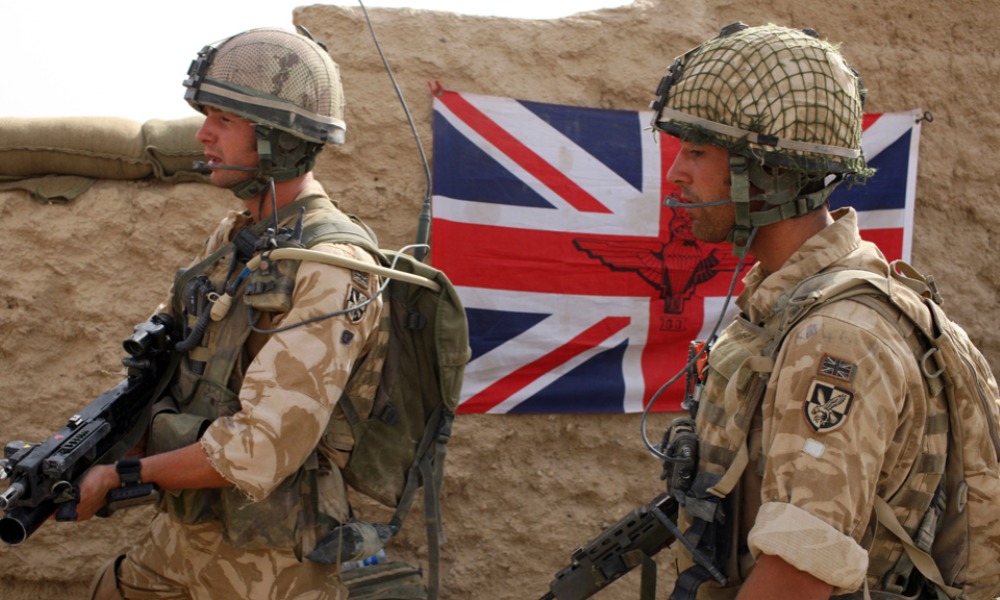
A House of Lords committee on Tuesday recommended that British troops should stay in Afghanistan until peace talks with the Taliban are over and urged the British government to shape its own policy rather than simply follow the United States.
Releasing their report on “The UK and Afghanistan”, the International Relations and Defence Committee criticizes the lack of clarity on UK policy towards Afghanistan, expresses concern over the premature withdrawal of troops by the US, and says the British government will have to carefully consider its approach to the Taliban if a power-sharing agreement is reached at the peace talks.
While only around 850 UK troops are currently stationed in Afghanistan, the UK is the third largest bilateral donor to Afghanistan, providing £167 million in official development assistance in 2020–21.
The Committee’s report comes after their inquiry which explored the UK’s diplomatic, military and aid strategy for Afghanistan, including scrutiny of the new Foreign, Commonwealth and Development Office (FCDO), and the Ministry of Defence (MoD).
It also considered the UK’s work with international partners such as the US, NATO, and the Afghan government.
Commenting on the report, Baroness Anelay of St Johns, Chair of the Committee, said:
“Afghanistan’s relative prioritisation as a UK national security issue has slipped since 2010, but the scale of the challenges facing the country, and their potential impact on UK interests, have not diminished.
“The Afghan state remains very fragile, while the Taliban’s insurgency continues, and terrorist groups, including al-Qaeda and Islamic State Khorasan Province (Daesh), operate in the country. Afghanistan is the source of 95 percent of heroin on UK streets.
“This is a critical time for Afghanistan, with peace talks in Qatar having resumed over the weekend and an unacceptably high level of violence continuing to afflict an already poor and unstable country.
“The (British) Government must engage urgently with the incoming Biden Administration on the strategy for Afghanistan, and emphasise to the US and to NATO Allies the importance of their ongoing presence in Afghanistan until a peace deal is reached. The Government should be front and centre in calling for a multinational approach to Afghanistan within NATO, addressing regional stability, counter-terrorism and countering narcotics production and trafficking,” she said.
As a major aid donor to Afghanistan, she said the Committee was concerned that the British Government’s decision to renege on its commitment to spend 0.7 percent of gross national income on aid from 2021 could have a disproportionately negative impact on Afghanistan.
The report meanwhile found that the UK has shown little inclination to exert an independent voice on policy on Afghanistan and has followed the lead of the US.
The Committee stated it also found few traces of a coherent UK policy approach to Afghanistan and urged the British government to call for a multi-national approach to Afghanistan within NATO – focusing on the UK’s objectives of regional stability, counter-terrorism and countering narcotics production and trafficking.
The report stated that the ongoing presence of US and NATO troops in Afghanistan is essential to the Afghan government’s military strength and negotiating position at the talks in Doha and emphasised the urgency of UK engagement with the incoming Biden Administration on Afghanistan.
“The UK must make clear to the US and NATO allies the crucial role they play in maintaining the Afghan government’s leverage in the peace talks,” the report read.
The inquiry also found that the Taliban has not demonstrated that it has changed, and “it is ideologically opposed to the progress on human rights made since 2001.”
According to the report, while the Taliban “is engaging with the peace talks, its commitment to a negotiated settlement and to power-sharing remains unclear.
“The Committee concludes the Government should carefully consider how it will handle its future relationship with the Taliban in the event of the peace talks resulting in an agreement, in the context of future UK security assistance and aid to an Afghan government with Taliban representation.” the report read.
Human rights were also found to be an issue, particularly the rights of women and minorities, which the Committee found to be in danger of being a casualty of the Afghan peace talks.
“The Committee welcomes the UK’s enduring commitment to human rights, but regrets that the UK is unlikely to have sufficient leverage to ensure these rights are protected.”





Latest News
Afghan Defense Ministry claims retaliatory strikes on Pakistani forces along Durand Line
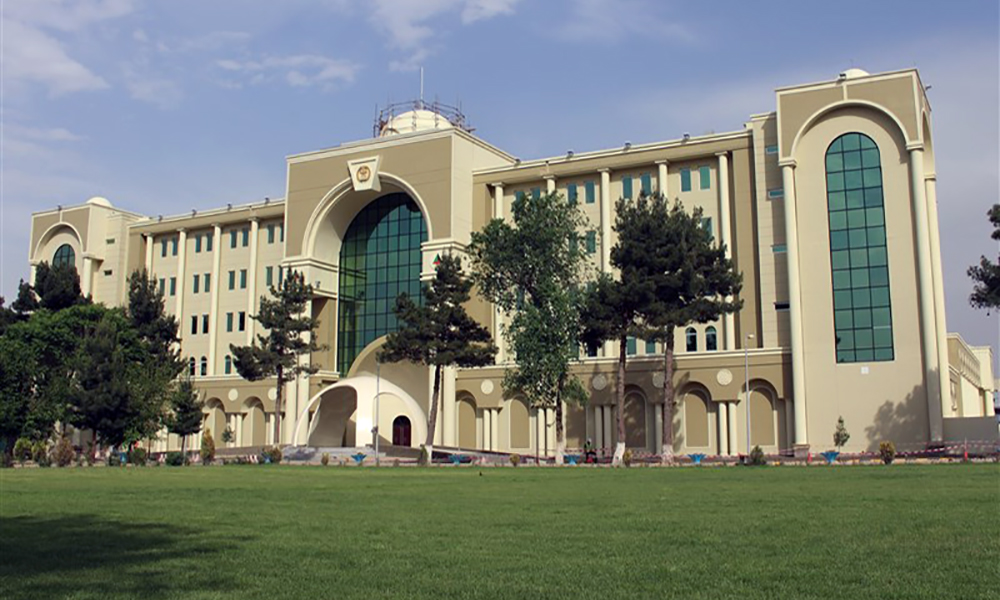
The Ministry of National Defense of Afghanistan said Thursday that Afghan forces carried out a series of retaliatory operations against Pakistani military positions following incursions by Pakistani forces across the disputed Durand Line.
In a statement, the ministry said the operations took place over the past day and night along the Durand Line and across several eastern and southern provinces, including Kandahar, Nangarhar, Kunar, Nuristan, Khost, Paktia, and Paktika. According to the statement, forces of the Islamic Emirate launched coordinated attacks targeting what officials described as enemy positions and military infrastructure.
The ministry also said Afghan air units conducted an airstrike at around 8 a.m. in the Kachlagh area of Balochistan province in Pakistan, targeting a command center belonging to the Frontier Corps, which it identified as the “Ghazaband” general command facility.
Officials claimed the strike hit the command office and soldiers’ barracks, resulting in dozens of Frontier Corps personnel being killed or wounded and causing significant structural damage. Independent confirmation of the casualties has not been immediately available.
According to the statement, Afghan forces also destroyed 12 Pakistani military posts and bases during the retaliatory operations over the past 24 hours. The ministry said the clashes resulted in 41 Pakistani soldiers killed and 53 others wounded.
The ministry added that Afghan air defenses shot down three Pakistani reconnaissance drones during the confrontations.
Afghan officials acknowledged that three members of the Islamic Emirate’s forces were killed and seven others injured during the fighting.
The reported strikes come amid rising tensions along the Durand Line, the disputed frontier between Afghanistan and Pakistan, where clashes between the two sides have intensified in recent days.
Latest News
Bayat Foundation provides Ramadan aid to needy families in Balkh
The Bayat Foundation regularly conducts humanitarian programs across the country, including food distributions, healthcare assistance, and community development initiatives.
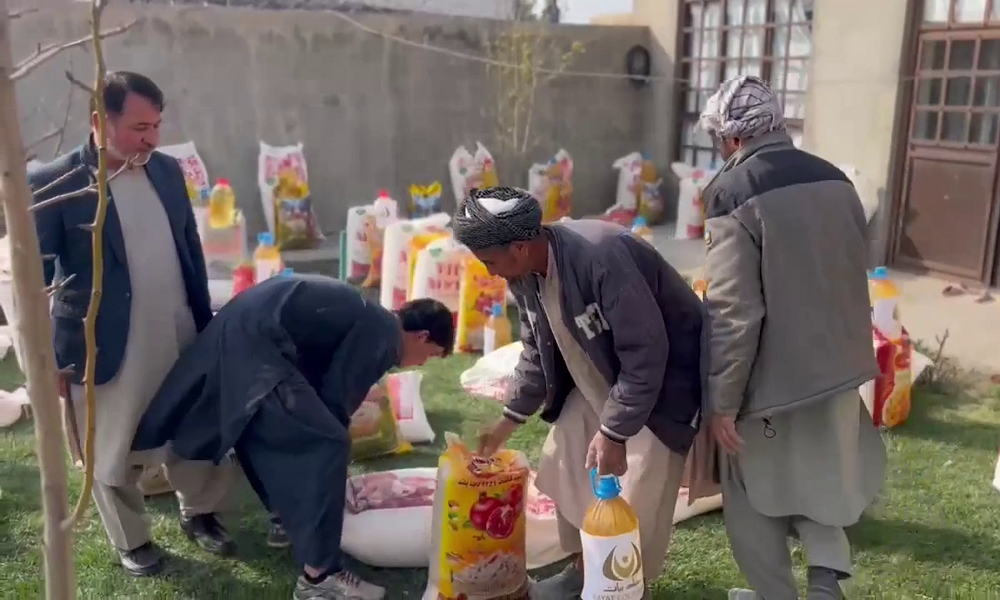
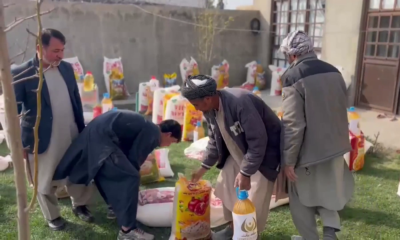
The Bayat Foundation has distributed food assistance packages to dozens of vulnerable families in northern Balkh province as part of its annual Ramadan relief efforts.
According to foundation officials, the packages included essential staples such as flour, rice, and cooking oil, aimed at helping struggling households meet basic needs during the holy month of Ramadan.
The organization said similar distributions are planned in other provinces across the country in the coming weeks.
Yafes Saqib, the Bayat Foundation’s representative in Balkh, said the initiative is part of the foundation’s broader humanitarian campaign carried out each year during Ramadan.
“Continuing the foundation’s ongoing assistance, this time Ramadan aid—including flour, oil, and rice—was distributed to needy families in Balkh province,” Saqib said.
“We remain committed to supporting vulnerable communities, especially during this important time,” he said.
Local residents welcomed the assistance, saying the support helps ease financial pressures during a period when many families struggle to afford basic food supplies.
“We are very grateful to the Bayat Foundation and happy that they provided assistance during the holy month of Ramadan,” one recipient said.
Another beneficiary expressed similar appreciation: “We sincerely thank the Bayat Foundation for distributing Ramadan aid to the people. We are truly pleased and thankful for their support.”
Humanitarian organizations have warned that economic hardship remains widespread across Afghanistan, with many households facing rising food prices, limited employment opportunities, and ongoing economic instability.
In this context, charitable initiatives during Ramadan play an important role in supporting vulnerable families.
The Bayat Foundation regularly conducts humanitarian programs across the country, including food distributions, healthcare assistance, and community development initiatives.
Each year during Ramadan, the foundation expands its relief activities to reach thousands of families in need across multiple provinces.
Latest News
KP Chief Minister says inclusive Pakistani delegation needs to visit Afghanistan for talks
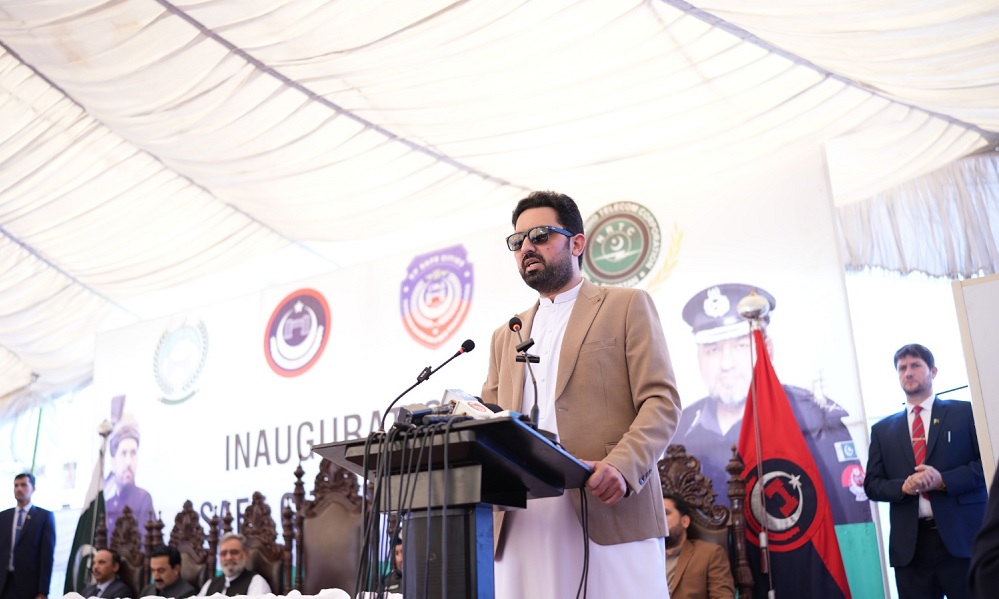
Sohail Afridi, Chief Minister of Khyber Pakhtunkhwa, has called for an inclusive Pakistani delegation to travel to Afghanistan to engage with the Islamic Emirate authorities.
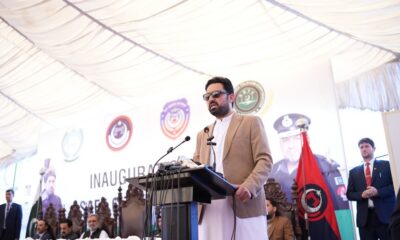
Speaking at a project inauguration in Peshawar on Wednesday, Afridi said the delegation should comprise provincial and federal officials, religious scholars, and tribal elders.
“In our view, such a jirga will be effective, and if an inclusive delegation visits Afghanistan, the situation is likely to improve,” he added.
Islamabad has repeatedly claimed that militants operate from Afghan territory to carry out attacks in Pakistan. The Islamic Emirate, however, has rejected these allegations, stating that Afghanistan is not responsible for Pakistan’s “security failures.”


Afghan Defense Ministry claims retaliatory strikes on Pakistani forces along Durand Line

Bayat Foundation provides Ramadan aid to needy families in Balkh

Saar: Sixth day of US–Israel war with Iran reviewed

ACB names squads for white-ball series against Sri Lanka; Ibrahim Zadran appointed T20I captain

KP Chief Minister says inclusive Pakistani delegation needs to visit Afghanistan for talks

Pakistani military jet downed in Afghanistan’s Jalalabad, pilot captured alive
Afghan Air Force conducts airstrikes in Islamabad, other cities

IEA releases three Pakistani soldiers to mark Ramadan

Afghanistan’s Chief of Armed Forces underscores readiness and equipment for national defense

Afghanistan welcomes investment and technology partnerships with India
Saar: Sixth day of US–Israel war with Iran reviewed

Tahawol: Discussion on ongoing US–Israel war with Iran

Saar: Turkiye’s efforts to revive ceasefire between Kabul-Islamabad

Tahawol: Discussion on ongoing conflicts between Afghanistan and Pakistan

Saar: Ongoing retaliatory operations against Pakistan discussed
-
 Latest News4 days ago
Afghan air force strikes key Pakistani military installations in retaliatory operation
-
 World5 days ago
US lawmakers, world leaders react to death of Ayatollah Ali Khamenei after Iran strikes
-
 Regional3 days ago
Middle East conflict intensifies; UK base in Cyprus targeted
-
 Regional4 days ago
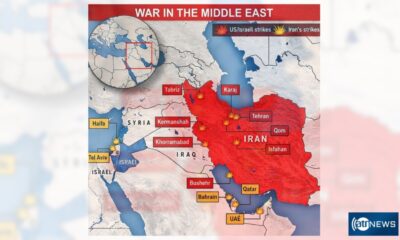
Iran launches widespread drone and missile strikes on Gulf states amid US-Israeli attacks
-
 Regional5 days ago
Iran to form interim leadership council as officials vow retaliation after Ayatollah’s death
-
 Latest News4 days ago
Pakistan’s night strikes hit residential areas in Afghanistan, civilian casualties reported
-
 Regional3 days ago
Ayatollah’s wife dies from injuries sustained in airstrike on Tehran residence
-

 International Sports4 days ago
FIFA calls for ‘all teams to participate’ in 2026 World Cup amid US–Iran conflict