
Latest News
U.S. says it is up to Afghans to defend country as Taliban take more territory


The United States said it was up to Afghan security forces to defend the country after Taliban militants captured a sixth provincial capital on Monday, along with border towns and trade routes.
President Joe Biden has said the U.S. military mission in Afghanistan will end on Aug. 31, arguing that the Afghan people must decide their own future and that he would not consign another generation of Americans to the 20-year war.
U.S. envoy for Afghanistan Zalmay Khalilzad has left for Qatar where he will “press the Taliban to stop their military offensive and to negotiate a political settlement,” the State Department said on Monday.
In talks over three days, representatives from governments and multilateral organizations will press for “a reduction of violence and ceasefire and a commitment not to recognize a government imposed by force,” the State Department said.
The Taliban, fighting to reimpose strict Islamic law after their 2001 ouster, have stepped up their campaign to defeat the government as foreign forces withdraw.
On Monday, they took Aybak, capital of the northern province of Samangan.
“Right now the Taliban are fighting with Afghan forces to capture the police headquarters and compound of the provincial governor,” said Ziauddin Zia, a lawmaker in Aybak.
“Several parts of the capital have fallen to the Taliban.”
The insurgents took three provincial capitals over the weekend – Zaranj in the southern province of Nimroz, Sar-e-Pul, in the northern province of the same name, and Taloqan, in northeastern Takhar province.
They had already taken the northern provincial capital of Kunduz and Lashkar Gah, capital of Helmand province.
Pentagon spokesman John Kirby said the United States was deeply concerned about the trend but that Afghan security forces had the capability to fight the insurgent group.
“These are their military forces, these are their provincial capitals, their people to defend and it’s really going to come down to the leadership that they’re willing to exude here at this particular moment,” Kirby said.
Asked what the U.S. military can do if the Afghan security forces are not putting up a fight, Kirby said: “Not much.”
U.S. officials, speaking on condition of anonymity, said that while the military had warned Biden earlier this year that provincial capitals would fall with a withdrawal of troops, they were still surprised at how quickly some of them were being taken by the Taliban, Reuters reported.
The United States carried out less than a dozen strikes over the weekend as the Taliban overran the provincial capitals, in one instance simply destroying equipment.
One official said the Afghan forces did not ask for any support as Kunduz was being overtaken.
RECRIMINATIONS
The Taliban gains have sparked recriminations over the withdrawal of foreign forces. British Defence Secretary Ben Wallace told the Daily Mail that the accord struck last year between the United States and the Taliban was a “rotten deal”.
Washington agreed to withdraw in a deal negotiated last year under Biden’s Republican predecessor, Donald Trump.
Wallace said his government had asked some NATO allies to keep their troops in Afghanistan once the U.S. troops departed, but failed to garner enough support, Reuters reported.
“Some said they were keen, but their parliaments weren’t. It became apparent pretty quickly that without the United States as the framework nation it had been, these options were closed off,” Wallace said.
Germany’s defence minister rejected calls for its soldiers to return to Afghanistan after Taliban insurgents took Kunduz where German troops were deployed for a decade.
Afghan commandoes had launched a counterattack to try to beat back Taliban fighters who overran Kunduz, with residents fleeing the conflict describing the almost constant sound of gunfire and explosions.
In the west, near the border with Iran, security officials said heavy fighting was under way on the outskirts of Herat. Arif Jalali, head of Herat Zonal Hospital, said 36 people had been killed and 220 wounded over the past 11 days. More than half of the wounded were civilians.
UNICEF said 20 children were killed and that 130 children had been injured in southern Kandahar province in the past 72 hours.
“The atrocities grow higher by the day,” said Hervé Ludovic De Lys, UNICEF’s representative in Afghanistan.
FAMILIES FLEE
In Kunduz, many desperate families, some with young children and pregnant women, abandoned their homes, hoping to reach the relative safety of Kabul, 315 km (200 miles) to the south – a drive that would normally take around 10 hours.
Ghulam Rasool, an engineer, was trying to hire a bus to get his family to the capital as the sound of gunfire reverberated through the streets of his hometown.
“We may just be forced to walk till Kabul, but we are not sure if we could be killed on the way. … Ground clashes were not just stopping even for 10 minutes,” Rasool told Reuters.
He and several other residents, and a security official, said Afghan commandoes had launched an operation to clear the insurgents from Kunduz.
In Kabul itself, suspected Taliban fighters killed an Afghan radio station manager, government officials said, the latest in a long line of attacks targeting media workers.
Thousands were trying to enter Kabul, even after the city has witnessed attacks in diplomatic districts.
Speaking to Al Jazeera TV on Sunday, Taliban spokesman Muhammad Naeem Wardak warned the United States against further intervention to support government forces.


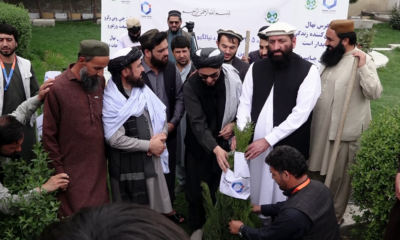




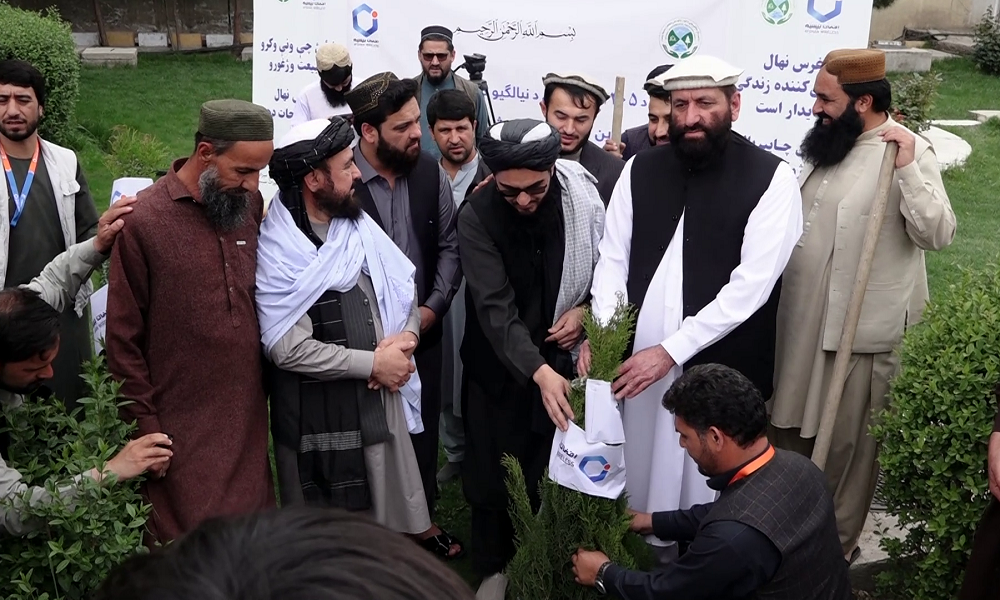
Afghan Wireless Communication Company (AWCC) has donated thousands of ornamental and non-fruit-bearing saplings to the National Environmental Protection Agency (NEPA) as part of efforts to promote greenery and improve the country’s environment.
NEPA officials said the saplings will be planted at new terminals of the Ministry of Transport, at several government offices, and across parts of Kabul to enhance urban greenery and environmental quality.
The agency welcomed the contribution and called on other private sector entities to support environmental initiatives and urban greening efforts.
Afghan Wireless officials said the company, in coordination with NEPA and municipal authorities, plans to continue tree-planting campaigns in Kabul, Kandahar, Herat, and Kunduz.
Mohammad Khan Yaqoubi, legal adviser to AWCC, said the company also intends to expand cooperation this year in Kabul, Kandahar, Bamyan, and Herat alongside environmental authorities and Kabul Municipality.
NEPA officials urged citizens to take part in efforts to develop and protect the country’s environment, emphasizing the importance of preserving a greener Afghanistan for future generations.
Latest News
Afghan minister rejects Durand Line, warns against ‘external interference’
Noori also dismissed claims of an internal “resistance” movement, describing it as an externally driven effort lacking genuine domestic support.
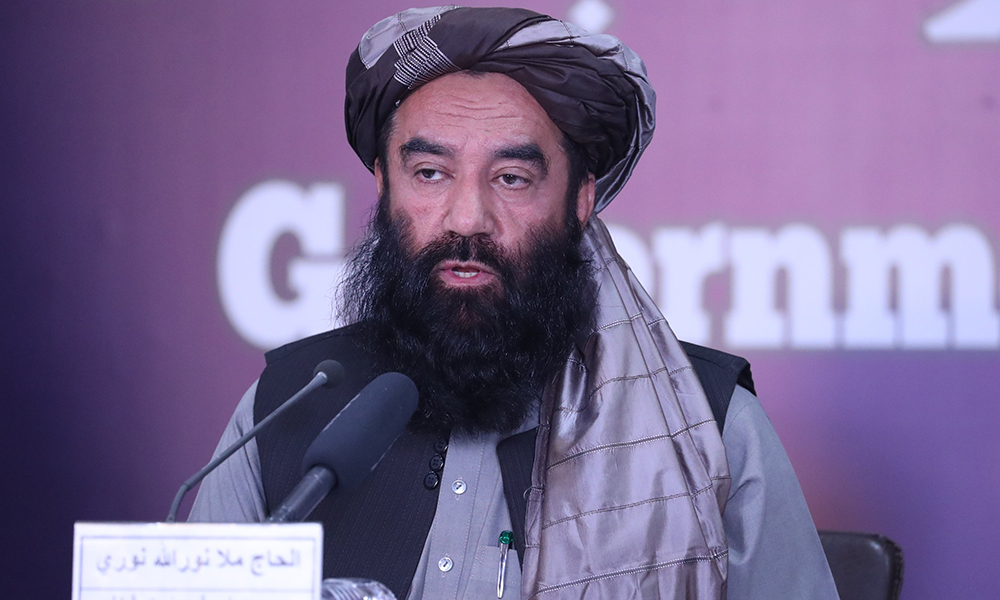
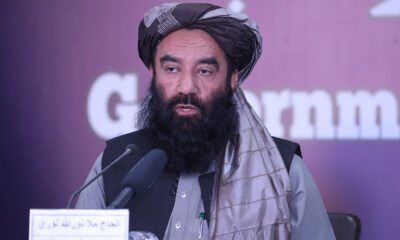
Noorullah Noori has reiterated that Afghanistan does not recognize the Durand Line, reaffirming Kabul’s long-standing position on the disputed boundary.
Speaking at a public gathering in Badakhshan province, the Minister of Borders, Ethnicities and Tribal Affairs accused regional intelligence agencies, including those of Pakistan and other countries, of past interference in Afghanistan’s internal affairs, alleging they have contributed to divisions within the country.
Noori also dismissed claims of an internal “resistance” movement, describing it as an externally driven effort lacking genuine domestic support.
Despite the criticism, he said the current authorities seek normal relations with all countries based on mutual respect, while stressing that Afghanistan would defend its territorial integrity against any potential threats.
Latest News
EU releases emergency funding to support flood-hit communities in Afghanistan
Additional assistance will focus on providing hygiene kits, access to safe drinking water and primary healthcare services to affected populations.
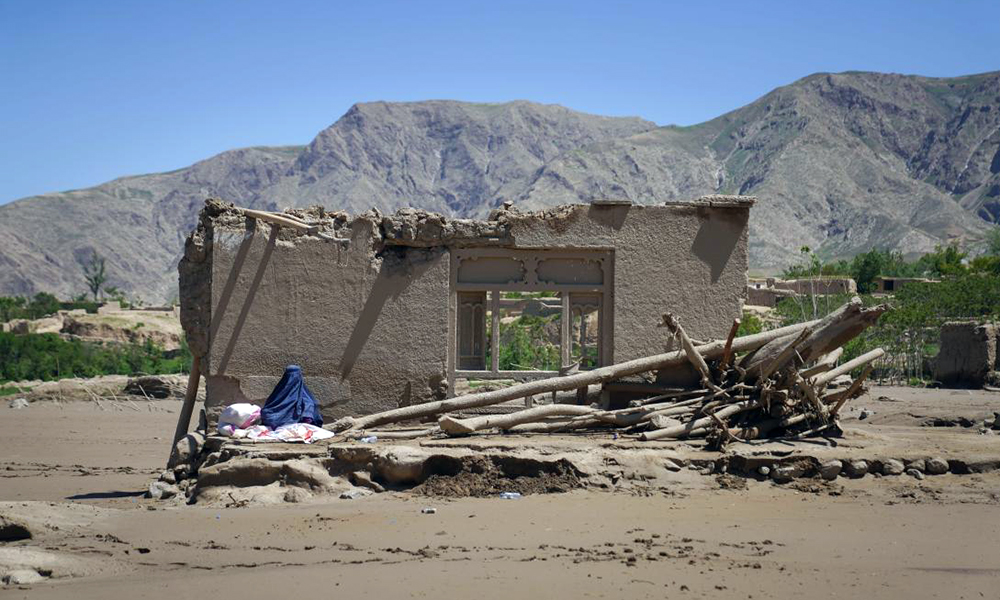
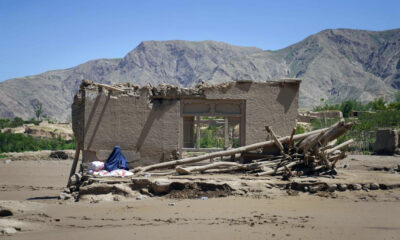
The European Union has announced €175,000 (more than 13 million afghanis) in humanitarian assistance to support communities affected by recent flooding across Afghanistan.
The funding is expected to assist around 12,000 people in some of the hardest-hit provinces, including Badghis, Farah, Ghor, Helmand, Herat, Kandahar, Logar and Uruzgan.
According to officials, the support will be channelled through the Afghan Red Crescent Society to deliver emergency cash assistance aimed at helping families meet their most urgent needs. The aid package will also include essential relief items such as tents, blankets and basic household supplies.
Additional assistance will focus on providing hygiene kits, access to safe drinking water and primary healthcare services to affected populations.
The funding forms part of the EU’s broader contribution to the Disaster Response Emergency Fund managed by the International Federation of Red Cross and Red Crescent Societies, which enables rapid response to emergencies.
The EU remains one of the largest humanitarian donors to Afghanistan, with more than €162 million allocated this year alone to support aid operations in the country. Earlier in 2026, the bloc also released €250,000 to assist communities displaced by ongoing conflict.
In addition to financial support, the EU has facilitated nearly 50 humanitarian airlift operations in recent years, including three flights so far this year delivering approximately 270 tonnes of nutrition supplies.
Officials said the latest funding underscores continued international efforts to address urgent humanitarian needs following natural disasters, as many Afghan communities face growing vulnerability due to recurring climate shocks and economic challenges.
The European Union and its member states are among the world’s leading providers of humanitarian assistance, supporting millions of people affected by conflicts and natural disasters each year.
Through its humanitarian operations arm, the EU delivers aid based on need, with the aim of saving lives, reducing suffering and protecting human dignity in crisis-affected regions.
The Disaster Response Emergency Fund, established in 1979 and supported by international donors, provides immediate financial assistance to national Red Cross and Red Crescent societies responding to emergencies, allowing for rapid deployment of relief efforts when disasters strike.


Tahawol: EU envoy’s concern over Afghanistan discussed

Saar: Afghanistan’s focus on developing regional cooperation discussed

US seizes tanker, Trump orders navy to use force as Hormuz tensions escalate

AWCC donates saplings to NEPA in push for greener Afghanistan

Afghan minister rejects Durand Line, warns against ‘external interference’

IEA supreme leader orders replacement of foreign terminology in official documents

Russia deems US military presence in Afghanistan unacceptable

Afghanistan hosts inaugural Afghanistan–Central Asia Consultative Dialogue to strengthen regional cooperation

TAPI gas pipeline advances 25 km in Afghanistan

Russia backs Uzbekistan–Afghanistan trade hub, praises regional economic cooperation
Tahawol: EU envoy’s concern over Afghanistan discussed
Saar: Afghanistan’s focus on developing regional cooperation discussed

Tahawol: Ceasefire extension between US and Iran discussed

Saar: Rising arbitrary arrests of Afghan refugees in Pakistan discussed

Tahawol: Russia’s Security Concerns Over Afghanistan discussed
-

 Latest News5 days ago
Afghanistan launches media platform to improve access to information
-
 Latest News3 days ago
Afghanistan, Belarus hold talks on fuel imports
-
 World4 days ago
UAE seeks US financial backstop amid Iran war fallout, warns of possible shift from dollar
-

 International Sports5 days ago
Record eight Arab teams qualify for 2026 World Cup
-
 World5 days ago
Arab and Islamic nations condemn Israel move on Somaliland
-
 Latest News5 days ago
CSTO, UN stress ‘Afghanistan factor’ in Central Asia security discussions
-

 Latest News5 days ago
Former Australian soldier denies Afghan war crimes allegations
-

 International Sports5 days ago
Sunrisers and DC secure wins as IPL momentum builds