
Business
U.S. has no plans to release billions in Afghan assets: Reuters

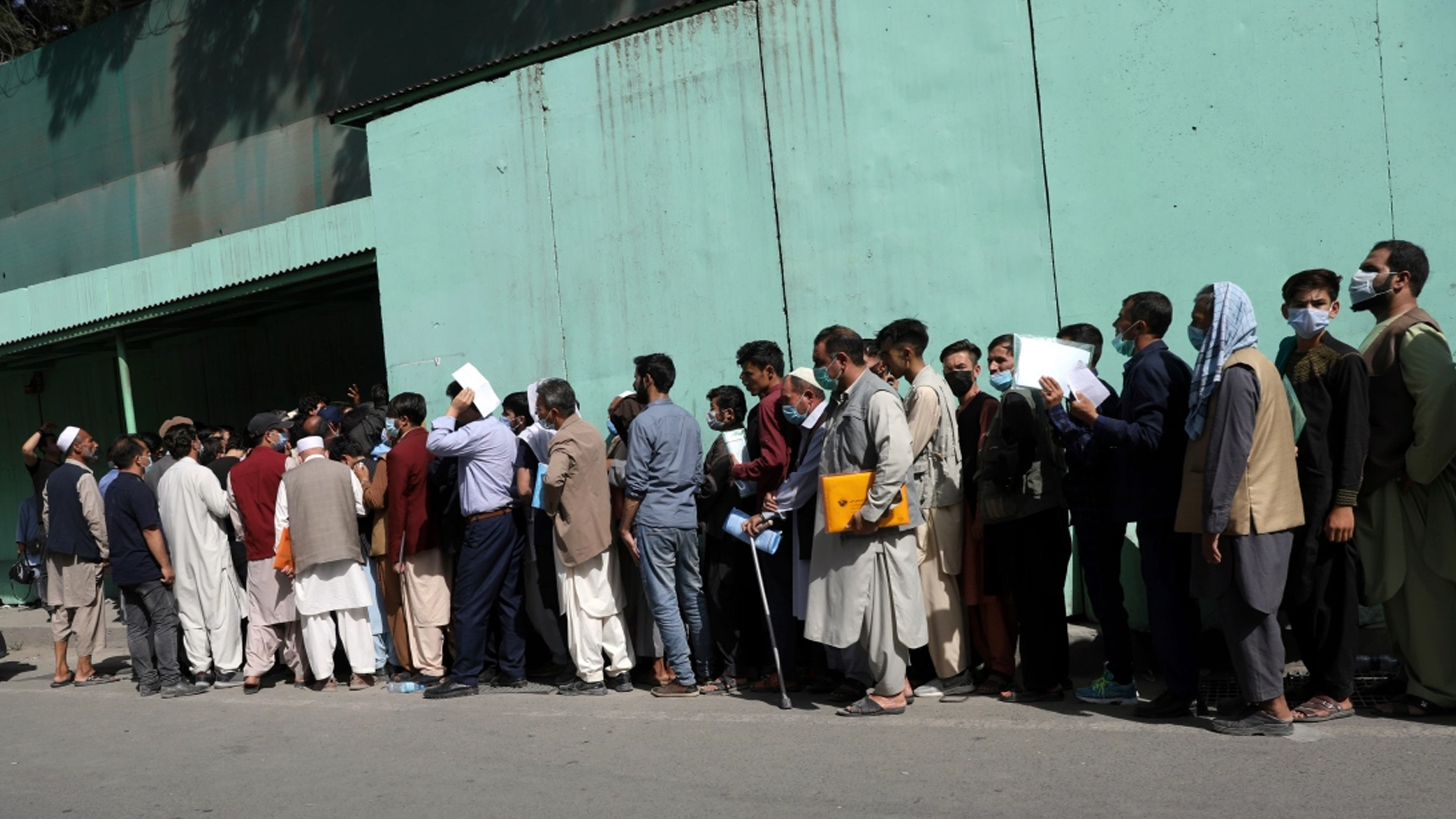
The Biden administration has no plans to release billions in Afghan gold, investments and foreign currency reserves parked in the United States that it froze after the Taliban’s takeover, despite pressure from humanitarian groups and others who say the cost may be the collapse of Afghanistan’s economy.
Much of the Afghan central bank’s $10 billion in assets are parked overseas here, where they are considered a key instrument for the West to pressure the Taliban here to respect women’s rights and the rule of law.
Any unfreezing of these assets may be months away, financial experts said.
Officials from the U.S. State Department, U.S. Treasury, White House National Security Council and other agencies have been in regular discussions about Afghanistan’s finances since the Taliban took over in mid-August, ahead of what the United Nations and others see as a looming humanitarian crisis.
Any decision to release the funds would likely involve top U.S. officials from several departments but will ultimately be up to President Joe Biden, the experts said.
Food and fuel prices are soaring across Afghanistan, amid a shortage of cash triggered by a halt in foreign aid, a halt in dollar shipments and a drought.
The U.S. Treasury this week said it had granted a license here authorizing the U.S. government and its partners to continue to facilitate humanitarian aid in Afghanistan. It also gave Western Union, the world’s largest money transfer firm, and other financial institutions a green light to resume processing here personal remittances to Afghanistan from migrants overseas.
The Treasury Department is not easing sanctions on the Taliban or loosening restrictions on their access to the global financial system, a spokesperson told Reuters.
“The United States government has been in touch with humanitarian partners in Afghanistan, both regarding security conditions on the ground and about their ability to continue their humanitarian work,” the spokesperson said.
“As we maintain our commitment to the Afghan people, we have not reduced sanctions pressure on Taliban leaders or the significant restrictions on their access to the international financial system.”
Shah Mehrabi, an economics professor in Maryland and long-time member of the Afghan central bank’s board, a senior Russian official and humanitarian groups are among those urging the U.S. Treasury to also unfreeze the Afghan assets, saying that lives are at stake.
“The gravity of the situation is so immense. Every day that passes is going to result in more suffering and more exodus of people,” Mehrabi said.
The International Monetary Fund has also blocked the Taliban from accessing some $440 million in new emergency reserves, or Special Drawing Rights, issued by the global lender last month.
Adnan Mazarei, former deputy director of the IMF and now a fellow at the Peterson Institute for International Economics, said the United States could not legally release the Afghan assets until there was an internationally recognized government, and that could take many months to occur. The IMF could not act until its board voted, once a government was recognized.
He said a central bank’s reserves are typically not touched except as a last resort. Even Iran, struggling under intense international sanctions, has not used its IMF emergency reserves, he said.
Brian O’Toole, a former Treasury Department official now with the Atlantic Council, said a release of the Afghan assets would not solve Afghanistan’s considerable problems.
“Just releasing those funds doesn’t stabilize the Afghan economy, or do anything like that. What it does is give the Taliban access” to billions of dollars, he said. “I don’t think there’s gonna be a lot of appetite in the U.S. to do that, nor should there be.”




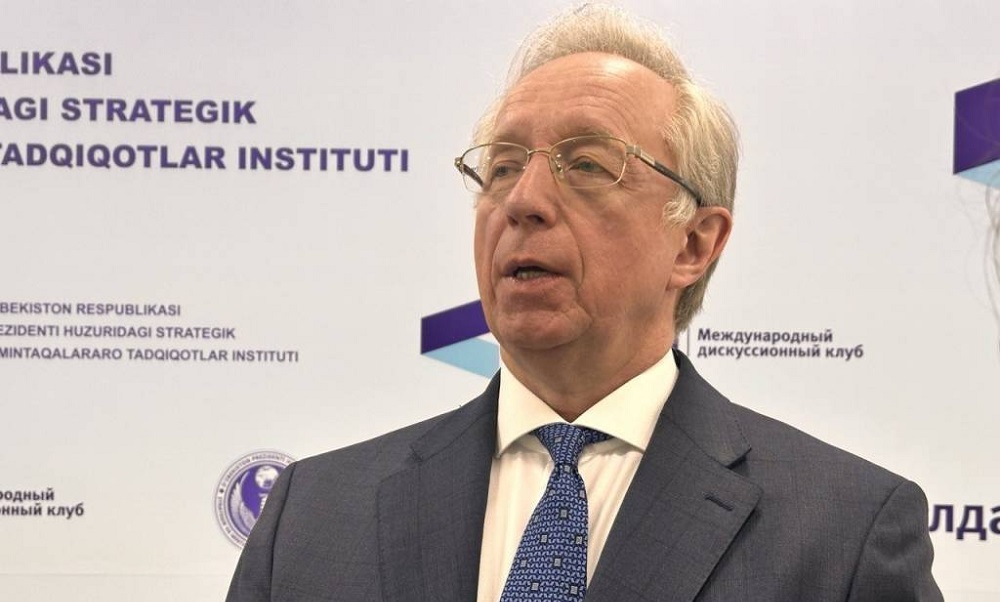
A senior Russian diplomat has praised Uzbekistan’s efforts to boost regional trade and economic cooperation, highlighting the strategic importance of a new international trade hub near the Afghan border.
Mikhail Galuzin, Deputy Minister of Foreign Affairs of the Russia, made the remarks to media representative covering an international conference titled “Uzbekistan – Russia: Strategic Partnership in the Eurasian Space,” at the Termez International Trade Center in southern Uzbekistan.
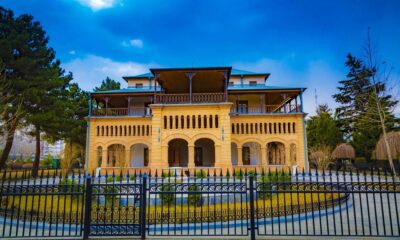
Speaking to media representatives, Galuzin commended the development of the Surkhandarya region, describing it as a “unique oasis” with significant economic potential. He said the Termez International Trade Center—located in a free trade zone—represents a major step forward in strengthening trade links, particularly between Uzbekistan and Afghanistan.
“The project deserves the highest praise,” Galuzin said, adding that the center is expected to play a key role in expanding trade and economic ties and advancing broader strategic partnerships across the Eurasian region.
The trade center was established under a resolution by Shavkat Mirziyoyev and is designed to facilitate commerce by providing a platform for Uzbek and Afghan entrepreneurs to showcase goods and investment projects. According to Galuzin, such initiatives are already contributing to increased trade turnover, with Afghanistan currently ranking among Uzbekistan’s top trading partners.
He also noted growing interest from Russian regions and businesses in participating in the project, calling for further expansion of cooperation among the countries involved.
Galuzin emphasized that platforms like the Termez trade hub and international conferences play a vital role in building direct economic connections, which in turn help create stable supply chains and open new opportunities for trade and investment across the region.
Business
Afghanistan opens doors to agribusiness investments amid rising opportunities
They urge MAIL to introduce incentive packages that would make the sector more attractive for investors.
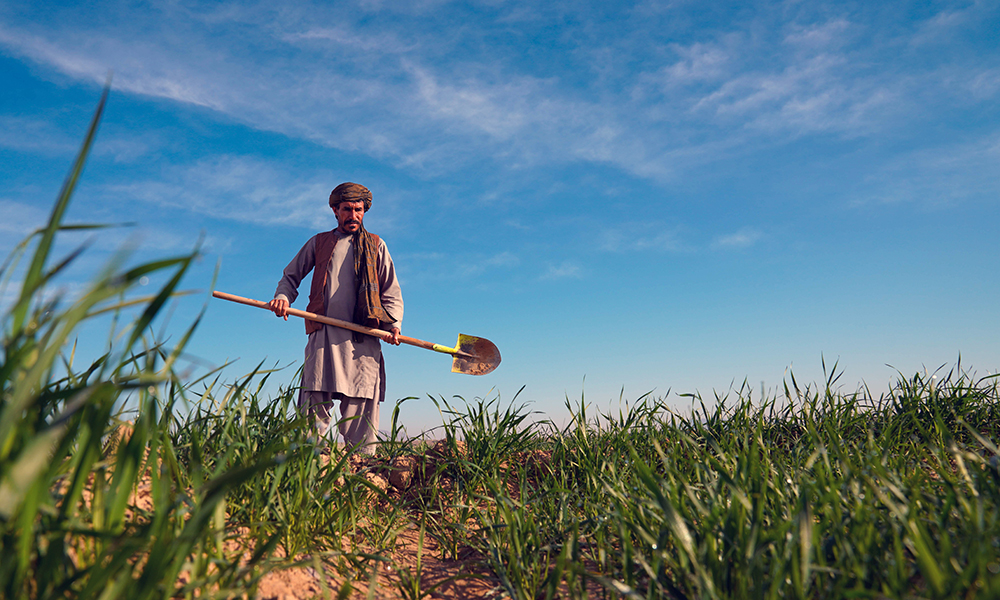
Officials from the Ministry of Agriculture, Irrigation, and Livestock (MAIL) have reiterated their commitment to expanding investment opportunities in Afghanistan’s agricultural sector, aiming to attract both domestic and international investors.
According to Sher Mohammad Khatami, spokesperson for the ministry, technical cooperation and land access are key priorities for supporting investors. “Around 72,000 jeribs of land have been allocated for agricultural and livestock projects across the country,” Khatami said.
The ministry highlights Afghanistan’s vast potential in agriculture, livestock, horticulture, irrigation, product packaging, storage, transport, and cold chain facilities. Private sector representatives note that with the proper technical support and land allocation, local investors would be more willing to participate in the sector.
However, some private investors have voiced concerns over the ministry’s performance, saying that despite Afghanistan’s high agricultural capacity, sufficient steps have not been taken to standardize products or achieve self-sufficiency.
Economic experts stress that well-targeted development of agriculture and livestock could unlock multi-billion-dollar investment opportunities.
They urge MAIL to introduce incentive packages that would make the sector more attractive for investors.
Business
Afghanistan, Uzbekistan ink $514.8 million deals to deepen trade ties
Addressing the gathering, Azizi described Afghanistan as a dependable partner for regional trade and investment, praising Uzbekistan’s ongoing cooperation.
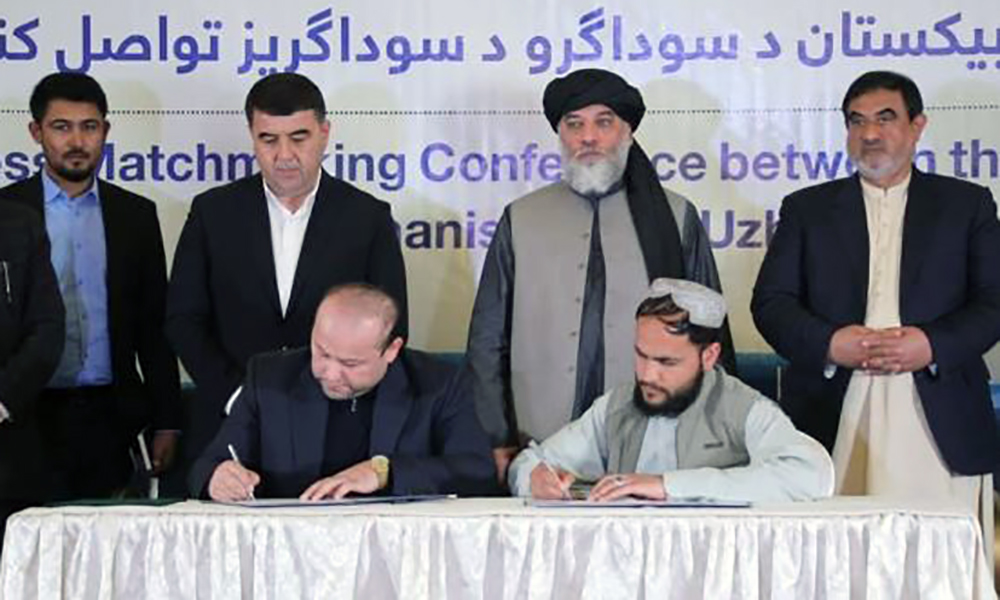
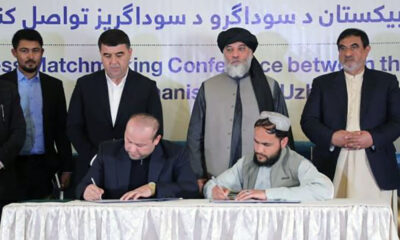
Afghanistan and Uzbekistan have signed cooperation agreements worth $514.8 million, marking a significant push to expand trade and investment between the two neighbours.
The agreements were finalised during a connectivity conference and a series of business meetings that brought together senior officials, private sector representatives, and investors from both countries.
Among those in attendance were Afghanistan’s Minister of Industry and Commerce Nooruddin Azizi and Shavkat Abdurazaqov, chairman of the Afghanistan Chamber of Commerce and Investment, alongside an Uzbek delegation comprising government and business leaders.
Addressing the gathering, Azizi described Afghanistan as a dependable partner for regional trade and investment, praising Uzbekistan’s ongoing cooperation.
He pointed to the country’s broad investment potential and highlighted a preferential tariff agreement between the two sides, which is expected to ease the export of Afghan goods into Uzbek markets.
Officials from Uzbekistan also underscored the importance of stability in Afghanistan.
The governor of Namangan Region noted that peace in Afghanistan is vital for Uzbekistan, adding that stronger economic collaboration could further reinforce regional connectivity and cooperation.
The newly signed agreements cover a range of sectors, including the establishment of a poultry hatchery in Afghanistan, trade in cement and coal, exports of dried fruits and vegetables, imports of food and fuel, production of layer chickens, and sports-related services.
Authorities say the deals represent a key step toward boosting bilateral trade, strengthening economic partnerships, and advancing broader regional integration.


Late drama as Lucknow edge Delhi Capitals in IPL thriller

Over 1,200 Iranians return home via regional routes amid travel restrictions

Over 27.5 million jeribs of public grazing land secured in three Afghan provinces

Two Afghan brothers drown while fishing in Ireland

Trump says Iran war’s core objectives near completion

Prominent Muslim scholar issues fatwa calling for Afghanistan-Pakistan ceasefire

IEA Supreme Leader issues Eid-ul-Fitr message urging unity and support for Islamic system

14 Pakistani soldiers killed after military post falls along Durand line: MoD

Ronaldo’s private jet flies out of Saudi Arabia following US Embassy drone strike in Riyadh

Afghanistan steps in to replace Iran in supplying fruits and vegetables to Russia

Tahawol: Ongoing US–Israeli war with Iran discussed

Saar: Afghanistan-Pakistan talks in China discussed

Tahawol: Escalation of conflict in Middle East discussed

Saar: Formation of Jirga in Khyber Pakhtunkhwa

Tahawol: Pakistani military shelling in Kunar
-
 Latest News3 days ago
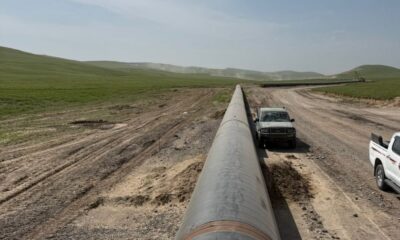
TAPI gas pipeline advances 25 km in Afghanistan
-
 Latest News5 days ago
Afghan defense forces stand ready to protect national sovereignty: MoD
-

 International Sports4 days ago
Injury concerns mount ahead of FIFA World Cup 2026 as stars sidelined
-
 Business4 days ago
Afghanistan, Uzbekistan ink $514.8 million deals to deepen trade ties
-
 Latest News4 days ago
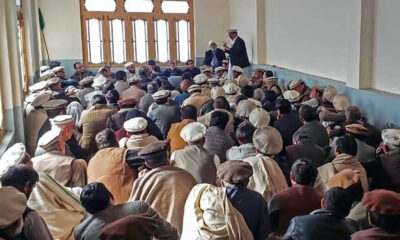
Peshawar to host key Pakistan-Afghanistan peace jirga amid ongoing tensions
-
 Latest News4 days ago
US report flags continued presence of anti-India militant groups in Pakistan
-
 Latest News5 days ago
US regime change efforts in Afghanistan ended in failure, says Merz
-
 Business3 days ago
Afghanistan opens doors to agribusiness investments amid rising opportunities