
Latest News
U.S. Envoy Reveals Fresh Details of Qatar Talks


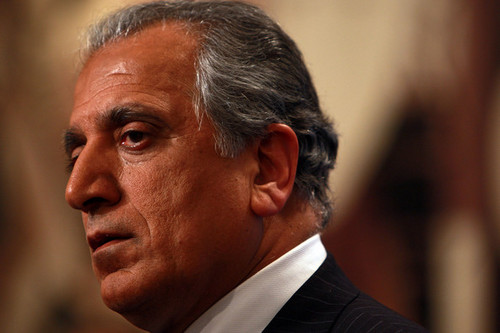
The U.S. special envoy Zalmay Khalilzad on Thursday revealed fresh details of his six days of talks with the Taliban representatives in Qatar.
“The path to peace doesn’t often run in a straight line,” Khalilzad said in a series of tweets. ” The situation in Afghanistan is complex and like all sensitive talks, not everything is conducted in public..”
Khalilzad stressed that they have made significant progress on two key issues including counter-terrorism and troop withdrawal, following this week’s Qatar talks.
“We made significant progress on two vital issues: counter-terrorism and troop withdrawal. That doesn’t mean we’re done. We’re not even finished with these issues yet, and there is still work to be done on other vital issues like intra-Afghan dialogue and a complete ceasefire,” he tweeted.
“Skeptics have rushed to judgment based on just the first part of a much larger effort, as though we have a completed agreement. But you can’t eat an elephant in one bite! And a forty-year-old war won’t be resolved in one meeting, even if that meeting runs for close to a week,” he said.
According to Khalilzad, the opportunity being provided for ensuring peace in Afghanistan should not be missed.
“This is a moment for Afghans to begin to heal old wounds and chart a new course for their country There are many players, many issues, and many moving parts,” he said.
The envoy, however, said that they are on the right path, “together”, referring to the U.S. President Trump’s tweet in which he said that Afghanistan talks are “proceeding well”.
This comes as President Ghani said that no agreements would be concluded without the government’s full participation.
“Our commitment is to provide peace and to prevent any possible disaster,”Ghani said. “There are values that are not disputable, such as national unity, national sovereignty, and territorial integrity.”
He said the key to peace is in Afghanistan, but the key for war is in Islamabad, Quetta, and Rawalpindi.
Separately, a spokesman of Ghani has quoted the president as saying that if someone thinks he can force Ashraf Ghani to sign another treaty of Gandamak, he is wrong.
“We want neither Shah Shujah nor Amir Mohammad Yaqub Khan who have signed Gandamak treaty, but we want Amanullah Khan, Ahmad Shah, and Mahmoud Ghaznawi,” Shah Hussain Mortazavi, the deputy spokesman to the presidency quoted Ashraf Ghani as saying on Thursday.






Latest News
Afghanistan intensifies fight against synthetic drugs
Officials described synthetic drugs as one of the country’s most pressing concerns and said targeted programs have been introduced to combat the problem.

Afghanistan’s Ministry of Interior Affairs says a nationwide campaign against narcotics, with a particular focus on synthetic drugs, is being intensified as authorities seek to curb the growing threat posed by illicit substances.
Speaking at a seminar in Kabul titled “Causes of Youth Drug Addiction and Prevention Methods,” Abdul Haq Mati, Head of Survey and Analysis at the Counter-Narcotics Deputy Office of the Ministry of Interior, said significant progress has been made in combating traditional narcotics. However, he noted that synthetic drugs remain a major challenge, with many of these substances being smuggled into the country from neighboring states.
Mati said security and law enforcement agencies are tasked with identifying, arresting and referring key figures involved in drug trafficking networks to judicial authorities. He added that efforts to prevent the trafficking and distribution of synthetic drugs are continuing across the country.
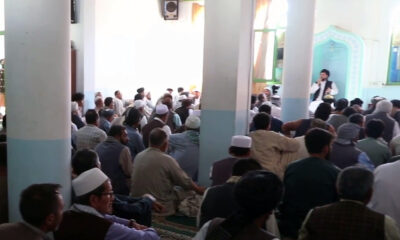
The seminar brought together students, officials from the Counter-Narcotics Department and university professors to discuss the causes of youth addiction and strategies for prevention.
Officials described synthetic drugs as one of the country’s most pressing concerns and said targeted programs have been introduced to combat the problem, building on measures previously used against traditional narcotics.
While acknowledging the progress made in anti-narcotics efforts, several university professors stressed that security measures alone would not be sufficient to address the issue. They called for greater investment in employment opportunities, education and social development initiatives aimed at tackling the root causes of addiction.
Participants also highlighted the importance of effectively managing and disrupting the entire narcotics supply chain, from street-level distribution to larger trafficking networks, as a key component in reducing the social and economic impact of drug abuse.
Students attending the seminar said awareness campaigns play an important role in prevention but argued that unemployment and limited access to education remain major factors that leave young people vulnerable to drug use.
The event, organized by a university in cooperation with the Counter-Narcotics Department, concluded with calls for stronger youth-focused programs, continued enforcement of anti-drug laws and greater efforts to address the underlying causes of addiction.
Participants agreed that a combination of prevention, public awareness, employment opportunities and law enforcement remains essential to protecting young people from drug addiction and curbing the spread of narcotics across the country.
Latest News
Kazakh deputy PM calls for de-escalation between Afghanistan and Pakistan
Zhumangarin further said that Kazakhstan was the first country to remove the Islamic Emirate from its list of banned organizations.

Serik Zhumangarin, Kazakhstan’s Deputy Prime Minister and Minister of National Economy, on Sunday called for a reduction in tensions between Afghanistan and Pakistan.
During his visit to Kabul, he said that disputes between the two countries should be resolved through dialogue and diplomatic channels.
Zhumangarin stated that Afghanistan and Pakistan, as two neighboring Muslim countries, should settle all disagreements at the negotiating table. He added that Kazakhstan is ready to play a mediating role and assist in easing tensions between Kabul and Islamabad if formally requested.
“Any conflict should be resolved through dialogue,” he said. “The President of Kazakhstan also emphasizes this point, and we urge both sides to address all disputed issues through diplomatic means.”
The Kazakh deputy prime minister also highlighted his country’s close relations with Afghanistan, noting that Astana kept its embassy in Kabul open even during difficult periods. According to him, Kazakhstan was among the first countries to grant official status to its diplomatic mission in Afghanistan and appoint a resident ambassador in Kabul.
Zhumangarin further said that Kazakhstan was the first country to remove the Islamic Emirate from its list of banned organizations. He also noted that Afghanistan’s embassy in Kazakhstan and its consulate general in Almaty continue to operate.
The Kazakh official expressed hope that the issue of formally recognizing the Islamic Emirate would progress through diplomatic and political processes and reach a conclusion in the near future.
A high-level Kazakh delegation led by Serik Zhumangarin arrived in Kabul on June 20. During meetings with officials of the Islamic Emirate, the delegation discussed expanding economic, trade, and political cooperation between the two countries.
Latest News
Germany could charter three deportation flights to Afghanistan a month
As the German government does not recognize the Islamic Emirate authorities in Kabul, the talks are referred to in Germany as taking place at a “technical level.”

German Interior Minister Alexander Dobrindt is planning a significant rise in the number of deportation flights to Afghanistan.
“Three charter flights per month are possible in future,” a ministerial spokeswoman told dpa in Berlin following reports in the Sunday media.
“In addition, individual repatriations using commercial flights are possible at all times,” the spokeswoman added.
The expansion follows talks between Interior Ministry representatives and the Islamic Emirate.
As the German government does not recognize the Islamic Emirate authorities in Kabul, the talks are referred to in Germany as taking place at a “technical level.”
Germany recently repatriated 32 Afghans by charter flight. The deported included men convicted of crimes, including murder, rape, sexual abuse, child abuse, drug dealing and extortion.
“Those abusing our protection and committing serious crimes here have to seek their futures in their home country,” Dobrindt told the Bild am Sonntag newspaper.


Afghanistan intensifies fight against synthetic drugs

Saar: Iran vs US Talks Begin – Will Tensions Ease?

Kazakh deputy PM calls for de-escalation between Afghanistan and Pakistan

Afghanistan, Uzbekistan move to expand cooperation in pharmaceutical sector

Germany could charter three deportation flights to Afghanistan a month

Norway’s Viking-inspired World Cup team photo goes viral

Afghanistan announce squad for India series

Afghanistan, Russia sign military cooperation agreement

Major pharma firms eye investment in Afghanistan

Afghanistan expands oil production as investment in Amu Darya fields grows
Saar: Iran vs US Talks Begin – Will Tensions Ease?

Tahawol: Discussion on reopening of Strait of Hormuz

Saar: Afghanistan-Pakistan tense relations disucssed

Tawsia: Last week’s key economic developments discsused

Tahawol: Afghanistan–UN ongoing engagement discussed
-
 Business3 days ago
Afghanistan signs $67 million contract for cement production in Samangan
-
 Sport4 days ago
2nd ODI: India crush Afghanistan by 170 runs to seal series lead
-
 Saar3 days ago
Saar: Trump’s remarks on US military equipment in Afghanistan discussed
-
 Latest News4 days ago
Trump says US may seek return of military equipment left in Afghanistan
-
 Health3 days ago
Polio cases in Afghanistan rise to six in 2026 as two new cases confirmed
-
 Latest News5 days ago
Afghan national pleads not guilty in deadly National Guard shooting near White House
-

 World5 days ago
G7 leaders express optimism for peace after Trump’s ‘very good’ Zelenskiy meeting
-
 Latest News2 days ago
Khalilzad calls for Afghanistan-Pakistan dialogue after airstrikes