
Regional
Turkey slams Israel’s ‘untenable’ claims after strikes on Syrian base

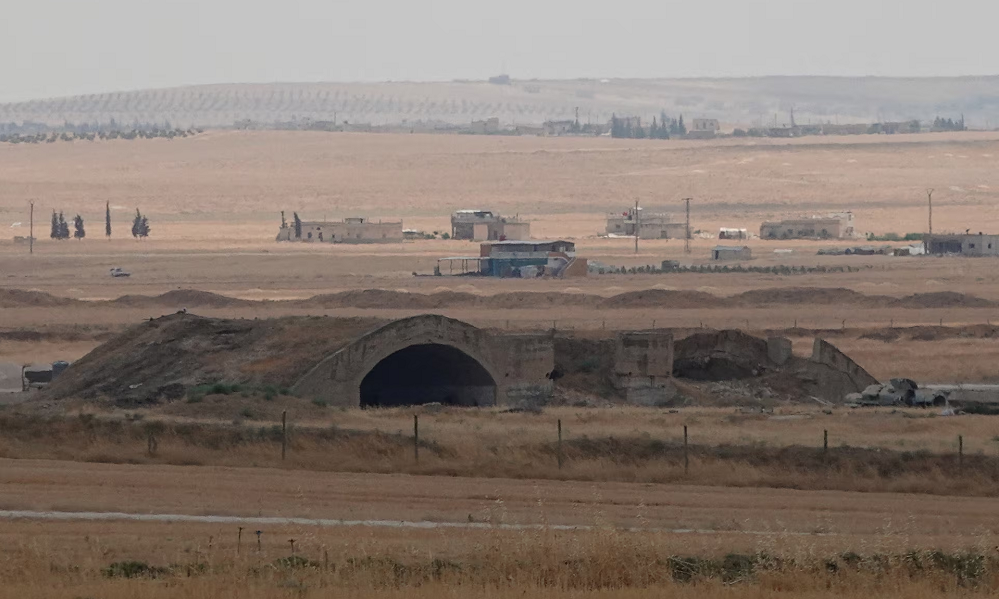
Turkey firmly rejected on Wednesday what it called “untenable allegations” by Israel regarding its military position in Syria, after Israel bombed a Syrian air base near the Turkish border and said Syria was on the verge of permitting Turkish troops to deploy there.
Israel carried out airstrikes against the Abu al-Duhur base near Aleppo on Tuesday, drawing condemnation from Turkey and criticism from a U.S. envoy who called the attack an “unnecessary escalation”.
In a statement, Israeli Prime Minister Benjamin Netanyahu’s office said late on Tuesday that Syria was on the verge of violating a “status quo agreed with Israel in security matters” by allowing Turkish troops to deploy at the airbase, adding that such a deployment would threaten Israel’s security and it would not tolerate this, Reuters reported.
In response, Turkey’s presidency said the “imputations” from Netanyahu’s office stemmed from his intention to pursue “expansionist and destabilising policies” ahead of elections in Israel, adding that lasting regional peace could only be achieved if Israel respected international law and abandoned its “aggressive and coercive policies”.
“The untenable allegations put forward by the Israeli Prime Minister’s Office are intended to legitimise Israel’s unlawful airstrikes targeting Syria’s sovereignty and territorial integrity,” it said on X, without explicitly referring to any potential deployment plans.
“Turkey will resolutely continue to cooperate with the Syrian Government on a legitimate basis for the establishment of peace, stability, and prosperity in Syria, and will never allow the destabilisation of Syria.”
The strikes on Tuesday follow worsening security tensions between Israel and Turkey and increasingly sharp rhetoric between the two countries over Syria, where both countries’ militaries are active.
Turkey, which has NATO’s second-largest army and has emerged as one of Syrian President Ahmed al-Sharaa’s main allies, accuses Israel of trying to destabilise Syria and undermine its new administration, repeatedly calling for international pressure and measures on Israel to respect Syria’s territorial integrity.
Ankara has been training Syria’s army, helping it rebuild its state institutions and infrastructure, and providing military and diplomatic support.
Last year, Turkey and Israel — also sharply at odds over the war in Gaza — established a line of communication to avoid any incidents in Syria.
Tom Barrack, the U.S. special presidential envoy for Syria and Iraq, told Reuters after the strikes on Tuesday that Washington was working to establish a deconfliction mechanism among Israel, Turkey and Syria, and added the U.S. already facilitates an information-sharing and dialogue mechanism among the parties.





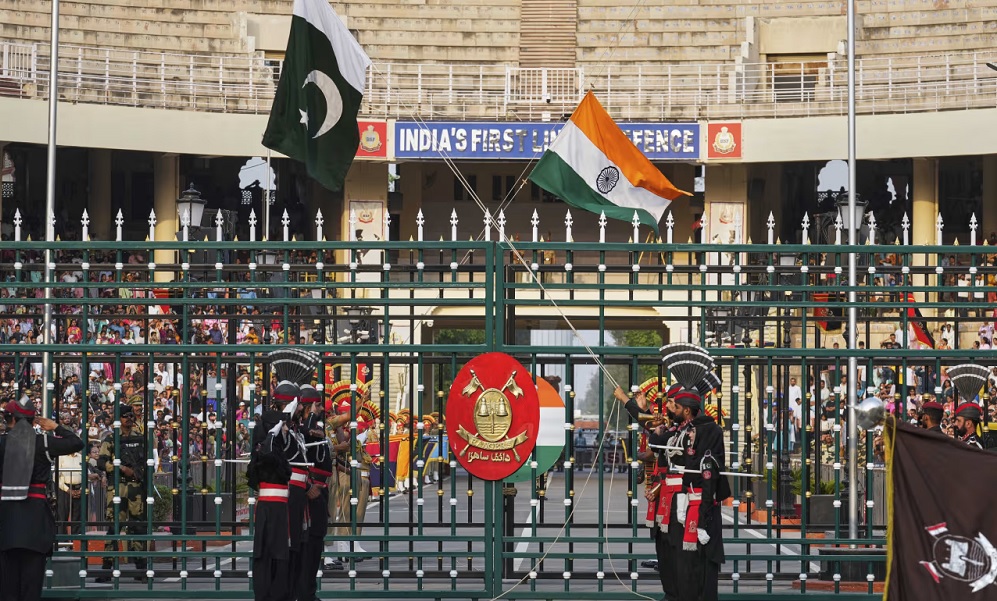
India and Pakistan summoned each other’s top diplomats on Saturday over a border incident on October 2, with New Delhi rejecting Islamabad’s allegation that Indian forces had killed two unarmed Pakistani civilians and saying those involved had crossed illegally into Indian territory.
Pakistan’s foreign ministry said earlier on Saturday that personnel from India’s Border Security Force had used “unprovoked lethal force” against two unarmed Pakistani civilians in the Bedian sector along the international border on Friday, Reuters reported.
“Pakistan categorically rejects any attempt to mischaracterize the deceased as ‘infiltrators’,” the ministry said in a statement.
Pakistan said it had summoned India’s chargé d’affaires to lodge a protest over the incident and called for an “immediate, transparent and credible investigation”.
India’s foreign ministry later rejected what it called “baseless and motivated allegations” and said it had summoned the chargé d’affaires of the Pakistan High Commission to protest at the “continued facilitation of illegal cross-border infiltration from Pakistan”.
The ministry said three people had crossed into Indian territory in the Ferozepur sector of Punjab and continued moving towards the border fence despite multiple warnings from the BSF to return to Pakistan.
“The BSF was compelled to engage them for posing an imminent security threat,” the ministry said.
India said the incident reflected “a clear pattern of repeated cross-border movement by armed narcotics syndicates operating from Pakistan” and urged Islamabad to investigate what it described as cross-border infiltration and drug-smuggling activities.
India also urged Pakistan to respect the international border, observe bilateral arrangements and ensure its forces prevented unauthorised movement from its side.
Relations between the two nuclear-armed rivals have been strained since a four-day war in 2025, the worst in decades, followed by a militant attack on tourists in Indian Kashmir that killed 26 people.
New Delhi accused Pakistan of backing the attack, which Islamabad denied.
Regional
Pakistan says Mecca pact members to hold emergency talks on engaging Houthis
More than six countries are keen to join the pact, Dar said, without naming them or saying whether all were Muslim-majority nations. New membership requests cannot be entertained until the pact is fully operational, which could take up to a year, he added.
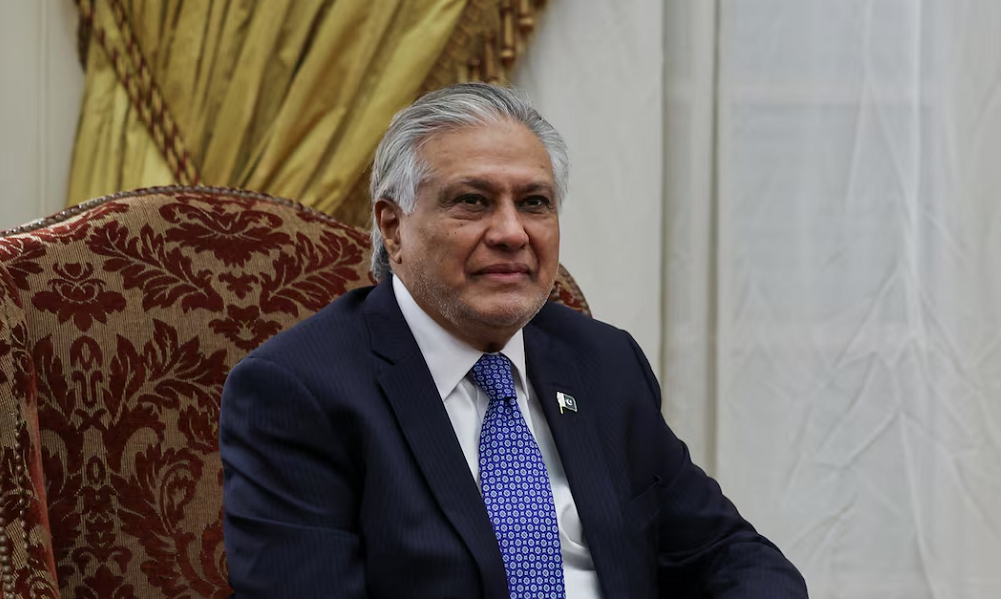
Pakistan’s foreign minister said Iran has suggested engaging Yemen’s Houthis politically after attacks by the group, an idea a committee of the Mecca defence pact will discuss at an emergency meeting in Riyadh next week.
The proposal comes as Saudi Arabia, which has accused the Houthis of targeting Islam’s two holiest cities, faces escalating attacks, Reuters reported.
Saudi Arabia, Turkey and Pakistan, the pact’s three members, will decide next steps at the meeting, Foreign Minister Ishaq Dar told a news conference. He said the date would be confirmed later.
Dar said Iran had distanced itself from the Houthis and Iraqi militias, and that President Masoud Pezeshkian and Foreign Minister Abbas Araqchi both want the matter concluded. He said he had also briefed Tehran on the defence pact and how Pakistan would honour it.
“There is no written, solid offer. It is brainstorming between two foreign ministers,” Dar said, describing the political approach as a suggestion made in good faith. It would be discussed as an alternative to “kinetic action”.
More than six countries are keen to join the pact, Dar said, without naming them or saying whether all were Muslim-majority nations. New membership requests cannot be entertained until the pact is fully operational, which could take up to a year, he added.
Saudi Arabia, Turkey and Pakistan signed the Mecca Joint Defence Agreement on August 7, pledging to treat an armed attack on any one of them as an attack on all three. Their military chiefs met in Riyadh on September 25 and condemned Houthi attacks.
Pakistan’s military said in a statement on Friday that its top commanders strongly condemned Houthi attacks on Saudi Arabia, expressing solidarity with the kingdom and commitment to the security of Islam’s holy sites.
Dar also said there should be no fee or charges to cross the Strait of Hormuz. The blockaded strait has become the central bargaining chip in efforts to end the nearly seven-month US-Iran conflict.
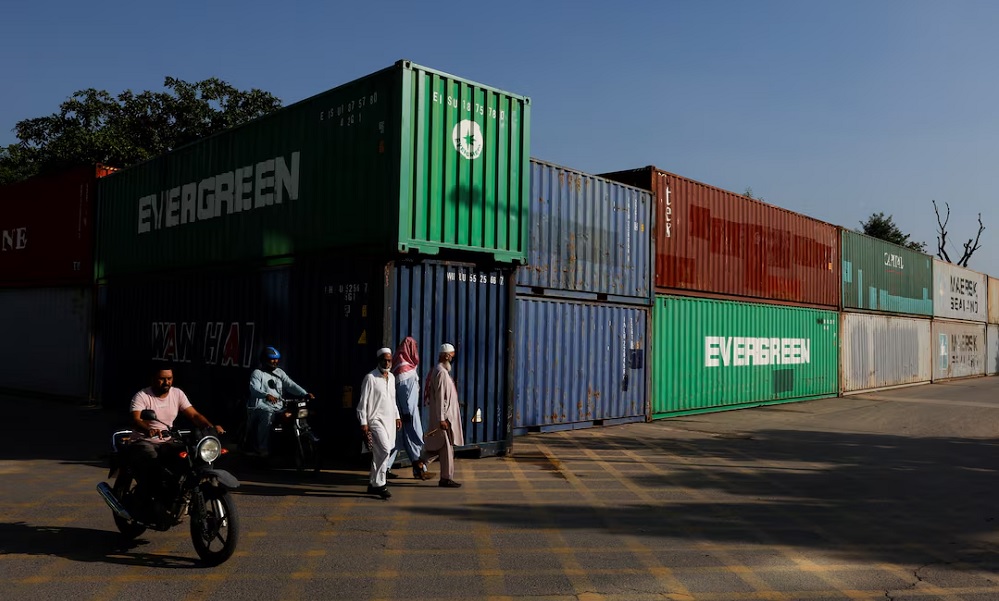
Pakistan’s effort to keep supporters of jailed former prime minister Imran Khan out of the capital has led to a pileup of shipping containers in the nation’s main port of Karachi, 1,400 kilometres (870 miles) away.
Truckers are refusing to drive north, for fear their vehicles will be seized and the containers used to barricade Islamabad ahead of an Oct 4 march on the city planned by Khan’s Pakistan Tehreek-e-Insaf (PTI) opposition party, Reuters reported.
“Right now, going toward Punjab is like committing suicide,” said driver Javid ur Rehman, 35, who has halted such journeys, referring to Pakistan’s most populous province.
“The police seize the vehicles and snatch the containers, and then we are left distressed.”
CONTAINERS HAVE LINED ROADS FOR WEEKS
Steel shipping containers, packed with sand and welded together, have lined the roads into Islamabad for weeks, in preparations against a march, postponed from Sept 27, to demand Khan’s release from prison.
The former cricket star was jailed in 2023 after being ousted by parliament. All convictions but one have been suspended or overturned, with appeals pending.
His party remains under state scrutiny that has suppressed participation in recent protests, however.
“This is not the way to stop protests,” said Rana Mohammad Aslam, president of the Karachi Goods Carrier association. Authorities began stopping vehicles around Sept. 5, weeks before the original date for the march, he said.
Pakistan’s home, information, commerce and finance ministries did not respond to requests for comment. Punjab police and the provincial home department also did not respond.
The containers are positioned ready for placement at key entry points into Islamabad, a capital region larger than the southeast Asian city state of Singapore.
Transporters battling rising prices say they cannot afford to have trucks seized.
Police requisitioned more than 2,000 vehicles in September ahead of the march, they added, many still loaded with cargo and held for days with little or no compensation.
Their reluctance is leaving containers to pile up at Pakistan’s main trade gateway of Karachi.
The disruption was affecting routes to Islamabad, the military city of Rawalpindi, and the cities of Jhelum, Peshawar and Attock, Aslam said.
Some operators had halted journeys beyond Gujranwala in Punjab, while others took alternative routes.
BILLS ARE MOUNTING FOR TRANSPORTERS
The bills are mounting for those whose containers have been seized, as daily demurrage charges on one such container alone can run into 30,000 to 40,000 rupees ($110 to $150), Aslam said, adding to losses from missed deliveries and idle trucks.
Consumer prices rose 10.26% in September from a year earlier, while the transport price index climbed 27.43%, the Pakistan Bureau of Statistics said on Thursday.
Operators are struggling to pay drivers and maintain their fleets, as international shippers still expect payment regardless of the reason for the delay, Aslam said.
He was holding talks to find a solution, he added, but transporters could stage their own protest if complaints go unanswered.
For Pervaiz Khan, 50, the risk was enough to keep a load of chemicals parked in Karachi.
“Right now, my vehicle is loaded but I am not going,” said the father of five, adding that he had loaded his cargo of chemicals by night.
“We depart from Sindh, and the moment we enter Punjab, that’s when our troubles begin.”
Drivers stranded near Islamabad regretted lost days of work or earnings.
“If the roads open, our children’s livelihood will open up,” said Sagheer Ahmed, 51, who added that his children awaiting him at home relied on his earnings. “If not, we will just keep standing.”


ACL: Sorkh Poshan extend perfect run with 1-0 win over Khurasan

Tahawol: Doha process seeks new cooperation opportunities

ACL: Toofan Herat crush Sarsabz Yashlar 3-0

Saar: Moscow forum 8th consultative meeting on Afghanistan

Muttaqi heads to Moscow for 8th Moscow format meeting

Saudi energy group signs major Afghanistan deals covering gas exploration and pipeline plans

Khalilzad: Afghanistan ready to attract major investment

Messi returns to Inter Miami after Argentina retirement

Imam Abu Hanifa exhibition to draw exhibitors from more than 20 countries

Maryam Nawaz says Punjab faces greater security threats from neighbouring provinces
Tahawol: Doha process seeks new cooperation opportunities
Saar: Moscow forum 8th consultative meeting on Afghanistan

Tahawol: Escalation of internal political crisis in Pakistan discussed

Saar: Continuation of crisis in the Middle East discussed

Tawsia: Review of three key economic developments in Afghanistan
-
 Latest News3 days ago
Four members of one family killed in Helmand in Pakistan airstrike
-
 Regional5 days ago
US imposes sanctions on 13 tied to Iran weapons procurement
-
 Sport2 days ago
ACB announces Afghanistan squads for Bangladesh, Zimbabwe series
-
 Business4 days ago
Afghanistan, Tajikistan seek stronger trade and investment ties
-
 Latest News4 days ago
Moscow to host 8th meeting of Afghanistan consultations on October 5
-
 Latest News4 days ago
WATCH: Woman rescued after 14 years of alleged confinement in Helmand
-
 Latest News2 days ago
Russia expects to ease Afghanistan-Pakistan tensions at Moscow Format meeting
-

 Sport3 days ago
Rashid Khan, Azmatullah Omarzai maintain top spots in ICC ODI rankings