
Latest News
Trump preps bans on WeChat, TikTok, stoking tension with China

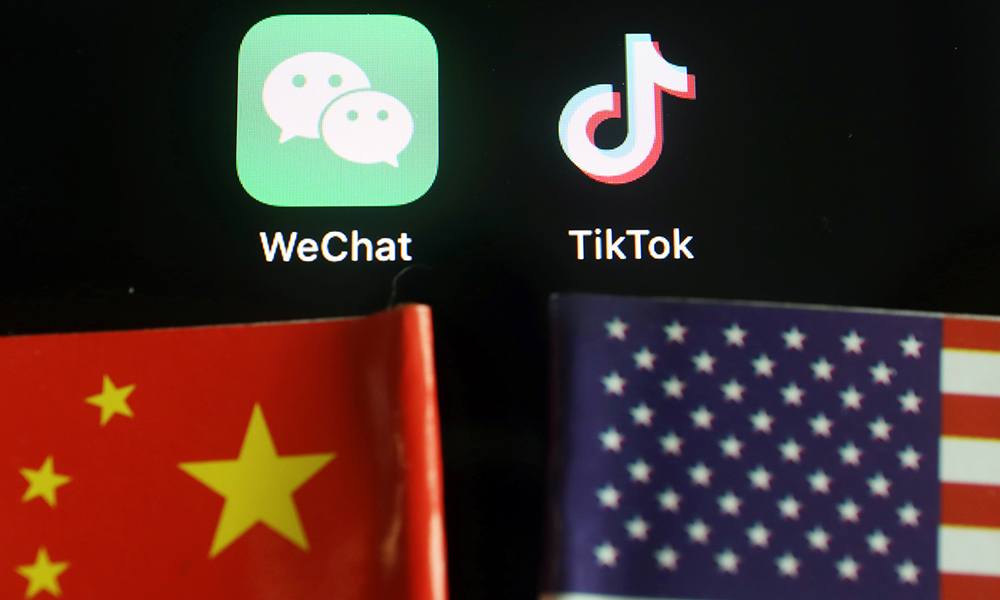
U.S. President Donald Trump has unveiled sweeping bans on U.S. transactions with the Chinese owners of messaging app WeChat and video-sharing app TikTok, escalating a high-stakes confrontation with Beijing over the future of the global tech industry.
The executive orders announced Thursday and effective in 45 days come after the Trump administration this week flagged increased effort to purge “untrusted” Chinese apps from U.S. digital networks, calling Tencent Holdings Ltd’s <0700.HK> WeChat and Bytedance’s popular TikTok “significant threats.”
China said on Friday the companies comply with U.S. laws and regulations and warned that the United States would have to “bear the consequences” of its action.
“The U.S. is using national security as an excuse and using state power to oppress non-American businesses. That’s just a hegemonic practice,” foreign ministry spokesman Wang Wenbin told a media briefing.
TikTok has come under fire from U.S. lawmakers over national security concerns surrounding data collection as distrust between Washington and Beijing grows. Reuters on Sunday reported that Trump has given Microsoft Corp <MSFT.O> 45 days to complete the purchase of TikTok’s U.S. operations.
“We are shocked by the recent Executive Order, which was issued without any due process,” TikTok said in a statement on Friday, adding that it would “pursue all remedies available to us in order to ensure that the rule of law is not discarded”.
The ban on U.S. transactions with Tencent, one of the world’s biggest internet companies, portends further fracturing of the global internet and severing of long-standing ties between the tech industries in the United States and China.
“This is the rupture in the digital world between the U.S. and China,” said James Lewis, a technology expert with Washington-based think-tank Center for Strategic and International Studies.
“Absolutely, China will retaliate.”
On Wednesday, U.S. Secretary of State Mike Pompeo expanded a program dubbed “Clean Network” to prevent various Chinese apps and telecoms firms from accessing sensitive information on U.S. citizens and businesses.
Trump’s new orders appeared coordinated with Pompeo’s announcement, Lewis said.
“We are reviewing the executive order to get a full understanding,” a Tencent spokesperson said.
ByteDance declined to comment.
WeChat has been downloaded a relatively small 19 million times in the United States, showed data from Sensor Tower. In China, however, the app is ubiquitous as a medium for services as varied as games and payment. It is also a common platform to communicate with individuals and businesses outside China.
U.S. social media and messaging services such Facebook Inc’s WhatsApp and Messenger are blocked in China, where a “great firewall” prevents citizens from freely accessing the worldwide web, and where online communication is routinely monitored and censored.
U.S. concerns about China’s tech industry had until recently focused on telecom equipment vendor Huawei Technologies Co Ltd [HWT.UL]. As relations soured over a host of economic and human rights issues, it has sanctioned numerous other Chinese tech firms.
Tencent is the biggest target yet. It is Asia’s second most-valuable company after Alibaba Group Holding Ltd <BABA.N> with a market capitalization of $686 billion, and is among the world’s largest social media and video game companies. It opened a California gaming studio this summer and owns minority stakes in numerous gaming and internet firms around the world, including U.S. messaging app operator Snap Inc.
Trump’s order sent Asian stock markets lower on Friday, with Tencent shares falling as far as 10.1% before recouping some of its losses in afternoon trade. [MKTS/GLOB]
The yuan, a barometer of Sino-U.S. relations, posted its steepest drop since the United States expelled China from its Houston consulate a little over two weeks ago. [CNY/]
Trump issued the orders under the International Emergency Economic Powers Act, a law that grants the administration sweeping power to bar U.S. firms or citizens from trading or conducting financial transactions with sanctioned parties.
Commerce Secretary Wilbur Ross will identify transactions covered after the orders take effect in mid-September.
Tension has been simmering between the two powers for months, with the United States taking issue with China’s handling of the novel coronavirus outbreak and moves to curb freedoms in Hong Kong. The increasingly aggressive posture towards China comes as Trump bids for re-election in November.
Trump said this week he would support Microsoft’s efforts to buy TikTok’s U.S. operations if the U.S. government got a “substantial portion” of the proceeds. He nevertheless said he will ban the popular app on Sept. 15, though some Republicans have raised concerns about potential political fallout.
The app may be used for disinformation campaigns that benefit the Chinese Communist Party, and the United States “must take aggressive action against the owners of TikTok to protect our national security,” Trump said in one order.
In the other, Trump said WeChat “automatically captures vast swaths of information from its users. This data collection threatens to allow the Chinese Communist Party access to Americans’ personal and proprietary information.”
The United States is not alone in its concern about Chinese internet apps: WeChat and TikTok were among 59 mostly Chinese apps that India outlawed in June for threatening its “sovereignty and integrity”.
The WeChat order would effectively ban the app in the United States by barring “to the extent permitted under applicable law, any transaction that is related to WeChat by any person, or with respect to any property, subject to the jurisdiction of the United States, with Tencent Holdings Ltd.”
It was not clear whether the sanction would effect Tencent’s other holdings in the country.
Meanwhile, WeChat users in the United States were quickly evaluating alternatives.
“Banning WeChat is against America’s liberal principles,” Jeason Ma, a 33-year-old in Los Angeles who obtained U.S. citizenship in November, told Reuters. “Most of our family and friends are in China. This will cause significant inconvenience to our lives.”
Ma has been sharing his account information for WhatsApp and messaging rival Line Corp with friends and family, fearing he could lose access to WeChat.
The order “calls TikTok a national security threat,” said Derek Scissors, an expert on Sino-U.S. economic relations at the American Enterprise Institute think-tank. “Either we’ve missed the threat for three years or it just became one and yet we are waiting 45 days.”
Source: Reuters







International Sports
Amnesty International raises alarm over deportations, protests ahead of FIFA World Cup
The rights watchdog said the situation is most acute in the US under President Donald Trump, where it says a “human rights emergency” is unfolding due to aggressive immigration enforcement policies.
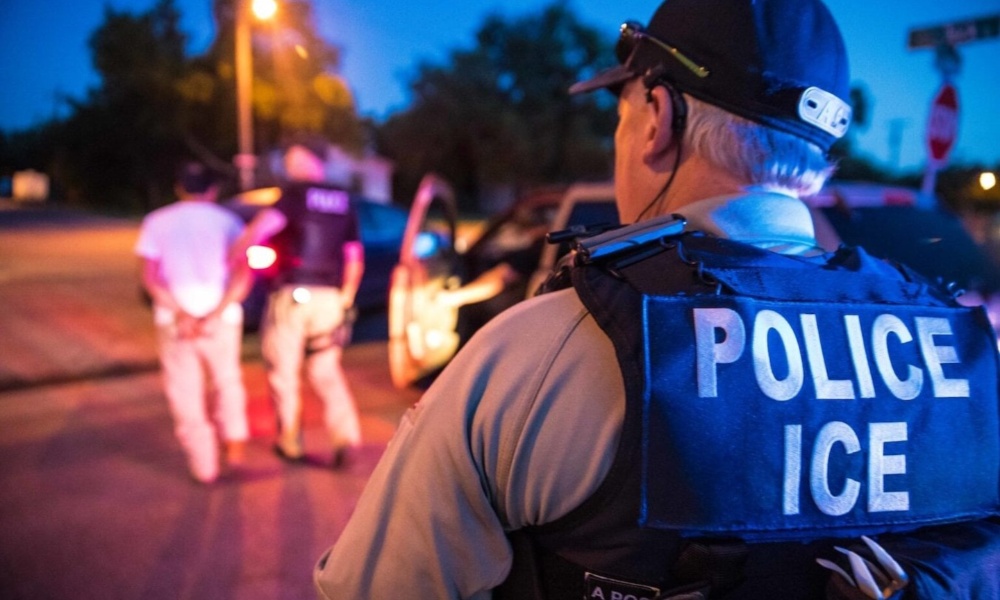
A new report released on Monday, 30 March, by Amnesty International has warned that the 2026 FIFA World Cup could expose millions of fans to serious human rights risks, particularly in the United States, where the majority of matches will be held.
The report, titled Humanity Must Win: Defending rights, tackling repression at the 2026 FIFA World Cup, highlights concerns across all three host nations—United States, Canada and Mexico—including threats to freedom of expression, peaceful protest, and the safety of local communities.
According to Amnesty International, the situation is most acute in the United States under President Donald Trump, where it says a “human rights emergency” is unfolding due to aggressive immigration enforcement policies.
The organization cited mass detentions, arbitrary arrests, and widespread deportations carried out by agencies such as US Immigration and Customs Enforcement (ICE) and US Customs and Border Protection.
Amnesty International’s Head of Economic and Social Justice, Steve Cockburn, said more than 500,000 people were deported from the United States in 2025 alone, warning that the erosion of due process has created “a climate of fear” that could affect both residents and visiting fans during the tournament.
The report also raises concerns about the impact of these policies on World Cup host cities, noting that local authorities in cities such as Dallas, Houston and Miami have entered agreements with federal immigration agencies, increasing the risk of racial profiling and undermining trust in law enforcement.
In addition, Amnesty International highlighted previous federal deployments of thousands of National Guard troops to Los Angeles in response to protests against immigration raids, warning that similar measures during the World Cup could threaten civil liberties.
Beyond the United States, the report points to risks in the other host countries. In Mexico, the deployment of around 100,000 security personnel—including military forces—has raised fears that protests could be suppressed, particularly by activists planning demonstrations linked to disappearances and social justice issues in Mexico City.
In Canada, Amnesty International warned that preparations for the tournament could worsen an already deepening housing crisis, citing concerns that people experiencing homelessness may be displaced, echoing the legacy of the 2010 Winter Olympics in Vancouver.
The organization also flagged travel restrictions that could prevent fans from several countries, including Côte d’Ivoire, Haiti, Iran and Senegal, from entering the United States, alongside proposals for intrusive screening measures such as social media vetting.
Amnesty International further warned that restrictions on freedom of expression and peaceful assembly across all three host nations could undermine the inclusive spirit of the tournament. It noted that protests—often a feature of global sporting events—risk being repressed, with recent examples including crackdowns on demonstrations in North America.
With just weeks to go before the tournament begins, Amnesty International urged FIFA and host governments to take immediate action to safeguard human rights.
“This World Cup is no longer the ‘medium risk’ tournament that FIFA once judged it to be,” said Cockburn.
“Urgent steps are needed to ensure fans, players, workers and communities are protected, and that the tournament lives up to its promise of being safe, inclusive and respectful of human rights,” he said.
Amnesty International added that while FIFA stands to generate record revenues from the competition, the rights and safety of those involved must remain at the centre of the event.
International Sports
Mumbai Indians outclass KKR in high-scoring IPL thriller
Mumbai chased down a daunting target with six wickets to spare, thanks to outstanding batting performances from Ryan Rickelton and Rohit Sharma, who dominated the chase and thrilled the home crowd.

The 2026 Indian Premier League (IPL) produced a thrilling contest on Sunday, March 29, as Mumbai Indians (MI) defeated Kolkata Knight Riders (KKR) in a high-scoring encounter at Mumbai’s Wankhede Stadium.
Mumbai chased down a daunting target with six wickets to spare, thanks to outstanding batting performances from Ryan Rickelton and Rohit Sharma, who dominated the chase and thrilled the home crowd.
Despite KKR posting a massive total, Mumbai’s batting lineup showed composure and attacking intent to seal one of the most entertaining matches of the early IPL season.
The tournament continues today, March 30, with another exciting fixture as Rajasthan Royals (RR) take on Chennai Super Kings (CSK).
The match is expected to draw huge attention, with both teams featuring star-studded lineups and looking to build early momentum in the competition.
Fans in Afghanistan can watch every match of the tournament live as Ariana Radio and Television Network (ATN) holds exclusive broadcast rights for the IPL in the country.
Cricket lovers can follow Ariana Television and Ariana News social media pages for live coverage, highlights, and the latest updates throughout the tournament.
Latest News
Pakistan shelling in Afghanistan’s Kunar leaves civilian casualties, says IEA
Earlier this month, Afghanistan said that a Pakistani airstrike had hit a drug treatment hospital in Kabul, killing more than 400 people.
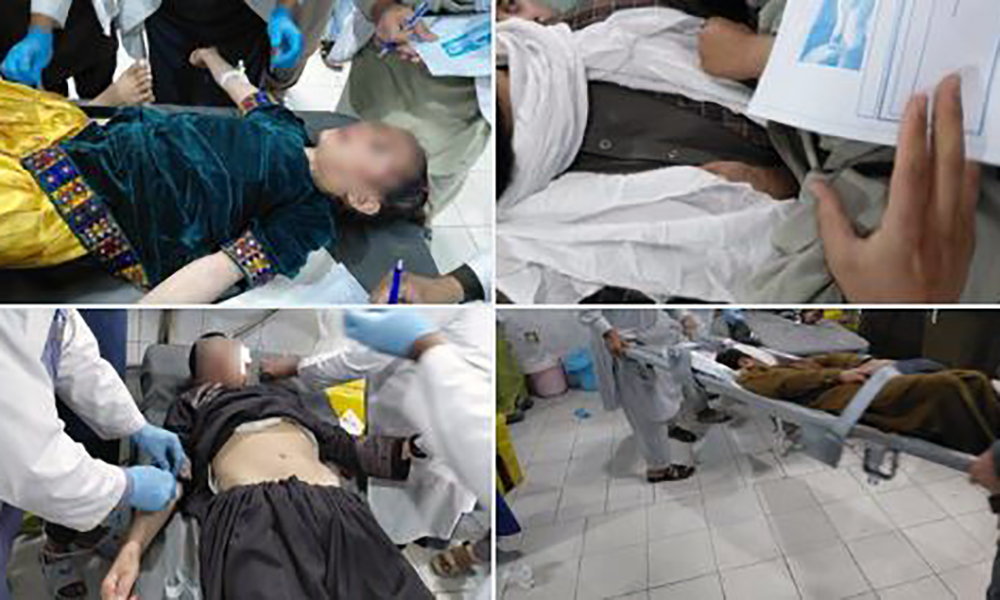
The Deputy Spokesman of the Islamic Emirate of Afghanistan, Hamdullah Fitrat, says Pakistani forces carried out heavy shelling on civilian areas in eastern Afghanistan, leaving several residents injured and one person dead.
In a statement issued on Sunday, Fitrat said that members of the Pakistani military regime fired mortars and other heavy weapons at around 5 pm on rural areas and residential neighborhoods on the outskirts of Asadabad, the provincial capital of Kunar Province.
According to him, the attacks targeted villages and civilian homes, resulting in casualties among local residents. Preliminary reports indicate that at least 16 people were injured—most of them women and children—while one person was killed in the incident.
“Once again, the militias of the Pakistani military regime conducted shelling on rural areas and civilian residences located on the outskirts of Asadabad using mortars and other heavy weaponry,” Fitrat stated.
Local sources say the shelling created panic among residents in surrounding communities, forcing some families to leave their homes due to fears of further attacks. Authorities say investigations are ongoing to determine the full extent of the damage and casualties.
Earlier this month, Afghanistan said that a Pakistani airstrike had hit a drug treatment hospital in Kabul, killing more than 400 people.


Amnesty International raises alarm over deportations, protests ahead of FIFA World Cup

Mumbai Indians outclass KKR in high-scoring IPL thriller

Pakistan shelling in Afghanistan’s Kunar leaves civilian casualties, says IEA

Pakistan hosts regional powers for Iran talks, with focus on Hormuz proposals

Tahawol: Efforts for Kabul-Islamabad de-escalation

Prominent Muslim scholar issues fatwa calling for Afghanistan-Pakistan ceasefire

Afghan air force strikes key Pakistani military installations in retaliatory operation

IEA Supreme Leader issues Eid-ul-Fitr message urging unity and support for Islamic system

14 Pakistani soldiers killed after military post falls along Durand line: MoD

Ronaldo’s private jet flies out of Saudi Arabia following US Embassy drone strike in Riyadh
Tahawol: Efforts for Kabul-Islamabad de-escalation

Saar: Restrictions on girls’ education in Afghanistan discussed

Tahawol: Concerns over spread of Middle East crisis discussed

Saar: Weakening relations between Kabul and Washington discussed

Exclusive interview with Indrika Ratwatte, Deputy UN Special Representative for Afghanistan
-
 Latest News4 days ago
Tajikistan shifts stance on Afghanistan amid rising border tensions
-

 Latest News3 days ago
Russia deems US military presence in Afghanistan unacceptable
-
 Latest News3 days ago
IEA says Iranian drivers no longer need visas to enter Afghanistan
-

 Latest News2 days ago
Afghan defense forces stand ready to protect national sovereignty: MoD
-
 Sport4 days ago
Myanmar trump Afghanistan 2-1 in Asian Cup Qualifier
-
 Sport4 days ago
Afghanistan to face Myanmar in crucial AFC clash
-
 Latest News4 days ago
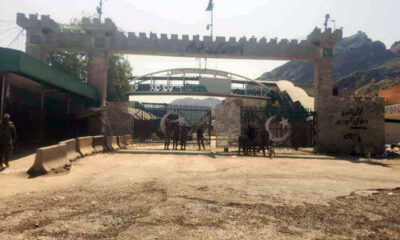
Torkham crossing reopens for returning Afghan migrants
-
 Latest News5 days ago
UN experts call for lasting ceasefire as Afghan–Pakistan violence escalates