
Latest News
Trump calls Afghanistan collapse ‘most humiliating’ moment for US

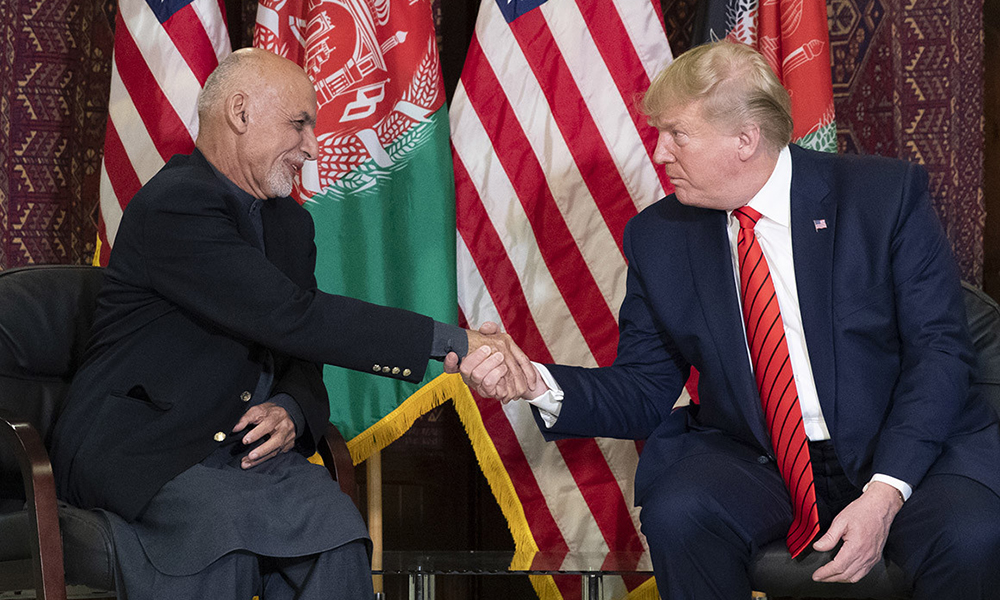
Former President Donald Trump described the recent events in Afghanistan as the worst humiliation in American history but defended the agreement his administration struck with the Taliban last year.
“It’s a great thing that we’re getting out, but nobody has ever handled a withdrawal worse than Joe Biden,” the former president told Fox News Tuesday.
“This is the greatest embarrassment, I believe, in the history of our country,” he said.
Trump sat down for his first interview since the Taliban marched into Kabul Sunday, climaxing a 96-hour conquest that saw Afghanistan’s major cities and provincial capitals fall with little resistance, Reuters reported.
While he was full of criticism for the Biden administration, Trump also at times echoed his successor’s address to the nation Monday, which cast blame on Afghan military and political leaders for their battlefield collapse and the resulting scenes of chaos.
“I knew they [Afghan security forces] weren’t going to fight … I said, ‘Why are they fighting? Why are these Afghan soldiers fighting against the Taliban?’” Trump told Fox News host Sean Hannity. “And I was told some very bad information by a lot of different people.
“The fact is, they’re among the highest-paid soldiers in the world. They were doing it for a paycheck, because once we stopped, once we left, they stopped fighting … The fact is, our country was paying the Afghan soldiers a fortune. So we were sort of bribing them to fight, and that’s not what it’s all about.”
By contrast, Trump repeatedly praised the Taliban as “good fighters” — at one point telling Hannity that “you have to give them credit for that” — and claimed he got along better with the Islamic fundamentalists than recently deposed Afghan President Ashraf Ghani, who fled the country as Taliban forces closed in, Reuters reported.
“I never had a lot of confidence, frankly, in Ghani,” the former president recalled. “I said that openly and plainly. I thought he was a total crook. I thought he got away with murder. He spent all his time wining and dining our senators. The senators were in his pocket. That was one of the problems that we had, but I never liked him, and I guess based on his escape with cash, I don’t know, maybe that’s a true story. I would suspect it is. All you have to do is look at his lifestyle, study his houses where he lives. He got away with murder in many different ways.”
In February 2020, the Trump administration announced a cease-fire agreement with the Taliban that called for the withdrawal of all US combat troops from Afghanistan by May 1 of this year. On Monday, Biden argued that his hands were tied by the agreement, Reuters reported.
“There would have been no ceasefire after May 1. There was no agreement protecting our forces after May 1. There was no status quo of stability without American casualties after May 1,” the president said. “There was only the cold reality of either following through on the agreement to withdraw our forces or escalating the conflict and sending thousands more American troops back into combat in Afghanistan, lurching into the third decade of conflict.”
Trump said Tuesday that the agreement was forged after what he called a “strong conversation” with a Taliban leader he identified as Mullah Abdul Ghani Baradar, a contender to become the new supreme leader of the new government, Reuters reported.
“I told him up front, I said, “Look, up front, before we start, let me just tell you right now that if anything bad happens to Americans or anybody else or if you ever come over to our land, we will hit you with a force that no country has ever been hit with before, a force so great you won’t even believe it,’” he recounted.
As a result of the agreement, Trump claimed, “we lost no soldiers in the last year-and-a-half because of me and because of the understanding that we had … In Chicago and in New York and in other cities in the United States, many people die every weekend. We lost no soldiers in Afghanistan because they knew I wasn’t going to put up with it.”
Summing up two decades of American efforts in Afghanistan, Trump described the initial decision to invade in October 2001 as “the worst decision ever made” and argued that the US should have limited its retaliation for the 9/11 attacks to airstrikes, Reuters reported.
As more grim reports emerged of thousands of Americans stuck in Taliban territory, with checkpoints between them and Kabul’s international airport, Trump said: “ I looked at that big, monster cargo plane yesterday, with people grabbing the side and trying to get flown out of Afghanistan because of their fear, their incredible fear, and they’re blowing off the plane from 2,000 feet up in the air.”
“Nobody’s ever seen anything like that. That blows the helicopters in Vietnam away. That’s not even a contest. This has been the most humiliating period of time I’ve ever seen.”


Latest News
Afghanistan’s economic crisis raises concerns over EU deportations
The growing contacts highlight the tension between Europe’s official policy of non-recognition and its practical efforts to address migration and other issues involving Afghanistan.

European governments are stepping up engagement with Afghanistan’s Islamic Emirate (IEA) authorities over the deportation of migrants, economic assistance and diplomatic representation, despite continuing to withhold formal recognition of the administration, France 24 reports.
The report draws on an investigation by Elian Peltier, The New York Times’ Pakistan and Afghanistan bureau chief, who says European officials are meeting IEA representatives more frequently than is widely known.
The growing contacts highlight the tension between Europe’s official policy of non-recognition and its practical efforts to address migration and other issues involving Afghanistan.
However, the prospect of returning Afghan migrants has raised concerns among United Nations experts and human rights organisations, which have warned about the risks of deportation under IEA rule, particularly given restrictions on fundamental rights.
Afghanistan’s persistent economic crisis adds to these concerns, with limited employment opportunities, widespread hardship and difficulties accessing basic necessities potentially leaving returnees struggling to rebuild their lives.
The developments underscore the challenge facing European governments as they seek to manage migration while weighing humanitarian concerns and the conditions awaiting deportees in Afghanistan.
Latest News
Poland hits back at Hegseth over NATO sacrifices in Afghanistan
According to the report, 43 Polish soldiers and one civilian paramedic were killed, while more than 200 Polish personnel were wounded.
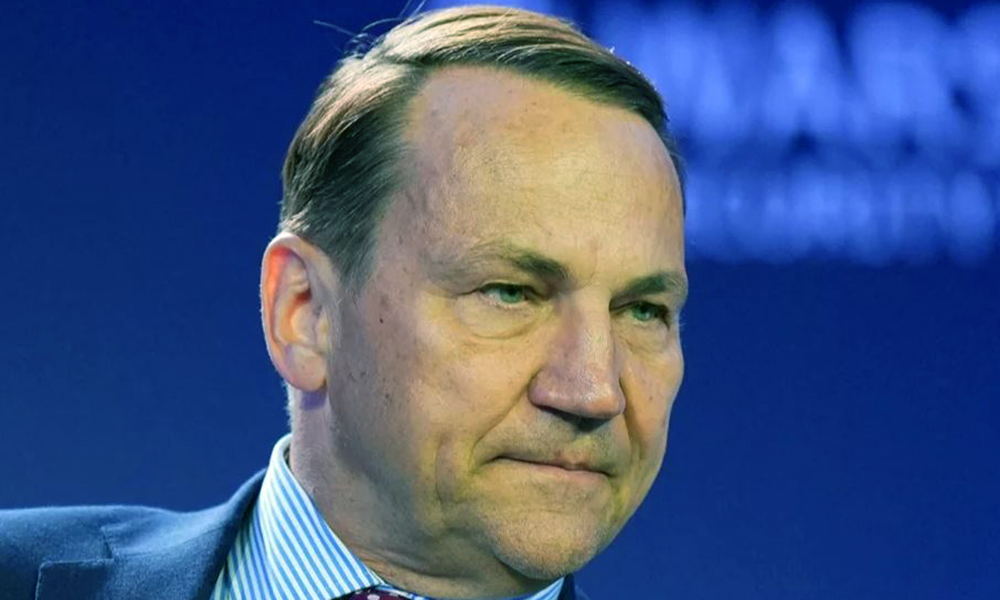
Poland’s Foreign Minister Radosław Sikorski has hit back at US Defence Secretary Pete Hegseth over remarks downplaying NATO allies’ contributions to the Afghanistan war, urging him to remember the Polish personnel who died fighting alongside American forces.
Hegseth recently questioned the extent of allied combat contributions during the Afghanistan mission, suggesting that only a small number of countries had played a significant role. He also joked that ISAF, the International Security Assistance Force, stood for “I Saw Americans Fighting.”
Sikorski responded by challenging Hegseth to repeat his remarks to the families of the 44 Polish personnel killed during the mission, including those who served in Ghazni province.
Jan Grabiec, head of the Polish prime minister’s office, also condemned the comments, saying the sacrifices of allied troops should not be mocked.
Poland took part in the US-led military operation from 2001 until the withdrawal of international forces in 2021.
More than 33,000 Polish soldiers and defence personnel served in Afghanistan over nearly two decades.
According to the report, 43 Polish soldiers and one civilian paramedic were killed, while more than 200 Polish personnel were wounded.
The Afghanistan mission marked the first and only time NATO invoked Article 5, its collective defence clause, following the September 11, 2001, attacks on the United States.
More than 1,000 NATO service members were killed during the mission, including 44 Poles.
The dispute has renewed debate over the contributions and sacrifices of NATO allies during the two-decade conflict, in which forces from across the alliance served alongside the United States.
Latest News
People need sports and recreation, says Anas Haqqani
Haqqani said Afghanistan has the capacity to grow in various sectors and would not face problems similar to those experienced during the presence of the Soviet Union and the United States in the country.
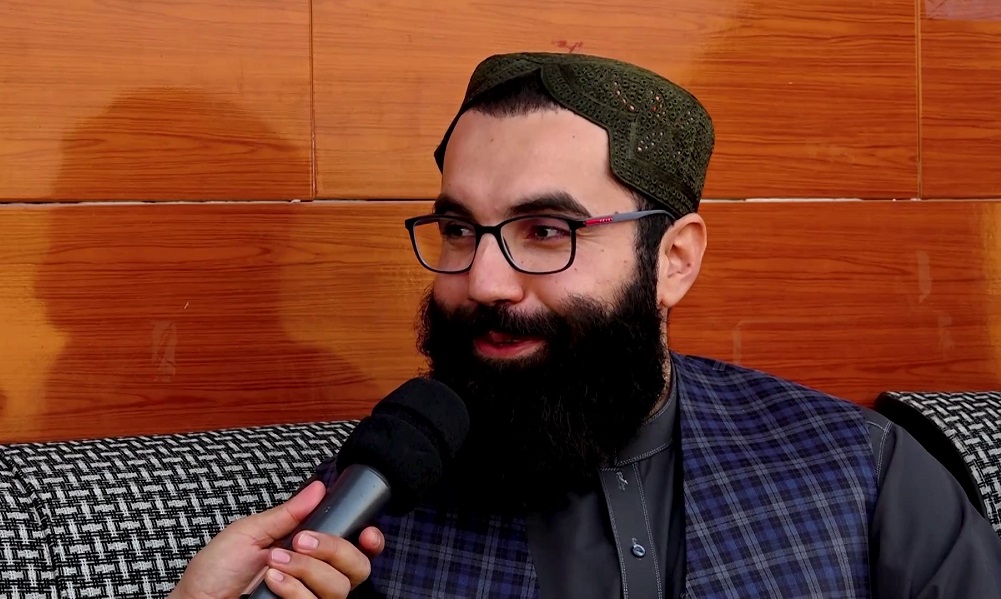
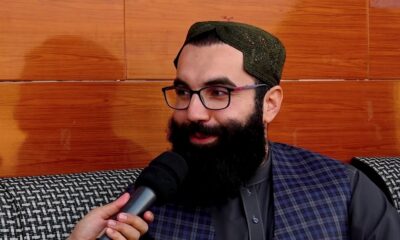
Anas Haqqani, a senior member of the Islamic Emirate, says sports and recreation are among human needs and that people should make time for them, whether they are involved in politics or education.
He made the remarks on Sunday while attending matches of the Afghanistan Champions League (ACL) at the Afghanistan Football Federation stadium in Kabul. He described the participation of foreign players in the competition as an important step forward for Afghan football.
“Whether a person is engaged in education or politics, they need to make time for sports and recreation. For us, this was also a very enjoyable atmosphere and experience,” Haqqani said.
He added that he is passionate about football and volleyball, has professional knowledge of football, and continues to practise volleyball. He also said he had experience playing and training in cricket.
Haqqani said Afghanistan has the capacity to grow in various sectors and would not face problems similar to those experienced during the presence of the Soviet Union and the United States in the country.
“Afghanistan has the capacity to make progress in every field and compete with other nations in every sector,” he said.


Saar: IEA–UNAMA relations: five years under review

Afghanistan’s economic crisis raises concerns over EU deportations

Poland hits back at Hegseth over NATO sacrifices in Afghanistan

Iran calls for extending Herat railway to Uzbekistan border

People need sports and recreation, says Anas Haqqani

Cricket Bonanza: Afghanistan set for packed international schedule

Afghanistan says 28 killed, 32 captured in Nuristan operation

Silk Road highway in Wakhan corridor now reaches the China border

CNN, MS NOW and Politico sue Trump, challenging White House ban

Dogharoun handles 60% of Iran’s exports to Afghanistan
Saar: IEA–UNAMA relations: five years under review

Violent protests spread across Europe as Albanian PM blames ‘foreign hand’

Tahawol: Afghanistan’s empty seat at OIC Meeting

Saar: Islamic Emirate–Pakistan clashes discussed

France rocked by nationwide clashes, looting and fires
-

 Latest News4 days ago
India, Russia hold security talks on Afghanistan and Pakistan amid regional tensions
-
 Latest News4 days ago
Uzbekistan gains ground in Afghanistan’s flour market as Kazakhstan loses exports
-
 Sport1 day ago
Afghanistan reach Brazil futsal tournament final after beating Cape Verde 4-2
-
 Regional4 days ago
School roof collapse kills teacher, 21 children in NW Pakistan
-
 Latest News4 days ago
Iran says nearly 60,000 Afghan students attend its universities, urges more refugee aid
-
 Latest News4 days ago
Afghanistan, Saudi Arabia discuss solar and wind energy cooperation
-
 Business3 days ago
Regional partners seek progress on Trans-Afghan corridor and CASA railway
-
 World3 days ago
Trump says he is talking to Russia and China about denuclearization