
Latest News
Taliban warns Washington against violating Doha agreement

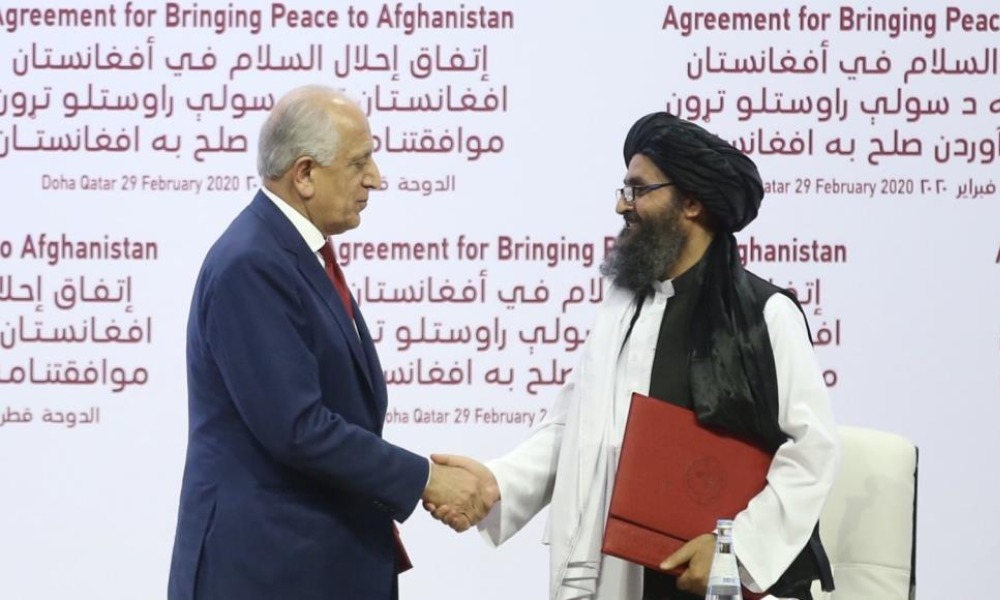
The Taliban urged Washington to uphold its part of the US-Taliban agreement signed a year ago Sunday and stated the release of remaining prisoners and end of blacklists have yet to be implemented.
In a statement issued Sunday to mark the one-year anniversary of the signing of the deal – which the Afghan government was not party to – the Taliban also stated that the implementation of the agreement “must be utilized to improve the situation and pushing it in the wrong direction must be avoided.”
“Practical steps must be undertaken to expedite the ongoing intra-Afghan dialogue process,” the group said.
The Taliban said it is committed to its obligations within the agreement but made it clear in the statement that the implementation of the contents of the agreement is “the sole effective tool for resolving the Afghan issue and establishing peace, that shall be realized under the shade of an Islamic system.”
“The release of remaining prisoners and end of blacklists are part of the agreement that have yet to be implemented,” the statement.
“The Doha agreement has created a practical framework for bringing peace and security to Afghanistan. If any other pathway is pursued as a replacement, then it is already doomed to failure.”
Claiming to have “significantly reduced the level of operations in line with the Doha agreement,” the Taliban stated that “the other side has not fulfilled its obligations in this regard as bombardments, drone strikes, raids and offensive operations that were all prohibit on the basis of the agreement are still continuing, which is mostly causing civilian harm and increasing the levels of violence.”
The Taliban also distanced itself for the wave of targeted attacks and assassinations that have gripped the country over the past few months.
According to the group, “some circles with their interests tied to foreign actors have recently launched a wave of targeted attacks especially against civilians with the aim of showing the situation as teetering on the brink of a crisis, and to create excuses for the continuation of occupation and war.”
The Taliban’s statement comes just three days after US Central Command chief, General Kenneth F. McKenzie said the US still continues to see levels of violence that are way too high.
“I place a large measure of the blame on the Taliban who have continued to mount offensive operations and targeted killings of Afghan officials but the excessive violence has led the government to launch their own defensive operations to protect themselves – the violence while too high on both sides,” McKenzie said.
McKenzie also stressed that there is no sign that the Taliban had severed ties with al-Qaeda, as called for in the US-Taliban agreement.
“In my clear judgment rests largely on the Taliban; we also continue to … look for signs of a Taliban break with al-Qaeda and I have not at this point seen any definitive signs that would lead to believe they’re prepared to or able to honor their obligations,” McKenzie added.
On Tuesday, the UN Assistance Mission Afghanistan (UNAMA) meanwhile stated there had been an increase in civilians killed and injured in Afghanistan since the start of peace talks in September.
In the latest report on civilian casualties, UNAMA said despite the rise in casualties since September the overall numbers for 2020 were down due to lower civilian casualty rates prior to the start of talks.
The Taliban however, reacted to the report and said: ”We reject such incomplete reports based on incorrect information.”
For a seventh consecutive year, UNAMA documented more than 3,000 civilians killed in a single year, with Afghanistan remaining among the deadliest places in the world to be a civilian.








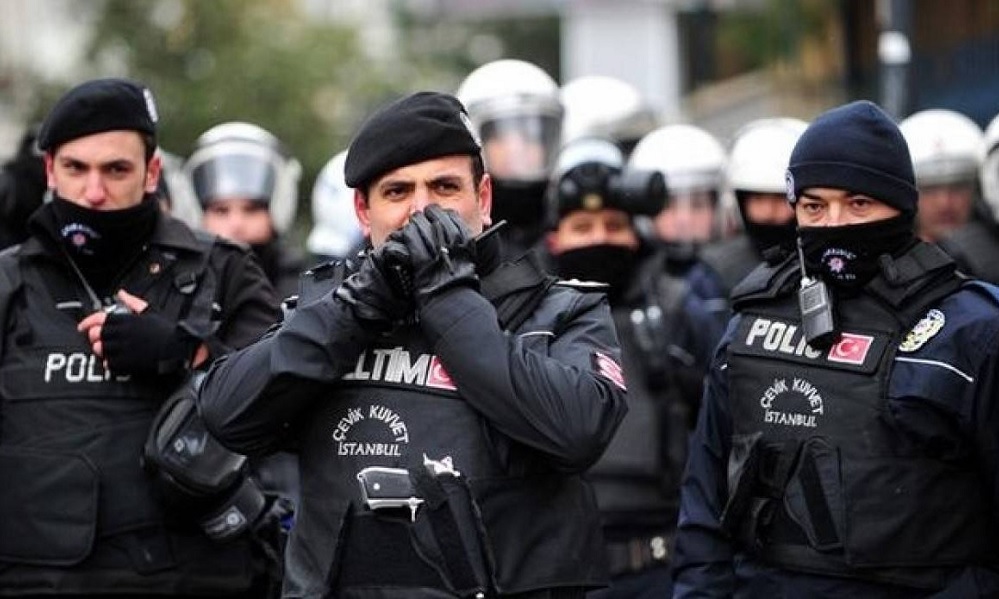
Turkish intelligence agents have captured a senior member of Daesh near the Durand Line, reportedly preventing planned suicide attacks in Turkey and other countries, according to Turkey’s state-run Anadolu Agency on Monday.
The suspect, identified as Mehmet Goren, is a Turkish citizen. He was apprehended during a covert operation and transferred to Turkey. Details on the timing of the operation or the involvement of Afghan and Pakistani authorities were not disclosed.
According to the report, Goren had risen through the ranks of Daesh and was allegedly tasked with carrying out suicide bombings in Turkey, Pakistan, Afghanistan, and Europe.
Daesh has a history of deadly attacks in Turkey, including the January 1, 2017 shooting at an Istanbul nightclub that killed 39 people.
Anadolu Agency reported that Goren’s arrest also provided intelligence on the group’s recruitment strategies and planned activities.
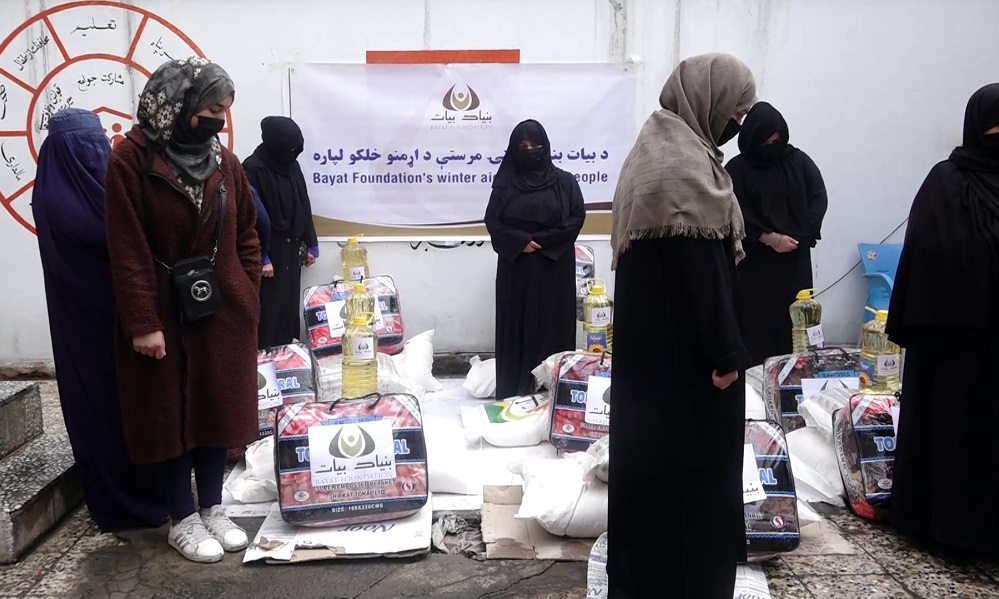
Dozens of needy families in Kabul’s fifth district have received essential winter assistance from the Bayat Foundation, as part of ongoing efforts to ease hardship during the cold season and worsening economic conditions.
According to foundation officials, the aid package includes staple food items such as flour, rice, and cooking oil, along with warm blankets to help families cope with freezing temperatures. Haji Mohammad Ismail, Deputy Head of Bayat Foundation, said the distribution began in Kabul and will soon be expanded to other provinces.
“Our assistance includes flour, rice, cooking oil, and blankets,” Ismail said. “Today, we started distributing these items in Kabul’s fifth district, and God willing, the aid will reach other provinces in the near future.”
Afghanistan continues to face widespread poverty, unemployment, and food insecurity, with many families struggling to meet basic needs, particularly during winter when access to work and heating becomes more difficult.Humanitarian organizations and charitable foundations have stepped up relief efforts to support those most affected.
Beneficiaries welcomed the assistance, describing it as a lifeline. “May God bless you for helping the poor. We had nothing and no work,” said one recipient. Another added, “Thank you for your help. Our flour was almost finished.”
Bayat Foundation officials stressed that winter aid distributions will continue in Kabul and other provinces in the coming days, as part of their broader commitment to supporting needy families across the country.
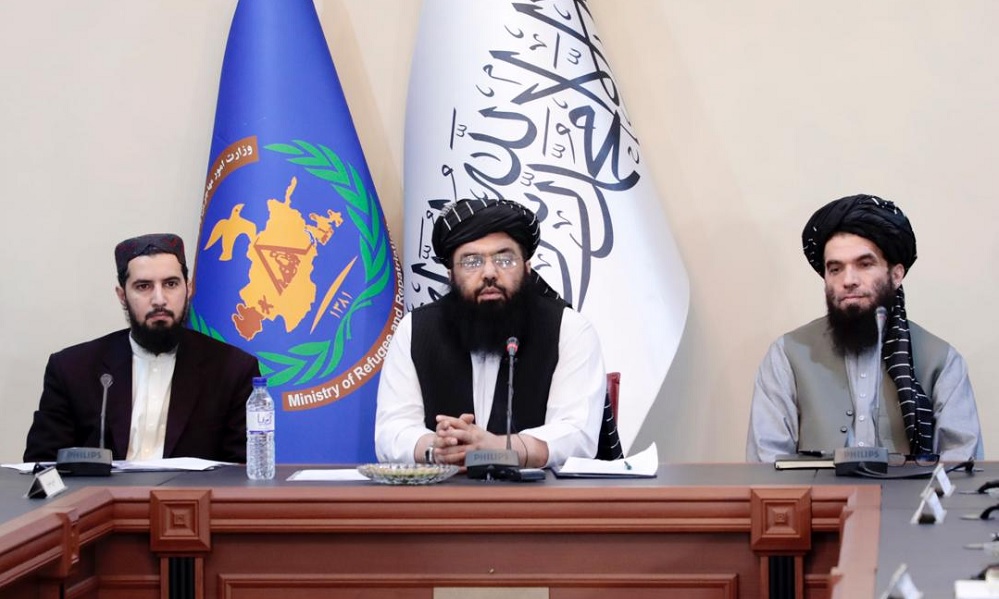
Since the Islamic Emirate came to power, approximately 6.8 million Afghans have returned home, either voluntarily or forcibly, from neighboring countries and other nations, according to the Minister of Refugees and Repatriation.
Mawlawi Abdul Kabir, speaking at a meeting on finalizing a draft plan for a permanent migration solution in Afghanistan, added that 1.3 million Afghans have been internally displaced due to natural disasters during the same period.
With winter approaching, widespread poverty and severe cold are threatening thousands of lives. Meanwhile, the forced expulsion of Afghan migrants from neighboring countries, particularly Iran and Pakistan, continues.
The Islamic Emirate has repeatedly urged neighboring states to allow migrants to return voluntarily. According to UNHCR, over two million Afghans have returned from Iran and Pakistan since the start of 2025.


Tahawol: Return of 6.8 million Afghan refugees to IEA rule

Saar: Pakistan army chief’s allegations against Afghanistan

Turkish intelligence captures a Daesh member near the Durand Line

Dozens of needy families in Kabul receive winter aid from Bayat Foundation

Nearly seven million Afghan refugees return home since Islamic Emirate’s takeover

Afghanistan economy under pressure as Pakistan shocks reshape trade flows

Gaza death toll tops 70,000, health ministry says

Afghanistan offers tax breaks, free land to attract Indian investors

Iran rerouting more oil to China through Indonesia to dodge US sanctions

Islamic Emirate declines to attend Tehran meeting on Afghanistan
Tahawol: Return of 6.8 million Afghan refugees to IEA rule
Saar: Pakistan army chief’s allegations against Afghanistan

Tahawol: CSTO’s security concerns over Afghanistan

Saar: UNAMA’s activities in Afghanistan reviewed

Tahawol: Iran’s pledges to facilitate trade with Afghanistan discussed
-

 Latest News2 days ago
Afghanistan signs 30-year deal for marble mining in Daikundi
-
 Latest News4 days ago
Afghan border forces prevent illegal entry of hundreds into Iran
-
 Latest News3 days ago
Pakistan summons Afghan diplomat over deadly attack in North Waziristan
-
 Latest News3 days ago
Afghan health minister calls for medical cooperation between Kabul and New Delhi
-
 Latest News4 days ago
Japan allocates nearly $20 million in humanitarian aid for Afghanistan
-
 Latest News3 days ago
Karzai urges reopening of girls’ schools and universities for Afghanistan’s bright future
-
 Health5 days ago
Afghanistan seeks India’s support in standardizing traditional medicine
-
 Business5 days ago
Afghanistan-Kazakhstan banking ties discussed in Kabul meeting