
Latest News
Taliban urges complete withdrawal in open letter to Americans

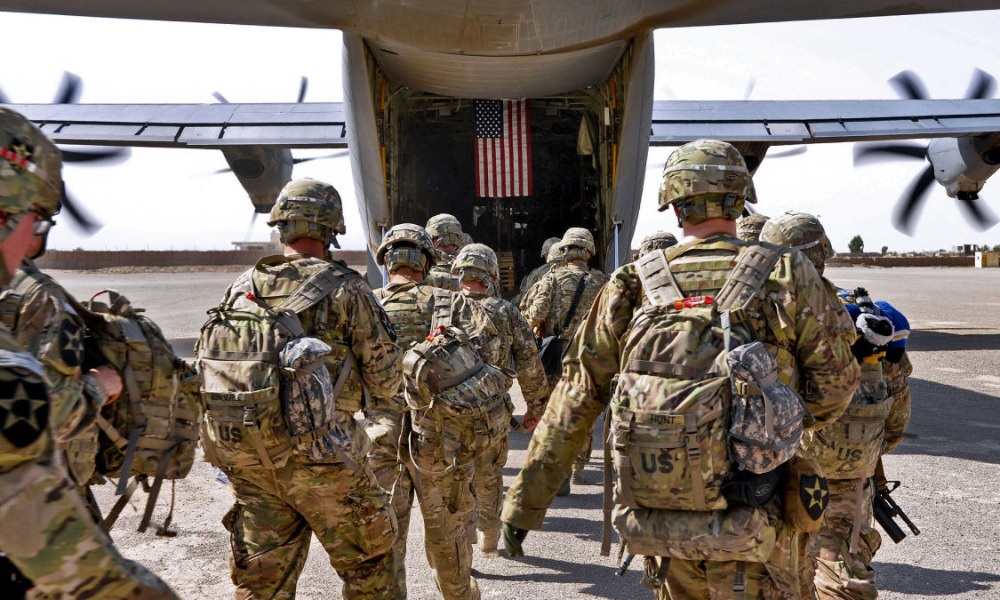
Taliban Deputy Leader Mullah Abdul Ghani Baradar says that there is no military solution to the long-term conflict in Afghanistan.
In an open letter to the people of the United States, Mullah Baradar stated: “The past nineteen years have proven beyond any doubt that the Afghan issue cannot be resolved through the use of force or by alternating military strategies and generals.”
Baradar emphasized that the people of Afghanistan are dealing with an “imposed war.”
“It is the responsibility and in the interest of all to bring an end to this war and the implementation of the Doha agreement is the most effective way of ending it,” the letter read.
The US and the Taliban signed an agreement on February 29, 2020, aimed at bringing peace to Afghanistan.
According to the deal, the US committed to withdrawing all its forces within the 14 months of the agreement. In exchange, the Taliban pledged to cut ties with terrorist groups including Al-Qaeda, and begin negotiations with the government of Afghanistan.
Mullah Baradar stated that the US-Taliban deal “with the aim that all foreign military forces along with their non-diplomatic personnel, private contractors, advisors, trainers and service providers withdraw from Afghanistan within a 14-month timeframe, while the Islamic Emirate [Taliban] would reciprocate by committing itself to prevent all threats to the security of other nations from Afghanistan.”
As per the Doha deal, the US needed to reduce its troop levels to 2,500 by December 2020 and direct talks needed to start between the Afghan government and the Taliban negotiating teams – which happened in September 2020.
Although the two sides held several meetings, they did not reach an agreement over the agenda of the intra-Afghan talks. The negotiations have since stalled and some members of the Republic’s peace team have returned to Kabul.
Meanwhile, some politicians believe that the peace talks’ failure could plunge the country into a new crisis.
“We are at a milestone, if we consider it, it is possible to reach a desirable solution. Otherwise, there would not be a war but we would witness a bigger crisis. Because both sides could use all their forces,” Ali Ahmad Osmani, a former cabinet member said.






Latest News
MSF urges Pakistan to halt forced returns of Afghan refugees
The medical charity said refugees have reported delaying or foregoing essential treatment because they fear documentation checks at healthcare facilities, leading to preventable health complications,

Médecins Sans Frontières (MSF), also known as Doctors Without Borders, has called on Pakistan to immediately halt the forced return of Afghan refugees and introduce humanitarian exemptions for those in need of international protection, warning that ongoing deportations are worsening an already fragile humanitarian situation.
In a statement released on Tuesday, MSF said Pakistan’s Illegal Foreigners Repatriation Plan (IFRP) has significantly restricted Afghan refugees’ access to healthcare, with many avoiding hospitals and clinics due to fears of arrest and deportation.
The medical charity said refugees have reported delaying or foregoing essential treatment because they fear documentation checks at healthcare facilities, leading to preventable health complications,
including severe child malnutrition and pregnancy-related emergencies.
MSF cited the case of an Afghan refugee identified as Najib, who said he was arrested during a police raid despite carrying a valid Proof of Registration (PoR) card. According to the organization, the incident caused severe emotional distress for his pregnant wife, who later suffered a miscarriage after delaying medical treatment because the family feared further arrests.
The organization also warned that the deportation campaign has disrupted refugees’ livelihoods, leaving many families without income while living under constant uncertainty and the threat of removal.
MSF said its mobile clinics in Quetta, Balochistan, recorded alarming levels of acute malnutrition among Afghan refugee children earlier this year. Of the children screened, 33.3 percent were found to be suffering from global acute malnutrition, including 7.6 percent with severe acute malnutrition and 25.7 percent with moderate acute malnutrition.
Nearly 90 percent of the malnourished patients treated were Afghan refugees, the majority of them women and children.
Pakistan launched the IFRP in November 2023, initially targeting undocumented Afghan nationals before expanding the policy to include holders of Afghan Citizen Cards (ACC) and Proof of Registration (PoR) cards. On July 10, authorities ordered the immediate arrest and accelerated deportation of Afghan nationals without valid visas.
Quoting figures from the UN Refugee Agency (UNHCR), MSF said more than 2.5 million Afghans have returned from Pakistan under the repatriation plan, many of them involuntarily.
The organization added that the United Nations has identified more than 70,000 Afghan refugees who could face serious risks if returned to Afghanistan.
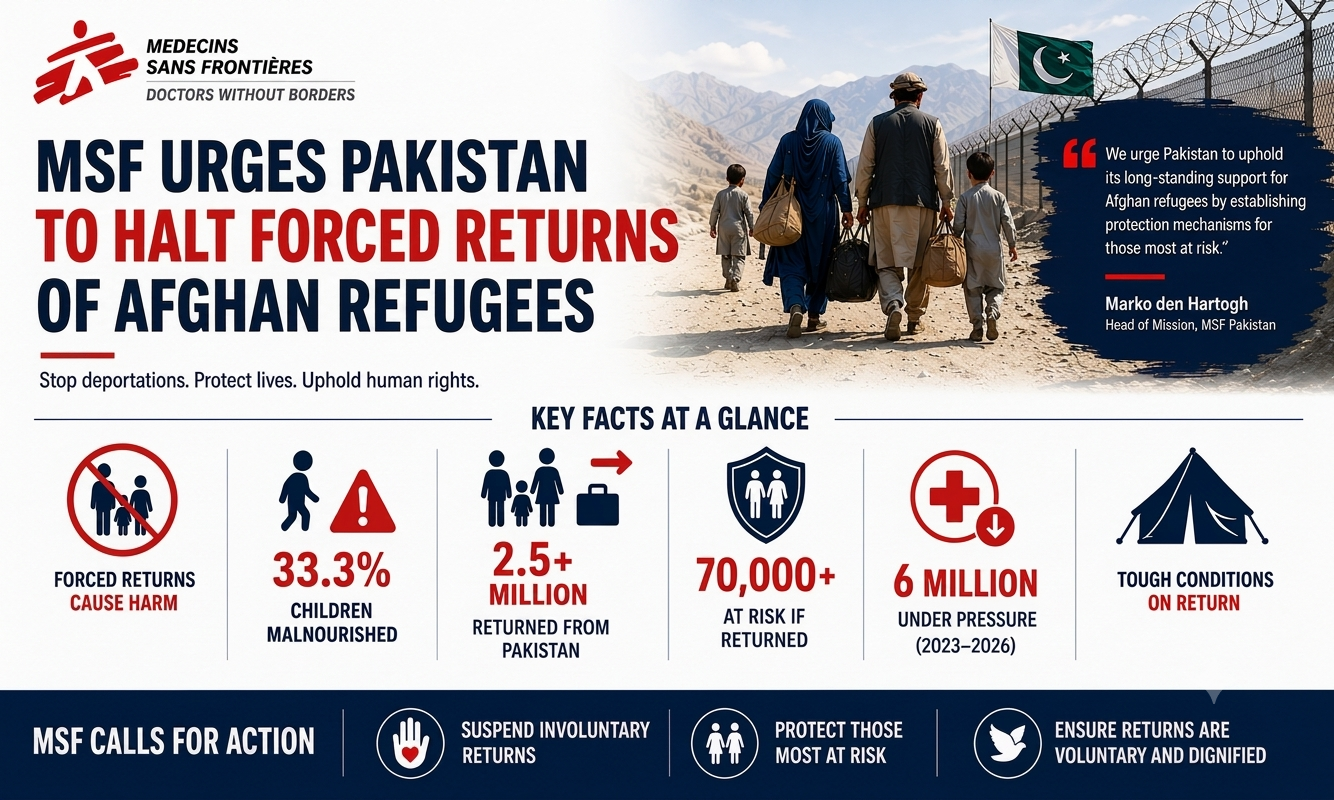
MSF warned that Afghanistan’s healthcare system is struggling to cope with the return of an estimated six million Afghans from Pakistan and Iran between 2023 and 2026. Reduced international aid, economic hardship and limited healthcare services are placing additional strain on returnees and host communities, it said.
Assessments conducted by MSF in informal returnee settlements in Kandahar found inadequate access to healthcare, poor shelter conditions, widespread undernutrition and insufficient sanitation, increasing the risk of disease outbreaks.
Marko den Hartogh, MSF’s Head of Mission in Pakistan, urged Islamabad to uphold its long-standing support for Afghan refugees by establishing formal protection mechanisms for those most at risk.
“This must include women and girls, children, the elderly, people with disabilities, those needing urgent or long-term medical care, refugees awaiting resettlement, and others at heightened risk of marginalization, discrimination, or persecution,” he said.
MSF also called on all countries hosting Afghan refugees to suspend involuntary returns and ensure that any repatriation is voluntary, safe, dignified and carried out in accordance with international humanitarian obligations.
Latest News
Germany deports first Afghan without criminal record since 2021, Reuters reports
Germany resumed deportations to Afghanistan in 2024 despite continued debate over the safety of returnees following the political changes in the country in 2021.
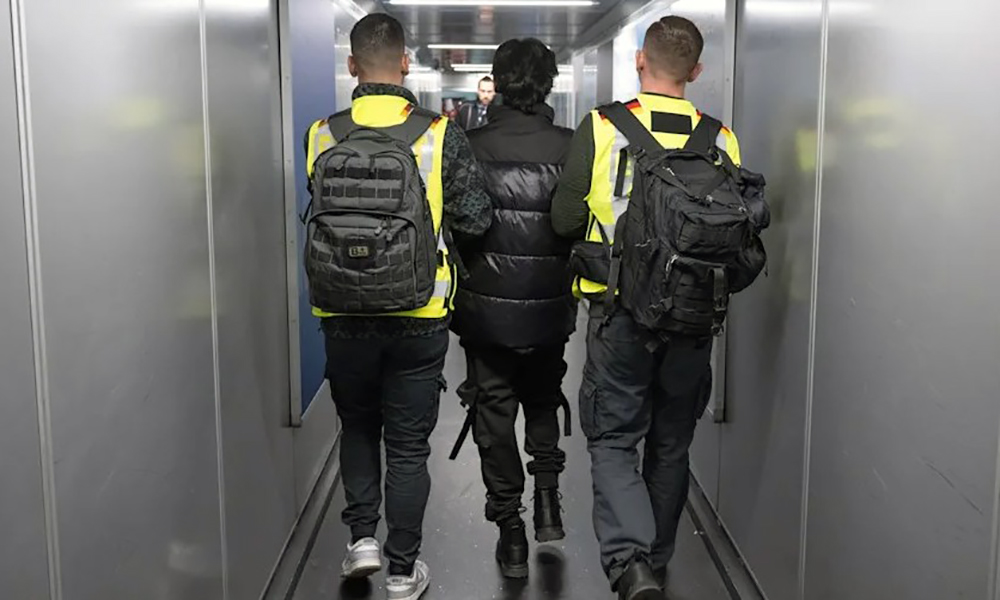
Germany has deported an Afghan national without a criminal record for the first time since the Islamic Emirate returned to power in Afghanistan in 2021, Reuters reported, citing German Interior Minister Alexander Dobrindt.
According to Dobrindt, the man became eligible for deportation after exhausting all legal avenues in his asylum case. He had previously attempted to settle in another European country but was found to be residing there illegally. After being transferred back to Germany under European migration procedures, he was deported to Afghanistan.
Reuters reported that the individual was among 31 Afghan men returned to Afghanistan on a deportation flight on Tuesday. The remaining 30 deportees had been convicted of criminal offenses, according to German authorities.
Germany resumed deportations to Afghanistan in 2024 despite continued debate over the safety of returnees following the political changes in the country in 2021.
Human rights organizations have repeatedly raised concerns over the policy. Reuters, citing Amnesty International, reported that Germany has deported more than 200 Afghans since the deportation program resumed in 2024, and that at least one deportee was later killed after returning to Afghanistan.
The deportations continue to draw criticism from rights groups, which have urged European governments to consider the humanitarian and human rights implications of returning asylum seekers to Afghanistan.
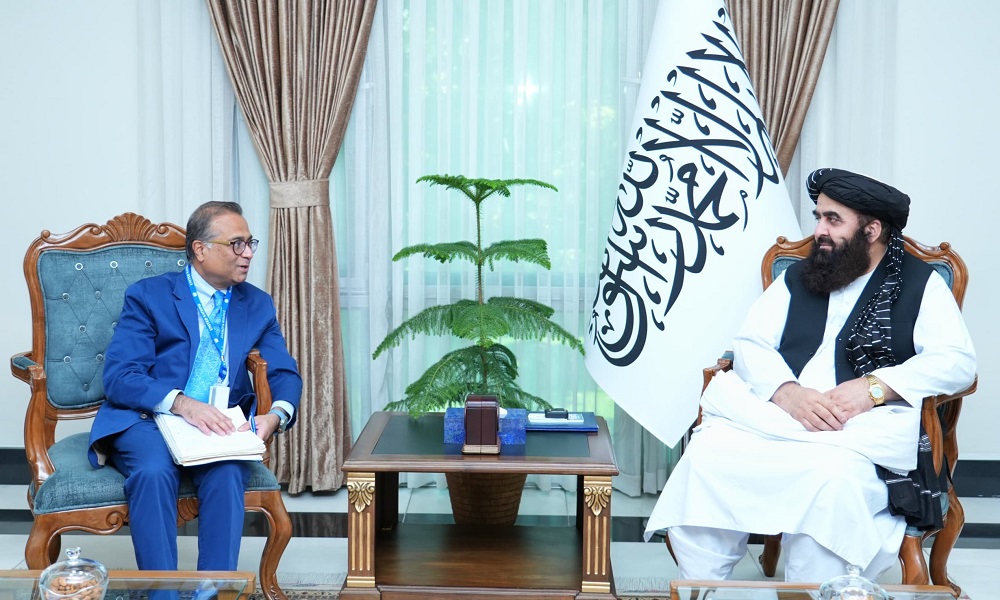
Afghanistan’s Foreign Minister Amir Khan Muttaqi met on Tuesday with Turhan Saleh, the newly appointed representative of the United Nations Development Programme (UNDP) in Afghanistan.
The Ministry of Foreign Affairs said the two sides discussed UNDP’s development activities in Afghanistan, the reintegration of returning migrants, cooperation in the health and agriculture sectors, alternative livelihoods for combating narcotics, environmental protection, climate change, and responses to natural disasters.
Muttaqi stressed the importance of implementing development and infrastructure projects alongside humanitarian assistance, saying the Islamic Emirate would continue cooperation with the United Nations in these areas.
The ministry added that Saleh assured the coordination of UNDP programs with Afghanistan’s priorities and said the organization would continue supporting development projects and capacity-building efforts based on the needs of the Afghan people.


Afghanistan set for crucial five-match ODI series against Ireland

FIFA reveals scale of record-breaking World Cup 2026 operation

MSF urges Pakistan to halt forced returns of Afghan refugees

Oman presents Iran with Gulf-backed plan for voluntary fees to use Hormuz

Germany deports first Afghan without criminal record since 2021, Reuters reports

India offers 1,000 online scholarships for Afghan students for 2026-27 academic year

Cricket world pays tribute to Afghanistan fast bowler Shapoor Zadran

Turkey spent over $120 million to prepare airport for Qatar-donated U.S. presidential aircraft

Thousands pay final respects as Afghan cricketer Shapoor Zadran buried in Kabul

Afghanistan U-15 team qualifies for FIFA U-15 World Cup

Tahawol: Iran–US relations amid recent developments

Saar: Attack in Pakistan-controlled Chitral

Tahawol: Afghanistan–Uzbekistan Economic Cooperation Enters New Phase

Saar: Growing Criticism in Pakistan Over Islamabad’s Afghanistan Policy

Tahawol: Trump halting major Iran escalation
-
 Latest News3 days ago
Badakhshan Governor, Army Chief reaffirm commitment to Afghanistan’s security
-
 Latest News5 days ago
Five armed men killed while attempting to cross Durand Line into Badakhshan
-
 Latest News4 days ago
U.S. government plan to interview Afghan refugees raises deportation concerns
-
 Latest News4 days ago
Afghanistan, Turkey discuss expanding agricultural cooperation
-

 Regional3 days ago
US pauses strikes on Iran as diplomatic efforts gather pace amid regional tensions
-
 Business2 days ago
Iran seeks to establish free trade zone with Afghanistan and China
-
 Latest News4 days ago
Uzbekistan delegation arrives in Kabul to attend trade forum
-
 World4 days ago
Trump says Israeli PM Netanyahu will visit US next week