
Latest News
Taliban says it controls 85% territory of Afghanistan

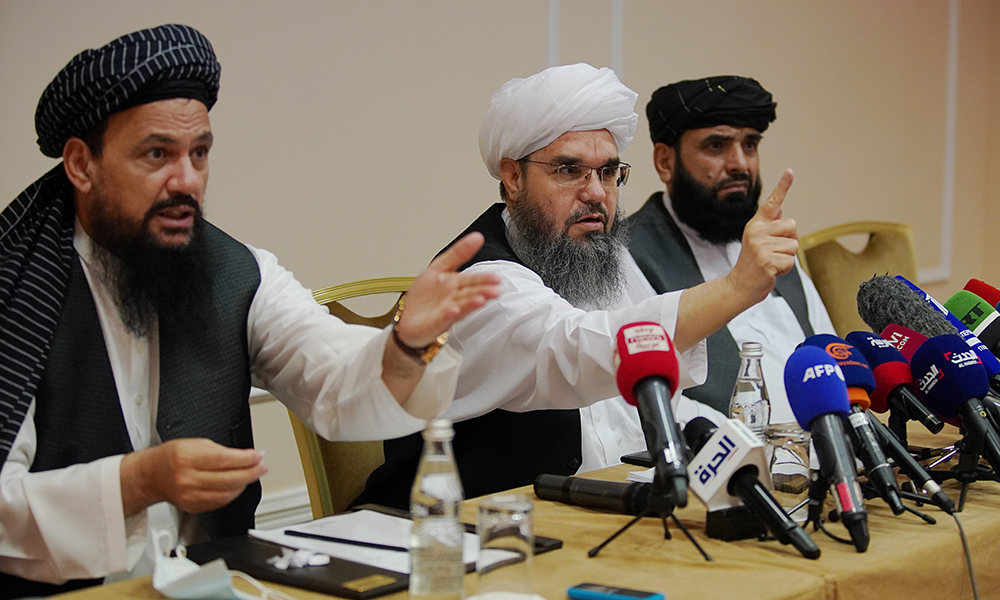
A Taliban delegation in Moscow said on Friday that the group controlled over 85% of territory in Afghanistan and reassured Russia it would not allow the country to be used as a platform to attack others.
Taliban negotiator Shahabuddin Dilawar says they have “85% of Afghan soil under their control.”
Dilawar also said that the Taliban have controlled all 28 districts of Badakhshan province and only the provincial capital is not in their control.
Foreign forces, including the United States, are withdrawing after almost 20 years of fighting, a move that has emboldened Taliban insurgents to try to gain fresh territory in Afghanistan.
That has prompted hundreds of Afghan security personnel and refugees to flee across the border into neighbouring Tajikistan and raised fears in Moscow and other capitals that Islamist extremists could infiltrate Central Asia, a region Russia views as its backyard.
At a news conference in Moscow on Friday, three Taliban members sought to signal that they did not pose a threat to the wider region however.
The members said the Taliban would do all it could to prevent Islamic State operating on Afghan territory and that it would also seek to wipe out drug production.
“We will take all measures so that Islamic State will not operate on Afghan territory… and our territory will never be used against our neighbours,” a Taliban negotiator Shahabuddin Delawar said through a translator.
The same members said a day earlier that the group would not attack the Tajik-Afghan border, the fate of which is in focus in Russia and Central Asia.
All Afghan border towns taken over by the Taliban will remain active, says Suhail Shaheen, a Taliban negotiator, at a press conference in Moscow. He vowed to address traders’ problems.
Moscow has noted a sharp increase in tensions on the same border, two thirds of which the Taliban currently controls, the Interfax news agency cited Russia’s foreign ministry as saying on Friday.
Russia’s foreign ministry called on all sides of the Afghanistan conflict to show restraint and said that Russia and the Moscow-led CSTO military bloc would act decisively to prevent aggression on the border if necessary, RIA reported.
The Taliban delegation told the same news conference that the group would respect the rights of ethnic minorities and all Afghan citizens should have the right to a decent education in the framework of Islamic law and Afghan traditions.
“We want all representatives of Afghan society … to take part in creating an Afghan state,” said Delawar.
Dilawar says they are in talks with other Afghans to discuss a new system “that should be Islamic, Afghan-inclusive and united.”
Meanwhile, the Taliban negotiator Shaheen says that attacking provincial capitals was not part of an agreement with the US, adding that: “but we still did not attack, also we did not launch our spring offensive and it shows our commitment to the agreement.”







Latest News
Indian cleric comments on rising Afghanistan–Pakistan tensions
Concluding his remarks, Nadwi called on Muslims to carefully assess the situation and to take what he described as a principled stand against injustice and external influence.
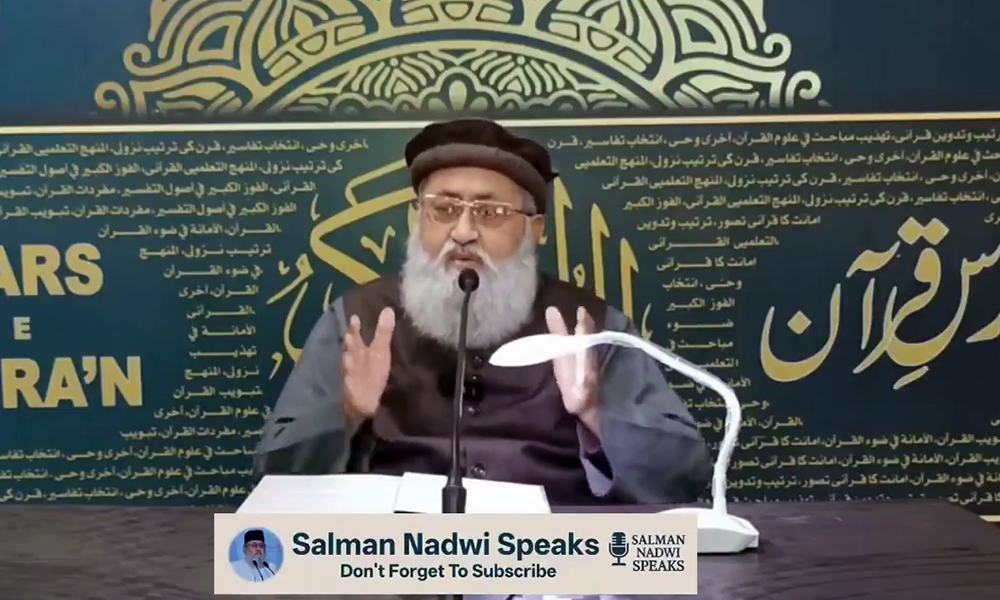
Prominent Indian Islamic scholar Salman Nadwi has weighed in on the recent tensions and clashes between Afghanistan and Pakistan, releasing a 13-minute video statement outlining his views on the unfolding political and military developments.
In the video, published on his official YouTube channel, Nadwi criticized Pakistan’s current military establishment, describing it as “oppressive” and “unjust.”
He alleged that the country’s armed forces prioritize foreign interests over the welfare of their own population.
Addressing the situation in Afghanistan, Nadwi said the country’s authorities are acting to defend their territory and governance system.
He characterized resistance to what he termed “military aggression” as legitimate from his perspective.
The cleric also questioned the positions taken by several Pakistani religious scholars and political figures, urging them to reconsider their stance on the escalating tensions.
He expressed disappointment over what he described as silence or insufficient responses from some influential voices within Pakistan.
Concluding his remarks, Nadwi called on Muslims to carefully assess the situation and to take what he described as a principled stand against injustice and external influence.
His comments come at a time of heightened friction between Afghanistan and Pakistan.

The Asian Football Confederation (AFC) has announced the postponement of several major club fixtures in its West Region competitions due to the rapidly deteriorating security situation in the Middle East.
In a statement released Monday, the AFC confirmed that the AFC Champions League Elite 2025/26 Round of 16 first-leg matches in the West Region — originally scheduled for Monday, March 2, and Tuesday, March 3 — will be rescheduled.
The decision affects top clubs from countries including Saudi Arabia, Iran, Qatar, the United Arab Emirates, Iraq, and Uzbekistan, many of whom were preparing for high-stakes knockout ties.
The postponements also extend to the AFC Champions League Two 2025/26 and the AFC Challenge League 2025/26, where West Region quarter-final first-leg matches set to take place between March 3 and 4 have been delayed until further notice.
These competitions feature emerging and mid-tier clubs from across West and Central Asia, for whom continental progression carries significant financial and sporting importance.
The move comes amid escalating military tensions across parts of the Middle East, with airstrikes and cross-border hostilities raising concerns about travel safety, airspace closures, and the security of players and supporters.
Several countries in the region have experienced heightened alert levels, leading to logistical complications for international sporting events.
Clubs from nations directly or indirectly affected by the conflict — including teams from Iran, Saudi Arabia, Qatar, and the United Arab Emirates — now face uncertainty over revised travel plans, fixture congestion, and potential impacts on domestic league schedules.
However, the AFC confirmed that matches involving clubs from the East Region — including sides from Japan, South Korea, China, Thailand, Australia, and other East and Southeast Asian nations — will proceed as originally scheduled across all AFC club competitions.
“The AFC will continue to closely monitor this rapidly evolving situation and remains resolute in ensuring the safety and security of all players, teams, officials, and fans,” the governing body said in its statement.
The postponements underscore how escalating geopolitical tensions are now reverberating beyond politics and security, disrupting one of Asia’s premier sporting competitions and affecting clubs, supporters, and broadcasters across the continent.
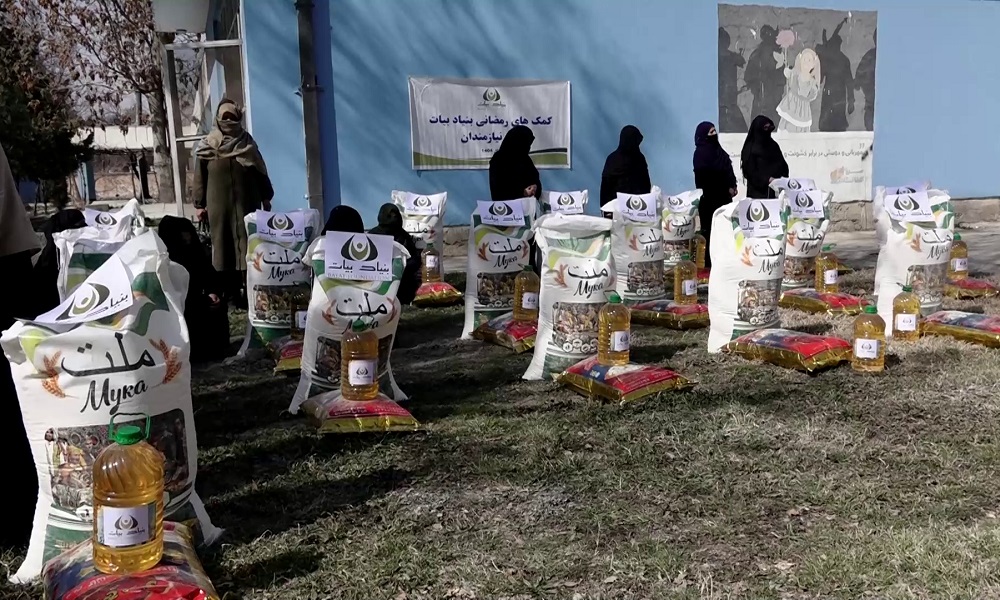
As Afghanistan continues to grapple with a severe humanitarian crisis compounded by economic hardship and heightened military tensions in the region, the Bayat Foundation has stepped up efforts to support vulnerable families in Kabul through its annual Ramadan assistance program.
This week, the foundation distributed food packages to dozens of struggling households in Kabul’s District 18. The packages include essential staples such as rice, flour, and cooking oil — basic necessities that many families are increasingly unable to afford amid high levels of unemployment, reduced incomes, and rising living costs.
Afghanistan remains one of the world’s most fragile humanitarian settings. Years of conflict, recurring natural disasters, economic isolation, and widespread poverty have left millions dependent on aid.
According to humanitarian agencies, a significant portion of the population faces food insecurity, with many families forced to skip meals or rely on limited assistance to survive. The situation has been further strained by recent regional tensions, which have disrupted trade routes and deepened economic uncertainty.
Speaking during the distribution, Haji Mohammad Esmail, Deputy Director of the Bayat Foundation, emphasized the organization’s ongoing commitment to assisting those in need.
“Continuing our annual Ramadan assistance [campaign], we are once again distributing aid this year. Today, we are in Kabul’s 18th district, providing food packages — including flour, oil, and rice — to a number of eligible families whose list was prepared by our team. Our assistance will continue both in Kabul and other provinces.”
For many recipients, the support offers not just food, but a measure of stability during an otherwise precarious time.
“I have no breadwinner at home; I am the one providing for my family. We are seven members,” said one woman receiving assistance. “Thank you — may God help you for assisting us poor people.”
Founded by Afghan businessman and philanthropist Dr Ehsanullah Bayat, the Bayat Foundation has been active in humanitarian and development work across Afghanistan for years. In addition to its annual Ramadan food drives, the organization has supported communities affected by earthquakes, floods, and harsh winters, provided healthcare initiatives, and contributed to educational and infrastructure projects in underserved areas.
As the holy month of Ramadan continues, the foundation says distributions will expand to other districts of Kabul and additional provinces, aiming to reach as many vulnerable families as possible during a period traditionally marked by charity, solidarity, and compassion.


Indian cleric comments on rising Afghanistan–Pakistan tensions

US Embassy, Consulates in Pakistan suspend visa services over security concerns

US Marines fired during storming of Karachi consulate, officials confirm

US orders immediate evacuations across Middle East amid escalating conflict

Saar: Afghan forces’ operation against Pakistani military

Pakistani military jet downed in Afghanistan’s Jalalabad, pilot captured alive

IEA releases three Pakistani soldiers to mark Ramadan

Afghan Air Force conducts airstrikes in Islamabad, other cities

AFC Futsal Asian Cup: Afghanistan to face Iran in crucial Group D clash

Afghanistan’s Chief of Armed Forces underscores readiness and equipment for national defense
Saar: Afghan forces’ operation against Pakistani military

Tahawol: Afghanistan and the Region Under the Shadow of Rising Tensions

Tahawol: Joint Israeli-US attacks on Iran discussed

Saar: Afghan retaliatory operations against Pakistan discussed

Tahawol: Carrying out retaliatory operations against Pakistan discussed
-
 Latest News3 days ago
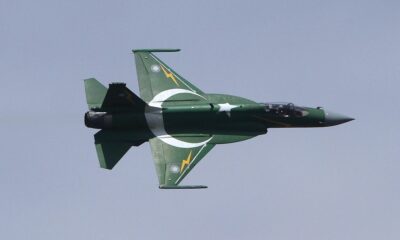
Pakistani military jet downed in Afghanistan’s Jalalabad, pilot captured alive
-
 Latest News4 days ago
Afghan Air Force conducts airstrikes in Islamabad, other cities
-
 Latest News4 days ago
IEA: Special circle in Pakistan has launched mission to destabilize region
-

 Latest News1 day ago
Afghan air force strikes key Pakistani military installations in retaliatory operation
-
 Latest News4 days ago
Turkey launches initiative to diffuse Afghanistan-Pakistan tension
-
 Regional5 days ago
Narendra Modi holds high-level talks after historic address to Knesset
-

 Latest News4 days ago
Afghans say they are united against Pakistan aggression
-
 Latest News3 days ago
Afghan forces conduct fresh airstrikes on Pakistani military targets