
Latest News
Taliban Must Not Repeat Mujahideen’s Mistake: MPs

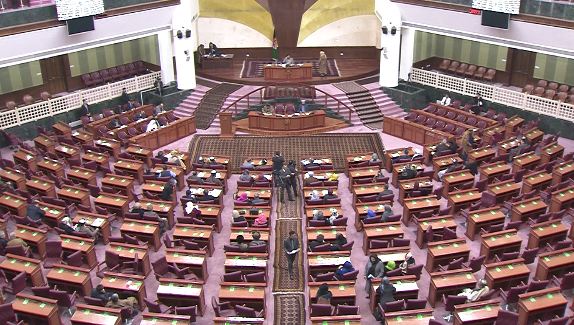 The Taliban insurgent group is making the same mistake as Mujahideen did during the Soviet-Afghan War, a number of Afghan lawmakers said on Wednesday.
“Mujahideen made the biggest mistake by refusing to negotiate with Dr. Najibullah. I’m calling on the Taliban that based on our religion peace is in our favor. Don’t act for the benefit of Pakistan and the United Arab Emirate,” said Abdul Wadod Paiman, an MP from Kunduz province.
The lawmaker added that foreign countries will not support the Taliban if the U.S. pulls out of Afghanistan.
“Some countries are using the Taliban as their toy. I’m calling on the Taliban to start direct talks with the Afghan government. It is a shame when foreigners are coming to mediate between Afghans,” said Obaidullah Barakzai, an MP from Urozgan province.
“Taliban must not repeat the mistakes of Mujahideen that led the country into chaos. This is an intra-Afghan issue,” said Amir Khan Yar, Second Deputy Speaker of the Lower House of Parliament.
In 1989, after the complete withdrawal of Soviet forces from Afghanistan, the Afghan Mujahideen refused to hold peace talks with the government and as a result, the country went into a huge crisis that still suffers.
Now, the Taliban is also refusing to sit with the Afghan government in order to find a solution to the nearly 40-years of violence in war-torn Afghanistan.
By Hesamuddin Hesam










Latest News
WFP navigates complex route to deliver emergency food aid to Afghan schoolchildren
WFP officials were forced to seek alternative routes to ensure the food reached vulnerable children without significant delays.
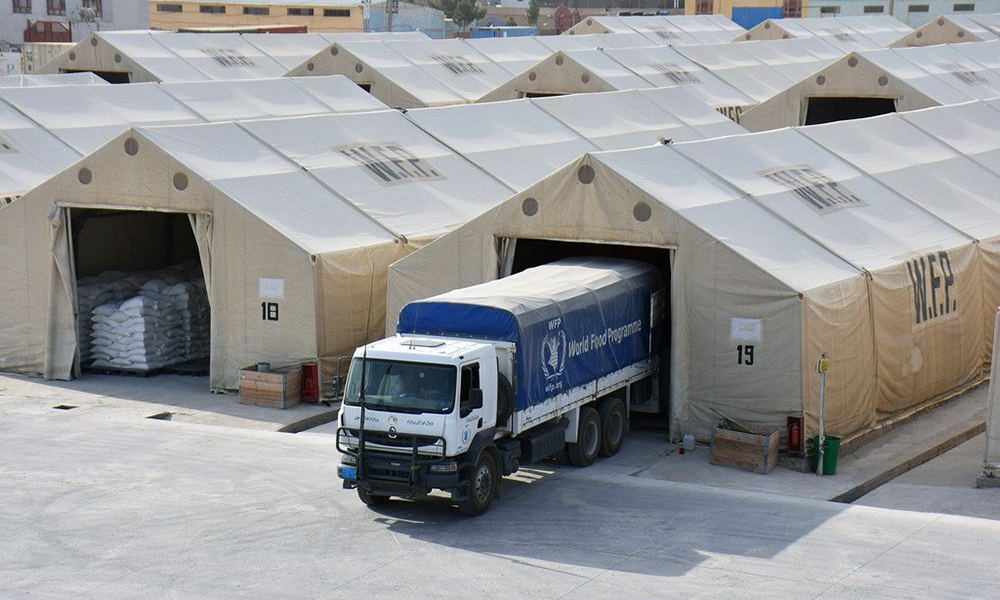
The World Food Programme (WFP) has detailed the complex journey required to deliver emergency food aid to Afghan schoolchildren, with a recent shipment traveling nearly 15,000 kilometers across nine countries amid regional instability, border closures and logistical challenges.
The shipment, consisting of 397 metric tons of fortified biscuits donated by Indonesia, was intended to support around 172,000 students in Afghanistan as part of a $3.5 million contribution from the Indonesian government to WFP’s school meals program.
According to the UN agency, the supplies began their journey at Indonesia’s Surabaya port before being shipped to Karachi, Pakistan. However, plans to transport the cargo overland into Afghanistan were disrupted when crossings between Pakistan and Afghanistan were closed amid tensions between the two countries.
WFP officials were forced to seek alternative routes to ensure the food reached vulnerable children without significant delays.
A second plan involving transport through the United Arab Emirates and Iran was later abandoned due to instability in the Middle East and disruptions affecting regional shipping routes.
Faced with mounting challenges, WFP logisticians developed a new overland corridor stretching from Dubai through Saudi Arabia, Jordan, Syria, Türkiye, Georgia, Azerbaijan and Turkmenistan before entering Afghanistan via the Torghundi border crossing.
The 21-truck convoy traveled thousands of kilometers across deserts, highways and ferry crossings, requiring customs clearances, security assessments and transport permits at multiple international borders.
“Hunger doesn’t wait for routes to reopen,” said Corinne Fleischer, Director of WFP Supply Chain and Delivery.
After weeks on the road, the convoy arrived in Kabul, where the biscuits were unloaded for distribution to schools in Ghor, Nuristan and Paktika provinces.
Abdul Ahad Monib, a WFP supply chain officer in Kabul, said the successful delivery reflected the organization’s determination to reach vulnerable communities despite difficult circumstances.
“For the children, it’s a packet of biscuits that helps them stay healthy,” Monib said. “For us, it’s a logistics feat.”
Afghanistan continues to face significant humanitarian challenges, including widespread poverty, food insecurity, natural disasters and declining international aid. For many students, WFP says the fortified biscuits provided through school feeding programs are among the most nutritious foods they receive each day.
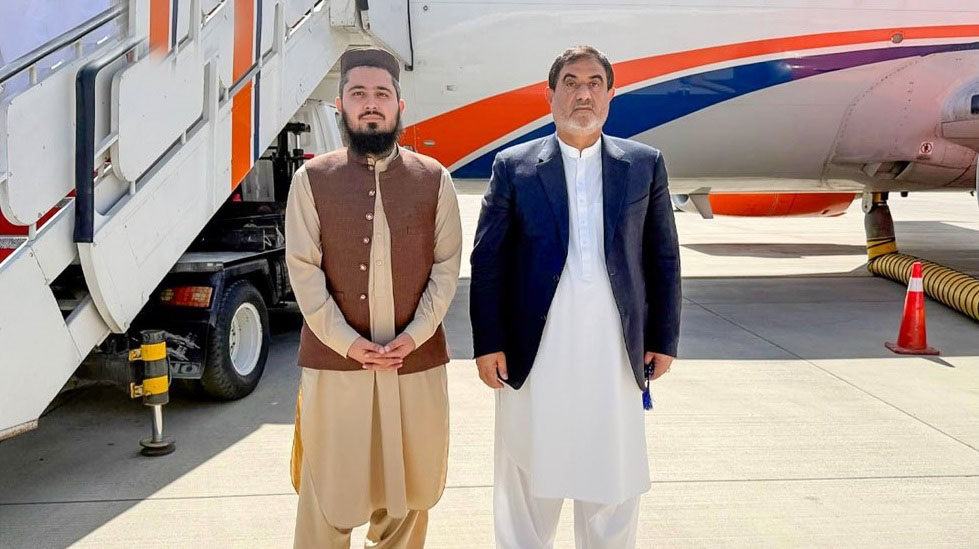
Sayed Karim Hashemi, chairman of the Afghanistan Chamber of Commerce and Investment (ACCI), has begun an official visit to Uzbekistan, India, and Kyrgyzstan as part of efforts aimed at strengthening Afghanistan’s regional economic ties.
ACCI said in a post on Saturday that the visit is focused on enhancing regional economic cooperation, attracting foreign investment into Afghanistan, and creating broader trade opportunities for Afghan businesses and traders.
Latest News
Central Asia–Afghanistan dialogue underscores regional connectivity and stability
Participants stressed that improved infrastructure links and stronger economic partnerships could play a key role in promoting stability and facilitating greater regional integration.
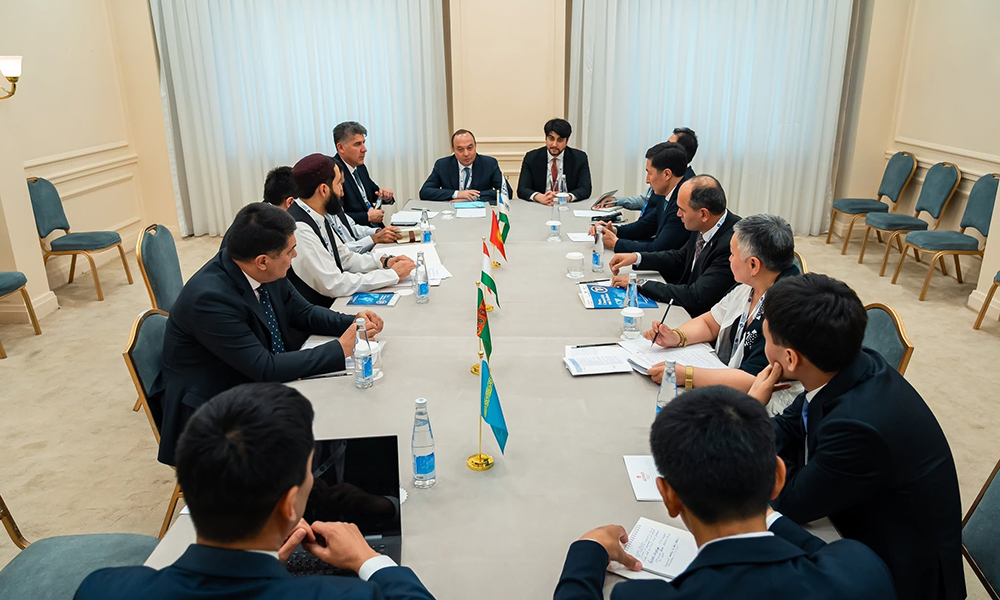
Policymakers, analysts, and regional stakeholders gathered on the sidelines of the Termez Dialogue on Connectivity between Central and South Asia to discuss the future of regional connectivity, economic cooperation, and stability between Central Asia and Afghanistan.
According to the Center for Strategic Studies Afghanistan, participants highlighted Afghanistan’s strategic position as a vital link between Central and South Asia, emphasizing the need for sustained engagement, practical cooperation, and inclusive economic initiatives to strengthen regional ties.
The discussions focused on expanding trade corridors, enhancing transport and energy connectivity, and fostering trust through continued dialogue among regional partners. Representatives from the Center for Strategic Studies, the Ministry of Foreign Affairs, and the Islamic Emirate of Afghanistan shared perspectives on regional priorities and opportunities for deeper cooperation.
Participants stressed that improved infrastructure links and stronger economic partnerships could play a key role in promoting stability and facilitating greater regional integration. They also underscored the importance of maintaining constructive dialogue to address common challenges and advance shared development goals.
The meeting concluded with a renewed commitment to building a stable, connected, and prosperous region. Attendees agreed that closer cooperation between Central Asian countries and Afghanistan is essential for unlocking broader economic opportunities and strengthening regional connectivity.


Australia stun Turkiye 2-0 in World Cup Group D opener

WFP navigates complex route to deliver emergency food aid to Afghan schoolchildren

US, Iran inch closer to deal, timing remains unclear

Trump says deal to end war will be signed on Sunday, Iran questions timing

Saar: Possible agreement between Iran and US discussed

Norway’s Viking-inspired World Cup team photo goes viral

Large blast near Beit Shemesh part of pre-planned test: Israeli defense firm

Trump returns from China with stability but little progress

Afghanistan announce squad for India series

Afghanistan, Russia sign military cooperation agreement
Saar: Possible agreement between Iran and US discussed

Tawsia: Increase in Afghanistan’s saffron exports discsused

Tahawol: Middle East crisis and future of Islamic world discussed

Saar: Kabul-Islamabad informal talks in Istanbul discussed

Tahawol: Fresh Pakistani military attacks on Afghanistan discussed
-

 International Sports4 days ago
One Day to Go: Everything you need to know about FIFA World Cup 2026
-

 Latest News5 days ago
Karzai, UK envoy react after protest dispersed in Herat
-
 Latest News5 days ago
Uzbek company keen to establish mineral processing plant in Afghanistan
-
 Latest News4 days ago
Pakistani airstrikes on civilian areas in three Afghan provinces kill 13
-

 Sport3 days ago
Afghanistan A edge India A by four runs in rain-hit Tri-Nation opener
-

 International Sports3 days ago
Mexico and South Africa set to open historic 2026 World Cup
-
 Regional4 days ago
Pakistan says all aboard military helicopter killed in crash in Pakistani Kashmir
-
 Latest News5 days ago
Afghan central bank, AACC discuss expanding banking, trade and investment ties