
Latest News
Taliban disagrees with gov’t negotiating team formation

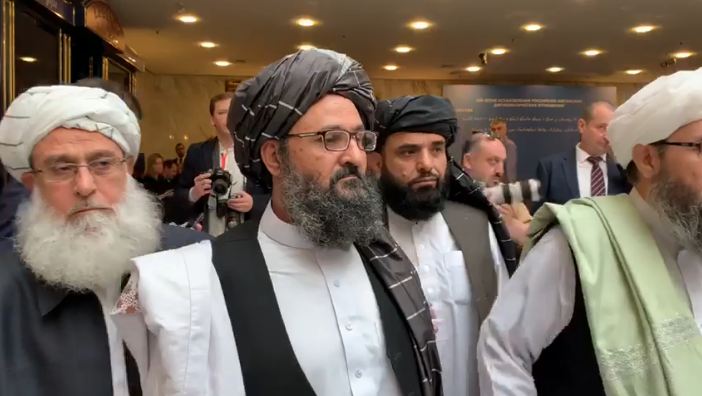
 According to the Taliban, the negotiating team formed by the Afghan government contradicts the US-Taliban agreement – the team should be an all-inclusive one.
It comes as the Afghan government Friday officially announced names of the intra-Afghan dialogue negotiating team led by Masoum Stanakzai.
The Taliban however, does not agree with the formation of the team saying in a statement that the Afghan government could play the role of one of the parties around the negotiation table – introducing the negotiating team by Kabul goes against the agreement made with the US.
The statement adds that the peace negotiating team should be all-inclusive, one that represents all sides.
The Taliban has revealed names of its negotiating team comprised of 10 people pronounced as follows:
Mawlawi Ziauddin Waqif, Mawlawi Abdul Hameed Akhondzada, Hafiz Abdul Qadeer, Mawlawi Abdul Zahir Noman, Mawlawi Abdul Fatah Fatih, Mawlawi Abdul Hadi Akhondzada, Mawlawi Abdullah Rabit, Mawlawi Sediqullah Khabib, Zabihullah Noorani and Mohammad Nasim Hilal.
The Taliban’s team is going to visit Kabul to negotiate the prisoner releases.
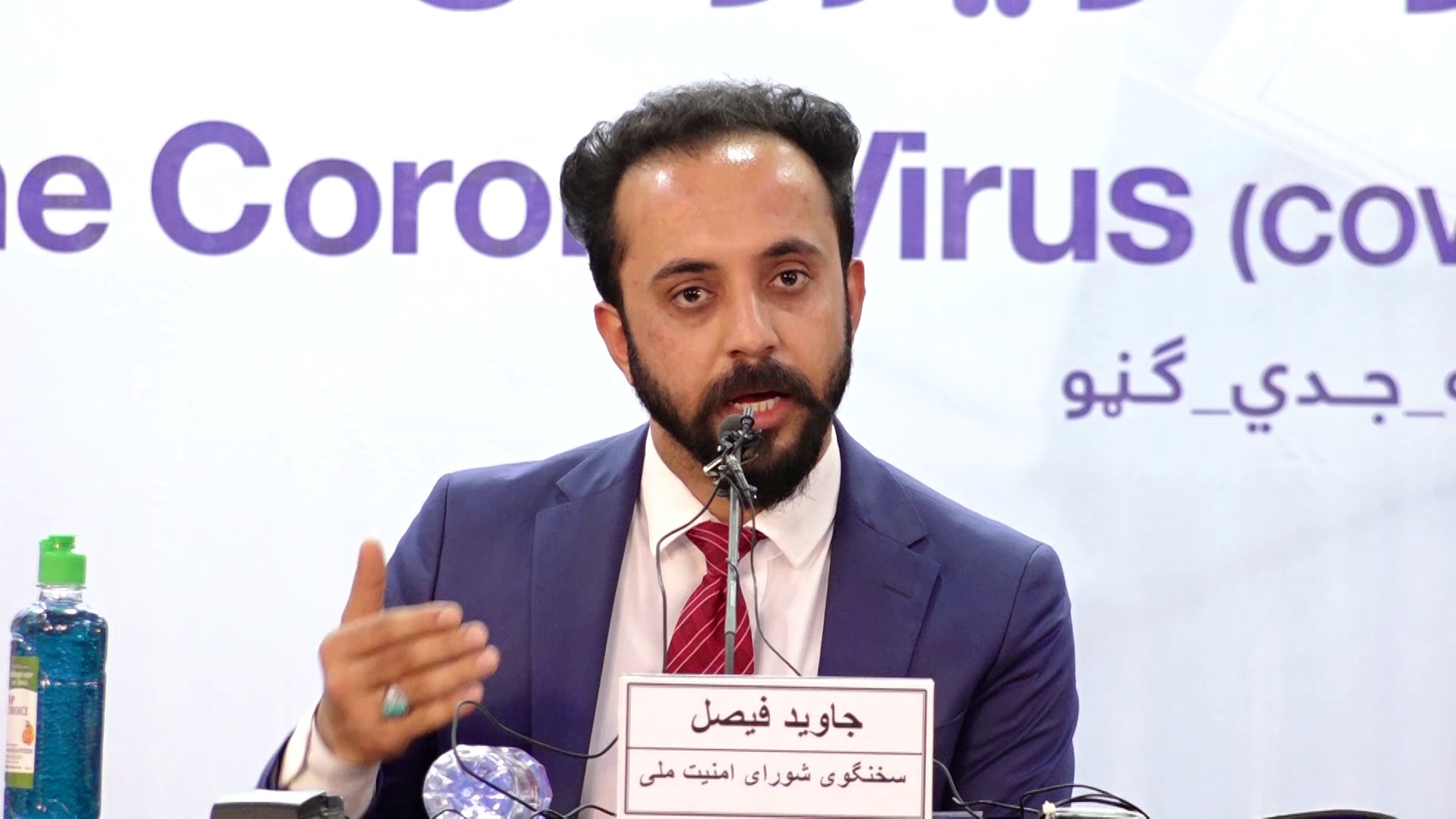 Jawid Faisal, the spokesperson for the National Security Council, says, “The day is not exact. They will soon come and the negotiations will start.”
In the meantime, the NSC says that the Taliban doesn’t have the 1000 Afghan government prisoners; therefore, the group has intensified its violence to take more captives and meet the count.
The spokesperson Jawid Faisal, says, “The Taliban does not have any prison. The group only has places where they torture the captives; therefore, the group has suddenly increased its attacks to take more captives and meet the list. The Taliban is damaging the peace process.”
Moeen Tsamkanai, a political expert, says, “The government does not have information on its prisoners.”
One more thing that the government has conditionally been stating is that the Taliban will have to guarantee that once the prisoners released will not return to battlefields.







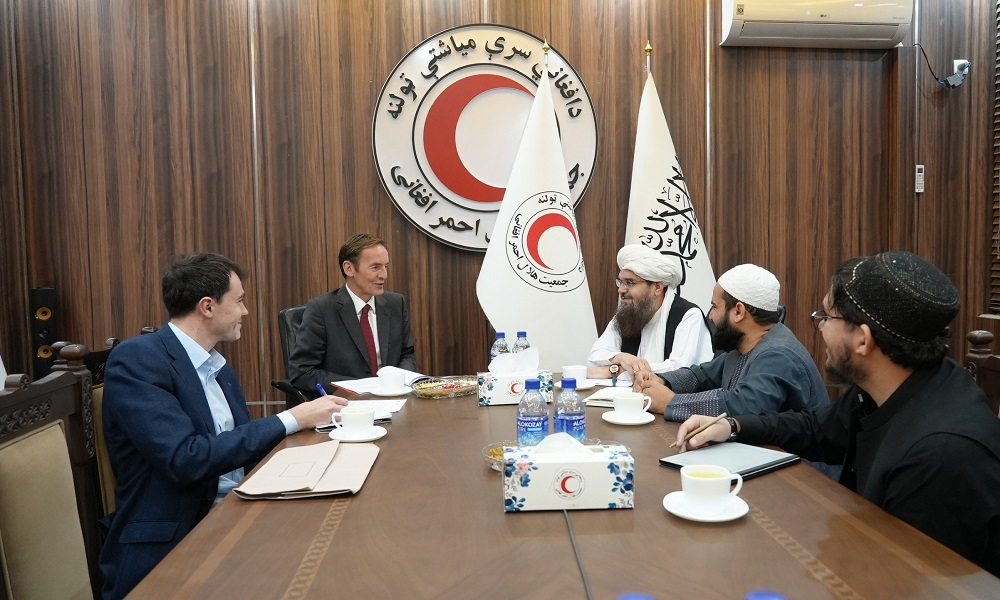
Shahabuddin Delawar, president of the Afghan Red Crescent Society (ARCS), met with Richard Lindsay, the UK’s Special Representative for Afghanistan, to discuss the country’s humanitarian situation and ways to expand assistance for vulnerable communities.
According to ARCS, the meeting focused on support for people affected by natural disasters, Afghan returnees and other vulnerable groups, particularly their urgent humanitarian and healthcare needs.
Delawar thanked the United Kingdom for its humanitarian assistance to people affected by natural disasters and briefed Lindsay on the ARCS’s humanitarian and healthcare activities.
He highlighted the society’s services for children with congenital heart defects at its cardiac hospital, vocational training and skills development programs for vulnerable women and children across seven regional zones, mental healthcare services, and assistance to communities affected by natural disasters.
Delawar said decades of hardship had left many Afghans facing mental health challenges, while vulnerable families continued to struggle with difficult living conditions. He stressed the need for expanded humanitarian assistance and healthcare support.
Referring to the return of Afghan refugees from neighboring countries, Delawar said many families urgently need shelter, food, non-food items and medical services. He called for greater UK cooperation to help meet returnees’ basic needs.
Lindsay praised the ARCS’s humanitarian work and pledged continued cooperation in supporting returnees and other humanitarian initiatives in the coming year. He also said he would seek to facilitate effective cooperation with the society in the healthcare sector.
Both sides underscored the importance of strengthening cooperation to expand humanitarian assistance, support vulnerable communities and improve healthcare services in Afghanistan.
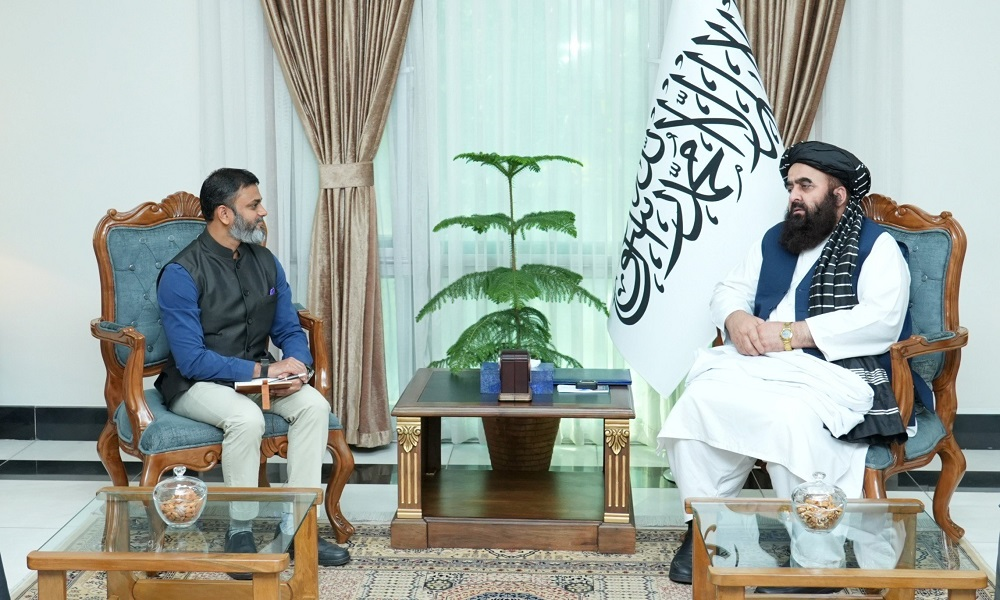
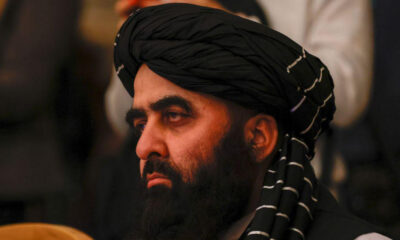
Amir Khan Muttaqi, Minister of Foreign Affairs of the Islamic Emirate of Afghanistan, met with Yatin Patel, India’s chargé d’affaires in Kabul, on Wednesday.
The Ministry of Foreign Affairs said Muttaqi emphasized that, in line with its balanced foreign policy, the Islamic Emirate attaches importance to relations with India.
Referring to the growing volume of trade between the two countries, he stressed the need to strengthen communication and cooperation between Afghanistan’s and India’s public and private sectors, adding that cooperation should be expanded to make better use of existing capacities.
Meanwhile, Yatin Patel said India seeks to expand its relations and engagement with Afghanistan in the economic, political and humanitarian fields.
Muttaqi also wished Patel success in his new assignment.
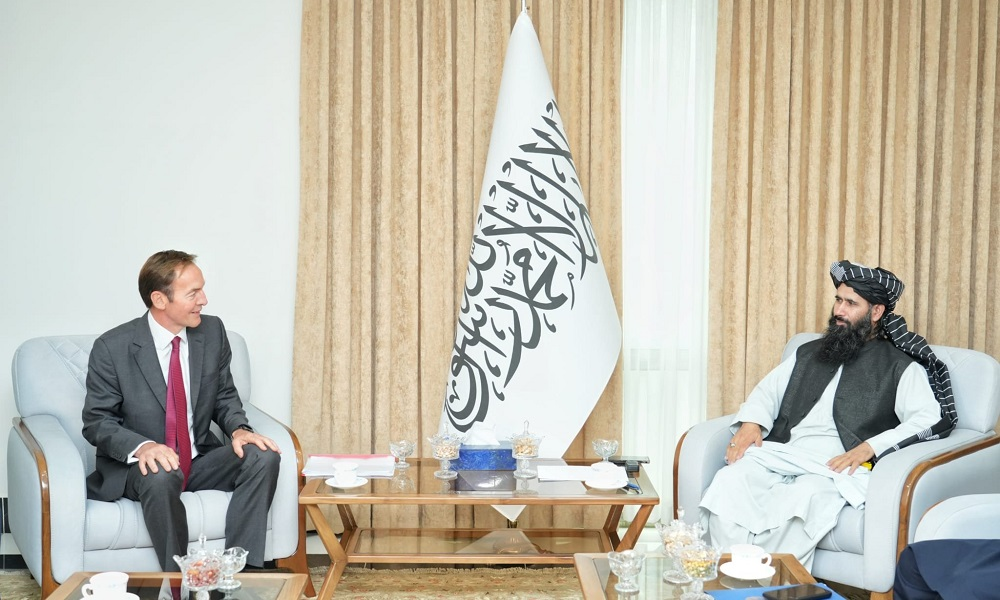
Mohammad Naeem, Deputy Minister for Finance and Administration at the Ministry of Foreign Affairs of the Islamic Emirate of Afghanistan, met on Wednesday with Richard Lindsay, the UK’s Special Representative for Afghanistan.
The Ministry of Foreign Affairs said the two sides discussed Afghanistan’s political, economic and security situation, regional stability, humanitarian assistance and consular services.
Naeem expressed appreciation for the UK’s humanitarian assistance and cooperation with Afghanistan and stressed the importance of continuing cooperation between the two sides.


Ukraine’s Zelenskiy says it is ‘painful’ when Trump chooses a different side

Tahawol: Kyrgyzstan’s rejection of Afghan refugees discussed

Saar: Central Asia’s trade alternative to Pakistan discussed

ARCS, UK envoy discuss humanitarian needs of vulnerable Afghans

FM Muttaqi says IEA values ties with India under its balanced foreign policy

Cricket Bonanza: Afghanistan set for packed international schedule

UN warns of mounting humanitarian and human rights pressures in Afghanistan

Afghanistan says 28 killed, 32 captured in Nuristan operation

CNN, MS NOW and Politico sue Trump, challenging White House ban

Silk Road highway in Wakhan corridor now reaches the China border
Tahawol: Kyrgyzstan’s rejection of Afghan refugees discussed
Saar: Central Asia’s trade alternative to Pakistan discussed

Tahawol: Warnings over worsening insecurity in Pakistan discussed

Saar: Concerns over potential return of US military bases to Afghanistan discussed

Tahawol: Kabul’s criticism of Islamabad’s policy toward Afghanistan
-
 Latest News5 days ago
Pakistan issues new directives for Afghan medical students and doctors
-
 Latest News5 days ago
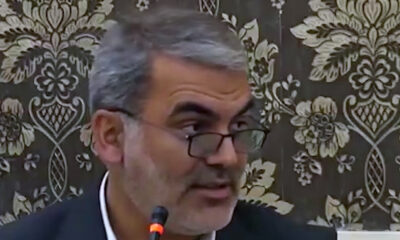
Iranian lawmaker praises Afghanistan’s support, accuses Pakistan of ‘hypocrisy’
-
 Regional4 days ago
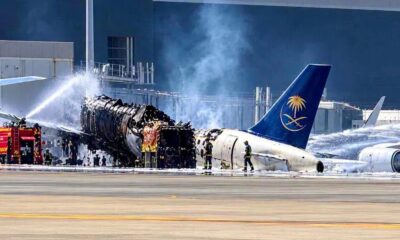
Houthis warn airlines to avoid Saudi airports after deadly Riyadh attack
-

 World3 days ago
One dead in new attack on Saudi airport, a day after Houthi strike kills 13
-
 Business5 days ago
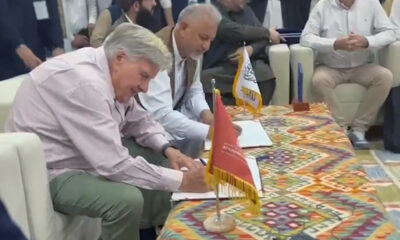
Afghan-Austrian partnership aims to boost carpet exports to European markets
-
 Sport4 days ago
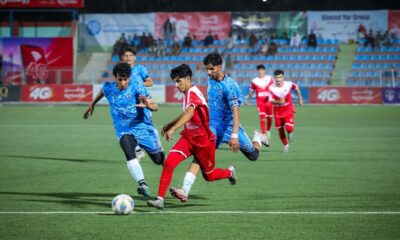
Afghanistan Champions League second half to kick off on October 16
-

 World4 days ago
14 killed in two separate mass shootings across the United States
-
 Business4 days ago
Afghanistan signs nearly $400 million in regional trade and investment deals