
Latest News
Taliban delegation in Kandahar for consultations

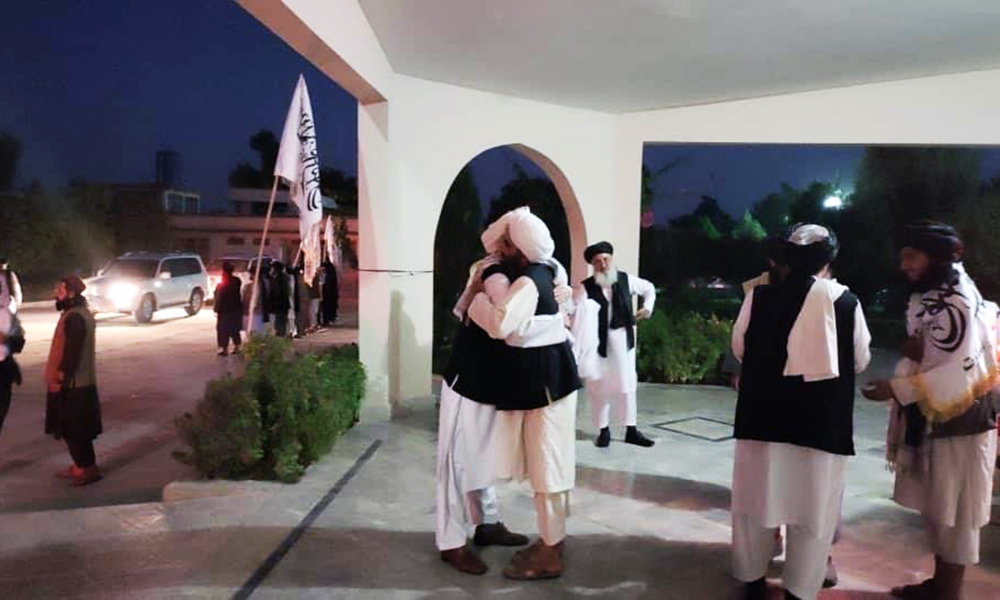
A nine-member Taliban delegation led by Mullah Abdul Ghani Baradar arrived in Kandahar on a special flight from Qatar on Tuesday night and are expected to hold consultations on the future system.
After arriving in Kandahar province, a senior Taliban member, Khairullah Khairkhah, told a news conference that he was pleased to see that there was no enemy in the country.
He also called on all people, with skills, to commit to developing their country.
Khairkhah said the reason for the delegation’s visit to Kandahar was to hold discussions on the future government structure and system.
He said these discussions will start soon and as soon as decisions have been made, the public will be informed.
“Now the situation is different from the past, and you see that all of us are together now, and who did what in the past is not difficult for anyone now,” Khairkhah said.
Regarding human rights, especially women’s rights and for them to work, and the issue of freedom of expression, Khairkhah said: “We hope that in the light of Islamic values and Afghan traditions, we will continue and be satisfied by the international community.”
Another Taliban member, Abdul Salam Hanafi, said the Taliban is now strengthening security in the country so that no one can cause instability or insecurity by using the Taliban’s name.
“Strengthening security is our priority for everyone to feel safe and for everyone to live together. The issue of war and enmity is over and no one will be insulted or humiliated. Everyone has the right to serve in their homeland,” he said.
Hanafi also said: “And in any field that has specialists, we welcome them, and the reason for the delegation to come (to Kandahar) is to consult with other elders so that we can make some arrangements that are necessary and we will share with you [media] later.”
Regarding the role and concerns of the youth, Hanafi said: “One of the decisions of the Islamic Emirate is that none of our young people will be killed on illegal routes to Europe.
“We work together and we need the youth and they should not feel threatened, and we have announced that everything that is past is past; the Emirate has declared amnesty for everyone from today, and the Islamic Emirate does not seek revenge.”
Regarding those who are said to be out of the country, or at enmity with the Taliban, or leaders who are not in Afghanistan, Hanafi replied: “We have declared a general amnesty and no one should leave Afghanistan and those who have left should return; their homes are safe; their honor and dignity are safe; we do not need anyone’s property, house or car; we are not here for revenge.”
Hanafi also called on the people not to flee the country and to stay in Afghanistan and help with its development.
Regarding the recent remarks made by Amrullah Saleh, former first vice president, Hanafi said: “The constitution was something that was translated by Westerners, and those who came by force; [government officials who fled] today have all gone and taken the constitution with them, and we ask all Afghans that Afghanistan is no longer a place for war, the war is over and no one should declare war and no one is ready for war and all Afghanistan is under the control of the forces of the Islamic Emirate and we want all Afghans to live together as brothers.
“Let them build their homeland and let no one disturb the security of Afghanistan,” he said.
Meanwhile, Anas Haqqani, a member of the Taliban’s leadership, is now in Kabul and met with political figures including Abdullah Abdullah, former president Hamid Karzai and Fazl Hadi Muslimyar.
The meeting was held at Abdullah’s home. Sources close to Gulbuddin Hekmatyar are said to be encouraged by the possibility that a political understanding can still be reached between the Taliban and Abdullah, Karzai and Hekmatyar.
“There is more opportunity than ever before, all positions should work to change the situation, do not doubt that the situation will change,” said Hafiz Rahman Naqi, deputy head of Gulbuddin Hekmatyar’s Islamic Party.
A number of political figures have meanwhile traveled to Islamabad in a bid to defend the republic system. They met with Pakistani Prime Minister Imran Khan.
Islamabad says it is trying to form a government based on a political agreement in Afghanistan.
Mohammad Younos Qanoni, another Afghan politician, said, “I am optimistic that one of the main obstacles was the previous Afghan government which is now non-existent. The opportunity for greater understanding and a new atmosphere in Afghanistan has been created. I hope that the leaders of the republic and the Taliban will reach an understanding.”

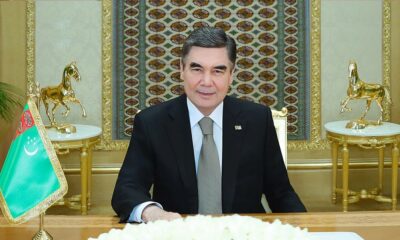


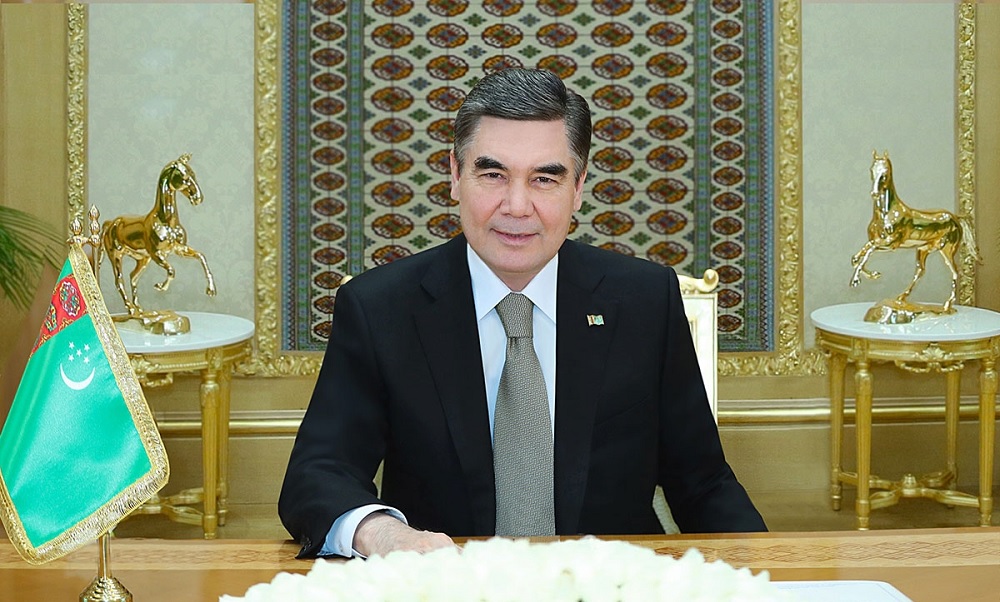
In an interview with Al Arabiya, former Turkmen President Gurbanguly Berdymukhamedov said international companies, including United States firms, are welcome to join the Turkmenistan–Afghanistan–Pakistan–India (TAPI) gas pipeline project.
Berdymukhamedov noted that while the project enjoys U.S. support, it will need to navigate longstanding regional tensions, as Afghanistan, Pakistan, and India have seen outbreaks of deadly fighting over the past year.
“This project, which enjoys international support, including from the United States, possesses immense potential in meeting the growing energy needs of South Asian nations. It also opens promising avenues for accessing the emerging markets of the Asia-Pacific region, the Near East, and the Middle East,” he said.
“The TAPI project is also of paramount importance for political stability and economic prosperity, maintaining high investment attractiveness,” Berdymukhamedov added.
Turkmenistan plans to complete the first section of the pipeline, reaching the Afghan city of Herat, by the end of 2026. No plans have yet been announced to extend the project further south.
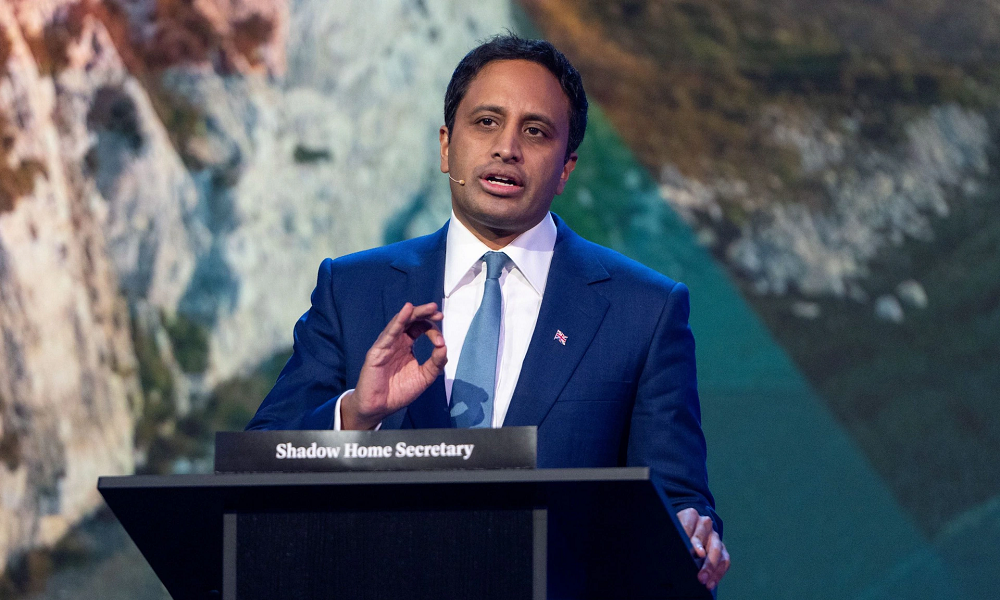
The British political party Reform UK, led by Nigel Farage, is set to impose a blanket visa ban on Afghanistan and five other countries — including Pakistan — as part of its proposed crackdown on illegal migration and states refusing to accept deported nationals.
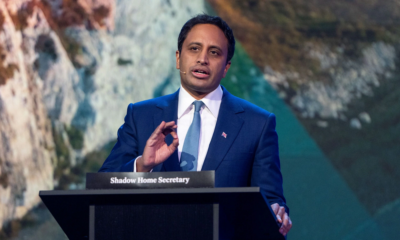
In a speech set for Monday, the party’s newly appointed “shadow” home secretary, Zia Yusuf, will outline plans to halt all visas for diplomats, students, workers, VIPs and tourists from Pakistan, Somalia, Eritrea, Syria, Afghanistan and Sudan. Reform says these governments fail to cooperate in accepting back deported migrants and convicted criminals.
Pakistan received more than 160,000 UK visas last year, making it one of the biggest visa recipients. However, British officials say Islamabad accepts back only a small fraction of rejected asylum seekers and has resisted pressure to take back individuals convicted in high-profile criminal cases.
The move – which mirrors US President Donald Trump’s visa ban on 75 countries – would be a key element in Reform’s strategy to deport up to 288,000 illegal migrants from the UK on five charter flights a day.
On legal migration, Yusuf will say a Reform government would terminate all welfare payments to foreign nationals, including the 1.3 million currently receiving UC, up from around 900,000 in 2022.
Yusuf is expected to say that years of weak immigration enforcement have undermined public trust and that a Reform government would secure Britain’s borders and make people feel safe.
Latest News
Ex-US envoy Khalilzad condemns Pakistan air attacks on Afghanistan
He described the situation as a tragedy for both Pakistan and its neighbors, urging the Pakistani leadership to reconsider its policies and change course.
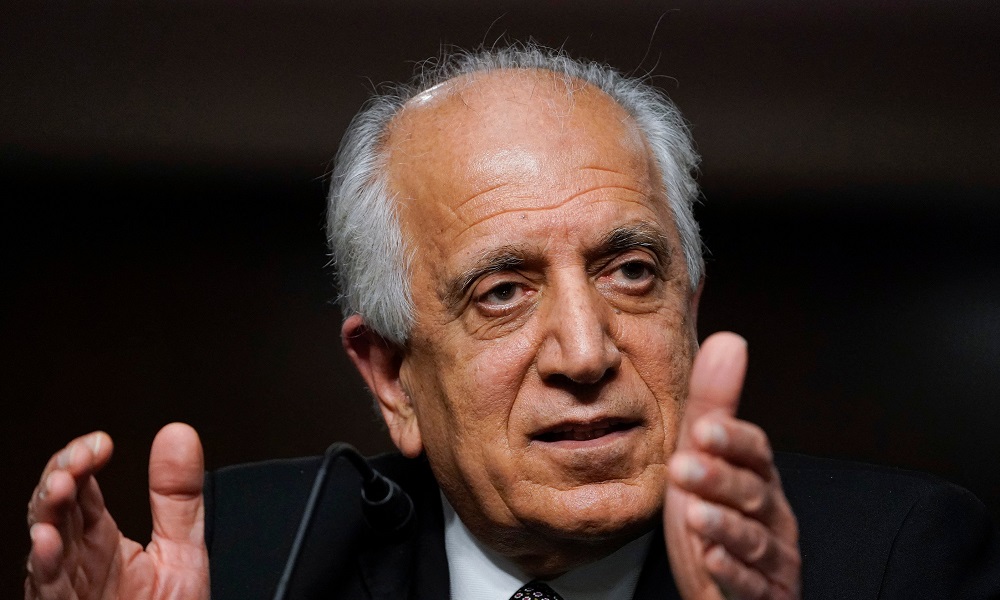
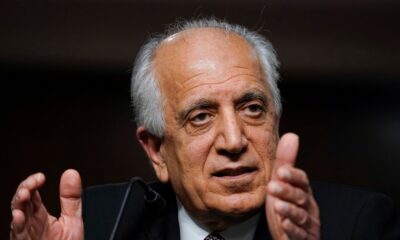
Former U.S. Special Envoy for Afghanistan, Zalmay Khalilzad, has strongly condemned Sunday’s airstrikes by Pakistan on Afghanistan. He stated that these attacks killed and wounded numerous innocent women, children, and elderly.
Khalilzad pointed to Pakistan’s long history of misgovernance, interference in minority rights, manipulation of democratic processes, and repeated military takeovers as the root causes.
He described the situation as a tragedy for both Pakistan and its neighbors, urging the Pakistani leadership to reconsider its policies and change course.


US companies are welcome to join TAPI project: Turkmenistan’s ex-president

Mexican military kills cartel boss ‘El Mencho’ in US-backed raid

UK’s Reform party pledges visa ban affecting Afghanistan and five other states

Iran and U.S. to meet on Thursday for talks

Ex-US envoy Khalilzad condemns Pakistan air attacks on Afghanistan

AFC Futsal Asian Cup 2026: Day One Review

IEA releases three Pakistani soldiers to mark Ramadan

AFC Futsal Asian Cup: Afghanistan to face Iran in crucial Group D clash

Afghanistan’s Chief of Armed Forces underscores readiness and equipment for national defense

Afghanistan welcomes investment and technology partnerships with India

Tahawol: Repeat crimes by Pakistani military in Afghanistan discussed

Saar: Pakistani military regime’s airstrikes on Afghanistan

Tahawol: US military review for attack against Iran discussed

Saar: Afghanistan’s expanding ties with Central Asia discussed

Tawsia: Calls for implementing development and infrastructure projects
-
 Latest News5 days ago
Afghanistan’s Chief of Armed Forces underscores readiness and equipment for national defense
-
 Latest News4 days ago
Afghanistan welcomes investment and technology partnerships with India
-

 Sport4 days ago
Afghan Peaks founder climbs Aconcagua to promote Afghanistan’s mountain potential
-

 Latest News3 days ago
Indian customs seize Chinese walnuts falsely declared as Afghan
-

 Business4 days ago
Pakistan allows re-export of stranded Afghan transit cargo
-
 Latest News3 days ago
Pakistan’s Punjab to send home 20 more Afghans in repatriation drive
-

 Latest News4 days ago
Pakistan signals possible air strikes as Kabul releases Pakistani soldiers in goodwill move
-

 Latest News5 days ago
Afghanistan welcomes Ramazan; authorities emphasize security and support for citizens