
Latest News
SIGAR blasts Washington for withholding key information on Afghanistan


The Special Inspector General for Afghanistan Reconstruction (SIGAR), John Sopko, said on Friday he has faced recent pressure from the U.S. State Department to redact some of the organization’s reports while noting the Pentagon classified much of its work detailing the failings of Afghanistan’s military forces.
He also referenced numerous attempts to “impede” his work, adding that “U.S. agencies have not made honest reporting easy for SIGAR.”
Sopko’s comments, published on SIGAR’s website, came at the Military Reporters & Editors Association’s annual conference, where the inspector general detailed multiple efforts by the State Department to get SIGAR to redact information from its reports, and remove all mentions of former Afghan president Ashraf Ghani.
“Those of you who have followed SIGAR’s work know that many of the reasons for the unexpectedly quick collapse of the Afghan government are problems that SIGAR has reported on for years – corruption; ghost soldiers; the dependence of the Afghan military on U.S. airpower, contractors, and other enablers; and incompetent Afghan leadership, to name but a few,” he said.
He also said SIGAR may be the only U.S. government agency that told “inconvenient truths” about the situation for the last 10 years.
“But we all know that U.S. agencies have not made honest reporting easy for SIGAR,” he stated.
Sopko’s address coincided with the release of its 53rd quarterly report, which includes information that shortly after the fall of Kabul, the State Department wrote to him and other oversight agencies requesting to “temporarily suspend access” to all “audit, inspection, and financial audit…reports” on SIGAR’s website because the state department “was
afraid that information included in those reports could put Afghan allies at risk”.
He said while he felt strongly that Afghans at genuine risk of reprisal should be protected, the state department was never able to give specific details on threats to individuals as a result of SIGAR’s reports.
He also said the state department did not explain how removing SIGAR reports could protect anyone since many were years old and already extensively disseminated worldwide.
“Nevertheless, with great reservation, I acceded to State’s initial request because it was made at the height of the emergency evacuation from Afghanistan,” he said.
After Sopko complied, the state department returned with another request, this time passing along a spreadsheet listing some 2,400 items it wanted redacted — something SIGAR reviewed and “found all but four to be without merit.”
“Given how hard the Department reportedly was working to evacuate Americans from Afghanistan and resettle Afghan refugees, I was surprised they found the time to go through every one of our reports and compile such an exhaustive list,” he said.
“Upon reviewing their request, it quickly became clear to us that State had little, if any, criteria for determining whether the information actually endangered anyone,” he added.
Among the requests was a plea to remove the name of a USAID official who publicly testified before Congress in 2017 and whose testimony is still posted on the committee’s site. It also asked SIGAR to remove Ghani’s name from all of its reports.
“While I’m sure the former president (Ghani) may wish to be excised from the annals of history, I don’t believe he faces any threats simply from being referenced by SIGAR,” Sopko said.
Addressing conference delegates he said: “No audience better understands the dangers of limiting public access to information in the name of ‘security’. And simply because the war in Afghanistan has
concluded does not mean the American people – or its elected representatives – do not have a right to know the truth about what happened in Afghanistan over the last 20 years.”
Sopko said that Congress has now tasked SIGAR with a number of assignments that include reports on why the Afghan government collapsed in spite of the $146 billion reconstruction effort; why the Afghan security forces collapsed; and whether Afghan government officials fled the country with U.S. taxpayer dollars; among others.
“In my opinion, the full picture of what happened in August – and all the warning signs that could have predicted the outcome – will only be revealed if the information that the Departments of Defense and State have already restricted from public release is made available,” he said.
He pointed out that the Department of Defense restricted from public release a range of information going back to 2015 on the performance of the Afghan security forces, purportedly at the request of the Afghan government.
This included information such as casualty data, unit strength, training and operational deficiencies, tactical and operational readiness of Afghan military leadership, comprehensive assessments of Afghan security force
headquarters leadership; and operational readiness rates down to the corps level.
“In essence, nearly all the information you needed to know to determine whether the Afghan security forces were a real fighting force or a house of cards waiting to fall.
“In light of recent events, it is not surprising that the Afghan government, and likely some in DOD, wanted to keep that information under lock and key,” he said.
“This information almost certainly would have benefited Congress and the public in assessing whether progress was being made in Afghanistan and, more importantly, whether we should have ended our efforts there earlier,” he added.
In recognition that this information will be essential for SIGAR to effectively respond to its Congressional directives, he said the bipartisan leadership of the House Oversight and Reform Committee and its National Security Subcommittee have formally requested that all information in SIGAR’s classified appendices be declassified by the originating agencies.
“At a bare minimum, DOD should immediately make available to SIGAR and the public the information restricted at the request of the Ghani government, for the simple reason that there no longer is a Ghani government and the Afghan security forces have already completely collapsed,” he said.
Sopko also called on Washington to declassify and make available to SIGAR and Congress all internal Department of Defense and State Department cables, reports and other material reflecting the security situation on the ground over the last few years – especially reports that differed from the public statements of the agencies in Washington.
“It is also important for SIGAR and Congress to have access to any reporting related to the reaction of the Ghani government and Afghan people to the withdrawal agreement signed between the Trump administration and the Taliban (IEA) in February 2020,” he said.
“What possible reason could remain for keeping all of this historical information out of public view?”
“Rather than attempt to impede SIGAR’s work, I believe the current administration should have every incentive to help us deliver the answers Congress has demanded,” Sopko said.
He also stated: “To answer these questions, we must find out what our government knew, when it knew it, and what it did, if anything,
with that information.
“SIGAR’s investigators are already interviewing Afghans who were evacuated to the United States to see what information they may be able to provide about corruption and other nefarious activities by former Afghan officials; SIGAR’s auditors and subject matter experts have already interviewed U.S. and Afghan government and military officials to start to put together the full picture of everything that happened that ultimately led to the Taliban (IEA) takeover just over two months ago.
“We already know a lot,” adding that while SIGAR has identified key lessons, “there is without question much more to be learned as we dig into what happened in Washington and Kabul during the months, weeks, days, and hours before Ghani fled and the Taliban (IEA) marched into his presidential palace without resistance.”



International Sports
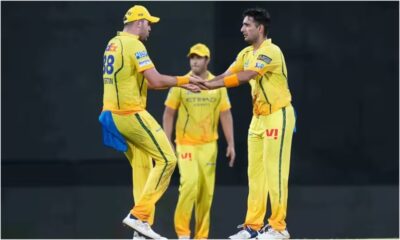
IPL double-header delivers thrills as teams battle for momentum
In the first match, Punjab Kings defeated Sunrisers Hyderabad by six wickets.
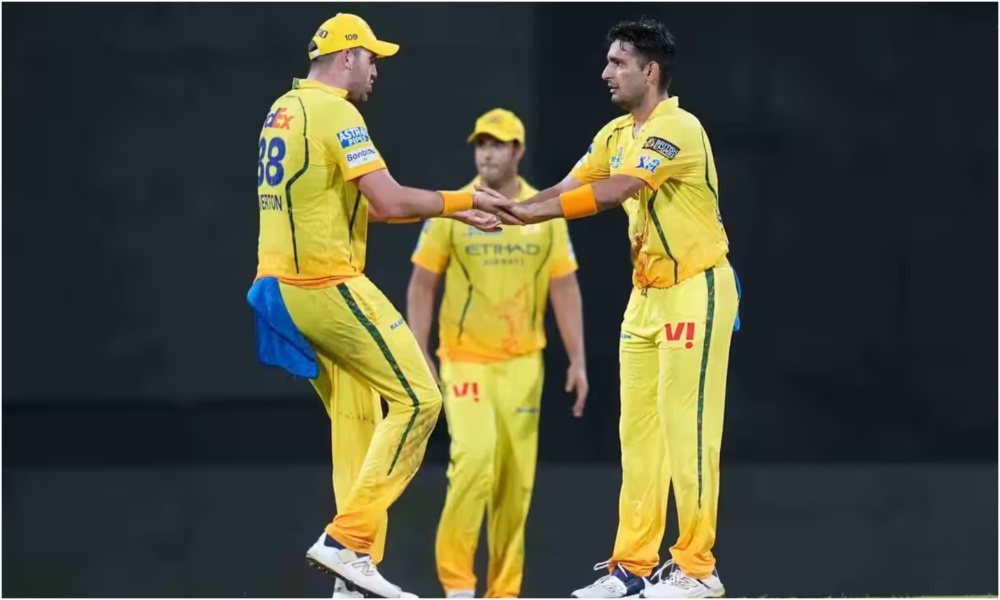
Saturday’s double-header in the Indian Premier League (IPL) saw Punjab Kings and Chennai Super Kings record important victories as the tournament gathered pace.
In the first match, Punjab Kings defeated Sunrisers Hyderabad by six wickets.
In the second game, Chennai Super Kings overcame Delhi Capitals in a closely contested match, with Chennai holding their nerve in the decisive moments to secure the win.
CSK won by 23 runs.
The results provide both Punjab and Chennai with valuable momentum as teams begin to establish themselves in the early stages of the competition.
Sunday’s Matches
Attention now turns to Sunday’s double-header.
Lucknow Super Giants will face Gujarat Titans in the first match of the day, with both sides aiming to strengthen their position in the standings.
Later, Mumbai Indians take on Royal Challengers Bengaluru in a high-profile clash expected to deliver another thrilling contest.
All matches are being broadcast live and exclusively across Afghanistan on Ariana Television Network.
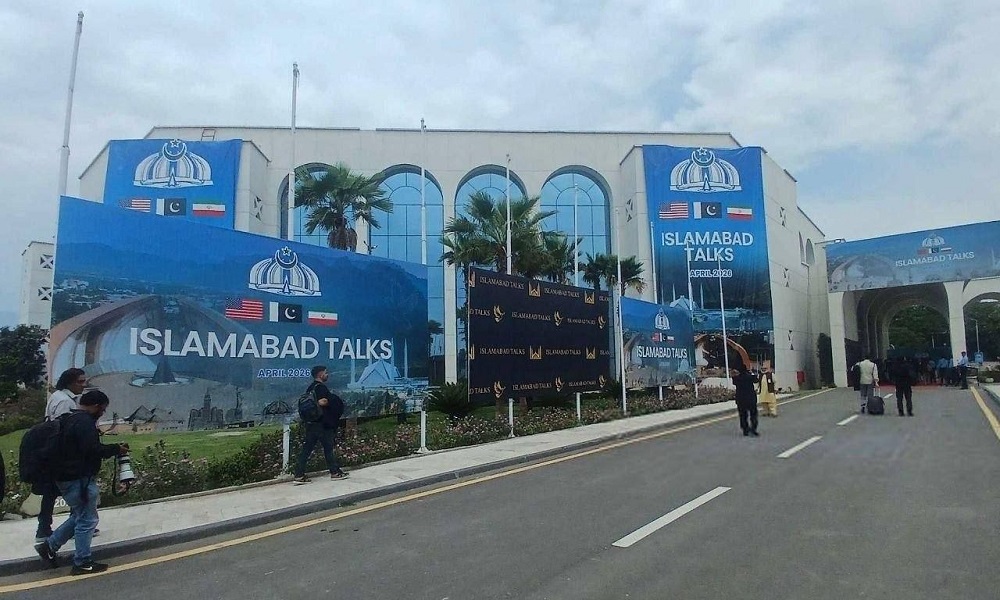
As Iranian and US delegations are present in Islamabad, Iranian media report that talks between the two sides have begun.
The negotiations are being conducted indirectly, with Pakistan acting as a mediator.
According to reports, Iran had set conditions for the start of the talks, including a halt to the war in Lebanon and the release of its frozen assets.
An IRIB correspondent in Islamabad reported that the US has agreed to release Iranian assets, and that the conflict in Lebanon has been limited to the southern part of the country.
However, US officials have not yet confirmed any agreement on the release of Iran’s frozen assets.
The talks come after 40 days of conflict between the United States, Israel, and Iran.
Latest News
Death toll rises in armed attack in Herat; 11 killed, 8 injured
Authorities have confirmed that one suspect has been arrested in connection with the attack.
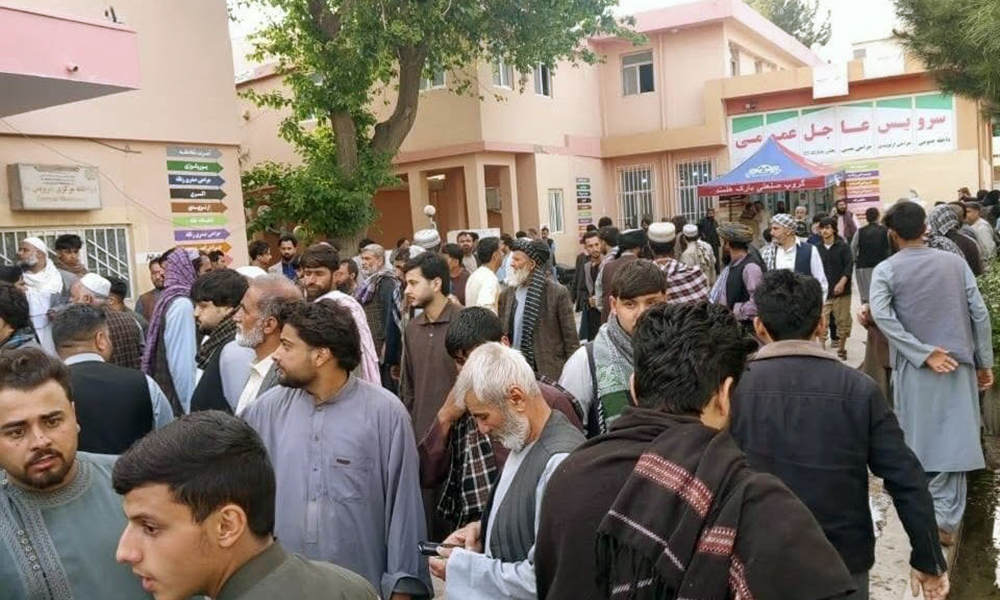
The death toll from a brutal armed attack in the Injil district of Herat province has increased, with local authorities confirming that at least 11 people were killed and 8 others injured.
Ahmadullah Muttaqi, Director of Information and Culture for Herat, reported that the attack occurred around 3:00 PM on Friday when unidentified gunmen opened fire on a group of families who had gathered for a picnic in the village of “Dah Mehre,” located in the Injil district.
Initial reports indicated that four people were killed and 15 others injured. However, as the severity of the injuries became clearer, seven more of the wounded tragically succumbed to their injuries overnight. The latest update puts the death toll at 11, with 8 survivors, two of whom are said to be in critical condition.
Authorities have confirmed that one suspect has been arrested in connection with the attack. Security forces are continuing to investigate the incident, with efforts underway to identify and apprehend additional perpetrators.
The attack has sent shockwaves through the region, with local authorities and communities expressing outrage and concern over the rising violence in the area.


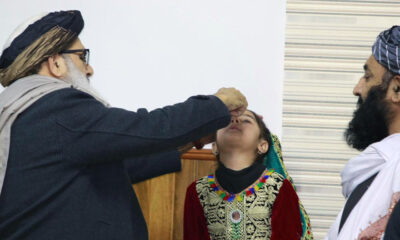
Afghanistan launches first nationwide polio vaccination campaign of 2026

IPL double-header delivers thrills as teams battle for momentum

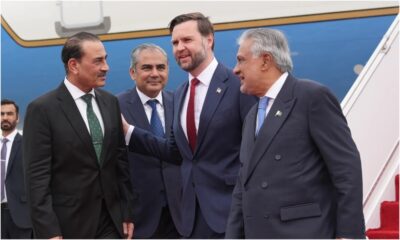
US-Iran talks end without breakthrough as Vance departs Pakistan

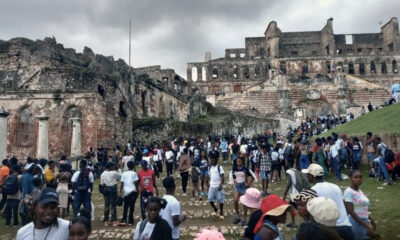
At least 30 dead in stampede at Haiti’s historic Laferriere Citadel

Tahawol: Historic US-Iran talks in Pakistan discussed

IEA Supreme Leader issues Eid-ul-Fitr message urging unity and support for Islamic system

IEA supreme leader orders replacement of foreign terminology in official documents

14 Pakistani soldiers killed after military post falls along Durand line: MoD

Afghan airstrikes target Pakistani military sites in retaliation for air attacks

Turkmenistan, Afghanistan discuss steps to speed up land acquisition for TAPI pipeline
Tahawol: Historic US-Iran talks in Pakistan discussed

Saar: Talks between Iran and US in Pakistan discussed

Tawsia: New transit route with Tatarstan, MoU with Uzbekistan discussed

Tahawol: China to host 2nd round of Kabul–Islamabad talks discussed

Saar: Fragile ceasefire in the Middle East reviewed
-
 Latest News5 days ago
China seeking to build trust between Afghanistan and Pakistan
-

 Business2 days ago
Etihad Airways to expand Kabul–Abu Dhabi flights to daily service amid surging demand
-
 Sport5 days ago
Afghanistan U-17s draw 0-0 against Turkmenistan in CAFA campaign
-
 Latest News5 days ago
Japan and UNDP launch $2.35 million livelihoods initiative in Afghanistan
-
 Regional4 days ago
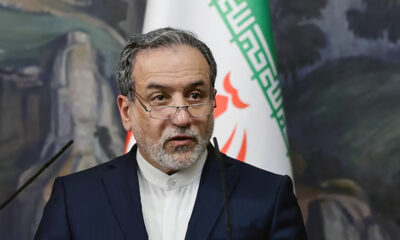
Iran agrees to temporary ceasefire as US pauses attacks
-
 Latest News5 days ago
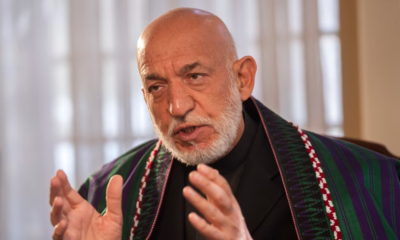
Karzai calls on UN to condemn Pakistan’s attacks on Afghan territory
-
 International Sports3 days ago
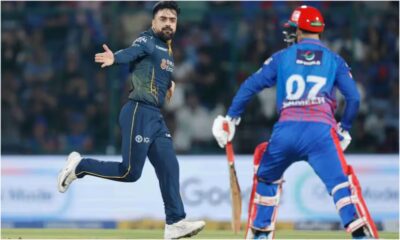
IPL 2026: Gujarat Titans edge Delhi Capitals in last-ball thriller
-
 Regional5 days ago
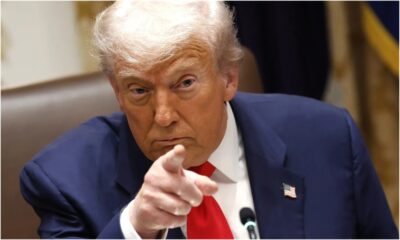
Trump says ‘a whole civilisation will die tonight’; Qatar fears regional escalation