
Business
Saudi Arabia may raise Nov official crude prices for Asia

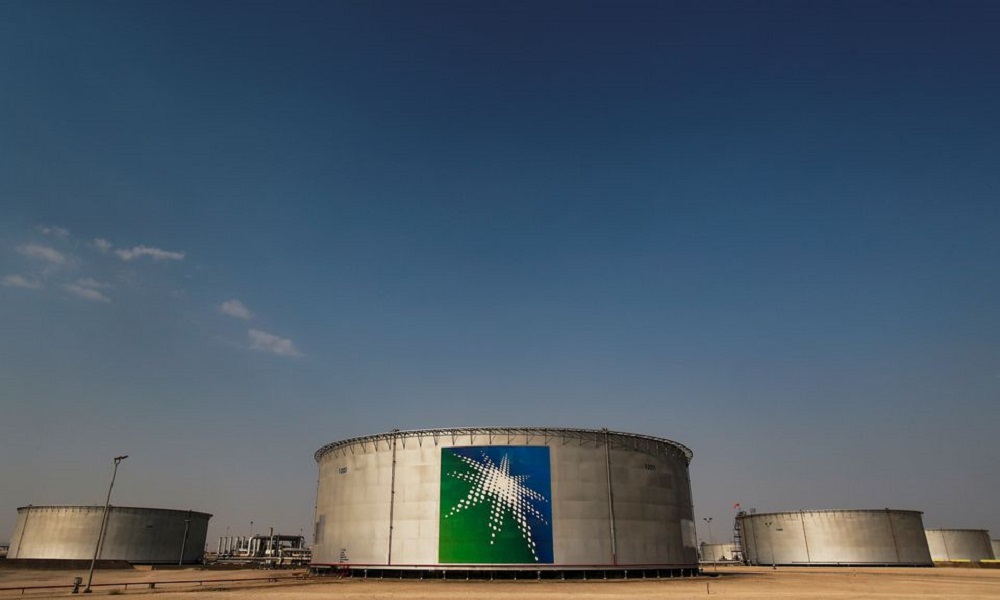
Top oil exporter Saudi Arabia may raise prices for most crude grades it sells to Asia in November on expectations for demand recovery and Chinese refineries to increase output following the issuance of new product export quotas.
The November official selling prices (OSP) for flagship Arab Light crude may rise by 25 cents a barrel, according to the median of the responses of five refining sources surveyed by Reuters on Sept. 29-30.
“Oil demand is expected to improve, which we can see from current market structure,” said one respondent.
The backwardation in the Dubai market structure widened during trading last month, implying that demand for crude in the near-term is rising. The premium for front-month Dubai over the price for the third-month averaged $5.36 a barrel in September, up from $5.07 in August.
The market also expects China, the world’s biggest crude importer, to increase purchases as Beijing has issued a fresh round of refined product export quotas, totalling 15 million tonnes. That could encourage Chinese refineries to lift their crude buying to ramp up fuel output.
Refining margins for gasoline and diesel plunged on China’s new export quotas as a flood of refined products would knock down the prices of the products.
“That’s a reason why we forecast the official prices for lighter crude grades to only see a small hike,” said another respondent.
The respondents polled by Reuters assess the price increase for Arab Medium and Arab Heavy to be larger than Arab Light, as the refining margins, also known as cracks, for fuel oil are performing better than the light- and middle-distillate products , .
China issued 1.75 million tonnes of export quotas for low-sulphur fuel oil, compared to 13.25 million tonnes for other products in the recent round.
OPEC+ will consider an oil output cut of more than a million barrels per day (bpd) during their monthly meeting this week, in what would be the biggest move yet since the COVID-19 pandemic to address oil market weakness.
Benchmark oil prices have fallen by more than 30% since March.
Saudi crude OSPs are around the fifth of each month, and set the trend for Iranian, Kuwaiti and Iraqi prices, affecting more than 9 million barrels per day (bpd) of crude bound for Asia.
Saudi Aramco sets its crude prices based on recommendations from customers and after calculating the change in the value of its oil over the past month, based on yields and product prices.
Saudi Aramco officials as a matter of policy do not comment on the kingdom’s monthly OSPs.







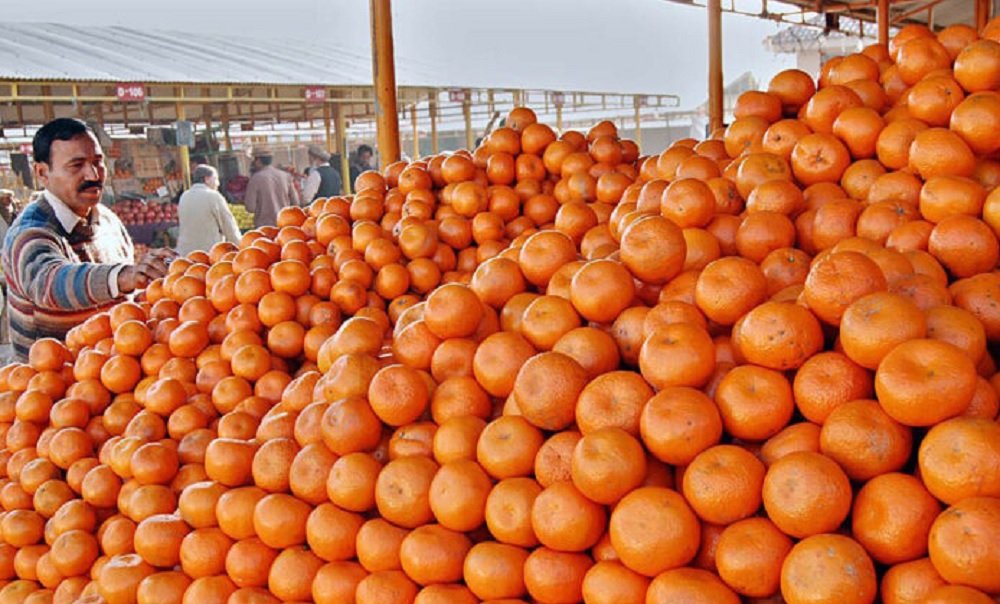
Pakistan’s kinno exports remain far below potential as regional tensions, high freight costs and weak government support continue to choke the citrus trade.
Despite being a leading global citrus producer, Pakistan is expected to export just 400,000–450,000 tonnes of kinno in the 2025–26 season, compared with an estimated capacity of 700,000–800,000 tonnes.
Exports in 2024–25 stood at around 350,000–400,000 tonnes, mainly to Russia, the UAE, Saudi Arabia, Afghanistan, Indonesia and Central Asia. While better fruit quality this season has raised hopes, persistent crossing disruptions—especially with Afghanistan—and transport bottlenecks have offset gains.
Growers say prices have collapsed sharply, forcing panic sales. Rates for large kinno have fallen from over Rs120 per kg early in the season to as low as Rs75, while smaller fruit is selling for Rs35–40 per kg amid weak demand.
Industry leaders warn the crisis is crippling processing units and jobs. More than 100 factories reportedly failed to open this season, with dozens more shutting down as exports stall. Cold storages in Sargodha are nearly full, putting fruit worth millions of dollars at risk of spoilage, while growers fear losses of up to Rs10 billion.
Exporters are urging the government to urgently resolve issues, subsidise logistics, and help access alternative markets, warning that prolonged inaction could devastate farmers, workers and the wider economy.

Iranian President Masoud Pezeshkian has said that Tehran will facilitate trade and economic exchanges with Afghanistan, including easing procedures at customs and local marketplaces.
He made the remarks during a televised interview following his visit to South Khorasan province, which shares a border with Afghanistan.
Pezeshkian, in a separate event addressing local business leaders, highlighted the province’s strategic advantages, citing its rich mineral resources, proximity to neighboring countries such as Afghanistan and Pakistan, and access to the ocean via the Chabahar port. He described the region as “a golden opportunity not found everywhere,” emphasizing its potential for economic growth and cross-border commerce.


Afghan Health Minister hails India visit as new chapter in bilateral ties

Power project signed to electrify 47,000 homes in Jawzjan

Ariana News to broadcast key AFC Champions League Two clash

Pakistani cleric condemns lifetime immunity for Army Chief as un-Islamic

Fazal Ur Rehman says Pakistan’s ‘attacks’ on Afghanistan are unjustifiable

Afghanistan economy under pressure as Pakistan shocks reshape trade flows

Gaza death toll tops 70,000, health ministry says

Iran rerouting more oil to China through Indonesia to dodge US sanctions

Islamic Emirate declines to attend Tehran meeting on Afghanistan

Cotton Industry in Crisis: Balkh farmers call for urgent action on exports

Tahawol: Return of 6.8 million Afghan refugees to IEA rule

Saar: Pakistan army chief’s allegations against Afghanistan

Tahawol: CSTO’s security concerns over Afghanistan

Saar: UNAMA’s activities in Afghanistan reviewed

Tahawol: Iran’s pledges to facilitate trade with Afghanistan discussed
-

 Latest News2 days ago
Afghanistan signs 30-year deal for marble mining in Daikundi
-
 Latest News4 days ago
Afghan border forces prevent illegal entry of hundreds into Iran
-
 Latest News3 days ago
Pakistan summons Afghan diplomat over deadly attack in North Waziristan
-

 Latest News3 days ago
Afghan health minister calls for medical cooperation between Kabul and New Delhi
-
 Latest News4 days ago
Japan allocates nearly $20 million in humanitarian aid for Afghanistan
-

 Latest News3 days ago
Karzai urges reopening of girls’ schools and universities for Afghanistan’s bright future
-
 Latest News2 days ago
Bush Institute criticizes Trump administration’s Afghan immigration freeze
-

 Health4 days ago
India issues over 200 medical visas to Afghans in last four months