
Health
Research finds ‘alarming’ levels of chemicals in male urine samples

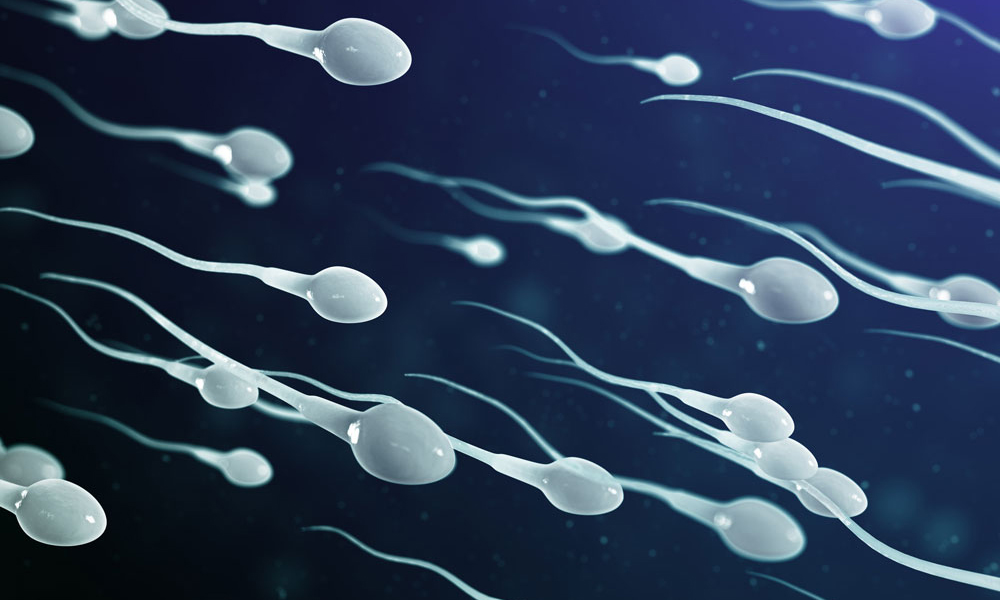
A study of urine samples from nearly 100 male volunteers has uncovered “alarming” levels of endocrine disruptors known to reduce human fertility.
Cocktails of chemicals such as bisphenols and dioxins, which are believed to interfere with hormones and affect sperm quality, were present at levels up to 100 times those considered safe, scientists have found.
The median exposure to these chemicals was 17 times the levels deemed acceptable.
“Our mixture risk assessment of chemicals which affect male reproductive health reveals alarming exceedances of acceptable combined exposures,” wrote the authors of the study, published on Thursday in the journal Environment International.
The study measured nine chemicals, including bisphenol, phthalates and paracetamol, in urine samples from 98 Danish men aged 18 to 30.
The study authors, led by Professor Andreas Kortenkamp of Brunel University London, said they were “astonished” by the magnitude of this hazard index in the volunteers studied, Euronews reported.
Sperm quantity and quality have dramatically declined across Western countries in recent decades, with research suggesting sperm counts have been more than halved in the space of 40 years.
Meanwhile, other reproductive health disorders have been on the rise, such as non-descending testes and testicular cancer.
Scientists around the world have considered a range of other possible causes behind falling sperm counts, including lifestyle factors, tobacco consumption and air pollution.
But recent studies have increasingly zeroed in on the role played by chemicals, Euronews reported.







Health
Afghan health minister hails India’s support, calls medical visas vital for patients
Jalali said India is planning to build a 30-bed hospital in Kabul’s Bagrami district, which is expected to include an oncology center, a trauma unit, and maternal and child healthcare clinics.
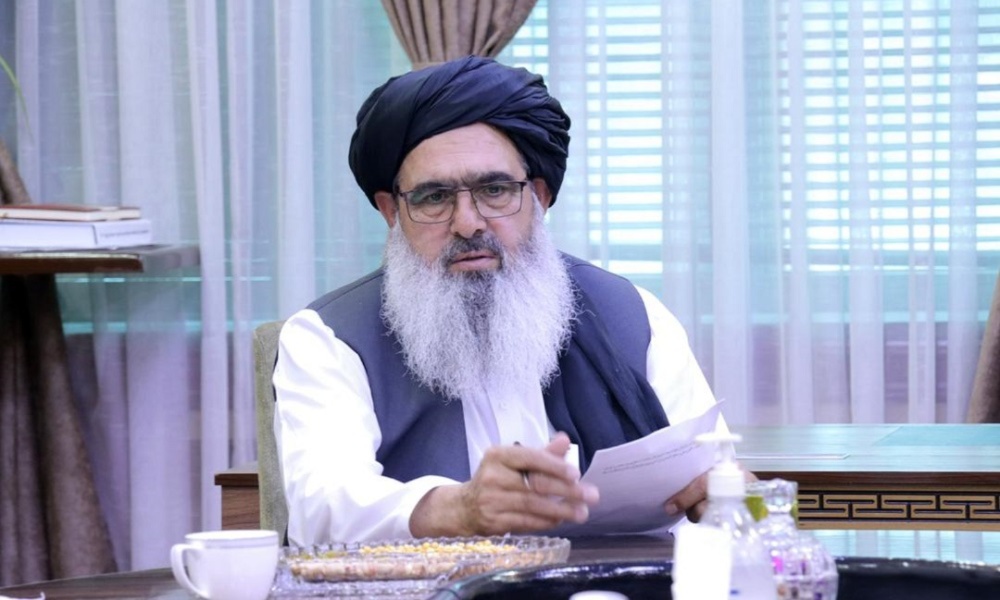
Afghanistan’s Minister of Public Health, Noor Jalal Jalali, has praised India’s long-standing support for Afghanistan’s healthcare sector, describing Indian medical visas as a “vital humanitarian channel” for Afghan patients.
In an interview with an Indian television network, during his official visit to New Delhi, Jalali said Afghans have long relied on India for medical treatment, noting that the facilitation of medical visas has enabled thousands of patients to access advanced healthcare services in recent years.
He welcomed India’s contributions to Afghanistan’s health infrastructure, highlighting the Indira Gandhi Institute of Child Health in Kabul as one of the country’s most important pediatric hospitals.
India has supported the facility through the establishment of a thalassemia center, a modern diagnostic unit, upgrades to heating systems, and plans to provide a CT scan machine.
Jalali said India is also planning to build a 30-bed hospital in Kabul’s Bagrami district, which is expected to include an oncology center, a trauma unit, and maternal and child healthcare clinics.
He added that India has fitted around 75 Afghan patients with prosthetic limbs under the Jaipur Foot program and donated 20 ambulances.
During talks with India’s Minister of Health and Family Welfare, Jalali called for expanded cooperation in medical equipment, pharmaceutical regulation, training of healthcare workers, and the supply of essential medicines, particularly cancer drugs. He said India has pledged to provide these medicines on an urgent basis.
The Afghan health minister stressed the importance of capacity building, including training Afghan doctors in India and deploying Indian medical teams to Afghanistan.
He also said agreements have been reached to cooperate in traditional medicine, including Ayurveda and Unani practices, with plans to establish a Traditional Medicine Institute and Research Center in Afghanistan.
Jalali noted that Afghanistan has diversified its pharmaceutical import routes to ensure a steady supply of medicines and address concerns over counterfeit and substandard drugs through stronger regulation.
He described Afghanistan–India relations as people-centric and rooted in humanitarian values, expressing hope that cooperation in healthcare, pharmaceuticals, and medical infrastructure will continue to deepen.
Health
Afghan health officials visit Indian medical institute to expand ties
India has historically been a key partner in Afghanistan’s health and education sectors, providing training, medical support and institutional cooperation.
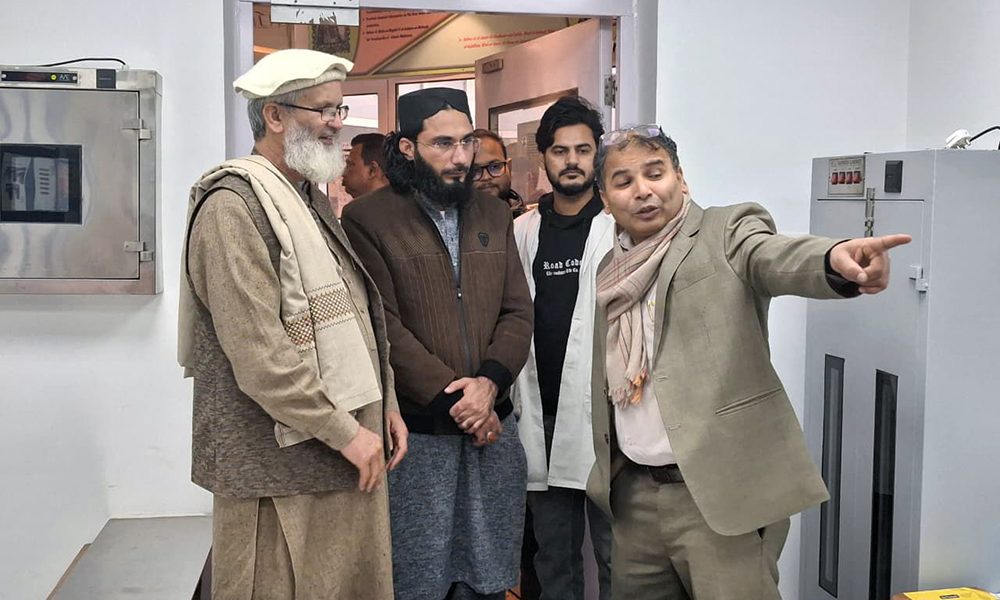
During an official visit to India, a technical delegation from Afghanistan’s Ministry of Public Health visited the Hamdard Institute of Medical Sciences and Research (HIMSR) in New Delhi, as part of efforts to strengthen cooperation in the health sector, particularly in the field of traditional medicine.
Officials and senior professors at HIMSR welcomed the Afghan team and provided detailed briefings on the institution’s academic programmes, research activities and medical services.
Discussions focused on opportunities for closer collaboration in traditional and integrative medicine, an area where Hamdard has long-standing expertise and international recognition.
HIMSR’s leadership expressed readiness to work with Afghan health authorities on joint research initiatives, quality testing and standardisation of traditional medicines through Hamdard’s laboratories, as well as knowledge-sharing programmes. The institution also pledged to offer scholarships and specialised training opportunities for Afghan doctors and medical professionals.
The visit comes as Afghanistan seeks to rebuild and strengthen its public health system amid ongoing economic and humanitarian challenges, with an emphasis on cost-effective and culturally accepted healthcare approaches such as traditional medicine.
India has historically been a key partner in Afghanistan’s health and education sectors, providing training, medical support and institutional cooperation.
Both sides said enhanced collaboration would contribute to improving public health outcomes, standardising traditional medicine practices, and expanding scientific and medical institutions in Afghanistan.
They reaffirmed their commitment to developing the partnership in a sustainable manner, aimed at long-term capacity building and mutual benefit.
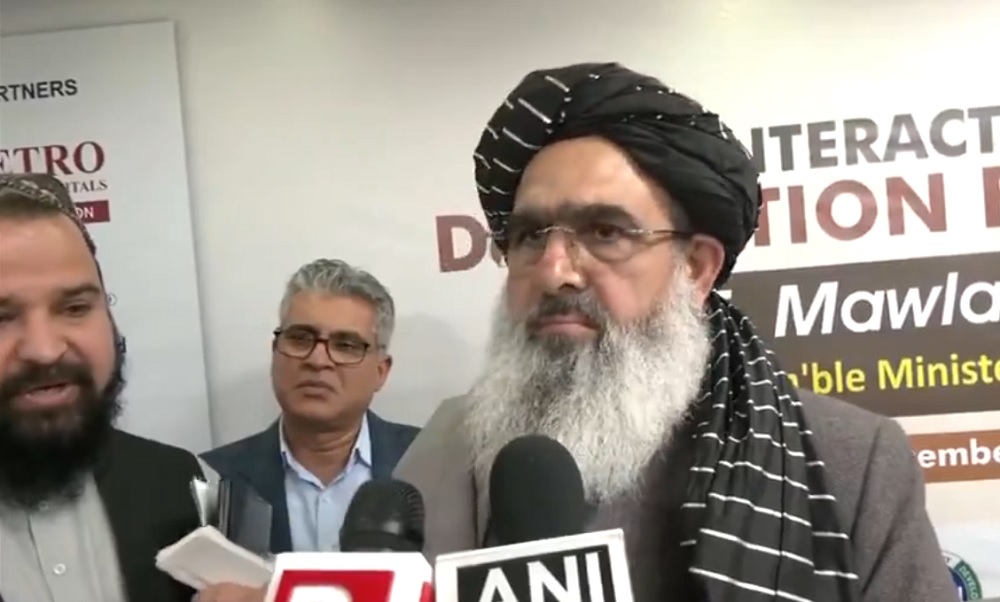
Afghanistan’s Minister of Public Health, Noor Jalal Jalali, has said that Afghanistan is looking to strengthen health-sector cooperation with India, as relations with Pakistan have cooled and the country seeks alternative partners to meet its medical needs.
Speaking during his visit to India, Jalali said his primary focus is combating disease and improving public health, stressing that he is ready to seek assistance and cooperation from any country willing to help Afghanistan in this regard.
“My enemy is disease,” Jalali told reporters. “I will shoot at it from anywhere it is possible.”
He said the purpose of his visit is to open a new chapter of cooperation between Afghanistan and India.
Jalali noted that a significant portion of Afghanistan’s medicine requirements had previously been met by Pakistan. However, amid strained relations with Islamabad, the Islamic Emirate is now exploring alternative options to ensure the steady supply of essential medicines. He added that India could serve as a key partner.


Tahawol: Return of 6.8 million Afghan refugees to IEA rule

Saar: Pakistan army chief’s allegations against Afghanistan

Turkish intelligence captures a Daesh member near the Durand Line

Dozens of needy families in Kabul receive winter aid from Bayat Foundation

Nearly seven million Afghan refugees return home since Islamic Emirate’s takeover

Afghanistan economy under pressure as Pakistan shocks reshape trade flows

Gaza death toll tops 70,000, health ministry says

Afghanistan offers tax breaks, free land to attract Indian investors

Iran rerouting more oil to China through Indonesia to dodge US sanctions

Islamic Emirate declines to attend Tehran meeting on Afghanistan
Tahawol: Return of 6.8 million Afghan refugees to IEA rule
Saar: Pakistan army chief’s allegations against Afghanistan

Tahawol: CSTO’s security concerns over Afghanistan

Saar: UNAMA’s activities in Afghanistan reviewed

Tahawol: Iran’s pledges to facilitate trade with Afghanistan discussed
-
 Latest News2 days ago
Afghanistan signs 30-year deal for marble mining in Daikundi
-
 Latest News4 days ago
Afghan border forces prevent illegal entry of hundreds into Iran
-
 Latest News3 days ago
Pakistan summons Afghan diplomat over deadly attack in North Waziristan
-
 Latest News3 days ago
Afghan health minister calls for medical cooperation between Kabul and New Delhi
-
 Latest News4 days ago
Japan allocates nearly $20 million in humanitarian aid for Afghanistan
-
 Latest News3 days ago
Karzai urges reopening of girls’ schools and universities for Afghanistan’s bright future
-
 Health5 days ago
Afghanistan seeks India’s support in standardizing traditional medicine
-
 Business5 days ago
Afghanistan-Kazakhstan banking ties discussed in Kabul meeting