
Science & Technology
Qantas looks at non-stop Sydney-London flights with Airbus order

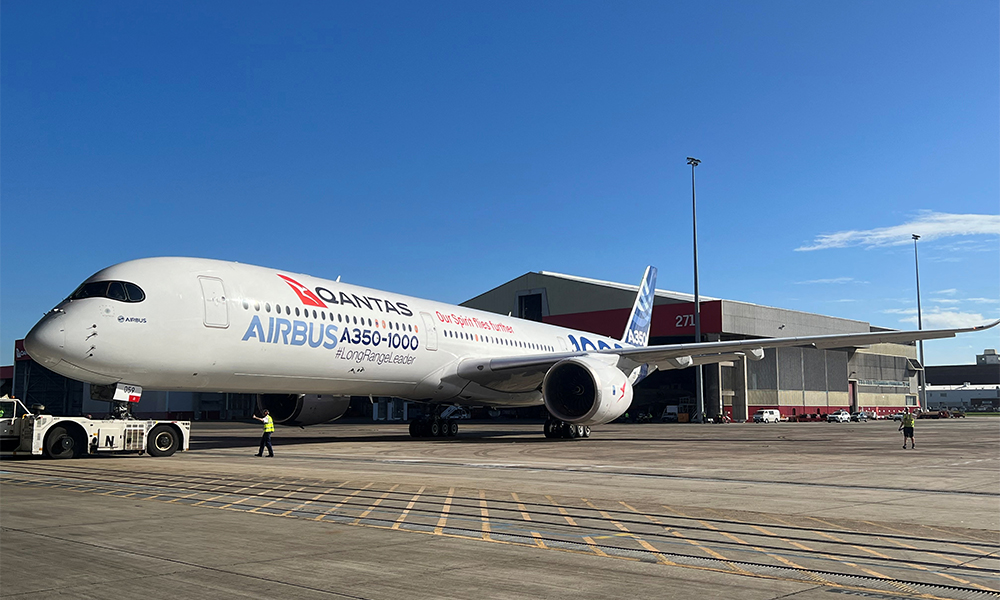
Qantas Airways (QAN.AX) will fly non-stop from Sydney to London after ordering a dozen special Airbus (AIR.PA) jets, charging higher fares in a multi-billion dollar bet that fliers will pay a premium to save four hours on the popular route.
To be launched late in 2025, the flights will use A350-1000 planes, specially configured with extra premium seating and reduced overall capacity, to ferry up to 238 passengers in a 20-hour trip – the world’s longest direct commercial flight.
Announcing plans for the service on Monday, the loss-making carrier said a strong recovery in the domestic market and signs of an improvement in international flying after the worst of the COVID-19 pandemic had given it the confidence to make a major investment on its future. Qantas forecasts a return to profit in the financial year starting this July.
The order from the European aircraft maker also includes 40 narrowbody A321XLR and A220 jets to start the replacement of Qantas’ ageing domestic fleet, with deliveries spread over a decade. The airline did not disclose the value of the Airbus deal, but analysts at Barrenjoey estimated in a client note it would cost at least A$6 billion ($4.23 billion).
“Since the start of the calendar year, we have seen huge increases in demand,” Qantas Chief Executive Alan Joyce told reporters at Sydney Airport, where an Airbus A350-1000 test plane flown from France emblazoned with the Qantas logo and “Our Spirit flies further” was parked in a hangar as a backdrop for the announcement.
Qantas shares surged as much as 5.5% on Monday to the highest level since November after it also said debt levels had fallen to pre-COVID levels faster than the market’s expectations.
The A350-1000 order was the culmination of a challenge called “Project Sunrise” set for Airbus and its rival Boeing Co (BA.N) in 2017 to create aircraft capable of the record-breaking flights.
Airbus was selected as the preferred supplier in late 2019, but Qantas delayed placing an order for two years due to financial challenges during the COVID pandemic.
Airbus Chief Commercial Officer Christian Scherer said the aircraft to be used on the Sydney-London flights would offer more fuel storage than A350-1000s currently in operation with other airlines.
The Qantas planes will carry passengers across four classes and will have around 100 fewer seats than rivals British Airways (ICAG.L) and Cathay Pacific Airways Ltd (0293.HK) use on their A350-1000s. The Australian carrier will dedicate more than 40% of the jets’ cabins to premium seating.
CEO Joyce said demand for non-stop flights had grown since the pandemic, when complex travel rules were put in place. Rising fuel costs could be recovered through higher fares, he said, as the airline had done previously on its non-stop Perth-London flights.
In a market update, Qantas said while it expects an underlying operating loss for the financial year ending June 30, 2022, the second half would benefit from improved domestic and international demand, with free cash flow seen rising further in the current quarter.
Barrenjoey analysts forecast Qantas could achieve a 20% revenue premium on the ultra-long haul flights, which Joyce said will also go to New York from late 2025 and possible future destinations like Paris, Chicago and Rio de Janeiro.
Qantas estimated Project Sunrise would have an internal rate of return of around 15%.




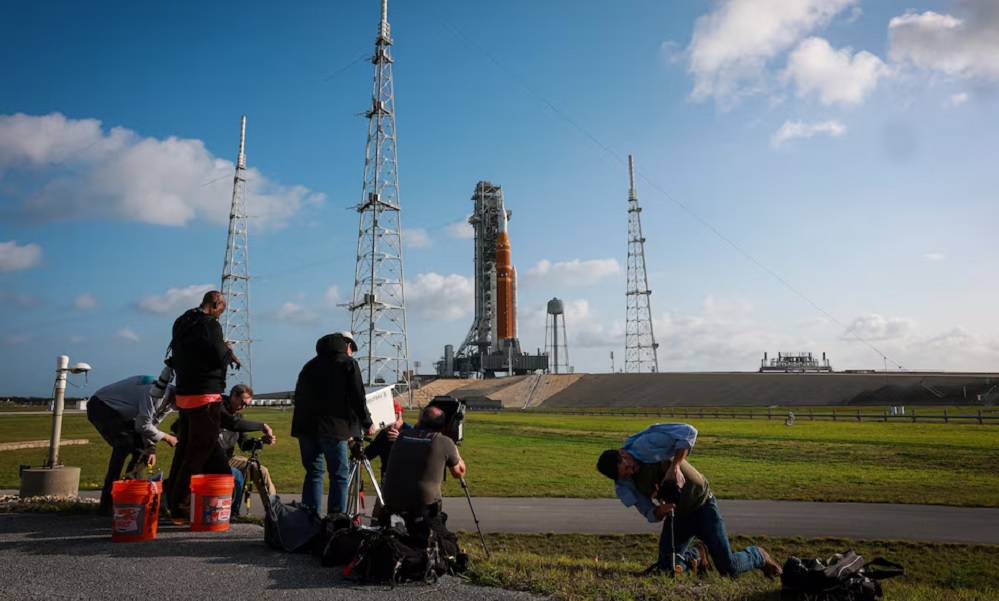
NASA is preparing to launch the first crew of astronauts toward the moon in over 53 years with its second Artemis mission, a key test flight in humanity’s broader lunar goals as the U.S. races to reassert leadership in space faced with growing competition from China.
Three U.S. and one Canadian astronaut are due for liftoff aboard NASA’s Orion capsule and Space Launch System rocket on Wednesday for a 10-day test mission swinging around the moon and back, a winding journey taking them deeper into space than humans have ever gone before, Reuters reported.
The mission is the first crewed test flight in NASA’s Artemis program, the flagship U.S. effort to begin regular flights to the moon, at an estimated cost of at least $93 billion since 2012. Not since Apollo 17 in 1972 have humans touched down on the moon’s surface, a tricky feat NASA aims to repeat in 2028 at the rugged lunar south pole.
The U.S. is the only country to have put humans on another celestial body with its six lunar landings of the Apollo program, driven by competition with the former Soviet Union.
China, a formidable technological rival to the U.S., has made steady progress in its own moon program in recent years, with a string of robotic lunar landings and a 2030 goal to put its own crew on the surface. U.S. officials have focused on beating China to the surface.
ANSWERING ‘THE QUESTION OF OUR LIFETIME’
NASA astronaut Christina Koch, Artemis II mission specialist, on Sunday said the moon is a “witness plate” to the solar system’s formation, and a stepping stone to Mars, “where we might have the most likelihood of finding evidence of past life.”
“Many, many countries have recognized the value that there is in exploring further into the solar system, to the moon and on to Mars,” she told reporters. “They recognize that not only can we gain all these extremely tangible benefits, but that we have the opportunity to answer the question that could be the question of our lifetime, which is, are we alone?”
“Answering that question starts at the moon,” she said. “The question is not should we go, but should we lead, or should we follow?”
Through a series of increasingly advanced Artemis missions extending into the next decade, the U.S. aims to set precedent for how others will operate and coexist on the moon’s surface, where someday countries and companies can exploit rocky lunar resources and practice for much more difficult missions to Mars.
COMMERCIAL LUNAR MARKET
NASA is relying on an array of companies in its moon program with the hope of stimulating a commercial lunar market in the future, the value of which is hard to estimate, analysts say.
A PricewaterhouseCoopers report from January estimates $127 billion in revenues by 2050 from lunar surface activities, with investments potentially reaching $72 billion to $88 billion through the same period.
But for now, and in the near future, governments will drive companies’ lunar strategies and revenue. It will be a long time before commercial growth exists on the moon independently of government funding, said Akhil Rao, an economist at analysis firm Rational Futures who was a research economist at NASA.
“NASA did not see a short-run economic value that companies would be able to derive that would allow NASA to be hands-off,” said Rao, who was among a team of economists and space policy staff laid off last year amid the Trump administration’s sweeping federal workforce cuts.
The Artemis II mission will pose a greater test of NASA’s Orion capsule and SLS, which conducted a similar mission without crew in 2022. The astronauts on board will test critical life-support systems, crew interfaces, navigation and communications before NASA proceeds with more complex missions in the following years.
Liftoff is scheduled for April 1, though it could happen any day after until April 6, depending on weather conditions in Florida and any last-minute snags with the rocket. Thereafter, another launch window, determined largely by the orbital mechanics between Earth and the moon, opens on April 30.
Artemis III, the next mission planned for 2027, will involve the Orion capsule docking in Earth’s orbit with NASA’s two lunar landers – the Blue Moon system from Jeff Bezos’ Blue Origin and Starship from Elon Musk’s SpaceX. The delicate tag-up will demonstrate how the landers will pick up astronauts before heading for the moon’s surface.
That mission was added to the program in February by NASA’s new administrator, Jared Isaacman, a billionaire private astronaut who has more broadly shaken up the program with new objectives. His decision pushed the program’s first crewed lunar landing to Artemis IV.
The architecture is more complex than the Apollo missions, involving an array of companies funded by NASA with the hope of stimulating private competition and market activity around the moon. Boeing and Northrop Grumman lead SLS and Lockheed Martin builds Orion for NASA.
SpaceX and Blue Origin are developing their own landers with NASA funding but under different types of contracts that allow them to offer the spacecraft to other customers.
Science & Technology
Trump administration set to receive $10 billion fee for brokering TikTok deal, WSJ reports
Vice President JD Vance had in September said that the new U.S. company will be valued at around $14 billion.

President Donald Trump’s administration is set to receive a roughly $10 billion fee from investors in the recently completed deal to take control of TikTok’s U.S. business, the Wall Street Journal reported on Friday, citing people familiar with the matter.
TikTok’s Chinese owner, ByteDance, in January finalized a deal to establish a majority American-owned joint venture that will secure U.S. data, to avoid a U.S. ban on the short video app used by over 200 million Americans.
TikTok USDS Joint Venture LLC will secure U.S. user data, apps and algorithms through data privacy and cybersecurity measures. It disclosed few details about the divestiture.
Vice President JD Vance had in September said that the new U.S. company will be valued at around $14 billion.
The payment is part of the agreement through which investors friendly with the administration gained control of TikTok’s U.S. operations from ByteDance, WSJ said. It is on top of the investments already made to establish a new entity to operate the app in the U.S.
Investors Oracle (ORCL.N), Silver Lake, Abu Dhabi’s MGX and other backers paid about $2.5 billion to the Treasury Department when the deal closed and are to make a number of subsequent payments until the total reaches $10 billion, per the Journal.
TikTok and the White House did not immediately respond to Reuters requests for comment.
Officials from the administration have said the fee is justified, citing Trump’s role in rescuing TikTok’s U.S. operations and guiding negotiations with China to complete the deal while tackling lawmakers’ concerns over national security, according to WSJ.
Earlier this month, Trump and U.S. Attorney General Pam Bondi were sued by retail investors in two social media rivals of TikTok seeking to reverse the U.S. president’s approval of a deal by the company’s Chinese owner ByteDance to form a majority American-owned joint venture.
Science & Technology
NASA eyes March 6 launch of astronaut moon mission
Artemis program managers completed a comprehensive simulation of the Space Launch System’s launch-day countdown, but said remaining work could still push the launch date further into March.
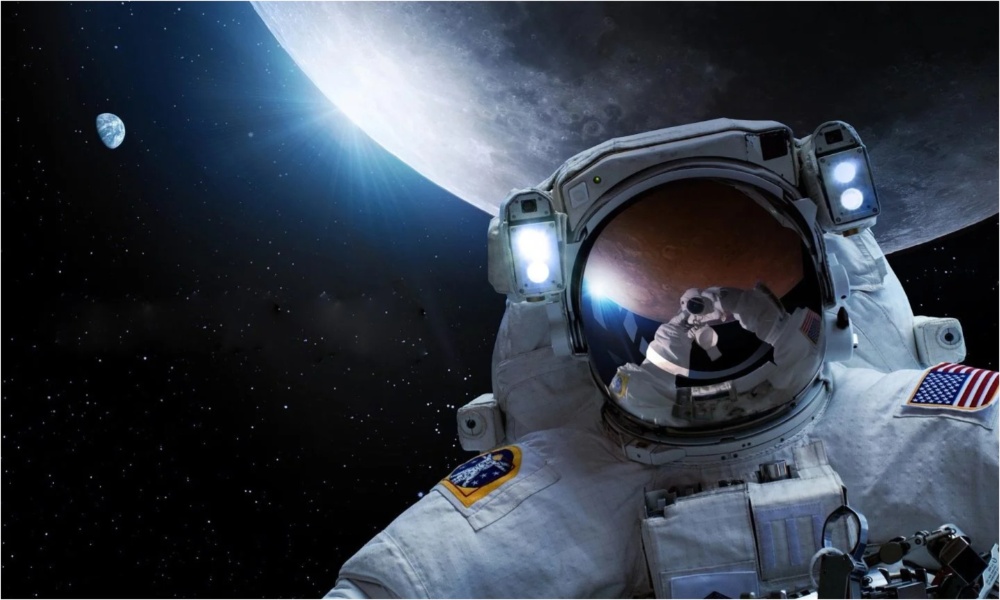
NASA officials said the agency was targeting March 6 for the launch of four astronauts around the moon and back as part of its Artemis II mission after overcoming rocket-fueling snags in a second key launch rehearsal this week, but cautioned that remaining prep work could warrant more time.
The U.S. space agency on Thursday night capped a nearly 50-hour rehearsal of the Artemis II launch countdown, fueling the rocket with some 730,000 gallons of propellant without running into the pesky hydrogen leaks that hobbled an initial rehearsal last month, officials said during a news conference.
Artemis program managers were elated that the Wet Dress Rehearsal, a comprehensive simulation of the Space Launch System’s launch-day countdown, went smoothly, but said remaining work ahead could still push the launch date further into NASA’s March launch window.
“I felt like last night was a big step in us earning our right to fly. So, felt really good, very proud of the team,” said NASA launch director Charlie Blackwell-Thompson.
Remaining work includes testing the rocket’s flight termination system and conducting a sweeping Flight Readiness Review, a day-long meeting of agency management during which they effectively double-check all rocket hardware and mission procedures before liftoff. – Reuters


Afghanistan to airlift 30,000 pilgrims to Saudi Arabia in 96 flights for Hajj 2026

CSTO leaders meet in Bishkek to address regional security, focus on Afghanistan

Ghalibaf accuses Donald Trump of ‘false claims’, warns on Strait of Hormuz

Ships crossing Hormuz need OK from IRGC, unfreezing funds part of deal, Iran official says

Tawsia: Uzbekistan’s interest in investing in Afghanistan discussed

IEA supreme leader orders replacement of foreign terminology in official documents

Russia deems US military presence in Afghanistan unacceptable

Afghanistan hosts inaugural Afghanistan–Central Asia Consultative Dialogue to strengthen regional cooperation

TAPI gas pipeline advances 25 km in Afghanistan

Afghani strengthens nearly 10% against US dollar amid banking sector reforms
Tawsia: Uzbekistan’s interest in investing in Afghanistan discussed

Tahawol: Russia’s readiness to mediate between Kabul-Islamabad discussed

Saar: Pakistan Army Chief’s trip to Iran discussed

Tahawol: Cooperation between Afghanistan and Central Asia discussed

Saar: Calls for recognition of IEA discussed
-

 Latest News4 days ago
Pakistan urged to halt deportation of Afghan refugees as concerns mount
-
 Business4 days ago
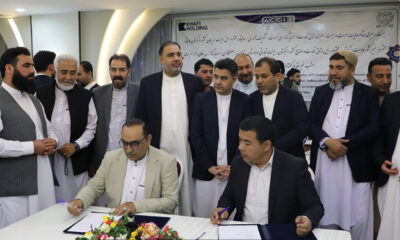
Afghanistan, Uzbekistan strengthen ties with $524 million in trade deals
-
 Business2 days ago
Airspace transit fees generate revenue for Afghanistan as flight routes shift
-

 Latest News5 days ago
Conflict with Pakistan deepens challenges for Afghan women, report finds
-

 Business2 days ago
Central Asia, Afghanistan crank up Russian fuel imports as MidEast supplies dry up
-

 Latest News4 days ago
IEA slams UN sanctions as ‘unreasonable’ after update to listings
-
 Latest News3 days ago
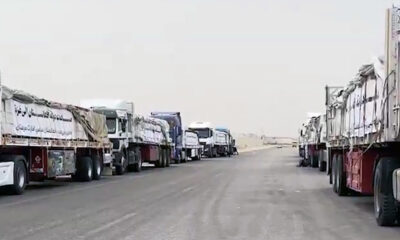
Afghanistan sends 530 tons of humanitarian aid to Gaza via Egypt
-
 World5 days ago
NATO allies reject US Hormuz blockade, push for diplomatic solution