
Latest News
Putin warns West of harsh response if it crosses Russia’s ‘red lines’

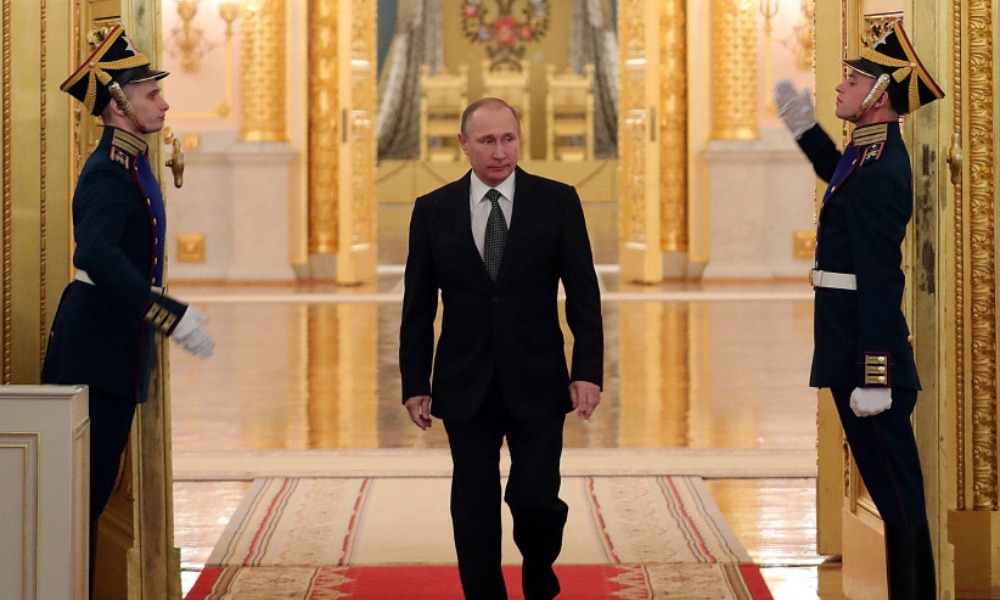
Russian President Vladimir Putin warned the West on Wednesday not to cross Russia’s “red lines”, saying Moscow would respond swiftly and harshly to any provocations and those responsible would regret it.
At a time of acute crisis in ties with the United States and Europe, with Russian troops massed near Ukraine and opposition leader Alexei Navalny on hunger strike in jail, the Kremlin leader used his state of the nation speech to project a message of Russian strength and defiance in the face of outside threats.
“We want good relations…and really don’t want to burn bridges,” Putin told both houses of parliament.
“But if someone mistakes our good intentions for indifference or weakness and intends to burn down or even blow up these bridges, they should know that Russia’s response will be asymmetrical, swift and harsh.”
Russia would determine where its red line lay in each specific case, he said, comparing those who attack it to hyenas led by a tiger.
His comments came at the climax of a speech dominated by Russia’s response to the COVID-19 pandemic and resulting economic hardship. Putin announced new social support measures for families with children ahead of a September parliamentary election.
He adopted a sterner tone when setting out foreign policy.
“In some countries, they have developed a highly unseemly habit of picking on Russia for any reason, and most often for no reason at all – a kind of sport,” said Putin, standing alone on a vast stage flanked by white, blue and red national flags and a backdrop of a giant double-headed eagle.
“Organisers of any provocations that threaten our core security interests will regret what they have done like they’ve never regretted anything for a long time.”
Putin, who is 68 and has dominated Russia for two decades, made no mention of Navalny. The opposition politician is ill in prison after starving himself for three weeks to demand access to his own doctors.
The rouble firmed after Putin’s speech, with markets interpreting it as not escalating tensions with the West.
Recent weeks have seen an intensification of confrontation between Russia and Western countries, which are alarmed by Navalny’s worsening condition and by what they say is the massing of tens of thousands of Russian troops near Ukraine and in Russian-annexed Crimea.
Washington last week tightened sanctions on Russia over accusations of computer hacking and election interference, and the Czech Republic accused Moscow of a role in explosions at an arms depot in 2014. Both expelled Russian diplomats. Russia denied wrongdoing and responded with tit-for-tat expulsions.
Moscow summoned a senior U.S. diplomat on Wednesday and said 10 embassy staff it expelled last week had a month to leave and that it would be disclosing the details of other punitive measures it had promised soon.
Tensions are also strained over the fate of Navalny, whose supporters rallied across Russia on Wednesday in his support.
Two of Navalny’s closest allies were arrested on Wednesday, their lawyers said. Lyubov Sobol, one of the faces of Navalny’s popular YouTube channel, and Kira Yarmysh, his spokeswoman, were both detained in Moscow.
One Navalny aide, Ruslan Shaveddinov, tweeted: “Right now across the whole of Russia they are detaining potential protesters. This is repression. This cannot be accepted. We need to fight this darkness.”
European Council President Charles Michel called the arrests “deplorable” and urged Russian authorities to respect people’s right to assemble.
OVD-Info, a group that monitors protests and detentions, said that nearly 300 people had been detained over the rallies in dozens of different places. The figure was expected to climb.
The Russian government has said the gatherings are illegal. Previous pro-Navalny rallies have been dispersed by force, with thousands of arrests.
Four doctors from outside Russia’s federal prison service visited Navalny on Tuesday and found his health to be satisfactory, Russian human rights commissioner Tatyana Moskalkova said.
In his speech, Putin urged all citizens to get vaccinated and predicted that Russia would achieve collective immunity by the autumn.
On the eve of an online climate summit to be hosted by U.S. President Joe Biden, Putin also called for tougher “polluter pays” rules and set a goal for Russia to cut its greenhouse gas emissions below those of the European Union in the next 30 years.


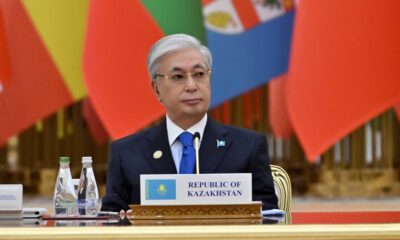


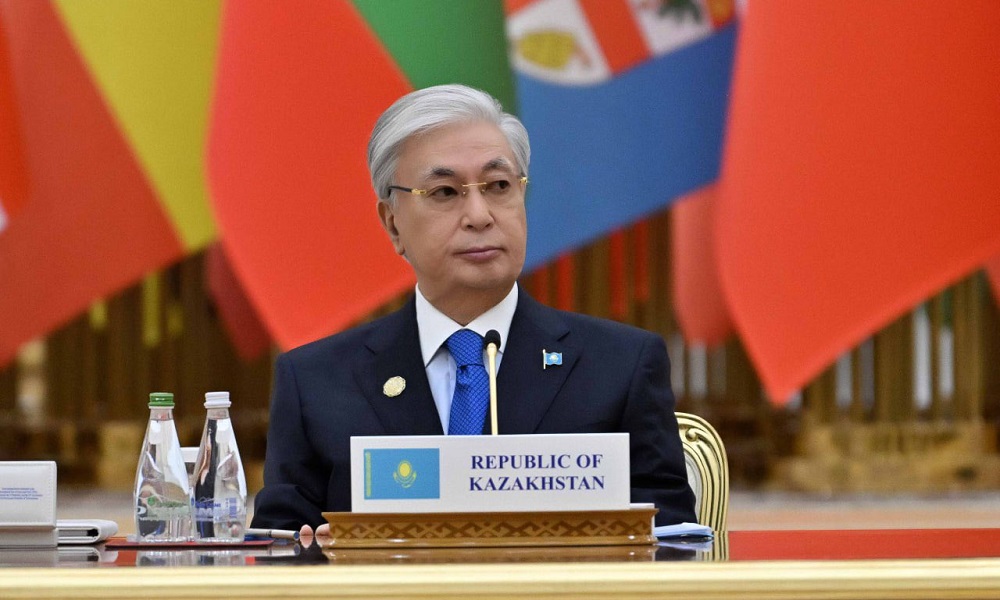
Kazakhstan’s President Kassym-Jomart Tokayev has emphasized the continuation of humanitarian assistance to Afghanistan, stating that the ongoing provision of such aid plays an important role in ensuring regional security.
Speaking at the international conference “Peace and Trust” in Ashgabat, the capital of Turkmenistan, Tokayev described addressing complex humanitarian challenges and the reconstruction of Afghanistan as a necessity.
“To ensure regional security, we consider it essential to continue providing assistance to Afghanistan, including by strengthening international efforts to address complex humanitarian issues and the reconstruction of this country. Kazakhstan remains committed to supporting the people of Afghanistan through humanitarian aid, educational projects, trade development, and food security initiatives,” he said.
Meanwhile, experts believe that sustainable improvement of the humanitarian situation in Afghanistan requires broad cooperation from the international community and support for the country’s economic development.
“Investment can be defined as one of the fundamental drivers of the economic cycle, and whenever Afghan traders do not take their money out of the country and instead invest domestically, it naturally leads to greater growth and dynamism in Afghanistan’s economy,” said Abdul Zahoor Modabber, an economic analyst.
As the humanitarian crisis in Afghanistan continues, reports by international relief organizations indicate that millions of citizens of the country are in urgent need of food, health, and livelihood assistance.
The reduction in funding for aid organizations, the impacts of climate change, and the return of migrants have increased concerns about a further deterioration of the humanitarian situation in the country.
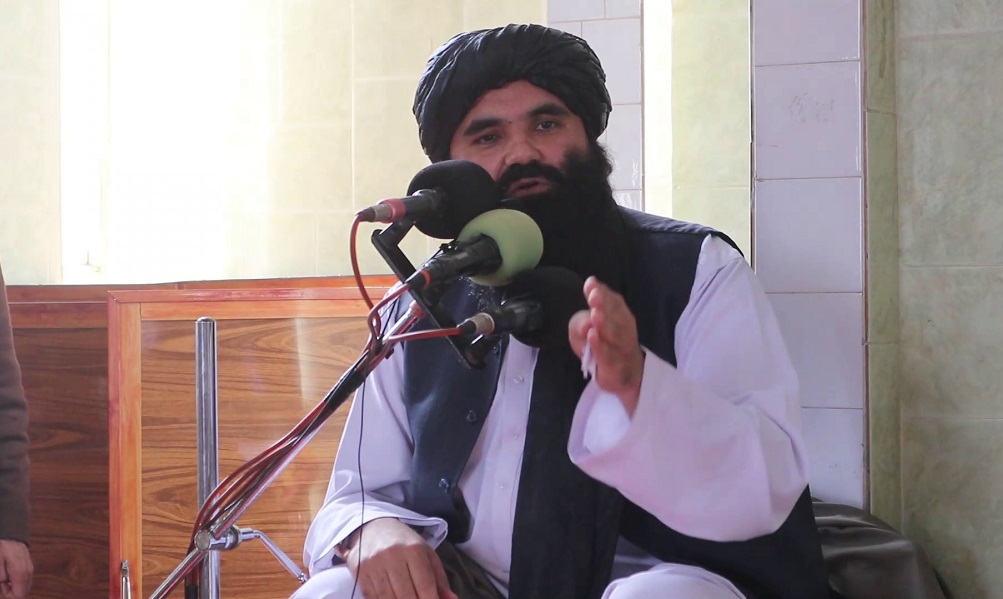
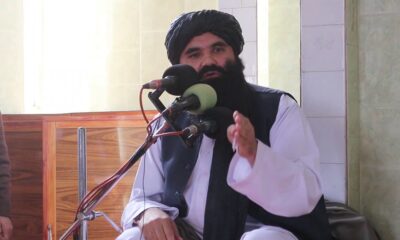
Khalifa Sirajuddin Haqqani, Minister of Interior of the Islamic Emirate of Afghanistan, said during a visit to Khost province on Friday that any government which rules through fear cannot be considered a true government.
“A government is one that is loved by its people, one that serves them with respect and compassion, and from whose behavior people learn ethics and sincerity,” he said.
Haqqani also stressed that Afghans who opposed the Islamic Emirate in the past should be tolerated and treated in a way that helps eliminate hostility and animosity, paving the way for national cohesion.


Saar: Iran’s regional meeting on Afghanistan discussed

ACL: Jawanan Perozi 1-0 Arman FC; Abu Muslim Farah 2-0 Sarsabz Yashlar

Continued aid to Afghanistan vital for regional security: Kazakh president

Islamic Emirate declines to attend Tehran meeting on Afghanistan

Sirajuddin Haqqani: A government that intimidates its people is not a true government

Pakistan will lose big market in both Afghanistan, Central Asia: Sarhadi

Afghanistan records $580m in fruit exports in six months

Tashkent: Central Asian leaders say regional stability hinges on Afghanistan

Afghan Abdalyan beat Sri Lanka A by 3 wickets in Rising Stars Asia Cup opener

Afghanistan U19 cricket team defeats India A U19
Saar: Iran’s regional meeting on Afghanistan discussed

Saar: Calls to avoid using Afghan soil against nations

Tahawol: UNSC meeting outcome regarding Afghanistan discussed

Saar: Ongoing Kabul–Islamabad tensions discussed

Tahawol: Pakistan’s warning on Afghanistan reiterated
-
 Latest News2 days ago
Muttaqi: Afghanistan’s progress requires both religious and modern education
-

 Sport4 days ago
ILT20: Desert Vipers edge Gulf Giants in historic super over thriller
-

 Regional4 days ago
Six Pakistani soldiers killed in TTP attack in Kurram District
-
 Business4 days ago
Trade bodies warn almost 11,000 Afghan transit containers stuck at Karachi port
-
 World4 days ago
Powerful 7.6 earthquake hits northern Japan, tsunami warnings issued
-
 Latest News3 days ago
Trump calls Afghanistan a ‘hellhole’ country as US expands immigration restrictions
-

 Sport3 days ago
Commanding wins for Arman FC and Sarsabz Yashlar in Afghanistan Champions League
-
 Latest News5 days ago
Pakistan’s top general calls on IEA to pick between ties with Islamabad or TTP