
Business
Pakistan’s exports to Afghanistan drop by 43.6% in July

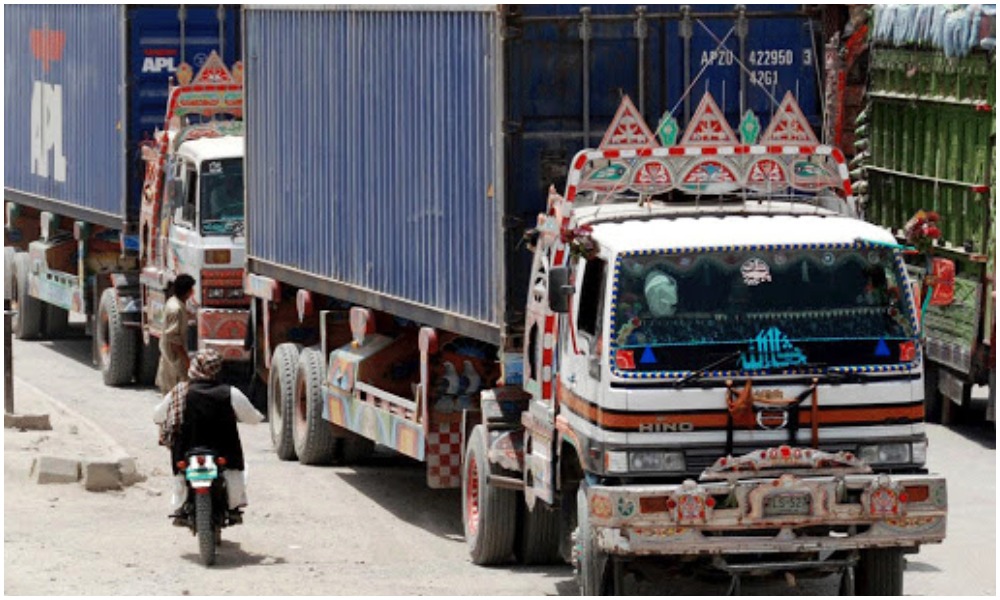
Pakistan’s exports of goods and services to Afghanistan dropped by 43.61 percent in July against the same period last year, the State Bank of Pakistan (SBP) reported.
According to Pakistan’s The Nation, exports totaled $61.25 million this July against exports to the value of $108.64 last year.
Imported products from Afghanistan also dropped by 56.7 percent from $9.7 million last July to $4.2 million this year.
SBP also reported an overall decline in exports to other countries in the same period. In July exports dropped by 14.57 percent from $2.2 billion to $1.89 billion.
Much of this could be attributed to the closure of all Pakistan’s borders in March due to the coronavirus pandemic.
Only in June did Pakistan start opening borders again with Afghanistan.
Three key trade routes — Chaman, Torkham, and Ghulam Khan border crossings opened but had to deal with major backlogs.
Pakistan and Afghanistan share 18 crossing points. The most commonly used ones are Torkham and Chaman.





Business
Economic Commission approves expansion of Sher Khan port to boost regional trade
The commission also approved extending the port’s operating hours in coordination with Tajikistan to facilitate the movement of a greater number of commercial vehicles and improve cross-border trade.

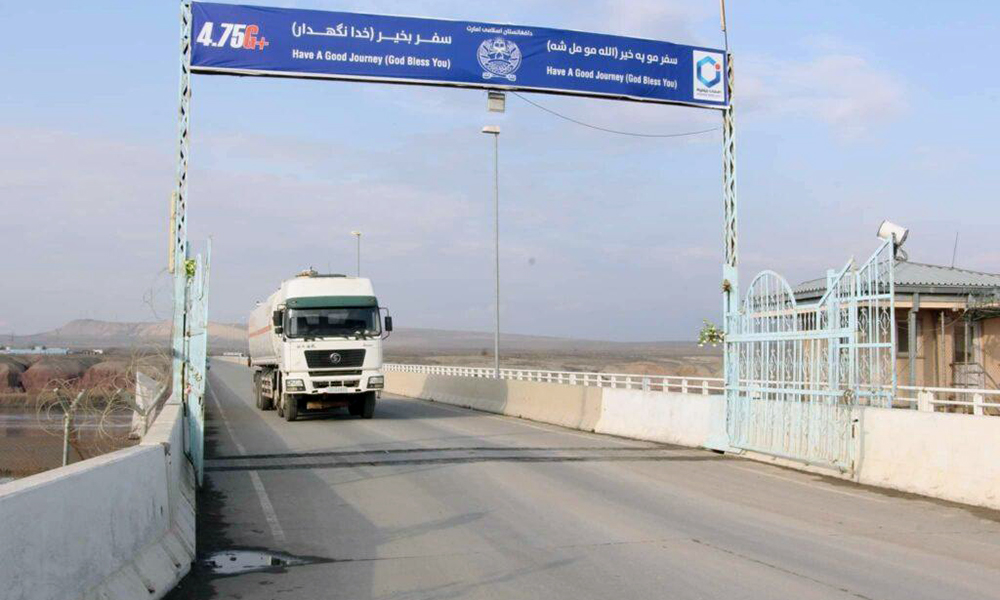
Afghanistan’s Economic Commission has approved a series of measures to expand the capacity of Sher Khan Port in an effort to strengthen trade with Tajikistan, Kyrgyzstan, and China.
The commission, chaired by Deputy Prime Minister for Economic Affairs Mullah Abdul Ghani Baradar, met on Tuesday to review proposals submitted by the Ministry of Transport and Civil Aviation aimed at increasing regional trade through the northern border crossing.
According to the approved plan, the Ministries of Finance, Interior, and other relevant institutions will develop new infrastructure at Sher Khan Port and expand existing facilities to accommodate growing trade volumes.
The commission also approved extending the port’s operating hours in coordination with Tajikistan to facilitate the movement of a greater number of commercial vehicles and improve cross-border trade.
In addition, the Ministry of Finance was instructed to allocate funding for the construction of a logistics center at Sher Khan Port. The facility will provide customs services, warehousing, cargo handling, and freight-loading operations to streamline trade activities.
The meeting also directed the Ministry of Public Works to construct the necessary railway infrastructure inside Afghanistan to activate the ECO railway corridor, a regional transport initiative linking Iran, Afghanistan, Tajikistan, and Kyrgyzstan under the framework of the Economic Cooperation Organization (ECO).
Separately, the commission decided that several state-owned entities will transfer their scrap iron to the National Development Company, which will process the material into standard steel reinforcing bars (rebar) for use in major government infrastructure projects.
The commission also endorsed 37 national standards and 12 testing methods proposed by the National Standards and Quality Authority. The standards cover agricultural products, food items, pharmaceuticals, construction materials, telecommunications and electrical equipment, chemicals, plastics, medical equipment, and several other sectors. Officials said the standards were developed in line with Afghanistan’s current needs and international benchmarks.
The meeting concluded with the presentation of follow-up reports on a number of ongoing issues, and relevant institutions were given the necessary directives. All decisions adopted during the session have been forwarded to the Office of the Supreme Leader for final approval.
Business
Afghanistan, Uzbekistan sign $50 million worth of trade agreements at Mazar-e-Sharif forum
The business forum reflects ongoing efforts by both countries to deepen commercial ties and promote regional economic integration through increased private-sector engagement.
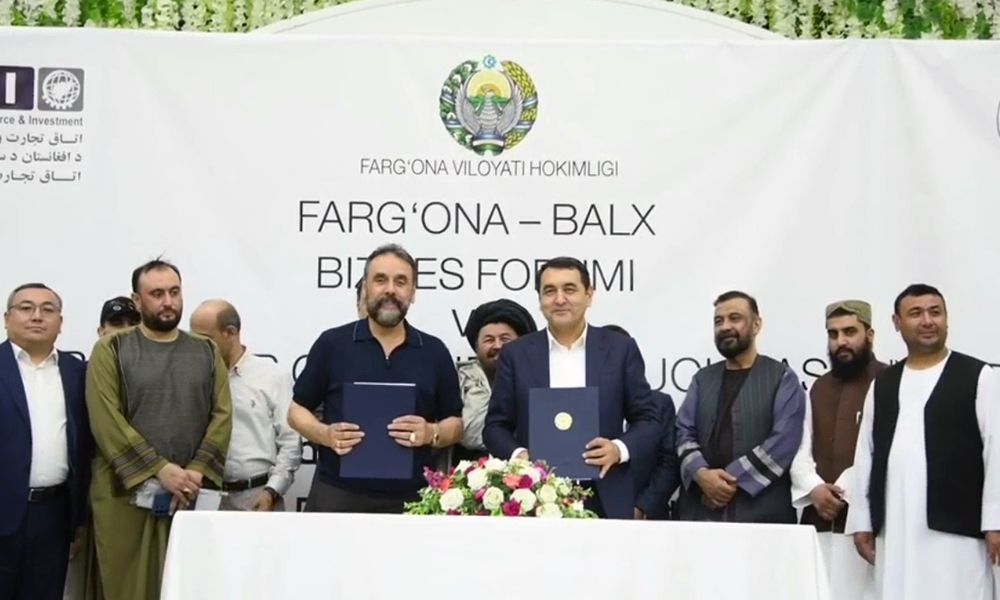
Afghanistan and Uzbekistan signed 25 cooperation agreements worth $50 million during a bilateral business forum held in the northern city of Mazar-e-Sharif, officials said.
Faiz Ahmad Khawafi, Deputy for Provincial Affairs at the Afghanistan Chamber of Commerce and Investment, said the agreements were signed in the presence of 130 Uzbek businessmen and investors, the governor of Uzbekistan’s Fergana region, as well as Afghan local officials and private sector representatives.
According to Khawafi, the agreements aim to expand bilateral trade, boost investment, and strengthen economic cooperation between Afghanistan and Uzbekistan.
The business forum reflects ongoing efforts by both countries to deepen commercial ties and promote regional economic integration through increased private-sector engagement.


Muttaqi discusses development projects with new UNDP envoy in Afghanistan

Naeem, Japanese ambassador discuss continued Kabul-Tokyo cooperation

Zidane appointed France head coach after 2026 World Cup

Economic Commission approves expansion of Sher Khan port to boost regional trade

Mujahid: Afghanistan’s borders secure, territory will not be used against other countries

India offers 1,000 online scholarships for Afghan students for 2026-27 academic year

Cricket world pays tribute to Afghanistan fast bowler Shapoor Zadran

Turkey spent over $120 million to prepare airport for Qatar-donated U.S. presidential aircraft

Thousands pay final respects as Afghan cricketer Shapoor Zadran buried in Kabul

Afghanistan U-15 team qualifies for FIFA U-15 World Cup

Tahawol: Afghanistan–Uzbekistan Economic Cooperation Enters New Phase

Saar: Growing Criticism in Pakistan Over Islamabad’s Afghanistan Policy

Tahawol: Trump halting major Iran escalation

Saar: Afghanistan-Uzbekistan economic ties

Tahawol: New developments ahead in the Middle East discussed
-

 Latest News2 days ago
Badakhshan Governor, Army Chief reaffirm commitment to Afghanistan’s security
-
 Latest News4 days ago
Five armed men killed while attempting to cross Durand Line into Badakhshan
-
 Latest News3 days ago
U.S. government plan to interview Afghan refugees raises deportation concerns
-
 Latest News4 days ago
Iran reiterates call for inclusive government in Afghanistan
-
 Latest News3 days ago
Afghanistan, Turkey discuss expanding agricultural cooperation
-
 Business4 days ago
Over 205,000 Afghans visit Uzbekistan for trade and business in six months
-

 Regional2 days ago
US pauses strikes on Iran as diplomatic efforts gather pace amid regional tensions
-

 World5 days ago
Trump links Saudi nuclear deal to Israel normalization through Abraham Accords