
Latest News
Pakistan urges Taliban to stay engaged in Afghan peace process

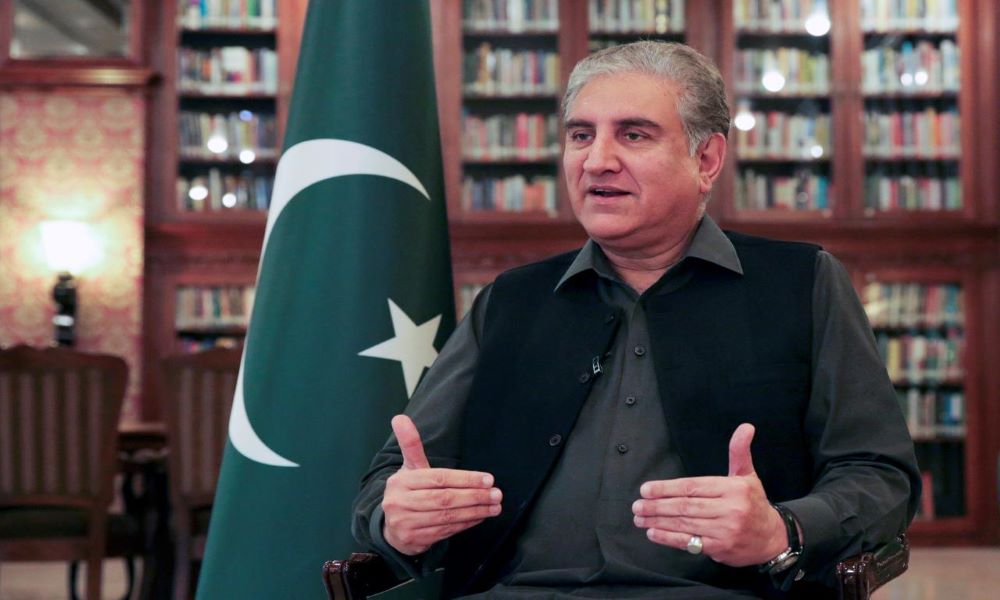
Pakistan on Monday urged the Taliban to remain engaged in the Afghan peace process after the armed group said it would now shun summits about Afghanistan until all foreign forces had left.
The decision was taken after the United States said last week it would withdraw all troops by Sept. 11 this year, later than a May 1 deadline set out by the previous administration.
“They take their own decisions but we will do whatever we can to convince them that it is in their national interest to remain engaged,” Pakistani Foreign Minister Shah Mahmood Qureshi said of the Taliban in an interview with Reuters in Abu Dhabi.
The refusal has thrown the peace process into disarray with Turkey scheduled to host a summit this Saturday, which diplomats had hoped would create new momentum towards a political settlement between the Taliban and Afghan government.
The Taliban ruled Afghanistan from 1996 to 2001 when they were ousted by U.S.-led forces, but they still control wide areas.
Qureshi said delays to the withdrawal were always a possibility due to logistics but that the Taliban had largely succeeded in their objective for foreign troops to withdraw and so should show flexibility towards the new Sept. 11 deadline.
“The troops will be out and a date has been given and the process starts on the 1st of May and goes on until the 11th of September so there is a definite time frame,” Qureshi said.
He also said he had no contact with the Taliban but that he believed the insurgent group would benefit by remaining engaged in the process, suggesting that they show patience and perseverance.
Pakistan, which helped facilitate U.S.-Taliban negotiations in Doha that resulted in the initial May 1 withdrawal deal, wields considerable influence with the Taliban.
The insurgents have sanctuaries in Pakistan, whose main military-run intelligence service gives them support, according to U.S. and Afghan officials. Pakistan denies the allegation.
Qureshi said he fears violence could escalate if the peace process remains deadlocked, plunging Afghanistan into civil war and leading to an exodus of Afghans.
Pakistan, which hosts close to 3 million Afghan refugees and economic migrants, has built 90% of a fence along its disputed 2,500 km (1,500 mile) border with Afghanistan and would hopefully be completed by September, he said.
He also said Pakistan was ready to engage in direct dialogue with arch-rival India once Jammu and Kashmir statehood was restored, which New Delhi in 2019 split into territories.
“We are two atomic powers that cannot, should not go into a direct conflict. It would be suicidal,” Qureshi said.
But he said he had no plans to meet with his Indian counterpart is also in the United Arab Emirates this week.
Top intelligence officers from India and Pakistan held secret talks in Dubai in January in a new effort to calm military tension over the disputed Himalayan region of Kashmir, sources have told Reuters




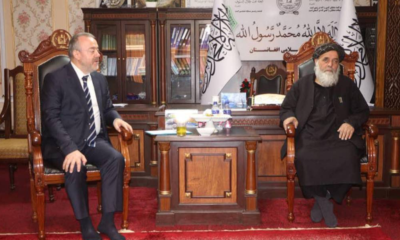

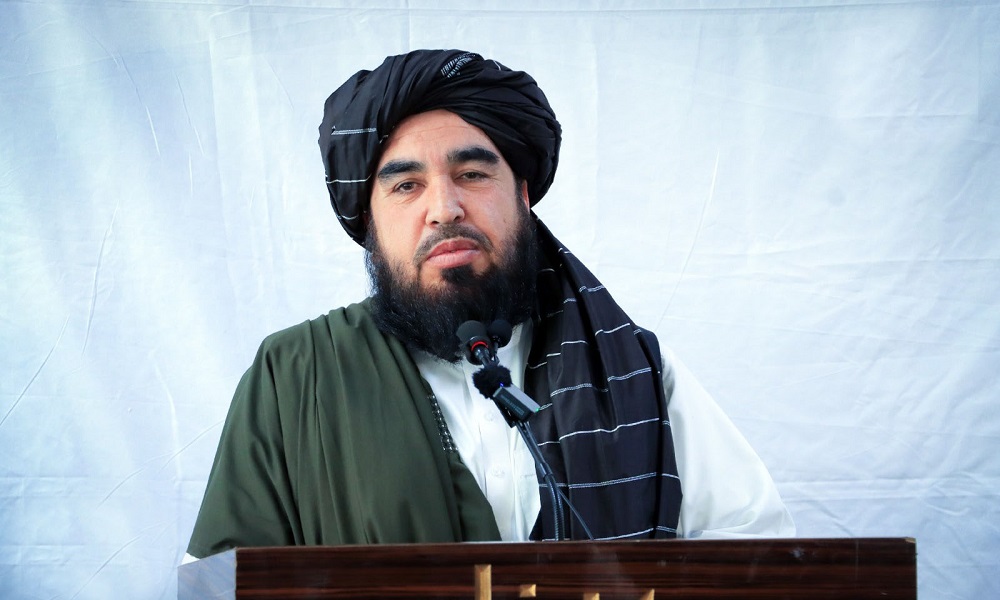
Da Afghanistan Breshna Sherkat (DABS) officially introduced Al-Haj Mullah Abdul Haq Hamkar as its new Chief Executive Officer, following a special decree by the Islamic Emirate’s Supreme Leader Amir al-Mu’minin Sheikh Hibatullah Akhundzada.
The ceremony was attended by senior officials, including representatives from the Ministries of Defense and Interior, provincial authorities, national institutions, the former DABS CEO Abdul Bari Omar, and directors and staff of the company.
Speakers highlighted recent progress at DABS, efforts to improve transparency and services, and the company’s move from losses toward profitability. In his remarks, Hamkar emphasized the importance of orderly transfer of responsibilities, obedience to leadership, and expanding electricity services, noting the central role of power supply in daily life and economic development.
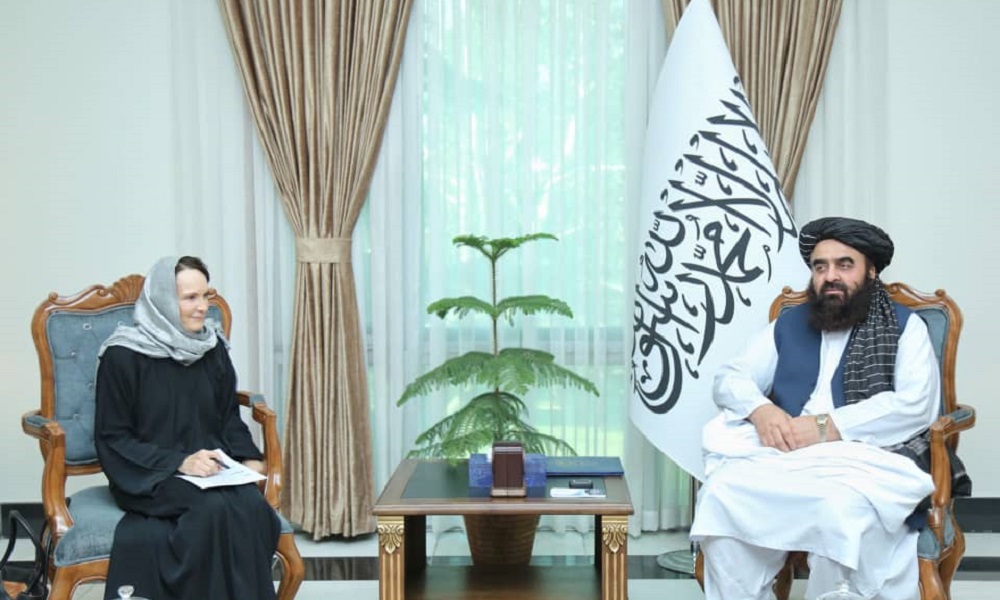
Amir Khan Mutaqi, the Minister of Foreign Affairs, met on Tuesday in Kabul with Georgette Gagnon, Officer-in-Charge of the UN Assistance Mission in Afghanistan (UNAMA).
According to a statement from the Ministry of Foreign Affairs, the meeting covered the upcoming visit of Rosemary DiCarlo, UN Under-Secretary-General for Political and Peacebuilding Affairs, to Kabul, as well as the progress and upcoming meetings of the Doha Process working groups on counter-narcotics and private sector support, and other related issues.
The statement added that Muttaqi said the Islamic Emirate has made satisfactory progress in the Doha Process working groups, but opposing parties have yet to achieve significant results regarding alternative livelihoods and banking issues.
He emphasized that it is necessary for the relevant parties to take effective steps in these areas to enable progress in other sectors as well.
Gagnon referred to DiCarlo’s visit at the end of this month and called for cooperation in this regard.
She also evaluated the outcomes of previous sessions of the two Doha Process working groups positively and noted that further attention would be given to these matters.
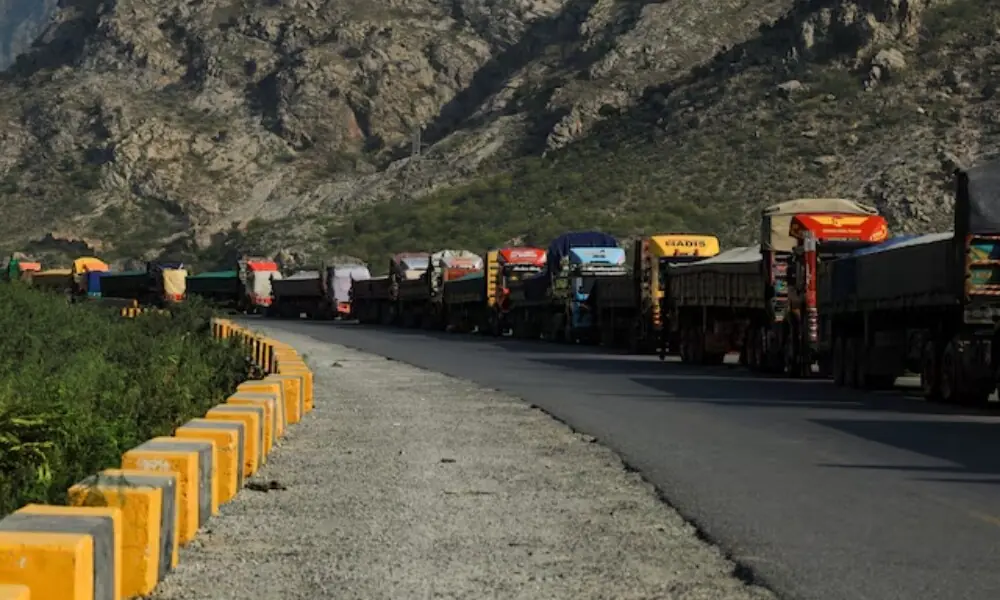
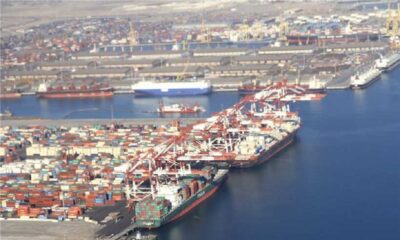
The federal government has approved the re-export of all Afghan transit trade consignments stranded at Karachi and Gwadar ports, offering relief to traders affected by prolonged border closures.
According to Pakistani media, traders will be allowed to re-export their Afghan transit shipments through any Pakistani seaport of their choice.
Sources said the commerce minister has formally conveyed the decision to the Federal Board of Revenue (FBR).
The measure aims to ease congestion and address disruptions caused by the suspension of trade routes.
Pakistan had earlier closed the Torkham and Chaman crossings for commercial activity due to security concerns, halting transit trade between the two countries from October 12.


Tahawol: Expansion of Afghanistan–India relations discussed

Saar: Possible Iran–US conflict reviewed

DABS names Abdul Haq Hamkar as new CEO

Afghan FM Muttaqi holds talks with UNAMA’s officer-in-change Georgette Gagnon

Pakistan approves re-export of stranded Afghan transit trade cargo

Afghanistan exports 10 containers of batteries to Saudi Arabia and UAE for first time

Pakistani cleric condemns lifetime immunity for Army Chief as un-Islamic

Turkey withdraws from Afghanistan-Pakistan mediation amid rising tensions

Afghanistan signs 30-year deal for marble mining in Daikundi

Sharp drop in exports to Afghanistan drives Pakistan’s trade deficit surge
Tahawol: Expansion of Afghanistan–India relations discussed
Saar: Possible Iran–US conflict reviewed

Tahawol: Donald Trump says Iran wants to talk to US

Saar: KP Chief Minister denies claims of Afghan soil being used against Pakistan

Tahawol: Iran’s ongoing crisis and its consequences discussed
-
 Latest News4 days ago
ICG report says Pakistan most impacted by IEA’s return in Afghanistan
-
 Business5 days ago
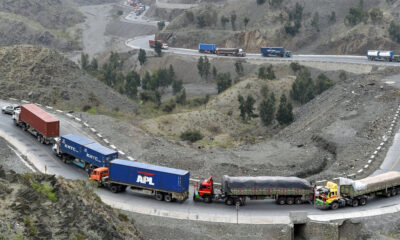
Pakistan–Afghanistan bilateral trade plunges 53% in first half of fiscal year
-
 Latest News3 days ago
Health Ministry holds meeting on halting medicine imports from Pakistan
-
 Latest News3 days ago
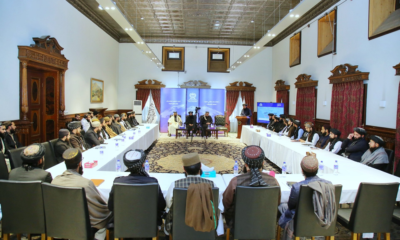
Afghan Foreign Ministry holds diplomacy training program with Qatar’s cooperation
-

 International Sports3 days ago
ATN secures broadcast rights to Carabao Cup semis across Afghanistan
-

 Sport5 days ago
Afghanistan announce under-19 squad for 2026 World Cup
-
 Latest News3 days ago
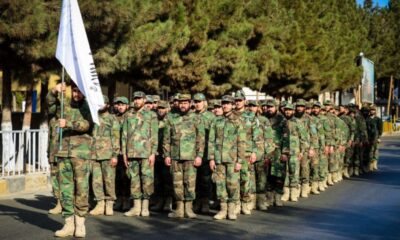
Afghanistan’s Ministry of Defense to recruit more forces
-
 Latest News3 days ago
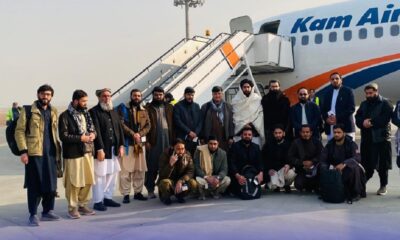
Afghanistan’s mines ministry sends technical team to Uzbekistan for training