
World
Pakistan Islamists clash with police in row over French cartoons


Four Pakistani police were killed and hundreds wounded when armed activists from a banned Islamist group clashed with security forces at an anti-blasphemy demonstration near the eastern city of Lahore, Reuters quoting officials.
According to the report the clash broke out at a rally of the banned Tehrik-e-Labaik Pakistan (TLP) on a highway in Sheikhupura, just outside Lahore, as the group prepared to march on the capital Islamabad, a spokesman for the Punjab police said on Wednesday.
Police said TLP activists armed with pistols and automatic weapons including AK-47 rifles opened fire on security forces controlling the demonstrators, read the report.
Rao Sardar Ali Khan, inspector general of the Punjab police, said four officers were killed and at least 263 wounded. TLP spokespeople said several of the group’s activists had also been killed or wounded in the clash.
Thousands of TLP activists have been blocking Pakistan’s busiest highway since Friday, demanding the release of their leader and the expulsion of France’s ambassador over the publication of a series of caricatures depicting the Prophet Mohammad by a French satirical magazine.
According to Reuters after days of tension, including a clash last week in which three police officers were killed, the Interior Ministry ordered paramilitary Rangers to be deployed under anti-terrorism laws.
“They will be there for 60 days. I have given them authority that they could go to anywhere they want in Punjab,” Interior Minister Sheikh Rasheed Ahmad told reporters. “I’m still warning the TLP to please back off.”
It is the group’s third countrywide protest campaign since 2017 over caricatures which are considered deeply insulting by Muslims, Reuters reported.
The French magazine Charlie Hebdo first published the cartoons in 2006 and republished them last year to mark the opening of a trial over a deadly attack on its offices in Paris by Islamist militants in 2015.
Pakistani Information Minister Fawad Chaudhry said the government would use force to block the Islamists from entering the capital Islamabad, read the report.
“We have shown restraint so far but the challenge to the state’s authority can’t be tolerated any more,” he told reporters.
Districts along the Grand Trunk Road were brought to a standstill where the city administration had already placed shipping containers to block entry and exit routes.




World
UAE seeks US financial backstop amid Iran war fallout, warns of possible shift from dollar
Emirati officials indicated that while the UAE has so far avoided the most severe economic impacts of the conflict, it may require financial support if conditions worsen.

The United Arab Emirates has held discussions with the United States over securing a potential financial backstop as the fallout from the Iran conflict threatens to strain its economy, according to a report by The Wall Street Journal.
Citing U.S. officials, the report said the idea of support measures — including a possible currency swap arrangement — was raised by UAE Central Bank Governor Khaled Mohamed Balama during meetings in Washington with Treasury Secretary Scott Bessent, as well as officials from the Treasury and the Federal Reserve.
Emirati officials indicated that while the UAE has so far avoided the most severe economic impacts of the conflict, it may require financial support if conditions worsen. They also signalled that tighter dollar liquidity could push the country to use alternative currencies, including the Chinese yuan, for oil sales and other transactions.
Oil disruption and capital risks
The talks come as the conflict has disrupted key sectors of the UAE economy. Damage to energy infrastructure and restrictions on tanker traffic through the Strait of Hormuz have affected a major source of dollar-denominated revenue.
Officials cited in the report also pointed to rising risks of capital flight and market volatility, potentially challenging the UAE’s role as a regional financial hub.
The Emirati dirham remains pegged to the U.S. dollar and is supported by foreign currency reserves estimated at around $270 billion. However, analysts say the conflict has increased pressure through capital outflows and broader economic disruption.
US cautious on swap arrangements
Currency swap lines, typically managed by the Federal Reserve, are extended selectively during periods of financial stress. The Fed maintains standing arrangements with major economies including the UK, Japan, Canada, Switzerland and the euro area.
According to the report, U.S. officials said the Federal Open Market Committee is unlikely to approve a swap line for the UAE, citing relatively limited financial integration with U.S. markets.
During previous crises — including the 2008 global financial crisis and the COVID-19 pandemic — the Federal Reserve expanded swap facilities to stabilise global dollar funding markets. The U.S. Treasury has also provided alternative support in some cases, including a $20 billion swap arrangement for Argentina through the Exchange Stabilization Fund last year.
Regional impact and financial measures
The discussions follow a period of intense hostilities before a ceasefire took effect on April 17. UAE authorities said Iran launched more than 2,800 drones and missiles during the conflict, most of which were intercepted.
The disruption to oil flows forms part of a broader regional shock, which the International Energy Agency has described as one of the most severe supply disruptions on record.
Gulf states have moved to bolster liquidity in response. Abu Dhabi raised around $4 billion through private placements earlier this month, while Bahrain established an estimated $5 billion swap line with the UAE to support financial stability, the WSJ reported.
Outlook and policy considerations
A recent report by S&P Global said the UAE’s strong fiscal and external buffers should help absorb economic shocks, but warned that prolonged disruption to oil exports and infrastructure damage could weigh on the outlook.
The UAE has also considered measures such as freezing Iranian assets held within the country, a step that could further affect trade and financial flows.
Finance ministers and central bankers attending meetings of the International Monetary Fund and the World Bank in Washington said recovery is unlikely to be immediate. Saudi Finance Minister Mohammed Al-Jadaan noted that logistical disruptions to oil shipments could persist for weeks even after hostilities subside.
U.S. Treasury officials have also asked Gulf countries to outline reconstruction and financing needs, signalling readiness to provide support if required.
World
Arab and Islamic nations condemn Israel move on Somaliland
Israel has not publicly detailed the scope or status of the reported diplomatic appointment.
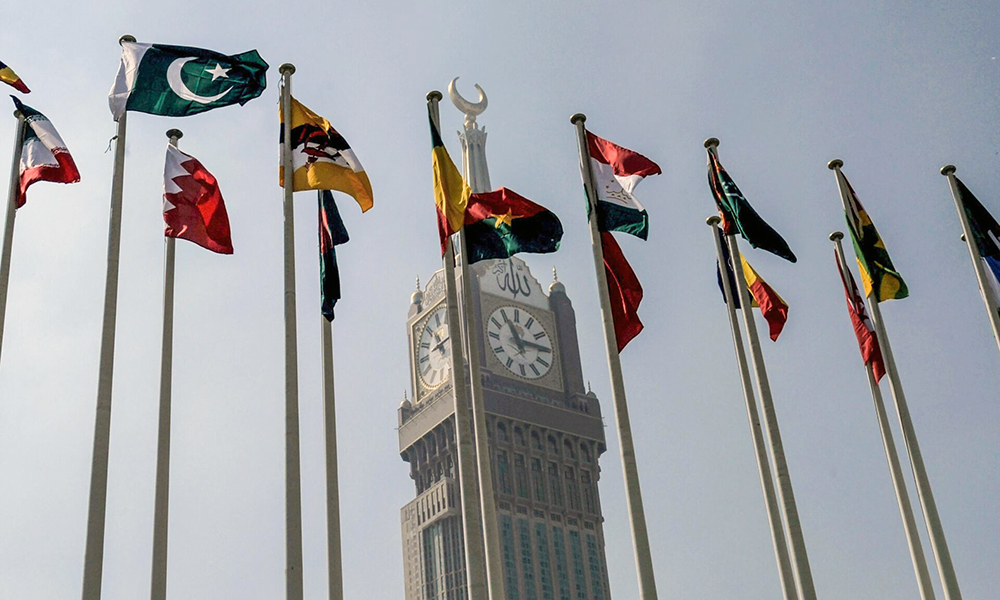
Sixteen Arab and Islamic countries have jointly condemned Israel’s reported decision to appoint a diplomatic envoy to Somaliland, warning that the move risks undermining Somalia’s sovereignty and regional stability.
In a joint statement issued in Doha, foreign ministers from countries including Qatar, Saudi Arabia, Egypt, Türkiye and Pakistan said the step constituted a “blatant violation” of the sovereignty and territorial integrity of Somalia.
The statement referred to Somaliland as a “so-called” entity, underscoring the signatories’ position that the self-declared republic — which proclaimed independence from Somalia in 1991 — is not internationally recognised. Somalia’s federal government continues to regard Somaliland as part of its territory.
“We reiterate our categorical rejection of all unilateral actions that infringe upon the unity or sovereignty of states,” the ministers said, adding that they fully support Somalia’s federal institutions as “the sole representatives of the will of the Somali people.”
The group also argued that Israel’s reported move contravenes international law, including the United Nations Charter and the founding principles of the African Union, both of which emphasise respect for territorial integrity.
Analysts say the issue is particularly sensitive in the Horn of Africa, where questions of recognition and sovereignty remain closely tied to security and political stability. While Somaliland has developed its own government, currency and security structures over the past three decades, it has struggled to gain formal international recognition.
The ministers warned that any steps perceived as recognising Somaliland could set a “dangerous precedent,” potentially fuelling tensions in the region and complicating efforts to maintain peace and stability.
Israel has not publicly detailed the scope or status of the reported diplomatic appointment.
World
Ghalibaf accuses Donald Trump of ‘false claims’, warns on Strait of Hormuz
In a post on X, Ghalibaf said, “The President of the United States made seven claims in one hour, all seven of which were false.”
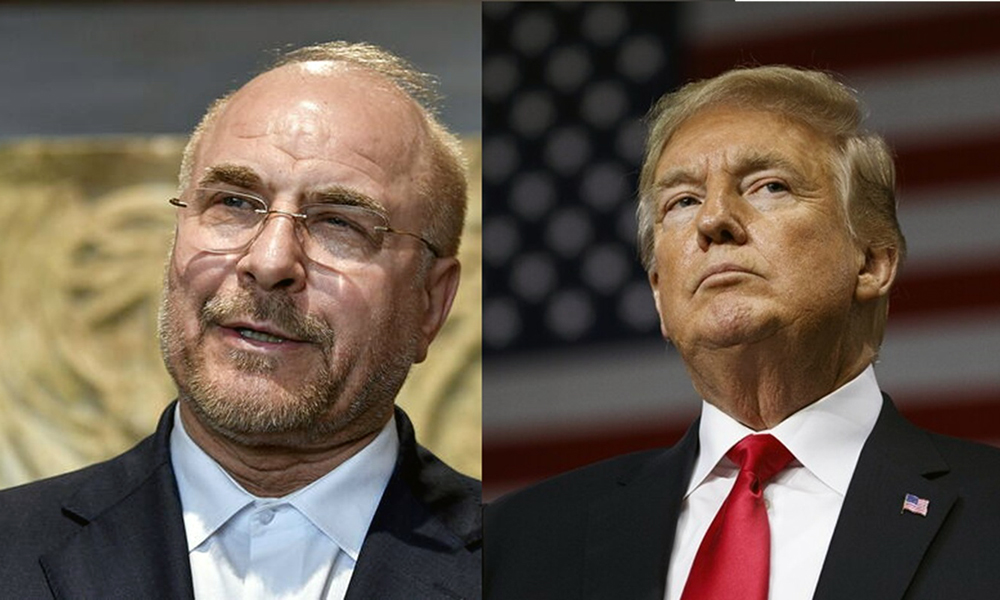
Iranian Parliament Speaker Mohammad Bagher Ghalibaf, who led Tehran’s delegation in recent talks with the United States in Islamabad, on Saturday accused US President Donald Trump of making multiple false claims.
In a post on X, Ghalibaf said, “The President of the United States made seven claims in one hour, all seven of which were false.”
Criticising the US administration, he added, “They did not win the war with these lies, and they will certainly not get anywhere in negotiations either.”
Ghalibaf also warned that if Washington continues its blockade, the Strait of Hormuz may not remain open. He stated that passage through the strait would be regulated via designated routes and subject to Iranian authorisation.
“Whether the strait is open or closed, and the rules governing it, will be determined in the field, not on social media,” he said, adding that media narratives would not influence the Iranian public.
He further urged audiences to rely on official sources, including statements from Iran’s Foreign Ministry spokesperson, for accurate updates on negotiations.
Meanwhile, Iran’s Foreign Minister Seyyed Abbas Araghchi on Friday confirmed the reopening of the Strait of Hormuz, offering temporary relief for global shipping.
“In line with the ceasefire in Lebanon, passage for all commercial vessels through the Strait of Hormuz is declared fully open for the duration of the ceasefire, along coordinated routes already announced by the Ports and Maritime Organisation of the Islamic Republic of Iran,” Araghchi said in a post on X.
Responding to the development, Trump wrote on Truth Social that Iran had agreed not to close the strait again, calling it a move that would prevent its use as a “weapon against the world.”
However, he added that the naval blockade would remain in place until a broader “transaction” with Iran is completed.


Robat Paryan railway station nearing completion, says Herat governor

Afghanistan, Belarus hold talks on fuel imports

Afghanistan showcases industry at key Central Asia expo

Webinar series highlights growing climate pressures on livelihoods in Afghanistan

Afghanistan Humanitarian Fund channeled $73.5 million to the needy in 2025

IEA supreme leader orders replacement of foreign terminology in official documents

Russia deems US military presence in Afghanistan unacceptable

Afghanistan hosts inaugural Afghanistan–Central Asia Consultative Dialogue to strengthen regional cooperation

TAPI gas pipeline advances 25 km in Afghanistan

Afghani strengthens nearly 10% against US dollar amid banking sector reforms

Tahawol: Fragile ceasefire between Iran and US discussed

Saar: Fate of Kabul–Islamabad talks in China reviewed

Tahawol: Reasons behind re-blocking of Strait of Hormuz discussed

Tawsia: Uzbekistan’s interest in investing in Afghanistan discussed

Tahawol: Russia’s readiness to mediate between Kabul-Islamabad discussed
-
 Business3 days ago
Afghanistan moves toward self-sufficiency in car battery production
-
 Business4 days ago
Airspace transit fees generate revenue for Afghanistan as flight routes shift
-

 Business4 days ago
Central Asia, Afghanistan crank up Russian fuel imports as MidEast supplies dry up
-
 Regional5 days ago
Iran’s Foreign Minister meets Pakistani Army Chief in Tehran amid mediation efforts
-
 Latest News4 days ago
Uzbekistan, Norway stress continued dialogue on Afghanistan settlement
-
 World4 days ago
White House denies U.S. requested ceasefire, says new talks may happen in Pakistan
-
 Business3 days ago
Uzbekistan launches exchange-based trade system with Afghanistan to boost bilateral commerce
-

 Latest News1 day ago
Afghanistan launches media platform to improve access to information