
Latest News
Pakistan completes 94% of border fence, despite ‘isolated’ incidents

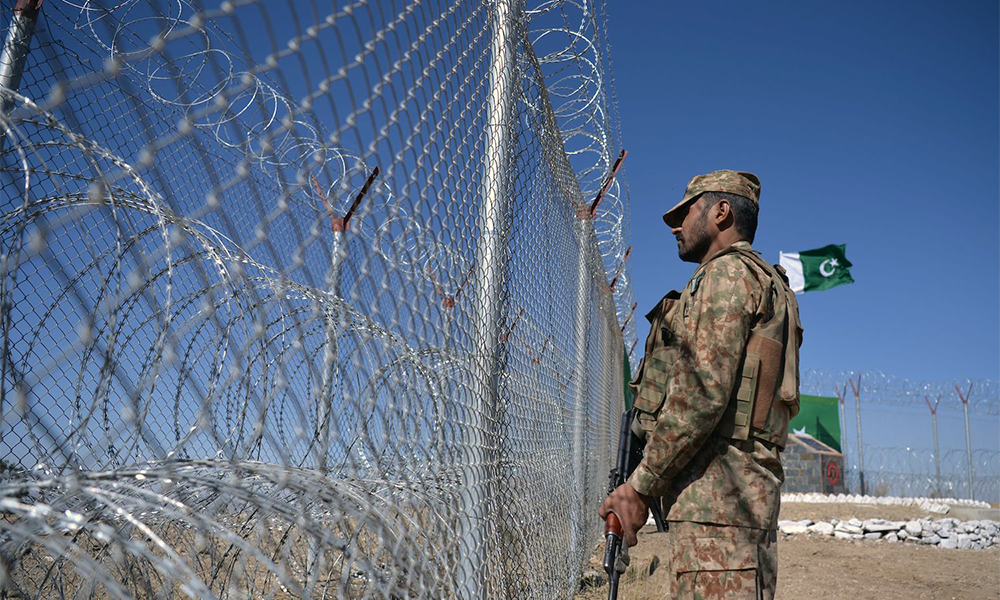
The Pakistani military has said the fencing project along the Durand Line with Afghanistan will continue despite issues raised in recent weeks.
Inter-Services Public Relations (ISPR) Director General Maj Gen Babar Iftikhar said on Wednesday that 94% of the border fence has been completed and that work on the remaining section continues.
“We are totally focused, and under the western border management regime, the work that is underway will be completed sometime soon.”
He also said the border management process would be improved.
“The blood of our martyrs was spilled in erecting this fence. It is a fence of peace. It will be completed and will remain [in place].”
Although the Islamic Emirate of Afghanistan (IEA) considers good relations with Pakistan to be a priority, footage published on social media that emerged this week allegedly shows IEA border forces destroying sections of the fence.
Iftikhar made it clear that Pakistan considers the Durand Line as the international border between the two countries. “It is an internationally recognised border,” he added.
When asked whether the government had raised the issue with the Afghan government, about the damage, Iftikhar said western border management had “local and strategic dynamics”.
He said the recent damage to the fence, allegedly by IEA forces, was “one or two localised problems”, which he said was being discussed by the governments of both countries.
“We have very good relations. We understand each other and keep talking about different issues that keep surfacing. There is no problem, fencing is underway and will continue.”
“The fencing should be stopped as a first step and the issue should be resolved through diplomacy. If the former government officials have signed any agreement with Pakistan on this issue, they should be held accountable to the Afghan people,” said Mohammad Saddiq Shinwari, an Afghan military analyst.
Since the beginning of the Islamic Emirate’s take over in the country, Pakistan has said the Afghan border forces have repeatedly clashed with the Pakistani military over the fencing.
However, the Islamic Emirate does not consider the matter a serious problem between them and officials have said that the improvement of relations with neighboring countries is a priority and that the fence problems are isolated incidents.
“The position of the Islamic Emirate is that it wants good relations with all countries, especially neighboring countries, and the small clashes that have occurred near the zero points are at the local level, and any concerns have been resolved and we do not have any concerns at the border or line level between the two countries,” said Bilal Karimi, IEA’s deputy spokesman.
Two days ago, Pakistani Foreign Minister Shah Mahmood Qureshi also reacted to the Afghan forces’ move to stop the fencing and said that Pakistan will continue fencing the border.








Latest News
Karzai voices concern over reported visa problems facing Afghan students in Pakistan
The comments come amid ongoing concerns over visa renewal delays affecting Afghan students studying in Pakistan.
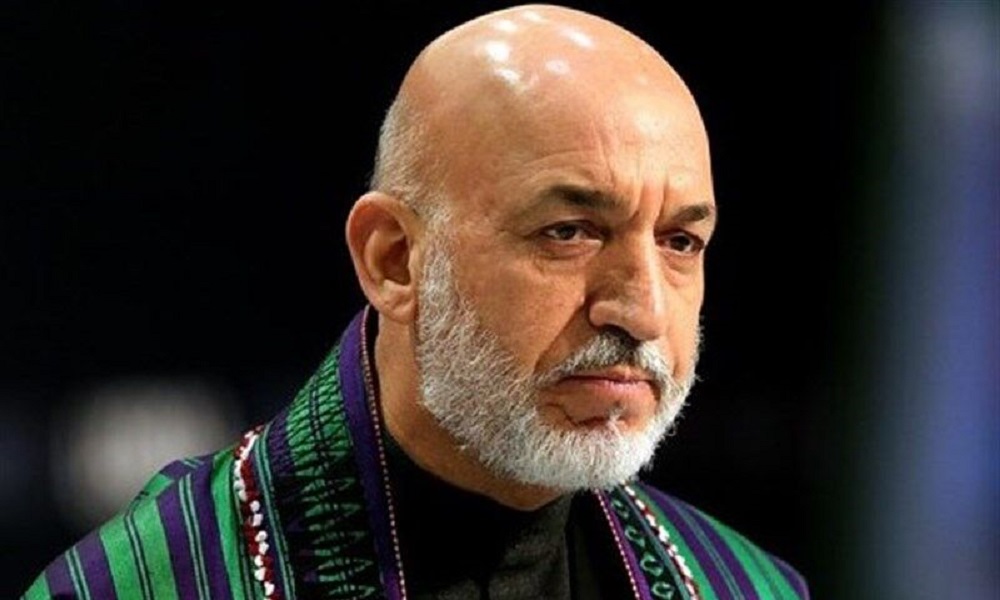
Former Afghan President Hamid Karzai has expressed concern over reports that Afghan students in Pakistan are facing difficulties renewing their visas and allegations of harassment by authorities.
In a statement, Karzai described the reports as regrettable and urged the relevant Pakistani authorities to keep the issue of students’ residency separate from broader matters affecting relations between Afghanistan and Pakistan.
He said Afghan students had travelled to Pakistan solely to pursue their education and should be treated in line with the standards and practices normally afforded to students in academic institutions. Karzai stressed that they should be able to continue their studies without facing legal or administrative obstacles related to their immigration status.
The comments come amid ongoing concerns over visa renewal delays affecting Afghan students studying in Pakistan.
Last month, the Islamic Emirate’s Consul General in Karachi, Abdul Jabbar Takhari, confirmed that many students in Pakistan’s Sindh province have been able to continue attending university but have been unable to renew their visas after their existing permits expired because Pakistani authorities have not yet issued new visas.
The delays have left a number of students in legal uncertainty, raising concerns about their ability to remain in the country and complete their education.
Takhari also said the situation is more difficult in some other provinces, where Afghan students reportedly face a greater risk of detention or deportation as Pakistan continues its campaign against undocumented foreign nationals.
Pakistan has been implementing a nationwide repatriation policy targeting undocumented foreigners since late 2023, resulting in the return of hundreds of thousands of Afghans. Although students with valid visas have generally been exempt from the campaign, delays in visa renewals have increased fears that some could become vulnerable to enforcement measures if their documentation lapses.
Afghan officials have repeatedly called on Pakistan to facilitate visa renewals for students, warning that prolonged delays could disrupt their education and create further hardship for young Afghans seeking to complete their studies.
Latest News
Mujahid: Afghanistan-Pakistan tensions benefit neither side
Mujahid reiterated that maintaining security and fostering stable relations with neighbouring countries remain key priorities for the Islamic Emirate.
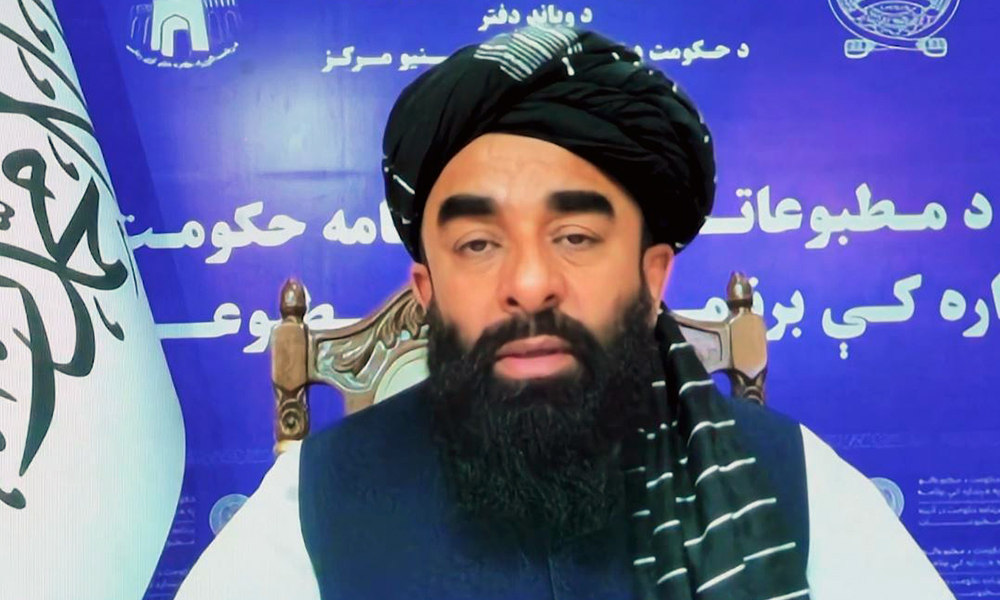
The Islamic Emirate’s spokesman, Zabihullah Mujahid, says ongoing tensions between Afghanistan and Pakistan are in the interests of neither country, stressing that the Islamic Emirate is working to resolve outstanding issues through dialogue and constructive engagement.
Speaking to reporters, Mujahid said the Islamic Emirate does not seek political or economic disputes with any nation. However, he claimed Pakistan has disrupted Afghan trade by blocking transit routes, creating difficulties for traders and cross-border commerce.
Commenting on security, Mujahid dismissed the group known as the “United Front,” saying it exists only on social media and has no meaningful presence inside Afghanistan.
He said Afghanistan’s security forces would not allow any group or individual to threaten the country’s stability, adding that similar groups had previously operated under different names and had simply rebranded themselves.
Mujahid reiterated that maintaining security and fostering stable relations with neighbouring countries remain key priorities for the Islamic Emirate.
Latest News
EU holds landmark migration talks with Islamic Emirate delegation
Belgium issued one-day visas to the delegation, led by Afghan foreign ministry spokesman Abdul Qahar Balkhi.
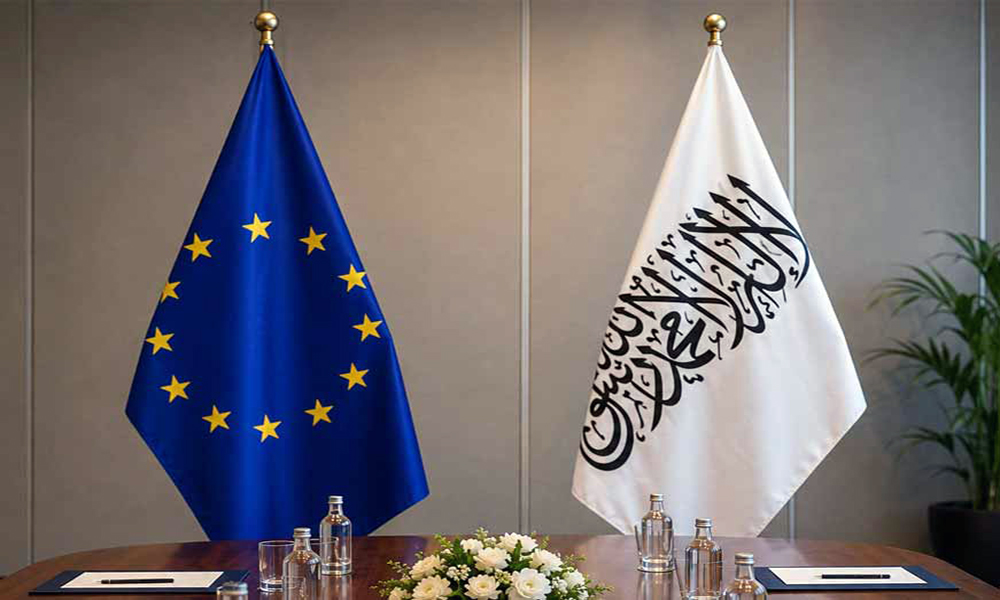
The European Union has held its highest-level talks with the Islamic Emirate of Afghanistan since 2021, hosting a five-member Afghan delegation in Brussels to discuss migration and the return of Afghan nationals.
The June meeting followed earlier talks in Austria and came as several EU member states push for faster deportations of rejected asylum seekers and Afghans convicted of crimes.
Belgium issued one-day visas to the delegation, led by Afghan foreign ministry spokesman Abdul Qahar Balkhi.
While the European Commission insisted the talks do not constitute formal recognition of the Islamic Emirate, the meeting marked the first official engagement between EU officials and an Afghan delegation on European soil since the change of government in Kabul in 2021.
Afghan officials described the visit as historic, saying it was aimed at building confi dence, expanding diplomatic engagement and improving arrangements for the return of Afghan nationals. Kabul also renewed its call for IEA-appointed diplomats to be accepted at Afghan embassies across Europe.
Migration has become a key political issue across Europe, with many governments seeking stricter asylum policies and increased deportations. According to EU data, around one million Afghans applied for asylum in EU countries between 2013 and 2024, with roughly half of the applications approved.
European officials increasingly acknowledge that cooperation with the authorities in Kabul is necessary to manage deportations, consular services and humanitarian coordination. Germany and Austria have already held discussions with Afghan officials and have deported Afghan nationals convicted of criminal offences.
Despite the practical need for engagement, the talks remain politically sensitive. EU officials stressed the discussions were technical and should not be viewed as a step toward formal recognition.
Human rights groups and some European lawmakers warned that increased cooperation could be seen as legitimising the Islamic Emirate without securing commitments on human rights or governance.
The meeting highlights the EU’s effort to balance its migration priorities with its foreign policy principles, while the Islamic Emirate continues seeking greater international engagement despite the absence of formal diplomatic recognition.


Tahawol: US cancelling strikes on Iran

Saar: Strained relations between Kabul and Islamabad

Suspected suicide bombing at police station kills at least 14 in Pakistan, officials say

Kabul opens cardiac hospital for children

Bomb carried by woman kills three, injures 21 near Moscow restaurant, authorities say

Pakistan’s governance system has ‘collapsed’: Mohsin Naqvi

India offers 1,000 online scholarships for Afghan students for 2026-27 academic year

Cricket world pays tribute to Afghanistan fast bowler Shapoor Zadran

Turkey spent over $120 million to prepare airport for Qatar-donated U.S. presidential aircraft

Thousands pay final respects as Afghan cricketer Shapoor Zadran buried in Kabul
Tahawol: US cancelling strikes on Iran
Saar: Strained relations between Kabul and Islamabad

Saar: Trade shifts from Pakistan to Central Asia and Iran discussed

Tawsia: Efforts to increase Ghori cement production discussed

Tahawol: Germany’s deportation of non-criminal Afghan refugees
-
 Latest News3 days ago
Pakistan’s governance system has ‘collapsed’: Mohsin Naqvi
-

 Sport5 days ago
Afghanistan set for crucial five-match ODI series against Ireland
-
 Sport5 days ago
Afghanistan futsal team heads to Thailand for Continental Championship
-
 Latest News5 days ago
MSF urges Pakistan to halt forced returns of Afghan refugees
-
 Business5 days ago
Afghanistan exports first stone shipment to US in $100,000 trade milestone
-

 Sport3 days ago
Qosh Tepa crowned champions of inaugural Afghanistan Wrestling Premier League
-

 Regional5 days ago
Oman presents Iran with Gulf-backed plan for voluntary fees to use Hormuz
-

 Latest News5 days ago
Germany deports first Afghan without criminal record since 2021, Reuters reports