
Latest News
Pakistan committed to eradicate terrorism, violence, extremism: Pakistani PM


Pakistan’s Prime Minister, Nawaz Sharif told the Heart of Asia conference in Islamabad that Pakistani government would continue to support an Afghan-owned and led peace and reconciliation process “which remains the most viable option to end violence and promote stability in Afghanistan”.
The prime minister said Pakistan was committed to eradicating terrorism, violence and extremism from its soil, and that military operations Zarb-i-Azb and the National Action Plan were “delivering desired results”.
“The emergence of newer and more threatening terrorist groups like Daesh should also strengthen our resolve against terrorism,” he said. “We should envisage collective and coordinated measures on the regional security front to ensure that the gains and struggle against terrorism are durable and irreversible.”
“Finalisation of border management standard operating procedures will be helpful in containing the movement of terrorists across the border,” he said.
“The massive cross-border movement of refugees constitutes a security risk and is exploited by the miscreants for their nefarious designs,” Nawaz said, adding that efforts for stability in Afghanistan should envisage the return and resettlement of Afghan refugees to their homeland in a dignified manner.
Meanwhile, President Ghani talked about the ‘unintended consequences’ of Pakistan’s military operations.
“Unfortunately, recent events in Pakistan have forced us to host close to 350,000 to 500,000 Pakistani refugees on our soil. The refugee issue is a common issue, like other issues that confront us,” Ghani said.
He lauded Pakistan’s decision to launch operations against militancy, but said the action had “created unintended consequences bringing about the displacement of a significant number of these [militant] groups onto our soil”.
“The Tehreek-i-Taliban Pakistan launched a vicious attack on children in Peshawar for which Pakistan robustly responded. But that very response brought them onto our country. Until now we have launched 40 operations through our Special Forces against them.
“What is the nature of the Taliban and how do we deal with it?” he questioned. “There is no historical precedent for solving this problem,” he said, referring to the challenges posed by terrorism.
“What is driving the conflict?” the Afghan president asked. “Is it insurgency or are we dealing with a much larger conflict?”
“The first driver of conflict is regional and international terror groups… Al Qaeda, Daesh and terrorists from China, Russia, Uzbekistan, Tajikistan, the Middle East are all, unfortunately, present on our soil.”
“The quarrel of these people [militants] is not with the government of Afghanistan or its people. We are fighting on behalf of all of you,” Ghani told the conference, “But we are the ones who are daily suffering some of the worst atrocities, including the butchering of our children and elderly who are totally innocent.”
Ghani called for a mechanism of regional cooperation to examine “how the networks of terror coordinate, co-finance, what is their linkage with the criminal economy, how is radicalism shaping and maligning our holy religion and our opportunities for global engagement and dialogue”.
Pakistan and Afghanistan have been trading accusations of supporting insurgents since Afghan peace talks brokered by Islamabad collapsed last summer, suspending a reconciliation process between Kabul and the Afghan Taliban.
The Heart of Asia gathering brings together Asian and other countries to discuss the future of Afghanistan and its neighbours.

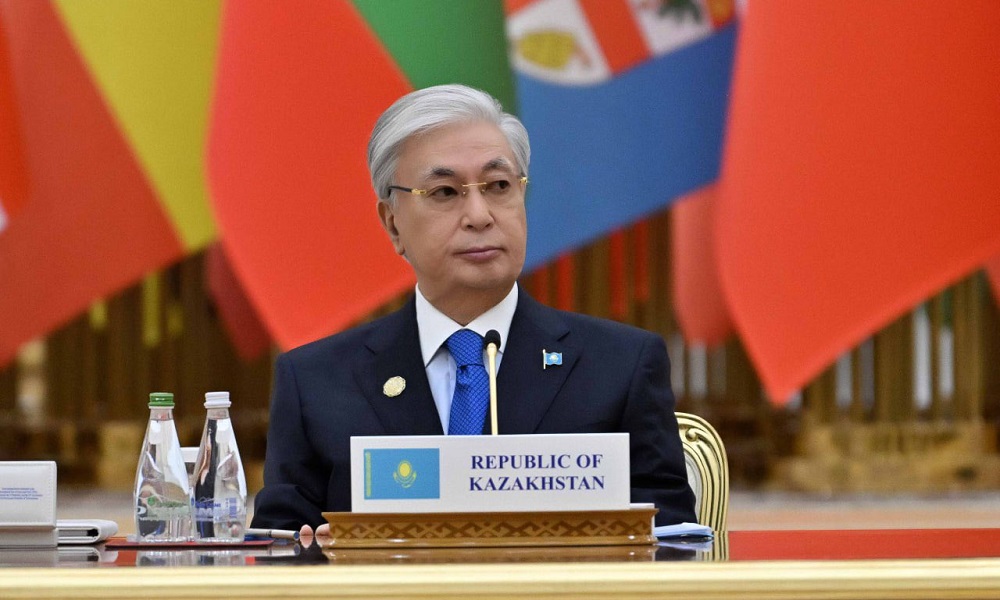
Kazakhstan’s President Kassym-Jomart Tokayev has emphasized the continuation of humanitarian assistance to Afghanistan, stating that the ongoing provision of such aid plays an important role in ensuring regional security.
Speaking at the international conference “Peace and Trust” in Ashgabat, the capital of Turkmenistan, Tokayev described addressing complex humanitarian challenges and the reconstruction of Afghanistan as a necessity.
“To ensure regional security, we consider it essential to continue providing assistance to Afghanistan, including by strengthening international efforts to address complex humanitarian issues and the reconstruction of this country. Kazakhstan remains committed to supporting the people of Afghanistan through humanitarian aid, educational projects, trade development, and food security initiatives,” he said.
Meanwhile, experts believe that sustainable improvement of the humanitarian situation in Afghanistan requires broad cooperation from the international community and support for the country’s economic development.
“Investment can be defined as one of the fundamental drivers of the economic cycle, and whenever Afghan traders do not take their money out of the country and instead invest domestically, it naturally leads to greater growth and dynamism in Afghanistan’s economy,” said Abdul Zahoor Modabber, an economic analyst.
As the humanitarian crisis in Afghanistan continues, reports by international relief organizations indicate that millions of citizens of the country are in urgent need of food, health, and livelihood assistance.
The reduction in funding for aid organizations, the impacts of climate change, and the return of migrants have increased concerns about a further deterioration of the humanitarian situation in the country.
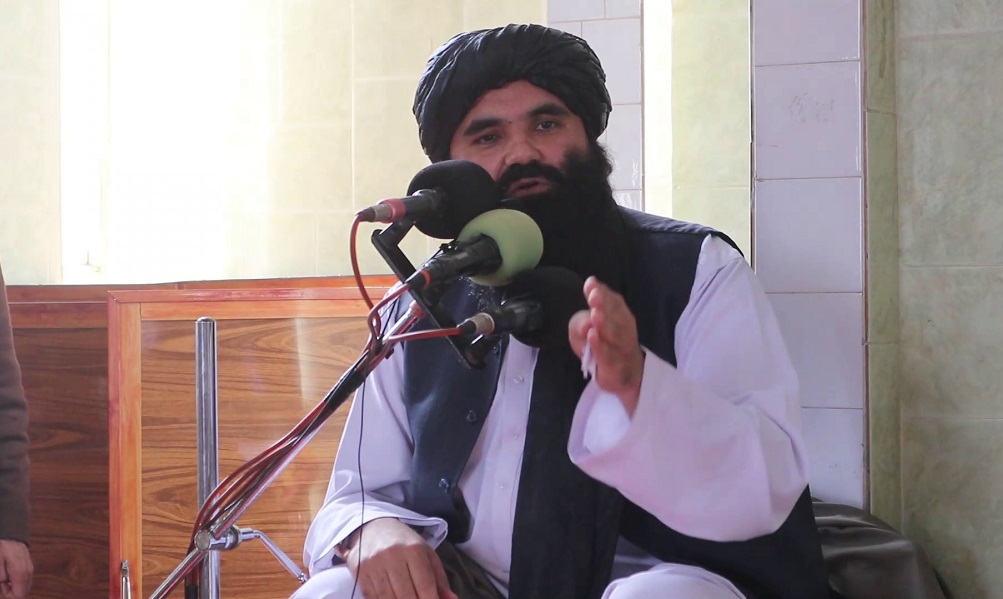
Khalifa Sirajuddin Haqqani, Minister of Interior of the Islamic Emirate of Afghanistan, said during a visit to Khost province on Friday that any government which rules through fear cannot be considered a true government.
“A government is one that is loved by its people, one that serves them with respect and compassion, and from whose behavior people learn ethics and sincerity,” he said.
Haqqani also stressed that Afghans who opposed the Islamic Emirate in the past should be tolerated and treated in a way that helps eliminate hostility and animosity, paving the way for national cohesion.


Continued aid to Afghanistan vital for regional security: Kazakh president

Islamic Emirate declines to attend Tehran meeting on Afghanistan

Sirajuddin Haqqani: A government that intimidates its people is not a true government

Afghanistan’s health minister likely to visit India next week

Top Pakistani, British officials discuss Afghan relocation

Pakistan will lose big market in both Afghanistan, Central Asia: Sarhadi

Afghanistan records $580m in fruit exports in six months

Tashkent: Central Asian leaders say regional stability hinges on Afghanistan

Afghan Abdalyan beat Sri Lanka A by 3 wickets in Rising Stars Asia Cup opener

Afghanistan U19 cricket team defeats India A U19

Saar: Calls to avoid using Afghan soil against nations

Tahawol: UNSC meeting outcome regarding Afghanistan discussed

Saar: Ongoing Kabul–Islamabad tensions discussed

Tahawol: Pakistan’s warning on Afghanistan reiterated

Saar: UN’s meeting on Afghanistan reviewed
-
 Latest News2 days ago
Muttaqi: Afghanistan’s progress requires both religious and modern education
-

 Sport4 days ago
ILT20: Desert Vipers edge Gulf Giants in historic super over thriller
-

 Regional4 days ago
Six Pakistani soldiers killed in TTP attack in Kurram District
-
 Business4 days ago
Trade bodies warn almost 11,000 Afghan transit containers stuck at Karachi port
-
 World4 days ago
Powerful 7.6 earthquake hits northern Japan, tsunami warnings issued
-

 Latest News3 days ago
Trump calls Afghanistan a ‘hellhole’ country as US expands immigration restrictions
-
 Sport5 days ago
Sorkh Poshan Khafi defeats Sarsabz Yashlar 4-0 in Afghanistan Champions League
-

 Sport3 days ago
Commanding wins for Arman FC and Sarsabz Yashlar in Afghanistan Champions League