
Business
NUG Fails to Properly Collect Old Kabul Bank’s Debts: IWA

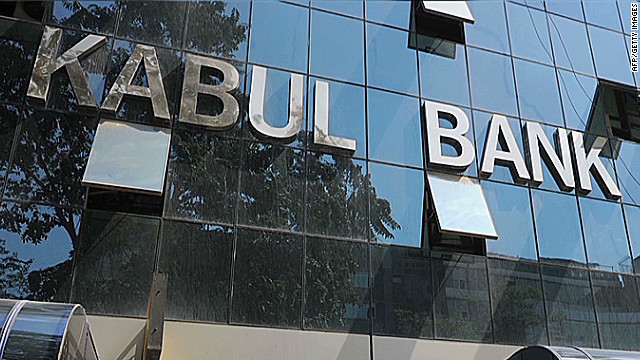
National Unity Government (NUG) has failed to properly collect the debts of old Kabul Bank, a watchdog said Sunday.
It has been eight years since the Afghan government begun collecting the debate of the old Kabul Bank which was collapsed in 2010.
During the former President Hamid Karzai’s tenure, $370 million debts of the bank were collected by the government from the overall debts of $987 million. However, since the opening of the Kabul Bank’s case, the National Unity Government has only managed to collect $78 million in debts.
The Integrity Watch Afghanistan says NUG was being expected to collect the debts – from the movable and immovable properties of the debtors, but due to political deals and the weakness of the judiciary institutions in the case – it has failed to collect the money.
“The government has politically dealt with the case and the government institutions do not have the capacity to collect the money back,” said Naser Temori, a researcher at the IWA.
The head of old Kabul Bank Sher Khan Farnood who has reportedly died of heart disease recently in Bagram prison had been sentenced to 10 years in prison. He had paid $334 million before his imprisonment and Chief Executive of the bank Khalilullah Ferozi has paid $137 million before being jailed to 10 years.
Farnood and Ferozi have been among the debtors of the bank. Apart from them, 12 other individuals involved in the case are also currently serving prison sentences and 16 more are under investigation of the judiciary institutions.
Rejecting the issue of being involved in political deals on the old Kabul Bank’s case, Spokesman of the Attorney General’s Office, Jamshid Rasoosi said: “We are an independent institution and we are doing our tasks based on the law. Our performances have been in line with the law and its provisions.”

Business
Trade bodies warn almost 11,000 Afghan transit containers stuck at Karachi port
SCCI officials urged authorities to separate trade from political tensions and immediately launch dialogue to restore commercial traffic between the two countries.

Trade bodies report that nearly 11,000 Afghan transit trade containers are stranded at Karachi port, while thousands more— including shipments of perishable goods—remain stuck at the Ghulam Khan, Spin Boldak, Kharlachi, and Torkham crossings between Afghanistan and Pakistan.
Traders involved in Pakistan–Afghanistan bilateral and transit commerce say they have suffered billions of Pakistani rupees in losses as the prolonged border shutdown continues to stall the movement of goods. Perishable food items have already begun to spoil, compounding financial losses.
They also report a sharp drop in bilateral trade volumes. Exporters who were already issued Form-E certificates have been unable to dispatch consignments, with the closure now nearing two months.
Sarhad Chamber of Commerce and Industry (SCCI) President Junaid Altaf said trade—already limited—has deteriorated further due to the closure of crossings. He estimated losses of roughly $45 million since the Torkham closure began, adding that the halt is damaging for both economies and directly affecting families whose livelihoods depend on trade.
SCCI officials urged authorities to separate trade from political tensions and immediately launch dialogue to restore commercial traffic between the two countries.
In recent weeks, repeated closures of the Pakistan–Afghanistan crossing have also brought pharmaceutical exports to a halt, putting nearly $200 million worth of medicines at risk. Hundreds of trucks carrying antibiotics, insulin, vaccines, and cardiovascular drugs remain stuck at Torkham and Chaman, with temperature-sensitive supplies facing potential spoilage.
The Pakistan Pharmaceutical Manufacturers Association (PPMA) warned that the disruption extends far beyond Afghanistan’s medicine supply. Afghanistan is Pakistan’s main overland route to Uzbekistan, Tajikistan, Turkmenistan, and Kazakhstan, and ongoing shutdowns are undermining key regional connectivity projects, including the Pakistan–Uzbekistan–Afghanistan railway.
Stakeholders are calling for urgent steps to reopen the crossings, warning that prolonged closures threaten not only pharmaceutical exports but Pakistan’s broader economic engagement across the region.
Business
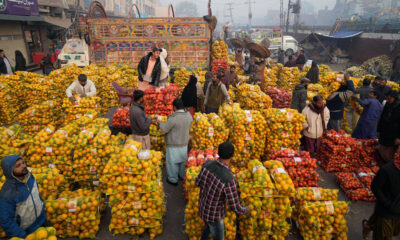
Pakistan’s citrus export crisis deepens amid ongoing Afghanistan trade route closure
Afghanistan, which absorbs around 60% of Pakistan’s citrus exports, has remained closed to trade since mid-October.

Pakistan’s citrus sector is facing a worsening export crisis as the closure of the Afghanistan crossing continues to block access to its largest market.
Despite the start of the 2025 citrus season, exports are set to fall further from an already steep decline — dropping from $211 million in fiscal year 2021 to just $92.5 million in fiscal year 2025.
Afghanistan, which absorbs around 60% of Pakistan’s citrus exports, has remained closed to trade since mid-October.
This year alone, Pakistan shipped 153,683 tonnes of citrus to Afghanistan, while exports through the Afghan transit route also supply Russia, Kazakhstan, and Uzbekistan. With that corridor shut, exporters warn that the bulk of Pakistan’s kinnow harvest could go unsold.
A temporary policy exemption now allows citrus shipments to transit through Iran, but exporters say volumes to Central Asia and Russia cannot compensate for the loss of the Afghan market.
The crisis, however, goes deeper than the current crossing closure situation. Pakistan’s citrus industry continues to suffer from long-standing structural challenges — including reliance on the outdated, seeded kinnow variety that makes up over 90% of exports.
Climate change, rising pest pressure, shrinking yields, and declining A-grade fruit quality have all eroded competitiveness. Yields have fallen to about six tonnes per acre, and nearly half of kinnow processing units have closed.
Global competitors such as Egypt, China, Spain, Morocco, and Brazil have overtaken Pakistan by introducing new seedless, high-yielding varieties with longer harvest windows. As profits shrink, farmers are abandoning citrus orchards: the cultivated area has dropped 16% in the past five years.
Experts say Pakistan must urgently invest in developing seedless, climate-resilient varieties and strengthen existing research centres. At the same time, trade officials need to diversify export destinations by securing new sanitary and phytosanitary agreements to reduce dependence on a single market.
Without structural reforms and diversified access, Pakistan’s signature fruit risks losing its place in global markets — and its farmers risk losing their livelihoods.

The Ministry of Finance of Afghanistan and UAE-based DP World have signed an investment term sheet to modernize key commercial land ports, marking a significant step in enhancing the country’s trade infrastructure.
Abdullah Azzam, Head of the Economic Affairs Office at the Office of the Prime Minister, stated that the agreement opens the door for foreign investment and new contracts.
He said that that under this agreement, Afghanistan’s ports will be modernized and equipped with cutting-edge technology.
The agreement outlines the development of cargo handling facilities, port management systems, and operations using advanced equipment in line with international standards. Hairatan Port will be upgraded in the first phase, followed by Torkham Port in the second phase, with subsequent expansion to logistics corridors, economic zones, and other national projects.
DP World officials emphasized that the modernization of these ports will not only increase trade but also create new employment opportunities.
They highlighted Afghanistan’s strategic location as a vital link between Central and South Asia and pledged continued efforts to support the country’s economic growth.
Economic analysts believe the investment will boost trade efficiency, reduce costs, and enhance the country’s transit capacity. Modernizing the ports is also expected to attract further foreign investment and strengthen Afghanistan’s overall economy.


US claims 2,000 evacuated Afghans have links to terrorist groups

Iran to host regional meeting on Afghanistan next week

EU pledges €25 million to support WFP programs in Afghanistan

Putin arrives in Ashgabat to hold series of meetings

Dual-citizen Afghans don’t need a visa to enter the country: Foreign Ministry

Pakistan will lose big market in both Afghanistan, Central Asia: Sarhadi

Afghanistan records $580m in fruit exports in six months

Tashkent: Central Asian leaders say regional stability hinges on Afghanistan

Afghan Abdalyan beat Sri Lanka A by 3 wickets in Rising Stars Asia Cup opener

Afghanistan U19 cricket team defeats India A U19

Saar: Calls to avoid using Afghan soil against nations

Tahawol: UNSC meeting outcome regarding Afghanistan discussed

Saar: Ongoing Kabul–Islamabad tensions discussed

Tahawol: Pakistan’s warning on Afghanistan reiterated

Saar: UN’s meeting on Afghanistan reviewed
-

 Business5 days ago
Afghanistan signs agreement with DP World to bolster ports infrastructure
-

 Latest News5 days ago
Syria’s President challenges West’s counter-terrorism claims in Afghanistan and Iraq
-

 Sport3 days ago
ILT20: Desert Vipers edge Gulf Giants in historic super over thriller
-

 4 days ago
Iran seeks broad expansion of cooperation with Afghanistan
-
 Business4 days ago
Pakistan’s citrus export crisis deepens amid ongoing Afghanistan trade route closure
-

 Latest News4 days ago
Doha Forum: Dialogue between Afghanistan and Pakistan key to regional connectivity
-

 Regional3 days ago
Six Pakistani soldiers killed in TTP attack in Kurram District
-

 Business3 days ago
Trade bodies warn almost 11,000 Afghan transit containers stuck at Karachi port