
Business
New bus service for Kabul city launched

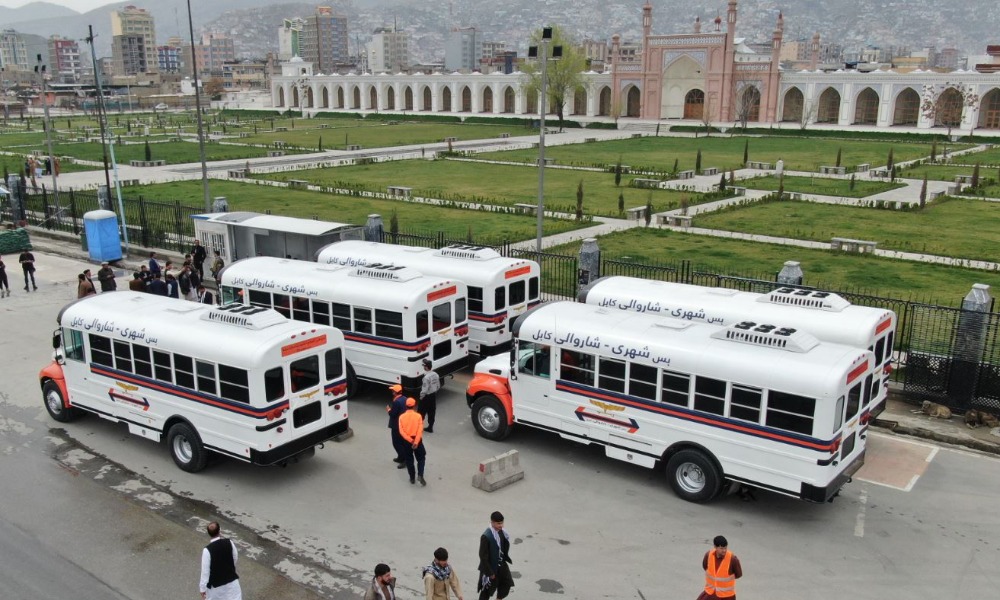
Kabul’s public bus service took to the road officially on Thursday when the new bus service was inaugurated by the mayor Daoud Sultanzoy.
The bus service was launched for the Kart-e-Naw routes and Ahmad Shah Baba Mina in eastern parts of Kabul.
“Protecting and caring for these resources, which is one of the national assets; the service is for all citizens,” Sultanzoy said.
According to the municipality 200 buses will eventually operate in the city along 16 routes of Kabul. However only five buses are initially in service.
The mayor of Kabul said that these buses are from an American company called A&C Bus Corporation, which will be rented according to a standard system and each bus has the capacity to carry 30 passengers at a time.
These buses provide services through five terminals and 264 bus stops on different routes. This will help create urban order and convenience for city residents, municipal officials said.
In 2019 the Kabul Municipality built 264 bus stops at a cost of millions of Afghanis in an effort to reduce traffic volumes in the capital.
At the time Narges Mohmand, the Spokesperson of Kabul Municipality told Ariana News that they were waiting for the Ministry of Transport to allow buses to operate in the City.
“We have built bus stations to resolve the problems of Kabul residents and we hope they are going to be used effectively,”
At the time an official from the Ministry of Transport said that around 1,500 buses will start their operations in Kabul City in the near future.


Business
Uzbek exploration company launches energy survey project in Afghanistan
The new seismic survey marks the second major energy exploration initiative by Uzbek companies in Afghanistan in recent years.
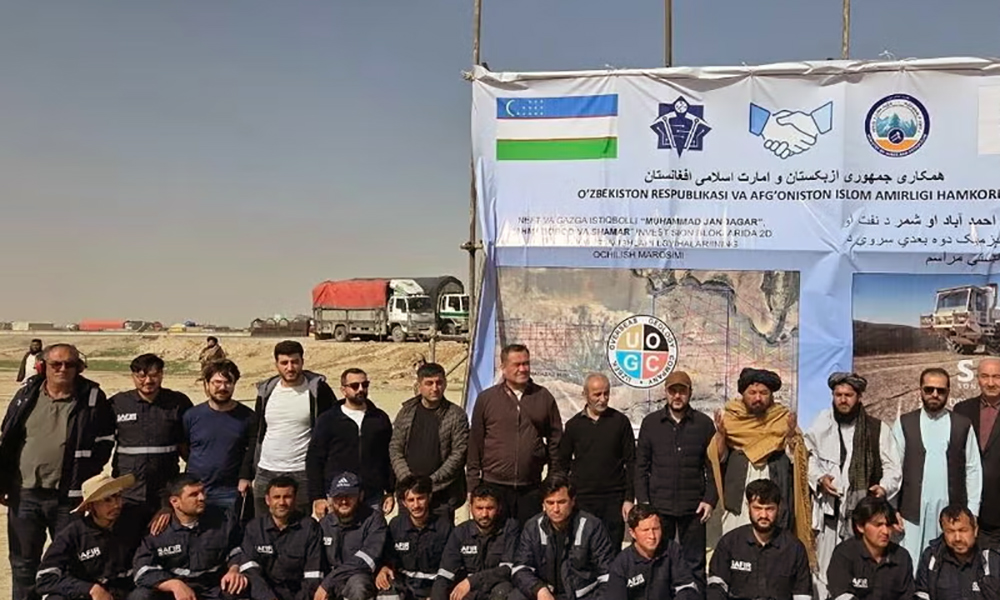
An exploration company backed by the government of Uzbekistan has begun collecting seismic data in northern Afghanistan as part of a new energy exploration project agreed between the two neighboring countries last year.
According to Uzbekistan’s Ministry of Mining Industry and Geology of Uzbekistan, the Uzbek Overseas Geology Company (UOGC) has started work to gather 2D seismic data across three exploration blocks in northern Afghanistan: Ahmadabad, Muhammad-Jandagar, and Shamar.
The three blocks cover more than 7,600 square kilometers near Afghanistan’s border with Tajikistan. Initial seismic surveys are expected to focus on about 600 square kilometers of the area.
Officials say the project will be fully financed by UOGC and aims to identify potential hydrocarbon reserves, while also assessing the area for other mineral resources, including iron and copper deposits.
The exploration work follows a cooperation agreement signed in 2025 between Uzbekistan’s mining ministry and Afghanistan’s Ministry of Mines and Petroleum of Afghanistan. Under the deal, the Uzbek side has two years of exclusive exploration rights in the blocks.
If commercially viable resources are discovered, Afghan authorities have agreed to give priority development rights to an operating company formed by the Uzbek partners.
The Uzbek Overseas Geology Company was established in early 2025 by two state-linked Uzbek exploration firms, Uzbekgeologorazvedka and Uzbekgeofizika, the latter being affiliated with Uzbekistan’s state energy producer Uzbekneftegaz.
Growing Uzbek energy involvement in Afghanistan
The new seismic survey marks the second major energy exploration initiative by Uzbek companies in Afghanistan in recent years.
In 2024, authorities in Tashkent announced that Eriell KAM—a joint venture between Uzbekistan’s oilfield service provider Eriell Group and Afghanistan’s Kam Group—had taken over exploration plans for the Totimaidan gas block.
The Totimaidan block is located in Faryab Province near the border with Turkmenistan and spans roughly 7,000 square kilometers. The area is believed to contain the undeveloped Juma and Bashikurd sour gas fields, according to energy consultancy Wood Mackenzie.
Although Afghanistan originally auctioned the block in 2014, a production-sharing contract was never finalized.
Regional cooperation and economic integration
Analysts say Uzbekistan’s growing involvement in Afghanistan’s resource sector reflects both geographic proximity and broader regional economic interests.
Tashkent-based investment consultant Farkhodjon Israilov said exploration projects in Afghanistan are not only about energy resources but also about encouraging infrastructure development and economic activity in the country.
According to Israilov, greater regional investment and economic integration could contribute to long-term stability and mutually beneficial growth for Afghanistan and its neighbors.
Uzbek officials say the seismic surveys represent an important step toward identifying Afghanistan’s untapped natural resources while expanding energy cooperation between the two countries.
Business
UNHCR launches largest carpet-weaving centre in western Afghanistan
Over the past year, some 2 million Afghans have returned from Iran, highlighting the urgent need for economic opportunities, especially for women, said UNHCR.
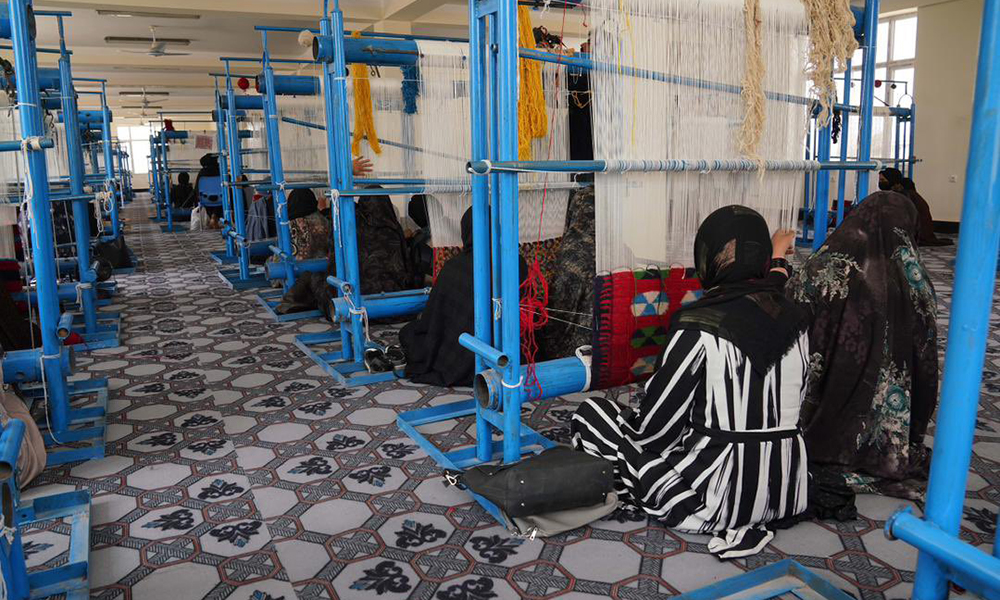
The UNHCR, in collaboration with the Islamic Development Bank, on Wednesday inaugurated the largest carpet-weaving center in western Afghanistan’s Herat province.
The initiative, attended by UN Deputy Special Representative Indrika Ratwatte and local community leaders, will support 400 returnees, with more than three-quarters of them women, providing livelihoods and skills training.
The centre aims to empower returnees and host communities, helping them rebuild sustainable livelihoods, a priority need identified by Afghans returning from Iran.
Over the past year, some 2 million Afghans have returned from Iran, highlighting the urgent need for economic opportunities, especially for women, said UNHCR.

Uzbekistan’s President Shavkat Mirziyoyev has officially ratified the Preferential Trade Agreement (PTA) between Uzbekistan and Afghanistan.
The agreement was first signed on 10 June 2025 during the Tashkent International Investment Forum by Uzbekistan’s Minister of Investment and Foreign Trade Laziz Kudratov and Afghanistan’s Minister Nuriddin Azizi, Uzbekistan Daily reported.
The PTA eliminates tariffs on 14 categories of goods, simplifies the issuance of phytosanitary permits for Afghan agricultural products, and introduces additional support measures for Uzbek exporters.
In February 2026, Uzbekistan’s Deputy Prime Minister Jamshid Khodjaev held online talks with Azizi to accelerate the agreement’s entry into force, advance investment projects, and promote industrial cooperation. A new joint business forum is planned to take place in Kabul after the conclusion of Ramadan.
The agreement is expected to strengthen bilateral trade, boost economic ties, and create new opportunities for Afghan businesses and exporters.


IEA, Chinese FMs hold phone talks, discuss bilateral relations

Seven police personnel killed in IED blast in northwest Pakistan

US eases sanctions on Russian oil to ease energy prices inflated by Iran war

UNAMA: Four civilians killed, 14 injured in Pakistani airstrike in Kabul

Afghan airstrikes target Pakistani military sites in retaliation for air attacks

Pakistani military jet downed in Afghanistan’s Jalalabad, pilot captured alive

Afghan Air Force conducts airstrikes in Islamabad, other cities

IEA releases three Pakistani soldiers to mark Ramadan

Afghanistan’s Chief of Armed Forces underscores readiness and equipment for national defense

Afghanistan welcomes investment and technology partnerships with India

Tahawol: Discussion on intensification of attacks in Middle East

Saar: Ongoing US-Israeli strikes on Iran discussed

Tahawol: Regional impacts of Middle East crisis reviewed

Saar: Diplomatic efforts to ease Kabul-Islamabad tensions discussed

Tahawol: Demands to end Afghanistan–Pakistan conflict reviewed
-
 Latest News4 days ago
American billionaire Tom Pritzker describes Afghanistan trip in email to Epstein
-

 Sport2 days ago
Afghanistan’s white-ball series against Sri Lanka postponed
-

 Regional4 days ago
Iran names Khamenei’s hardline son Mojtaba as new supreme leader, oil surges
-
 Latest News3 days ago
Russia, China and UK urge Afghanistan and Pakistan to resolve issues through dialogue
-
 Latest News4 days ago
UN warns of possible surge in Afghan returnees from Iran
-
 Latest News4 days ago
UN Security Council to hold meeting on Afghanistan
-

 Latest News4 days ago
Hegseth reflects on Afghanistan lessons, says Iran war aims to bring enemy ‘to their knees’
-
 Latest News3 days ago
Trump envoy warns Afghanistan could face fate similar to Iran or Venezuela over detained Americans