
Latest News
NEPA and Kabul municipality taken to task over pollution problem

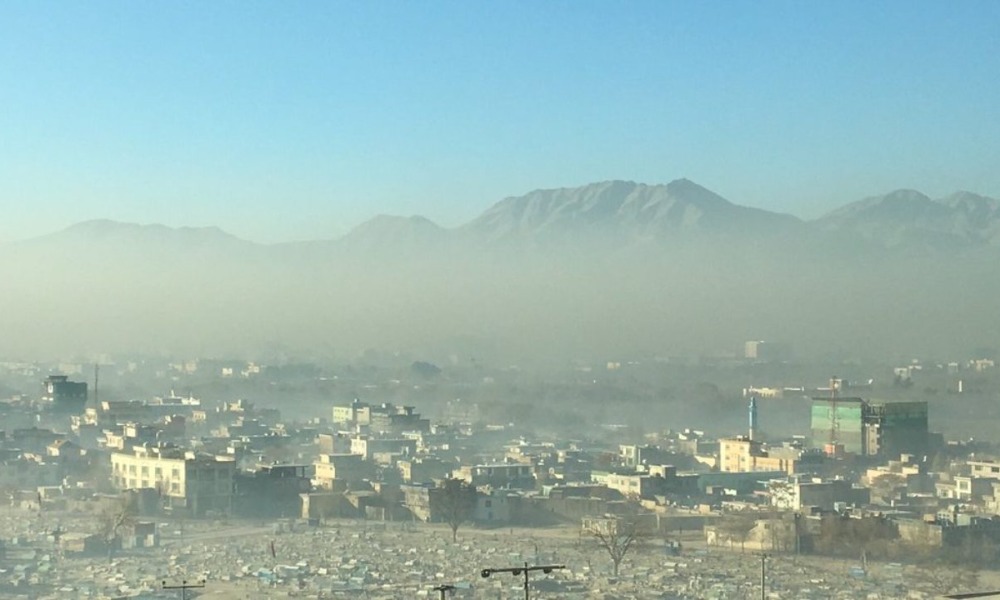
Afghanistan’s Meshrano Jirga (Upper House of Parliament) on Sunday summoned National Environmental Protection Agency (NEPA) officials, and Kabul municipal officials to answer questions over the high levels of pollution in Kabul city among other issues.
According to senators, government is responsible for taking practical steps to reduce the pollution in Kabul. Without control, Kabul residents are exposed to various diseases, senators said.
“The situation has raised concerns. Some hotels and bakeries use low-quality products. Why are you not managing the problems,” said Farahnaz Pamiri, a senator.
Buildings, without proper planning permission were also raised and concerns voiced.
“The buildings that were built without any authorization and the use of low-quality materials has affected the environment badly. Government should stop these problems,” said Mohammad Akbari, another senator.
NEPA, however, acknowledged the pollution problem and said government institutions are implementing recommended measures but very slowly.
“We have a long-term plan. We have identified 52 causes of pollution. The government institutions implement the recommended measures so slowly,” said Ezatullah Siddiqi, deputy head of NEPA.
Kabul’s Mayor Daoud Sultanzoy, meanwhile said that in order to fight pollution, the public needs to cooperate as 30 percent of pollution is caused by members of the public.
“As we investigated, 200 factory buildings out of 600 have filters and 149 others installed filters last year. We monitor buildings seriously. We will ask police for their cooperation if needed,” said Sultanzoy.
Senators said government should also stop the practice of importing low-quality fuel so as to reduce the level of air pollution in Kabul city.



Latest News
Trump envoy warns Afghanistan could face fate similar to Iran or Venezuela over detained Americans
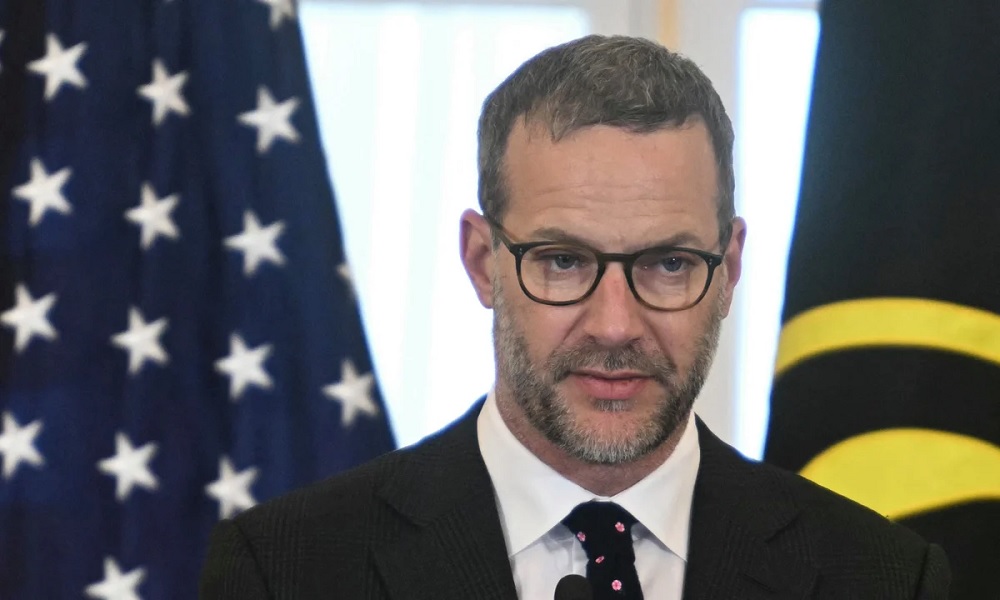
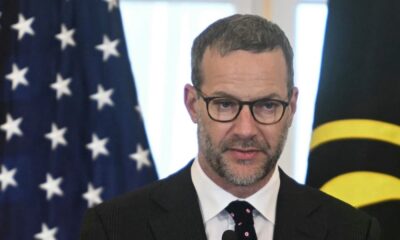
Adam Boehler, the U.S. President’s Special Envoy for Hostage Affairs, has warned that Afghanistan could face consequences similar to those faced by Iran or Venezuela if American citizens detained in the country are not released.
The warning comes after U.S. Secretary of State Marco Rubio designated Afghanistan as a “state sponsor of wrongful detention” on Monday — a step that could lead to restrictions on the use of U.S. passports for travel to Afghanistan.
In a statement, Rubio called on Kabul to release all American citizens believed to be detained in the country, including Mahmood Habibi and Dennis Coyle.
Rubio accused the IEA of continuing to use what he described as “terrorist tactics,” including detaining individuals to extract ransom payments or political concessions. “These despicable tactics need to end,” he said.
According to a report by Reuters citing two informed sources, the United States is also seeking the return of the remains of writer Paul Overby, who was last seen in 2014 near the Durand Line.
The report said that if Afghanistan does not respond to Washington’s demands, the United States could restrict the use of American passports for travel to Afghanistan. Such restrictions are currently applied only to North Korea.
The move comes after the United States also designated Iran as a “state sponsor of wrongful detention” on February 26.
Rubio warned the U.S. could restrict travel to Iran over its detention of U.S. citizens, but has not imposed any restrictions. The U.S. and Israel launched a war against Iran the day after the determination was announced.
The Islamic Emirate has previously denied detaining Mahmood Habibi, the former head of Afghanistan’s Civil Aviation Authority.
It has released some U.S. prisoners following negotiations.
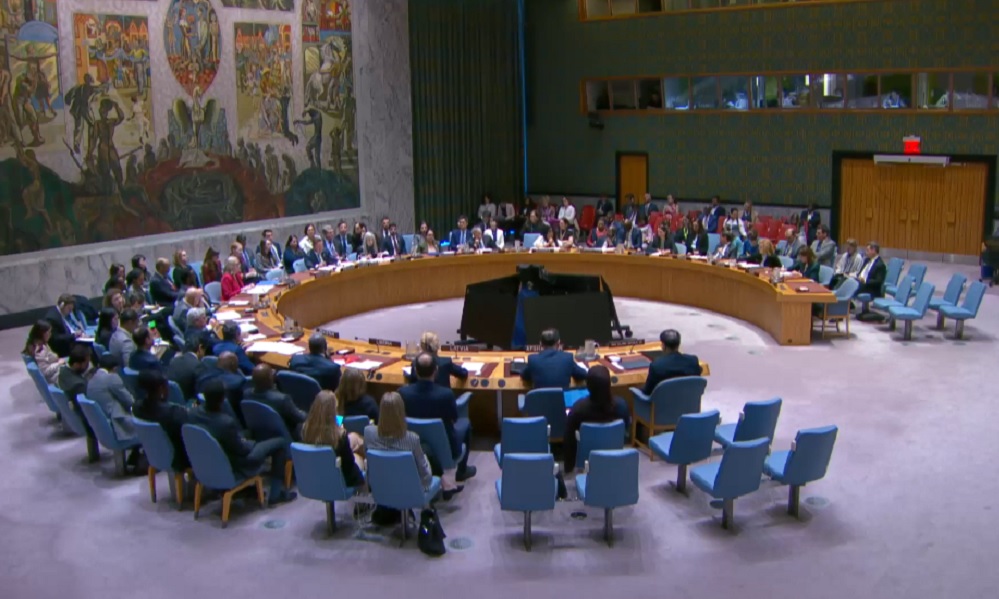
Members of the United Nations Security Council have voiced concern over rising clashes between Afghanistan and Pakistan, calling on both countries to reduce tensions and resolve their disputes through dialogue.
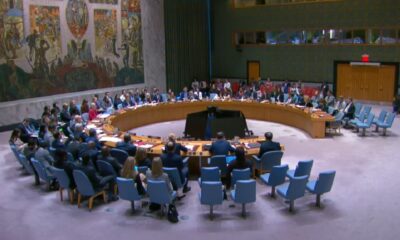
Speaking during a Security Council meeting on Monday, Russia’s ambassador to the United Nations, Vassily Nebenzia, said Moscow was alarmed by the recent escalation in armed confrontations along the disputed Durand Line frontier between Afghanistan and Pakistan.
Nebenzia described both countries as partners of Russia and stressed the need to shift the situation back to diplomatic and political channels. He said Moscow was ready to support efforts aimed at easing tensions if requested by the two sides.
The Russian envoy also expressed hope that Afghanistan and Pakistan would resume constructive cooperation on regional security issues, particularly counterterrorism.
He added that Russia continues to monitor developments inside Afghanistan, including the protection of human rights and fundamental freedoms, emphasizing the importance of ensuring access to education and employment for all Afghans regardless of ethnicity, religion, or gender.
Nebenzia further noted that Moscow is closely observing progress toward the formation of an inclusive political system in Afghanistan that includes participation from all ethnic and political groups.
China’s ambassador to the United Nations, Fu Cong, also expressed concern over the growing violence between the two neighbors. He said the clashes had resulted in significant casualties and called on both sides to exercise restraint.
Fu urged Kabul and Islamabad to quickly move toward a ceasefire and resolve their disputes through dialogue and negotiation. He added that China has been actively using diplomatic channels to help reduce tensions and remains willing to play a constructive role in mediating between the two countries.
The Chinese envoy also raised broader economic issues affecting Afghanistan, stressing that Afghan central bank assets frozen abroad belong to the Afghan people and should be returned. He also called for the lifting of unilateral sanctions imposed on the country.
Meanwhile, the United Kingdom’s Minister of State for Skills, Jacqui Smith, said United Kingdom is deeply concerned about the escalating tensions between Afghanistan and Pakistan.
She called for immediate de-escalation and urged both sides to re-engage in mediated dialogue in order to prevent further instability in an already fragile region.
The statements come amid rising tensions between Afghanistan and Pakistan, which have led to recent clashes along the disputed Durand Line and raised fears of broader regional instability. Diplomatic efforts by international actors are increasingly focused on preventing further escalation between the two neighboring countries.
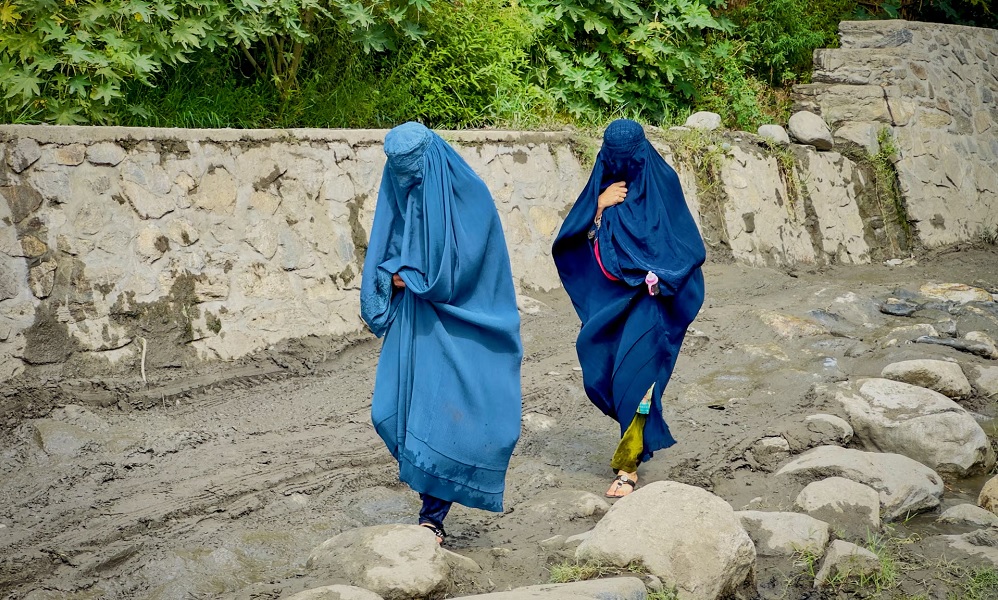
Despite what it called a humanitarian “disaster” in Afghanistan, the U.S. said on Monday international assistance to the country should be evaluated, given IEA “intransigence” and its exclusion of the female population from basic rights.
Speaking to a U.N. Security Council meeting on Afghanistan, the U.S. ambassador to the United Nations, Mike Waltz, noted that the budget for the United Nations Assistance Mission in Afghanistan (UNAMA), the mandate of which is up for renewal next week, is the largest of any special U.N. mission in the world.
“In light of the Taliban’s (IEA) intransigence, we must carefully evaluate the utility of international assistance and engagement in Afghanistan,” Waltz said, even as he highlighted an ongoing “humanitarian disaster” there.
“This council must consider carefully the funds we collectively provide for this mission’s budget, when the mission’s female national staff are not even able to go into the office to work,” he added.
The Islamic Emirate has previously said that its policies on women are based on the Islamic law.
Afghanistan faces one of the world’s most pressing humanitarian crises.
According to the U.N. World Food Programme, more than 17 million Afghans – or one-third of the population – are facing acute food shortages, including 4.7 million facing emergency levels of hunger.
The temporary head of UNAMA, Georgette Gagnon, told the meeting Afghanistan had “urgent” humanitarian needs and the humanitarian crisis there had worsened due to funding cuts. She said humanitarian agencies aimed to assist 17.5 million Afghans in 2026 through an appeal for $1.71 billion, but this was currently only 10% funded.
Gagnon said Afghanistan’s nearly two-week conflict with Pakistan had had “punishing human and economic costs” and the Iran war on its other border was causing prices of basic commodities to rise.
She said some positive developments showed the value of international engagement, including the IEA ban on opium poppy cultivation. She warned that if rights and humanitarian issues were not dealt with, Afghanistan could “once again become a driver of regional and global instability in the form of outmigration, terrorism, narcotics and more.”


Trump envoy warns Afghanistan could face fate similar to Iran or Venezuela over detained Americans

Russia, China and UK urge Afghanistan and Pakistan to resolve issues through dialogue

Iran says oil blockade will continue until attacks end, Trump threatens to hit harder

US says UN aid to Afghanistan needs evaluation

Tahawol: International Reactions to Iran’s Newly Appointed Leader

Pakistani military jet downed in Afghanistan’s Jalalabad, pilot captured alive

Afghan Air Force conducts airstrikes in Islamabad, other cities

IEA releases three Pakistani soldiers to mark Ramadan

Afghanistan’s Chief of Armed Forces underscores readiness and equipment for national defense

Afghanistan welcomes investment and technology partnerships with India
Tahawol: International Reactions to Iran’s Newly Appointed Leader

Saar: UN Security Council Meeting on Afghanistan discussed

Tahawol: Iran’s war with America and Israel discussed

Saar: Key Daesh member killed in Pakistan

Tahawol: Upcoming UNSC meeting on Afghanistan discussed
-

 Latest News3 days ago
Prominent Muslim scholar issues fatwa calling for Afghanistan-Pakistan ceasefire
-

 Business3 days ago
Afghanistan steps in to replace Iran in supplying fruits and vegetables to Russia
-
 Latest News2 days ago
International Women’s Day: Khalilzad urges IEA to allow girls’ education
-

 Sport5 days ago
ACB names squads for white-ball series against Sri Lanka; Ibrahim Zadran appointed T20I captain
-
 Latest News2 days ago
Afghanistan’s Virtue Ministry: Over 3,400 women’s rights complaints addressed in 10 months
-
 Latest News4 days ago
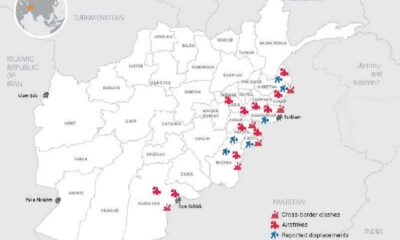
Airstrikes and clashes displace thousands as Afghanistan–Pakistan tensions escalate: UN
-
 Latest News4 days ago
Afghanistan says 327 Pakistani soldiers killed in ‘Radd-ul-Zulm’ operation
-
 Latest News3 days ago
Afghans among those injured in Iranian attacks on UAE