
World
Myanmar quake death toll hits 1,700 as aid scramble intensifies
India, China and Thailand are among Myanmar’s neighbours that have sent relief materials and teams, along with aid and personnel from Malaysia, Singapore and Russia.

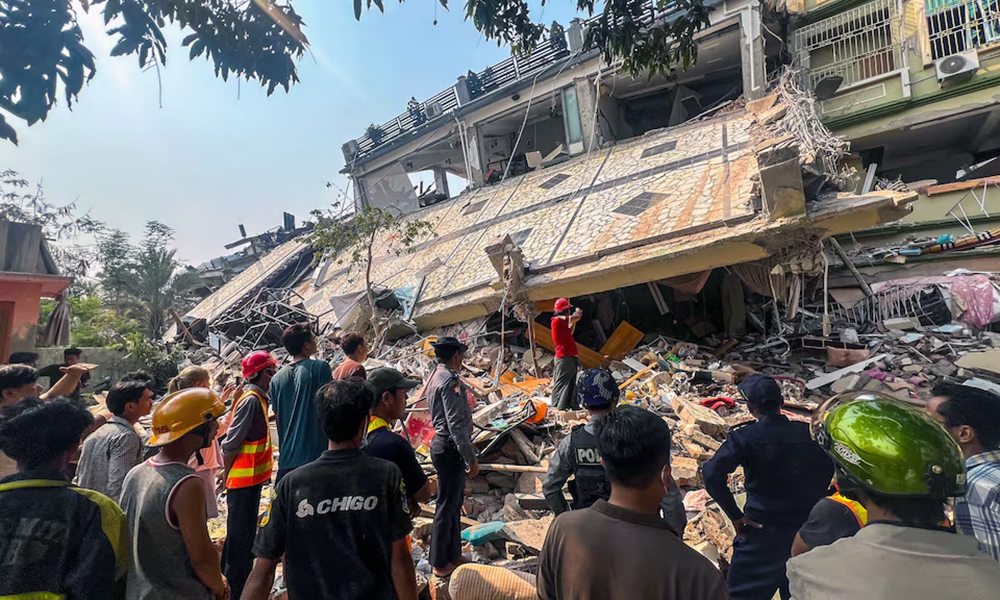
The toll from Myanmar’s earthquake continued to rise on Sunday, as foreign rescue teams and aid rushed into the impoverished country, where hospitals were overwhelmed and some communities scrambled to mount rescue efforts with limited resources.
The 7.7-magnitude quake, one of Myanmar’s strongest in a century, jolted the war-torn Southeast Asian nation on Friday, leaving around 1,700 people dead, 3,400 injured and over 300 missing as of Sunday, the military government said.
The junta chief, Senior General Min Aung Hlaing, warned that the number of fatalities could go up and his administration faced a challenging situation, state media reported, three days after he made a rare call for international assistance.
India, China and Thailand are among Myanmar’s neighbours that have sent relief materials and teams, along with aid and personnel from Malaysia, Singapore and Russia.
“The destruction has been extensive, and humanitarian needs are growing by the hour,” the International Federation of Red Cross and Red Crescent Societies said in a statement.
“With temperatures rising and the monsoon season approaching in just weeks, there is an urgent need to stabilise affected communities before secondary crises emerge.”
The devastation has piled more misery on Myanmar, already in chaos from a civil war that grew out of a nationwide uprising after a 2021 military coup ousted the elected government of Nobel Peace Prize laureate Aung San Suu Kyi.
Critical infrastructure – including bridges, highways, airports and railways – across the country of 55 million lie damaged, slowing humanitarian efforts while the conflict that has battered the economy, displaced over 3.5 million people and debilitated the health system rages on.
In some areas near the epicentre, residents told Reuters that government assistance was scarce, leaving people to fend for themselves.
“It is necessary to restore the transportation routes as soon as possible,” Min Aung Hlaing told officials on Saturday, according to state media. “It is necessary to fix the railways and also reopen the airports so that rescue operations would be more effective.”
The U.S. Geological Service’s predictive modelling estimated Myanmar’s death toll could top 10,000 and losses could exceed the country’s annual economic output.
Hospitals in parts of central and northwestern Myanmar, including the second-biggest city, Mandalay, and the capital Naypyitaw, were struggling to cope with an influx of injured people, the U.N. Office for the Coordination of Humanitarian Affairs said late on Saturday.
The quake also shook parts of neighbouring Thailand, bringing down an under-construction skyscraper and killing 18 people across the capital, according to Thai authorities.
At least 76 people remained trapped under the debris of the collapsed building, where rescue operations continued for a third day, using drones and sniffer dogs to hunt for survivors.
The opposition National Unity Government, which includes remnants of the previous administration, said anti-junta militias under its command would pause all offensive military actions for two weeks from Sunday.
The devastation in some areas of upper Myanmar, such as the town of Sagaing near the quake’s epicentre, was extensive, said resident Han Zin.
“What we are seeing here is widespread destruction – many buildings have collapsed into the ground,” he said by phone, adding that much of the town had been without electricity since the disaster hit and drinking water was running out.
“We have received no aid, and there are no rescue workers in sight.”
Sections of a major bridge connecting Sagaing to nearby Mandalay collapsed, satellite imagery showed, with spans of the colonial-era structure submerged in the Irrawaddy river.
“With bridges destroyed, even aid from Mandalay is struggling to get through,” Sagaing Federal Unit Hluttaw, a political association linked to the NUG, said on Facebook.
“Food and medicine are unavailable, and the rising number of casualties is overwhelming the small local hospital, which lacks the capacity to treat all the patients.”
In Mandalay, scores of people were feared trapped under collapsed buildings and most could not be reached or pulled out without heavy machinery, two humanitarian workers and two residents said.
“My teams in Mandalay are using work gloves, ropes and basic kits to dig and retrieve people,” said one of the humanitarian workers. Reuters is not naming them because of security concerns.
“There are countless trapped and still missing. The death toll is impossible to count at the moment due to the number trapped and unidentified, if alive.”
A video filmed by a Mandalay resident on Saturday and shared with Reuters showed patients in beds, some attached to drips, on the grounds outside a 500-bed orthopaedic hospital in the city.
Public and private health care facilities in Mandalay, including the Mandalay General Hospital and parts of Mandalay Medical University, were damaged by the quake, according to the World Health Organization.
Russian and Indian rescue workers were heading to Mandalay, and multiple teams of Chinese, Thai and Singapore rescue personnel have also arrived in the country.
In Bangkok, at the site of the collapsed 33-storey building, rescuers surrounded by shattered concrete piles and twisted metal continued their efforts to rescue dozens of workers trapped under the rubble.
Teerasak Thongmo, a Thai police commander, said his team of policemen and rescue dogs were racing against time to locate survivors, struggling to move around metal debris and sharp edges on an unstable structure.
“Right now, our team is trying to find anyone that might still be alive. Within the first 72 hours, we have to try and save those still alive,” he said.
Near the rescue operations, relatives and friends of the missing and trapped construction workers waited for news. Some broke down.
“Ploy, Ploy, Ploy, my daughter, I’m here for you now!” one woman wailed, as she was hugged by two others. “Ploy, can you hear me calling out for you?”





World
Trump administration recalls dozens of diplomats in ‘America First’ push
The State Department declined to name those affected, with a senior official calling the recalls a routine step for new administrations.
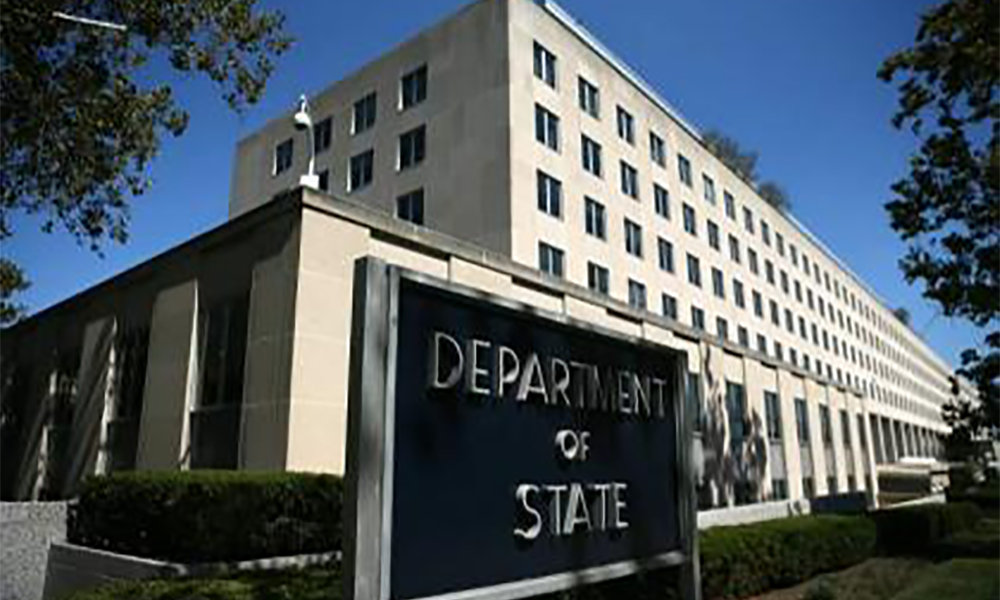
The Trump administration is recalling nearly 30 U.S. ambassadors and senior career diplomats to ensure embassies align with President Donald Trump’s “America First” agenda, a move critics say could weaken U.S. credibility abroad.
The State Department declined to name those affected, with a senior official calling the recalls a routine step for new administrations. The official said ambassadors are the president’s representatives and must advance his policy priorities.
However, officials familiar with the matter said the recalls largely affect career Foreign Service officers posted to smaller countries, where ambassadors are traditionally non-partisan. Those ordered back to Washington were encouraged to seek other roles within the State Department.
The American Foreign Service Association said some diplomats were notified by phone without explanation, calling the process “highly irregular” and warning that such actions risk harming morale and U.S. effectiveness overseas. The State Department did not respond to the criticism.
The move, first reported by Politico, comes as Trump seeks to place loyalists in senior roles during his second term, after facing resistance from the foreign policy establishment in his first.
Democrats have criticised the decision, noting that around 80 ambassadorial posts remain vacant. Senator Jeanne Shaheen said the recalls undermine U.S. leadership and benefit rivals such as China and Russia.
World
Trump plans expanded immigration crackdown in 2026 despite backlash
The plans come amid rising public unease over aggressive tactics, including neighborhood raids and the detention of some U.S. citizens.

U.S. President Donald Trump is preparing to significantly expand his immigration crackdown in 2026, backed by billions of dollars in new funding, even as political opposition grows ahead of next year’s midterm elections.
ICE and U.S. Customs and Border Protection are set to receive an additional $170 billion through September 2029, enabling the administration to hire thousands of new agents, expand detention facilities and increase enforcement actions, including more workplace raids. While immigration agents have already been surged into major U.S. cities, many economically critical workplaces were largely spared in 2025.
The plans come amid rising public unease over aggressive tactics, including neighborhood raids and the detention of some U.S. citizens. Trump’s approval rating on immigration has fallen from 50% in March to 41% in mid-December, according to recent polling.
The administration has also revoked temporary legal status for hundreds of thousands of Haitian, Venezuelan and Afghan migrants, expanding the pool of people eligible for deportation.
About 622,000 immigrants have been deported since Trump took office in January, short of his goal of 1 million deportations per year.
White House border czar Tom Homan said arrests will increase sharply next year as staffing and detention capacity grow. Critics warn that expanded workplace enforcement could raise labor costs and deepen political and economic backlash ahead of the elections.
World
US, Russian officials meet in Florida for more Ukraine talks
Kyiv says it will not cede land that Moscow’s forces have failed to capture in nearly four years of war.
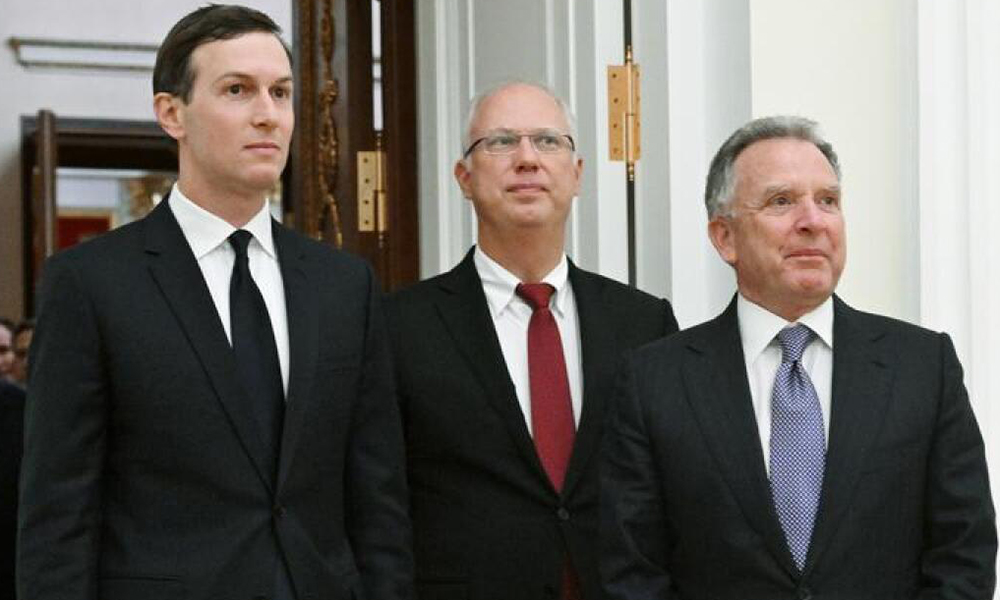
U.S. negotiators met Russian officials in Florida on Saturday for the latest talks aimed at ending Russia’s war in Ukraine, as President Donald Trump’s administration tries to coax an agreement out of both sides to end the conflict, Reuters reported.
The Miami meeting followed U.S. talks on Friday with Ukrainian and European officials, the latest discussions of a peace plan that has sparked some hope of a resolution to the conflict that began when Russia launched its full-scale invasion in February 2022.
Russian President Vladimir Putin’s special envoy Kirill Dmitriev told reporters after meeting U.S. special envoy Steve Witkoff and Trump’s son-in-law Jared Kushner that the talks were constructive and would continue on Sunday. A White House official said the talks had concluded for the day.
“The discussions are proceeding constructively. They began earlier and will continue today, and will also continue tomorrow,” Dmitriev said.
Marco Rubio, Trump’s top diplomat and national security advisor, had said he might also join the talks.
U.S., Ukrainian and European officials earlier this week reported progress on security guarantees for Kyiv as part of the talks to end the war, but it remains unclear if those terms will be acceptable to Moscow.
A Russian source told Reuters that any meeting between Dmitriev and the Ukrainian negotiators had been ruled out.
In Kyiv, Ukrainian President Volodymyr Zelenskiy said on Saturday that Ukraine would back a U.S. proposal for three-sided talks with the United States and Russia if it facilitated more exchanges of prisoners and paved the way for meetings of national leaders.
“America is now proposing a trilateral meeting with national security advisers — America Ukraine, Russia,” Zelenskiy told local journalists in Kyiv.
U.S. intelligence reports continue to warn that Putin intends to capture all of Ukraine, sources familiar with the intelligence said, contradicting some U.S. officials’ assertions that Moscow is ready for peace.
Putin offered no compromise during his annual press conference in Moscow, insisting that Russia’s terms for ending the war had not changed since June 2024, when he demanded Ukraine abandon its ambition to join NATO and withdraw entirely from four Ukrainian regions Russia claims as its own territory, Reuters reported.
Kyiv says it will not cede land that Moscow’s forces have failed to capture in nearly four years of war.
Ukraine’s top negotiator Rustem Umerov said U.S. and European teams on Friday held talks and agreed to pursue their joint efforts.
“We agreed with our American partners on further steps and on continuing our joint work in the near future,” Umerov wrote on Telegram of the discussions in the United States, adding that he had informed Zelenskiy of the outcome of the talks.
The White House did not immediately respond to a request for comment.
Rubio told reporters on Friday that progress has been made in discussions to end the war but there is still a way to go.
“The role we’re trying to play is a role of figuring out whether there’s any overlap here that they can agree to, and that’s what we’ve invested a lot of time and energy and continue to do so. That may not be possible. I hope it is. I hope it can get done this month before the end of the year.”


Power project signed to electrify 47,000 homes in Jawzjan

Ariana News to broadcast key AFC Champions League Two clash

Pakistani cleric condemns lifetime immunity for Army Chief as un-Islamic

Fazal Ur Rehman says Pakistan’s ‘attacks’ on Afghanistan are unjustifiable

Trump administration recalls dozens of diplomats in ‘America First’ push

Afghanistan economy under pressure as Pakistan shocks reshape trade flows

Gaza death toll tops 70,000, health ministry says

Iran rerouting more oil to China through Indonesia to dodge US sanctions

Islamic Emirate declines to attend Tehran meeting on Afghanistan

Cotton Industry in Crisis: Balkh farmers call for urgent action on exports

Tahawol: Return of 6.8 million Afghan refugees to IEA rule

Saar: Pakistan army chief’s allegations against Afghanistan

Tahawol: CSTO’s security concerns over Afghanistan

Saar: UNAMA’s activities in Afghanistan reviewed

Tahawol: Iran’s pledges to facilitate trade with Afghanistan discussed
-

 Latest News2 days ago
Afghanistan signs 30-year deal for marble mining in Daikundi
-
 Latest News4 days ago
Afghan border forces prevent illegal entry of hundreds into Iran
-
 Latest News3 days ago
Pakistan summons Afghan diplomat over deadly attack in North Waziristan
-

 Latest News3 days ago
Afghan health minister calls for medical cooperation between Kabul and New Delhi
-
 Latest News4 days ago
Japan allocates nearly $20 million in humanitarian aid for Afghanistan
-
 Latest News3 days ago
Karzai urges reopening of girls’ schools and universities for Afghanistan’s bright future
-
 Latest News2 days ago
Bush Institute criticizes Trump administration’s Afghan immigration freeze
-

 Health4 days ago
India issues over 200 medical visas to Afghans in last four months