
Latest News
Miller confirms withdrawal process in Afghanistan is underway

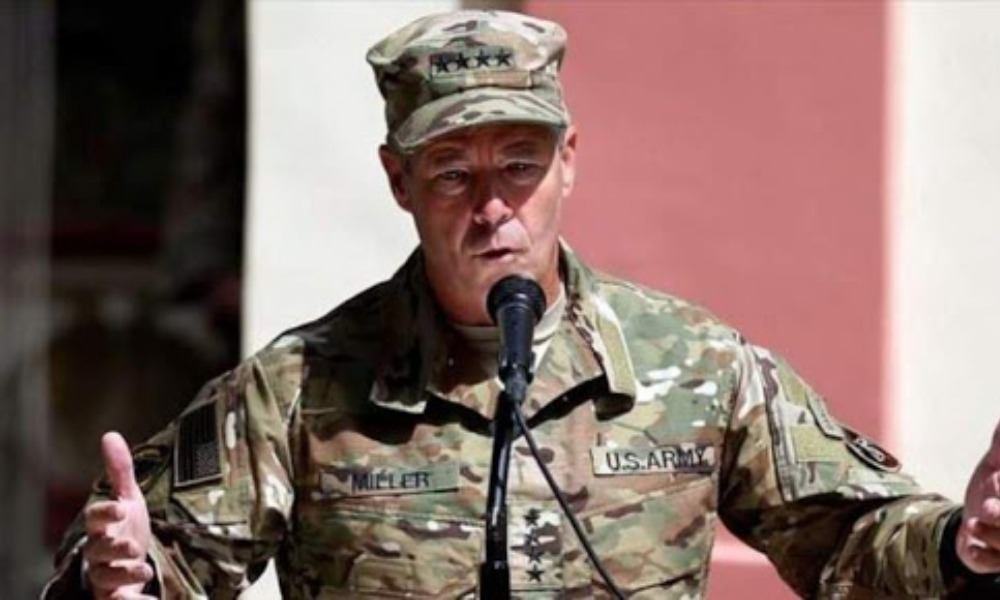
US-Forces commander in Afghanistan General Austin Scott Miller said Sunday the evacuation of some bases has already started in Afghanistan.
“We will turn over the bases primarily to the Ministry of Defense and other Afghan forces,” Miller told reporters in a press conference in Kabul on Sunday, adding that: “The notification day will be the first of May but at the same time as we start taking local actions, we have already begun that”.
The US is expected to hand over three military bases and one airport to the Afghan forces in the next two weeks as part of the US plan for the full troop withdrawal from Afghanistan by September 11, sources said last week.
According to a security source, the bases concerned are the Kandahar airport, Camp Shorabak (formerly Camp Bastion) in Helmand, Camp Eggers in Kabul, and the COP (Dash Towp) in Chak district of Maidan Wardak.
Miller meanwhile said that if Afghanistan reached a peace agreement, we would still to leave Afghanistan.
Meanwhile, CIA Director William Burns reportedly made a surprise visit to Kabul this week to discuss the withdrawal process with Afghan officials.
The Associated Press reported Saturday that two credible sources had confirmed the visit. In Washington, the CIA declined to comment when asked by AP about the director’s schedule and the agency’s role in Afghanistan.
On Taliban relation with Al-Qaeda Miller said that: “Taliban still have link to al-Qaeda.”
He also expressed concern about the escalation of violence by the Taliban in Afghanistan.
“Violence from the Taliban is still high and this is having a negative impacts on the peace process, and if the violence escalates after the withdrawal, it will be dangerous for the whole region,” Miller said.
Miller says the only reasonable way forward is a political path to peace, otherwise “the violence is senseless,” he says.
The Taliban have intensified clashes across the country as the foreign troops are getting ready to withdraw from Afghanistan.
The Defense Ministry, however, claimed that the group has been defeated on the battlefield.
“We have the capacity to support Afghan forces remotely,” Miller said.
His comments comes after the head of U.S. forces in the Middle East said on Thursday that he was concerned about the ability of the Afghan security forces to hold territory after the withdrawal of all foreign troops from the country in the coming months.
President Joe Biden announced last week that the United States will withdraw its remaining 2,500 troops from Afghanistan by Sept. 11, the 20th anniversary of the al Qaeda attacks that triggered America’s longest war.




Latest News
Khalilzad: Afghanistan ready to attract major investment
Describing the agreement as a “positive and promising development,” Khalilzad said Afghans have endured decades of war and now face substantial economic needs.
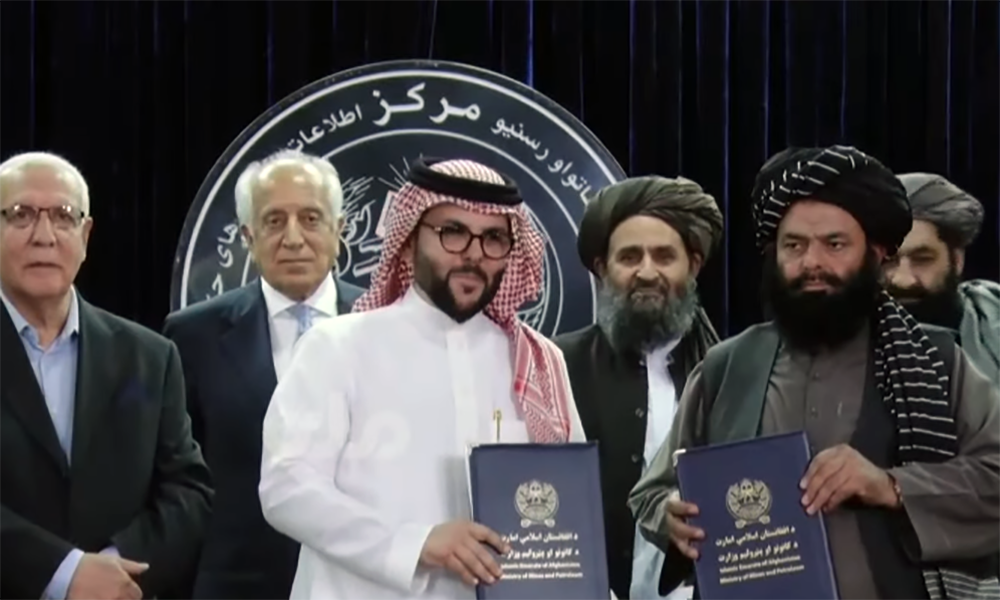
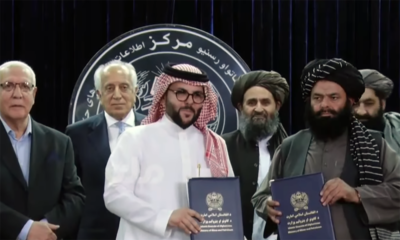
Former U.S. Special Representative for Afghanistan Zalmay Khalilzad has said Afghanistan is ready to attract major international investment, describing a newly signed agreement with a Saudi Arabian oil and gas company as a positive signal for the country’s economy.
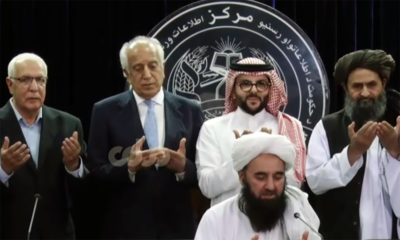
Speaking at a contract-signing ceremony between Afghanistan’s Ministry of Mines and the Saudi company in Kabul, Khalilzad said the agreement demonstrates that Afghanistan is increasingly ready for business and large-scale investment.
He said Afghanistan has long been viewed as a potential land bridge linking resource-rich Central Asia with the large markets and growing demand of South Asia.
Khalilzad also said Afghanistan itself has significant natural resources that could supply regional and international markets, potentially creating new opportunities for economic growth.
Describing the agreement as a “positive and promising development,” Khalilzad said Afghans have endured decades of war and now face substantial economic needs.
He congratulated both sides on the agreement and said he was pleased to witness what he described as an important development for Afghanistan’s investment prospects.
Latest News
UNAMA urges increased and timely humanitarian aid for Afghanistan
Abdul Wase, meanwhile, praised UNAMA’s activities and said the Islamic Emirate would continue cooperating with the UN mission.
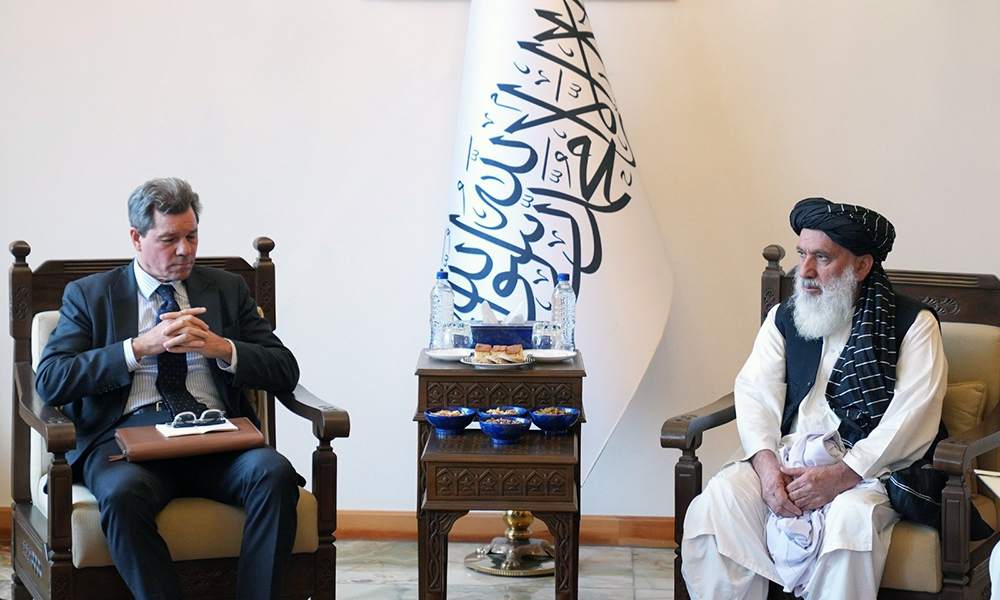
The United Nations Assistance Mission in Afghanistan (UNAMA) has called for increased and timely humanitarian assistance to Afghanistan, with priority given to vulnerable Afghans and people affected by natural disasters.
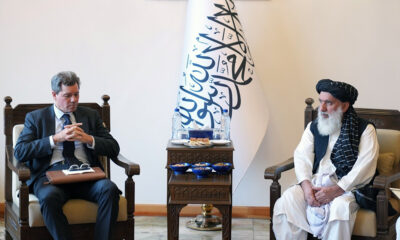
UNAMA Political Affairs Chief Scott Smith made the remarks during a meeting with Abdul Wase, head of the General Office of Administrative Affairs of the Office of the Prime Minister.
Smith said coordination and cooperation between the Islamic Emirate and UNAMA had improved in recent years, describing the continued extension of UNAMA’s mandate in Afghanistan as a positive indication of ongoing cooperation.
He also thanked the Islamic Emirate for facilitating the transfer of 1,000 containers of food and medicine into Afghanistan through the Torkham crossing. Smith said the supplies could have been lost had they not been transported into the country in time.
According to Smith, UNAMA is working to strengthen Afghanistan’s engagement with the international community. He stressed the importance of maintaining political stability and continuing joint efforts to support the country’s economic development.
Smith also proposed establishing a joint mechanism between the Islamic Emirate and the United Nations to improve communication over Afghanistan’s concerns and requests and help resolve challenges through greater coordination.
Abdul Wase, meanwhile, praised UNAMA’s activities and said the Islamic Emirate would continue cooperating with the UN mission.
He called on UN agencies to increase assistance to vulnerable Afghans and people affected by natural disasters, urging them to give priority to humanitarian needs.
Abdul Wase also asked UNAMA to better reflect Afghanistan’s current situation, particularly developments related to security, stability and economic opportunities in the country.
Latest News
UN urges IEA to review restrictions on Afghan women and girls
According to UN spokesperson Stéphane Dujarric, September 7 marks one year since Afghan women were barred from entering UN facilities nationwide.
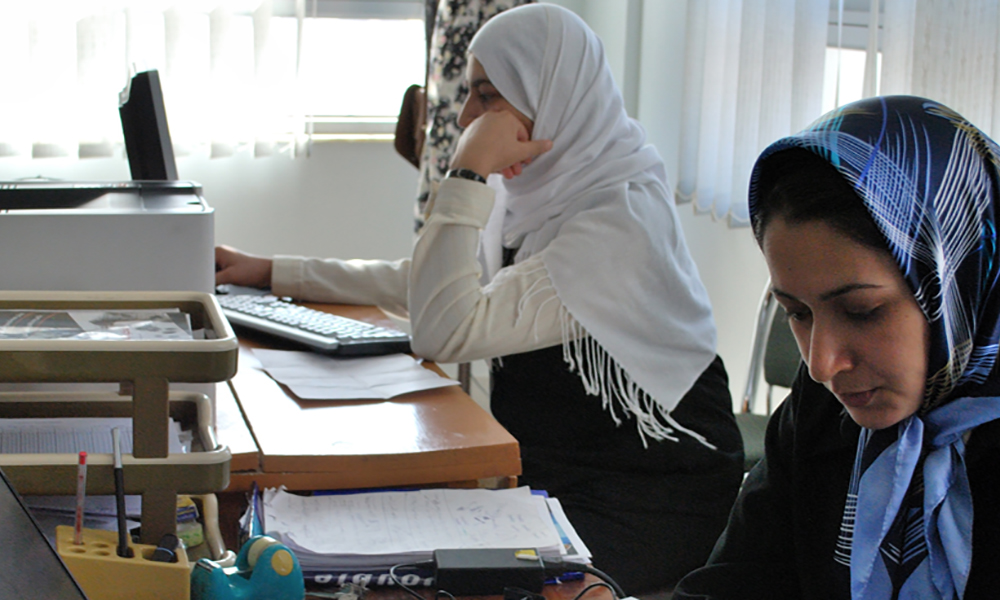
The United Nations Secretary-General has urged the Islamic Emirate to review and remove restrictions imposed on women and girls in Afghanistan, calling for their full, equal and meaningful participation in all areas of life.
UN Secretary-General António Guterres also called for the immediate lifting of restrictions on Afghan women working for the United Nations and urged authorities to ensure their safe and unhindered access to UN facilities across the country.
According to UN spokesperson Stéphane Dujarric, September 7 marks one year since Afghan women were barred from entering UN facilities nationwide.
Guterres said unhindered access to workplaces for UN staff and the delivery of assistance to vulnerable people, particularly women and girls, are essential.
He added that enabling women to deliver humanitarian assistance and essential services to other women and girls is necessary for an effective and principled humanitarian response.
The UN said restrictions on women and girls affect all aspects of their lives, including their participation in public life, education and many areas of employment. It warned that the restrictions also pose serious obstacles to Afghanistan’s economic development, stability and reintegration into the international community.
Previously, the Islamic Emirate said the issue of Afghan female UN staff working in Afghanistan had been addressed in accordance with Afghan laws and domestic conditions.


Afghanistan end AFC U20 Asian Cup qualifying campaign with 3-1 win over Bahrain

Saudi energy group signs major Afghanistan deals covering gas exploration and pipeline plans

Khalilzad: Afghanistan ready to attract major investment

ATN to air English Football League clash between Crystal Palace and Middlesbrough

UNAMA urges increased and timely humanitarian aid for Afghanistan

Four mediators struggle to secure lasting Pakistan-Afghanistan ceasefire

HesabPay unveils new visa card and digital payment app in Kabul

AFC Champions League Elite draw nears as Al-Nassr seeded above Al-Hilal

Afghanistan secure direct qualification for 2027 Men’s ODI World Cup

Abasin Defenders stun Kabul Zalmi in Kabul Premier League

Tahawol: Hopes for improved relations between Kabul and Washington

Saar: Afghan refugee returns discussed

Tahawol: Afghanistan and great power rivalry in Central Asia discussed

Saar: Iran-US ongoing tensions in Middle East discussed

Tahawol: US rejection of Islamic Emirate’s proposal discussed
-
 Latest News3 days ago
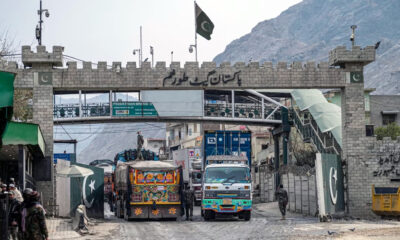
Khyber Chamber demands reopening of Torkham crossing
-

 Regional3 days ago
Syria begins destroying Assad-era chemical weapons
-
 World3 days ago
South Korea reviews military options for Strait of Hormuz
-
 Latest News2 days ago
Russian official: West seeks military infrastructure in Central Asia, citing Afghanistan threat
-
 Latest News2 days ago
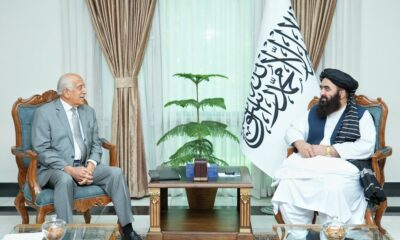
Muttaqi and Khalilzad discuss expanding Afghanistan-US relations
-
 Latest News3 days ago
Pakistan’s envoy to Afghanistan discusses regional security with top officials in Islamabad
-
 Climate Change4 days ago
El Niño likely to intensify, may become strongest ever recorded, WMO says
-
 Latest News4 days ago
Aisha Wahab sworn in as first Afghan American in U.S. Congress