
Latest News
Make girls’ education ‘red line’ in talks with IEA, Amnesty tells int’l community

Amnesty International on Monday called on the international community to make girls’ right to education a “red line” during negotiations with the Islamic Emirate of Afghanistan (IEA).
Amnesty International’s South Asia Director Yamini Mishra said in a statement that IEA’s “devastating” backtrack on reopening schools for female students above sixth grade is “a blatant violation of the right to education and casts a shadow over the futures of millions of Afghan girls.”
“Amnesty International is calling on the international community to make women’s and girls’ rights to education a red line during negotiations with the Taliban (IEA) de-facto authorities,” Yamini said. “The Taliban (IEA) must, without further delay, allow girls of all ages to attend school and stop using cynical pretexts to further its discriminatory agenda.”
Last week, IEA reversed its decision to open secondary and high schools for girls, saying they would remain closed until a plan was drawn up in accordance with Islamic law for them to reopen.
The move was widely condemned by international organizations and foreign governments, with the United States abruptly cancelling meetings with IEA in Doha that were set to address key economic issues.
IEA said on Tuesday that pressuring the government on the issue of schools is an interference in Afghanistan’s internal affairs.
“Schools remaining closed is an internal issue, and external pressures for their reopening is an interference in domestic affairs. Schools would open following the order of the IEA leadership,” said Bilal Karimi, deputy spokesman for IEA.


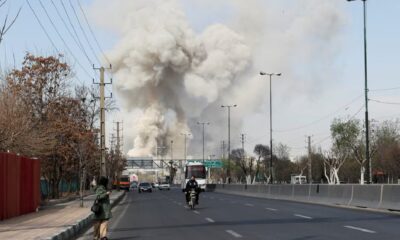

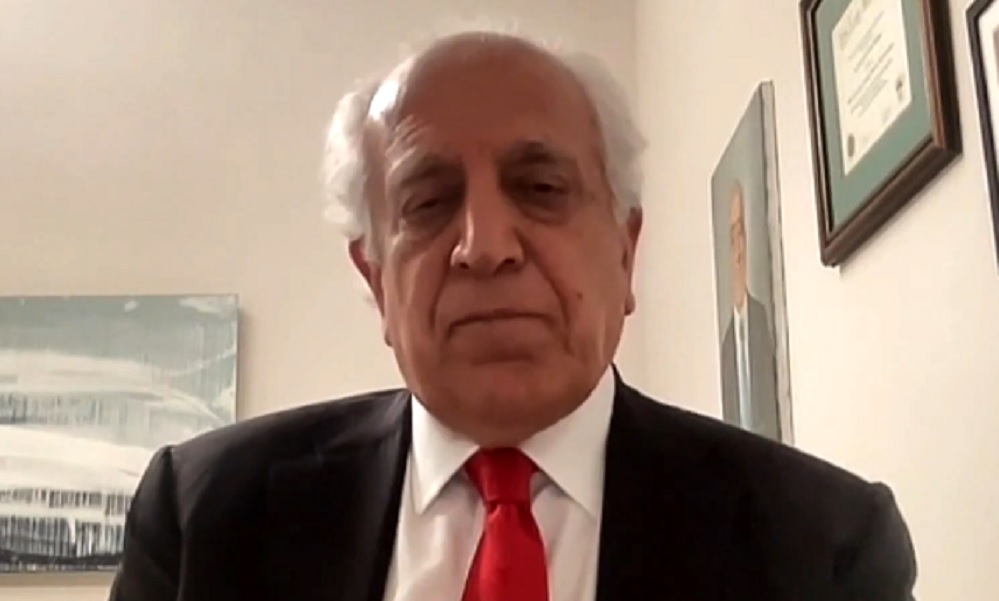
Zalmay Khalilzad, former U.S. diplomat, has suggested that in a potential U.S. military campaign against Iran, the Afghanistan model might be implemented, with Kurdish forces playing a role similar to the Northern Alliance in Afghanistan.
In an interview with Rudaw, a television network in Iraqi Kurdistan, Khalilzad emphasized that there is no indication the U.S. intends to launch a large-scale ground invasion of Tehran or overthrow the Iranian regime, as it did in Iraq in 2003.
He explained that the likely strategy would focus on weakening Iran’s leadership through precision missile strikes and heavy air raids, creating conditions conducive to political change.
Khalilzad also highlighted the potential involvement of Kurdish and Iranian opposition groups, suggesting they could serve a role akin to the Northern Alliance in Afghanistan in 2001.
He recalled that during the U.S. military operations in Afghanistan, a small number of American special forces and intelligence teams coordinated with local allies to identify and target strategic objectives for airstrikes.
Khalilzad added that if the U.S. avoids deploying a large ground force, relying on local forces such as the Kurds—backed by extensive air support—could be the most effective approach.
He described the current situation as a “historic opportunity” for Iranians, particularly the Kurds, to pursue long-sought political change, while urging careful planning and coordination to manage the associated risks.
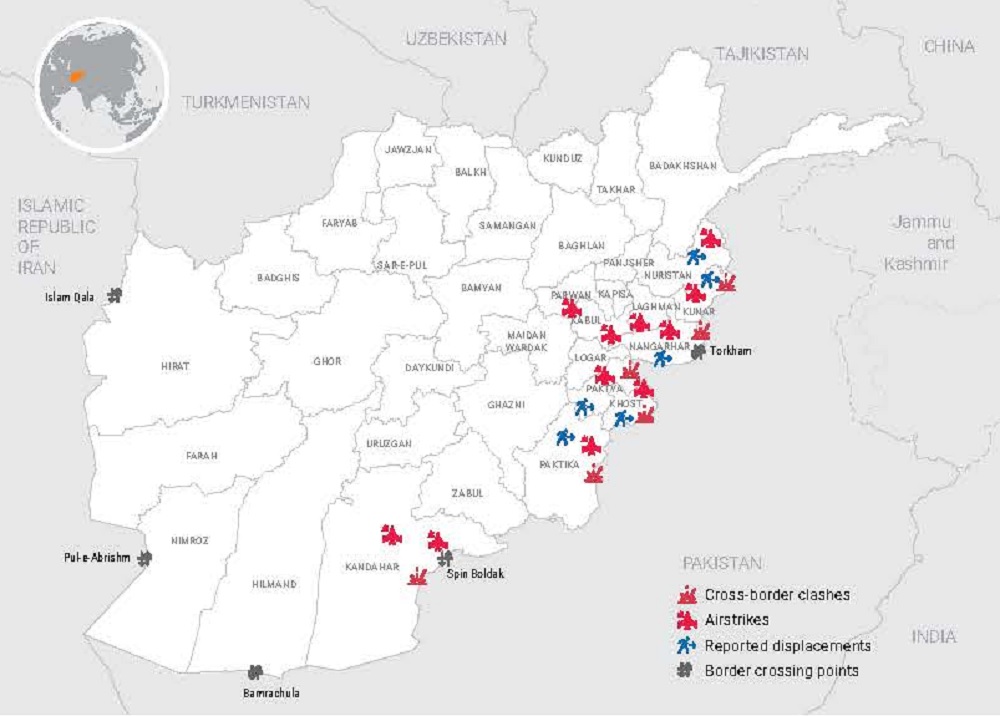
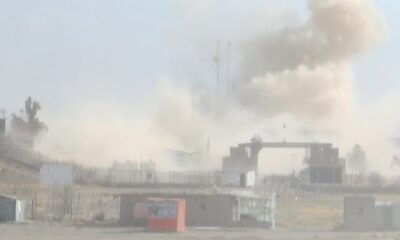
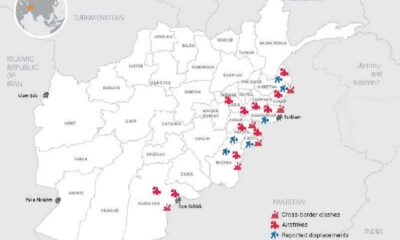
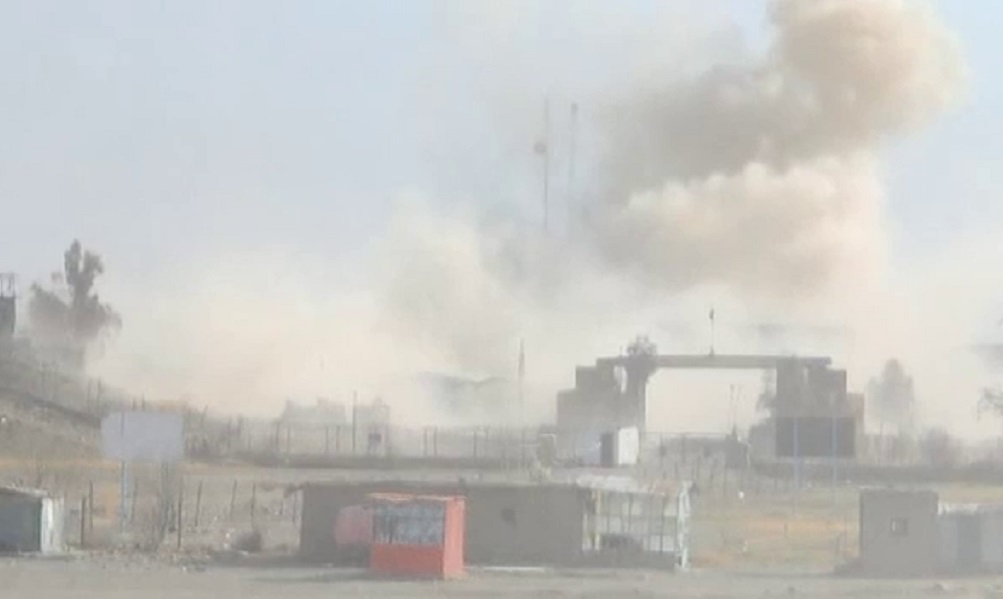
The United Nations Office for the Coordination of Humanitarian Affairs (OCHA) said on Thursday airstrikes and Durand Line clashes between Afghanistan and Pakistan from 26 February to 3 March have affected at least 10 provinces as tensions between the two countries escalated.
According to OCHA, the violence impacted the provinces of Kabul, Kandahar, Khost, Kunar, Laghman, Nangarhar, Nuristan, Parwan, Paktia and Paktika.
As of 4 March, at least 56 civilians have been killed and 129 others injured, while hostilities remain ongoing in Nangarhar, Kunar, Khost, Paktia and Paktika provinces.
OCHA estimates that 16,370 families have been newly displaced by the fighting, including 2,500 families in Khost, 3,500 in Kunar, 2,500 in Nangarhar, 470 in Paktika, 7,000 in Paktia and 400 in Nuristan.
The displacement comes in addition to around 7,000 families still displaced after the 31 August 2025 earthquake in eastern Afghanistan, bringing the total number of displaced families to about 23,370, or roughly 163,590 people.
OCHA said the new displacement is worsening existing vulnerabilities. In Kunar Province, 3,640 families who had been living in informal settlements after the earthquake have been evacuated or ordered to leave areas near a military compound and return to their original locations. Another 2,074 families in Kunar and Nangarhar are at risk of secondary displacement.
Airstrikes have also damaged civilian infrastructure, including health facilities and humanitarian sites. Among the affected facilities are a 20-bed emergency hospital at the IOM Transit Centre and the Omari Returnee Reception Centre at the Torkham Crossing in Nangarhar.


Several Pakistani soldiers killed in Afghan operations along the Durand Line

Zalmay Khalilzad: Afghanistan model could be applied in war against Iran

Airstrikes and clashes displace thousands as Afghanistan–Pakistan tensions escalate: UN

Trump wants say on Iran’s next leader as war intensifies

Afghan Defense Ministry claims retaliatory strikes on Pakistani forces along Durand Line

Pakistani military jet downed in Afghanistan’s Jalalabad, pilot captured alive
Afghan Air Force conducts airstrikes in Islamabad, other cities

IEA releases three Pakistani soldiers to mark Ramadan

Afghanistan’s Chief of Armed Forces underscores readiness and equipment for national defense

Afghanistan welcomes investment and technology partnerships with India

Saar: Sixth day of US–Israel war with Iran reviewed

Tahawol: Discussion on ongoing US–Israel war with Iran

Saar: Turkiye’s efforts to revive ceasefire between Kabul-Islamabad

Tahawol: Discussion on ongoing conflicts between Afghanistan and Pakistan

Saar: Ongoing retaliatory operations against Pakistan discussed
-
 Latest News4 days ago
Afghan air force strikes key Pakistani military installations in retaliatory operation
-
 Regional4 days ago
Middle East conflict intensifies; UK base in Cyprus targeted
-

 Regional4 days ago
Ayatollah’s wife dies from injuries sustained in airstrike on Tehran residence
-
 Latest News3 days ago
UNAMA calls for immediate halt to Afghanistan–Pakistan cashes
-

 International Sports5 days ago
FIFA calls for ‘all teams to participate’ in 2026 World Cup amid US–Iran conflict
-
 Latest News2 days ago
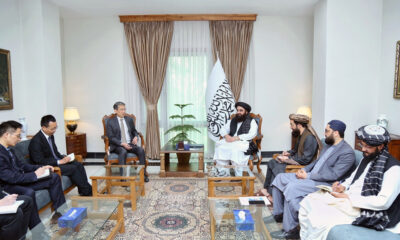
Amir Khan Muttaqi, Zhao Xing discuss regional security and violations of Afghan territory
-

 International Sports4 days ago
AFC postpones Champions League matches amid escalating Middle East tensions
-
 Business4 days ago
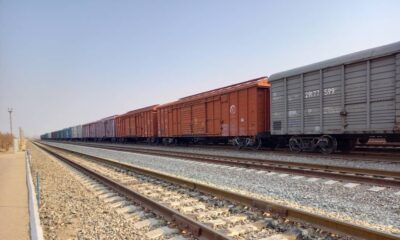
Afghanistan records 33% rise in railway cargo transport