
Regional
Lebanon’s army chief elected president, showing weakened Hezbollah


Lebanon’s parliament elected army chief Joseph Aoun head of state on Thursday, filling the vacant presidency with a general who has U.S. support and showing the weakened sway of the Iran-backed Hezbollah group after its devastating war with Israel.
In a speech to the chamber, Aoun, 60, vowed to work to ensure the state has the exclusive right to carry arms, drawing loud applause as lawmakers from Hezbollah — which runs its own military forces — sat still, Reuters reported.
He promised to rebuild south Lebanon and other parts of the country he said had been destroyed by Israel, and also to prevent Israeli attacks on Lebanon, which was mired in deep economic and political crises even before the latest conflict. “Today, a new phase in the history of Lebanon begins,” he said.
His election reflected shifts in the power balance in Lebanon and the wider Middle East, with Shi’ite Muslim Hezbollah badly pummelled from last year’s war, and its Syrian ally Bashar al-Assad toppled in December.
It also indicated a revival of Saudi influence in a country where Riyadh’s role was eclipsed by Iran and Hezbollah long ago.
Israeli Foreign Minister Gideon Saar congratulated Lebanon, saying on X he hoped Aoun’s election would contribute towards stability and good neighbourly relations.
U.S. ambassador Lisa Johnson, attending the session, told Reuters she was “very happy” with Aoun’s election.
The presidency, reserved for a Maronite Christian in Lebanon’s sectarian power-sharing system, has been vacant since Michel Aoun’s term ended in October 2022, with deeply divided factions unable to agree on a candidate able to win enough votes in the 128-seat parliament.
Joseph Aoun fell short of the 86 votes needed in a first round vote, but crossed the threshold with 99 votes in a second round, after lawmakers from Hezbollah and its Shi’ite ally the Amal Movement backed him.
Hezbollah lawmaker Mohammed Raad said that by delaying their vote for Aoun, the group had “sent a message that we are the guardians of national consensus”.
Momentum built behind Aoun on Wednesday as Hezbollah’s long preferred candidate, Suleiman Frangieh, withdrew and declared support for the army commander, and as French and Saudi envoys shuttled around Beirut, urging his election in meetings with politicians, three Lebanese political sources said.
A source close to the Saudi royal court said French, Saudi, and U.S. envoys had told Parliament Speaker Nabih Berri, a close Hezbollah ally, that international financial assistance – including from Saudi Arabia – hinged on Aoun’s election.
“There is a very clear message from the international community that they are ready to support Lebanon, but that needs a president, a government,” Michel Mouawad, a Christian lawmaker opposed to Hezbollah who voted for Aoun, told Reuters.
“We did get a message from Saudi of support,” he added.
The Saudi king and crown prince congratulated Aoun.
FRANCE URGES FORMATION OF STRONG GOVERNMENT
His election is a first step towards reviving government institutions in a country which has had neither a head of state nor a fully empowered cabinet since Aoun left office.
Lebanon, its economy still reeling from a financial collapse in 2019, is in dire need of aid to rebuild from the war, which the World Bank estimates cost the country $8.5 billion.
Much of the damage is in majority Shi’ite areas where Hezbollah draws support. Hezbollah has urged Arab and international support for Lebanon.
Lebanon’s system of government now requires Aoun to convene consultations with lawmakers to nominate a Sunni Muslim prime minister to form a new cabinet, a process that can often be protracted as factions barter over ministerial portfolios.
France said the election opened a new page for Lebanon.
“This election must now be followed by the appointment of a strong government” capable of “carrying out the reforms necessary for Lebanon’s economic recovery, stability, security and sovereignty,” French foreign ministry spokesman Christophe Lemoine said.
Lebanon’s international bonds, which have been in default since 2020, rallied after Aoun’s victory was announced.
Aoun has played a key role in shoring up a ceasefire between Hezbollah and Israel which was brokered by Washington and Paris in November. The terms require the Lebanese army to deploy into south Lebanon as Israeli troops and Hezbollah withdraw forces.
Opponents of his candidacy said his election was the result of foreign pressure. Lawmaker Gebran Bassil, leader of one of the biggest Christian factions, told the session that many lawmakers had received “instructions from abroad”.
But Melhem Riachi, a Christian lawmaker who voted for Aoun, said the election marked the end of the previous era with “an Iranian face”. “This is the era of Lebanon’s harmony with the international community,” he said.

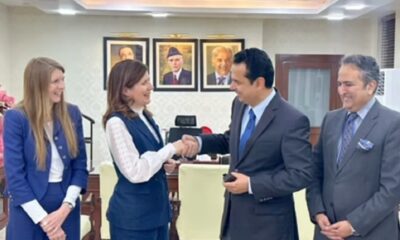
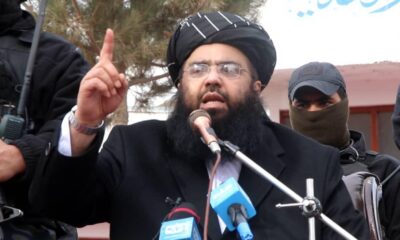

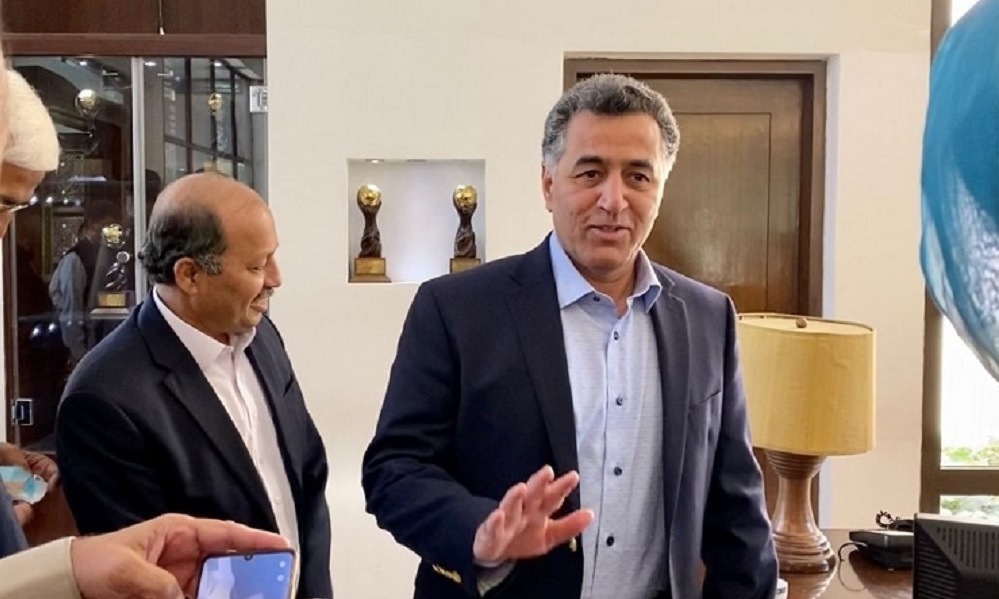
A military court in Pakistan jailed former spy chief Faiz Hamid for 14 years on four charges including interference in politics, the army said on Thursday, in a rare conviction of a once-powerful general in the South Asian nation.
Hamid, in custody and under trial since August last year, was the chief of Pakistan’s powerful Inter-Services Intelligence agency from 2019 to 2021 under jailed former Prime Minister Imran Khan, and the two were considered close allies.”The accused was tried on four charges,” the military said in a statement, Reuters reported.
The charges ranged from engaging in political activities and violating the Official Secrets Act in a way detrimental to safety and state interest to misuse of authority and resources as well as causing wrongful loss to individuals, it added.
TIES TO JAILED FORMER PM IMRAN KHAN
The former general was found guilty on all the charges, the military said, without detailing the incidents. His conviction followed “lengthy and laborious legal proceedings”, it added, and Hamid has a right of appeal.
He also faces a separate investigation of his role in May 2023 attacks by thousands of Khan’s supporters on scores of military installations and offices to protest against the arrest of the 72-year-old former cricket star.
Information Minister Attaullah Tarar said Hamid had crossed “red lines” and acted as an advisor to Khan’s party to try to create chaos in the country.
Hamid’s lawyers or family could not be reached for comment. Khan’s PTI party did not immediately respond to a Reuters request for comment.
Khan has been in jail since August 2023.
Khan and nearly 150 of his party leaders and supporters have already been indicted by an anti-terrorism court on charges of inciting the attacks that also targeted military headquarters in the garrison city of Rawalpindi.
Khan and his associates deny the charges.
Hamid’s close ties to Khan, who blames the military for ousting him from power in 2022, were a source of tension between the cricketer-turned-politician and the military.
The military, which has directly ruled the nation of 241 million for more than three decades of its 77-year independent history, plays a big role in making or breaking governments.
Regional
Six Pakistani soldiers killed in TTP attack in Kurram District
Islamabad has accused TTP fighters of using Afghan territory to stage attacks inside Pakistan, a claim Kabul denies, insisting that Pakistan’s security problems are internal matters.
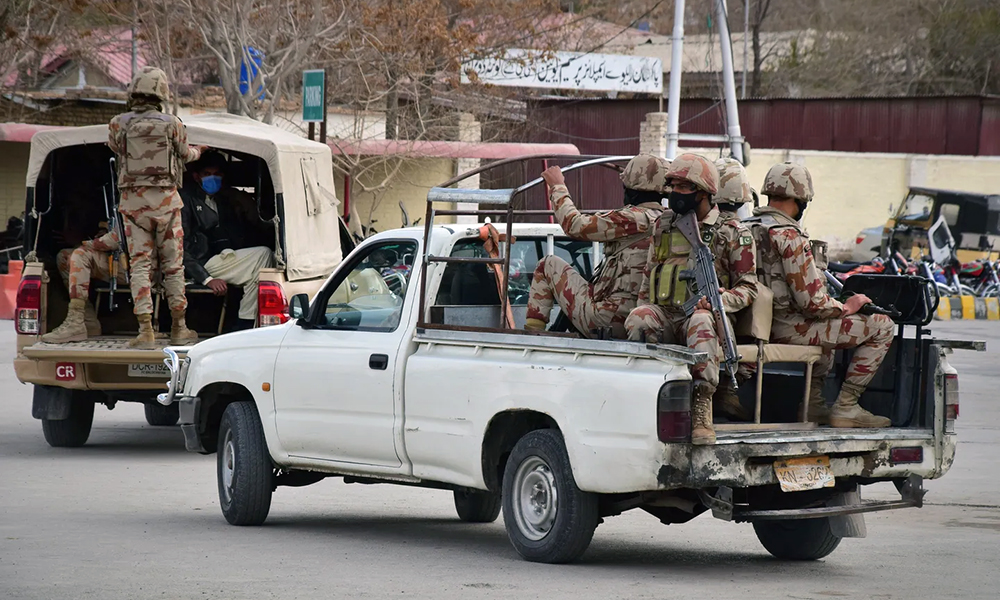
Six Pakistani soldiers were killed and four others injured when militants attacked a security checkpoint in northwest Pakistan’s Kurram district, officials confirmed on Tuesday. The Tehreek-e-Taliban Pakistan (TTP) claimed responsibility for the assault.
The attack took place in the Manato area late Monday afternoon, according to a police officer at the district’s emergency control room. A government official, speaking on condition of anonymity, told AFP that two militants were also killed during the exchange of fire.
Security forces later identified one of the dead militants as local TTP commander Usman Khyberi.
The incident comes amid heightened tensions between Pakistan and Afghanistan, as both sides struggle to maintain a fragile calm following deadly border clashes in October—the worst since the Islamic Emirate took control of Kabul in 2021.
Sporadic skirmishes have continued, including heavy exchanges of fire last week that left at least five people dead.
Islamabad has accused TTP fighters of using Afghan territory to stage attacks inside Pakistan, a claim Kabul denies, insisting that Pakistan’s security problems are internal matters.
Efforts to broker a lasting truce have so far failed. Three rounds of peace talks—facilitated by Qatar, Türkiye, and Saudi Arabia—have not produced a breakthrough.
Regional
Putin questions US punishing India for buying Russian oil
Hours earlier, Modi received Putin at the airport in Delhi, a rare gesture underlining the warm ties between the leaders.

Russian President Vladimir Putin challenged heavy U.S. pressure on India not to buy Russian fuel if the U.S. could do so as he began a two-day state visit, where he was embraced on arrival by Indian Prime Minister Narendra Modi.
Putin spoke in comments to Indian broadcaster India Today, aired hours after landing in New Delhi for a visit during which both countries are seeking to boost mutual trade and expand the variety of items in transactions.
New Delhi and Moscow have strong ties going back to the days of the former Soviet Union, and Russia has been the main source of arms for India for decades. India has also emerged as the top buyer of seaborne Russian oil despite Western sanctions imposed after Moscow launched its invasion of Ukraine in February 2022.
India’s crude imports, however, are set to hit a three-year low this month following a punitive U.S. tariff on Indian goods and a tightening of sanctions on Russia, as U.S. President Donald Trump’s administration says India’s purchases of cheap Russian oil help finance Moscow’s war in Ukraine.
“The United States itself still buys nuclear fuel from us for its own nuclear power plants. That is also fuel,” Putin told India Today.
“If the U.S. has the right to buy our fuel, why shouldn’t India have the same privilege? This question deserves thorough examination, and we stand ready to discuss it, including with President Trump,” he said.
India has said Trump’s tariffs are unjustified and unreasonable and pointed at ongoing U.S. trade with Moscow. The U.S. and European Union continue to import billions of dollars worth of Russian energy and commodities, ranging from liquefied natural gas to enriched uranium.
“There is a certain decline in overall trade turnover during the first nine months of this year,” Putin said when asked if Indian oil purchases had fallen under pressure from the West.
“This is just a minor adjustment. Overall, our trade turnover stands almost at the same level as before.”
He added: “Trade in petroleum products and crude oil … Russian oil, is running smoothly in India.”
Asked how India and Russia should deal with Trump and his tariffs, Putin said the U.S. President has advisers who believe that implementing such tariff policies ultimately benefits the U.S. economy. “We hope that, in the end, all violations of World Trade Organization regulations will be rectified,” he said.
Hours earlier, Modi received Putin at the airport in Delhi, a rare gesture underlining the warm ties between the leaders.
They embraced on a red carpet on the tarmac and then drove away in the same vehicle for a private dinner hosted by Modi.
Senior Russian ministers and a large Russian business delegation were in New Delhi for Putin’s visit and the two leaders will hold summit talks on Friday when they are expected to announce a raft of deals.
“Delighted to welcome my friend, President Putin to India. India-Russia friendship is a time-tested one that has greatly benefited our people,” Modi posted on X ahead of the dinner.
India and Russia aim to raise two-way trade to $100 billion by 2030. Their commerce rose more than five-fold from about $13 billion in 2021 to near $69 billion in 2024–25, almost entirely driven by Indian energy imports.
Bilateral trade eased to $28.25 billion in April–August 2025, reflecting a decline in crude oil imports.
At the same time, India is looking for new destinations to increase exports of its goods hit by the punishing 50% tariff imposed by Trump.
Russia wants to import more Indian goods to balance bilateral trade, which is currently heavily skewed towards energy, Deputy Kremlin Chief of Staff Maxim Oreshkin told a business conference in New Delhi earlier on Thursday.
Indian Trade Minister Piyush Goyal said New Delhi wants to diversify exports to Russia and increase sales of automobiles, electronics goods, data-processing equipment, heavy machinery, industrial components, textiles, and foodstuffs.


Continued aid to Afghanistan vital for regional security: Kazakh president

Islamic Emirate declines to attend Tehran meeting on Afghanistan

Sirajuddin Haqqani: A government that intimidates its people is not a true government

Afghanistan’s health minister likely to visit India next week

Top Pakistani, British officials discuss Afghan relocation

Pakistan will lose big market in both Afghanistan, Central Asia: Sarhadi

Afghanistan records $580m in fruit exports in six months

Tashkent: Central Asian leaders say regional stability hinges on Afghanistan

Afghan Abdalyan beat Sri Lanka A by 3 wickets in Rising Stars Asia Cup opener

Afghanistan U19 cricket team defeats India A U19

Saar: Calls to avoid using Afghan soil against nations

Tahawol: UNSC meeting outcome regarding Afghanistan discussed

Saar: Ongoing Kabul–Islamabad tensions discussed

Tahawol: Pakistan’s warning on Afghanistan reiterated

Saar: UN’s meeting on Afghanistan reviewed
-
 Sport4 days ago
ILT20: Desert Vipers edge Gulf Giants in historic super over thriller
-
 Latest News2 days ago
Muttaqi: Afghanistan’s progress requires both religious and modern education
-

 Regional4 days ago
Six Pakistani soldiers killed in TTP attack in Kurram District
-
 Business4 days ago
Trade bodies warn almost 11,000 Afghan transit containers stuck at Karachi port
-
 World4 days ago
Powerful 7.6 earthquake hits northern Japan, tsunami warnings issued
-
 Latest News3 days ago
Trump calls Afghanistan a ‘hellhole’ country as US expands immigration restrictions
-
 Sport5 days ago
Sorkh Poshan Khafi defeats Sarsabz Yashlar 4-0 in Afghanistan Champions League
-

 Sport3 days ago
Commanding wins for Arman FC and Sarsabz Yashlar in Afghanistan Champions League