
Latest News
KHOST- Attack on police special unit ends after-10 hour clash

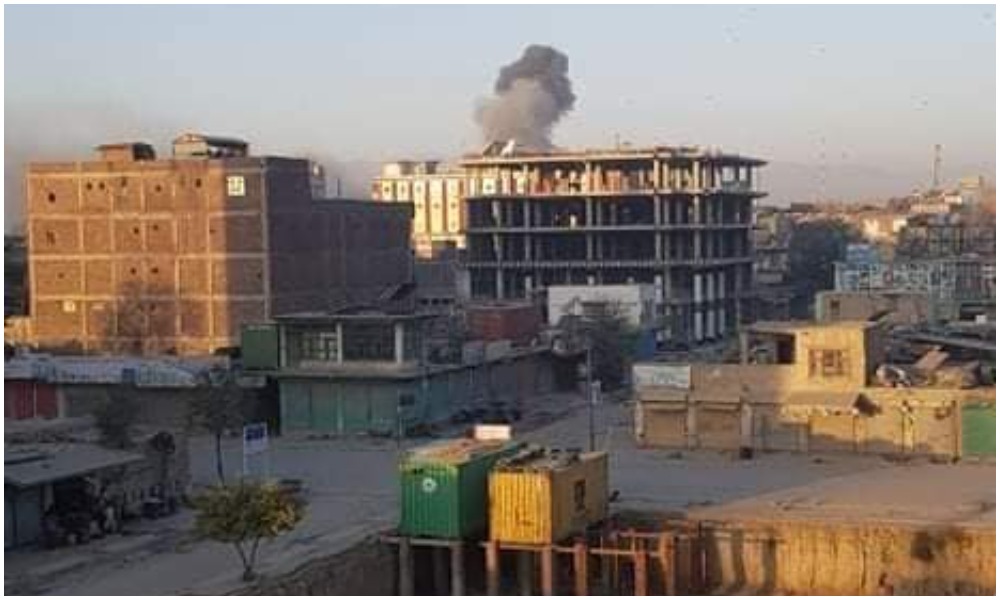
Khost attack on a special police unit ended after almost 10 hours, leaving at least five special forces members dead, said Police Chief Ghulam Daoud Tarakhail.
According to Tarakhail the attackers were 10 people, three of them detonated their explosives and seven others were gun downed in the clash with security forces.
Five special police forces killed in the attack, Tarakhail said.
According to Tarakhail more than 35 others including 10 civilians were wounded in the clash.
According to the local officials, those wounded in the attack were taken to the provincial hospital for treatment.
Provincial governor Sediq Patman said that there were three car bombs–one was detonated and the two others were prevented from exploding by security forces.
“The situation is under control now,” Patman added.
The incident occurred around 6am local time after a car bomb detonated close to the wall of the police special forces unit.
No group including the Taliban yet claimed responsibility for the attack.
This comes after UNAMA in their latest quarterly report on Tuesday, documented 5,939 civilian casualties (2,117 killed and 3,822 injured) from 1 January to 30 September 2020.
In their report, the mission said: “High levels of violence continue with a devastating impact on civilians, with Afghanistan remaining among the deadliest places in the world to be a civilian.”

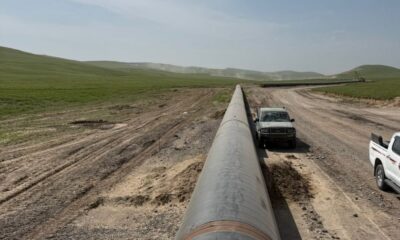




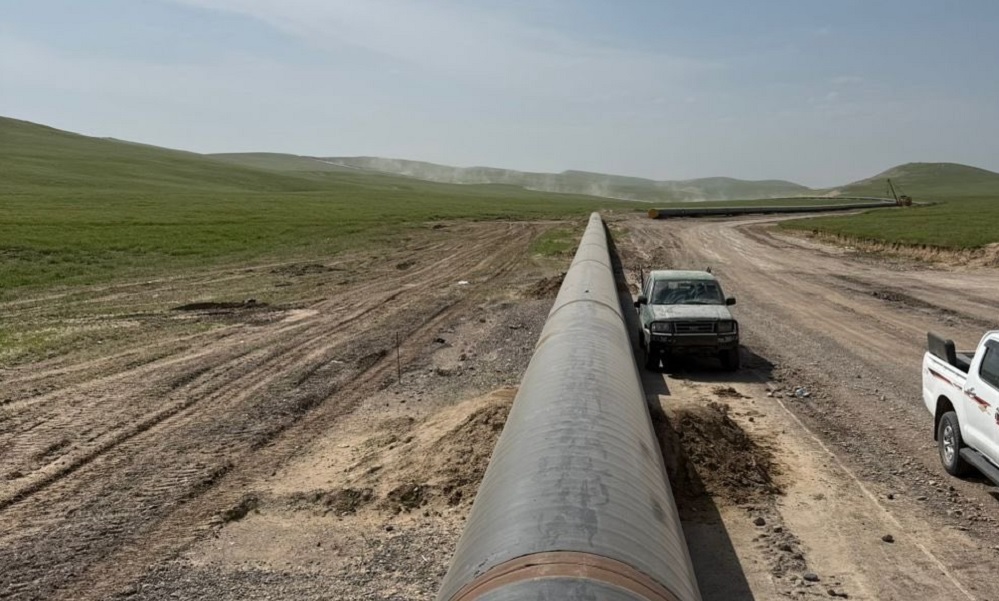
Afghanistan’s Ministry of Mines and Petroleum says construction of the TAPI Gas Pipeline is advancing steadily in Herat Province, with significant milestones already achieved.
According to the ministry, around 25 kilometers of the pipeline have been laid so far, while preparations for an additional 120 kilometers are now complete. The arrival of new pipes and technical equipment to the project site is expected to further accelerate construction in the coming months.
Homayoun Afghan, spokesperson for the ministry, said work on the Herat section of the project is progressing according to plan and is expected to be completed by the end of the current calendar year.
The TAPI pipeline, a major regional energy initiative linking Turkmenistan, Afghanistan, Pakistan, and India, is seen as a key driver of economic growth and regional cooperation. Afghan officials have repeatedly emphasized its potential to create jobs, boost revenues, and strengthen energy connectivity across the region.
Latest News
Afghan diaspora protests in London and Oslo over Pakistan strikes
At the same time, members of the Afghan community in Oslo gathered outside the Norwegian Parliament, where they denounced the attacks and called for accountability.
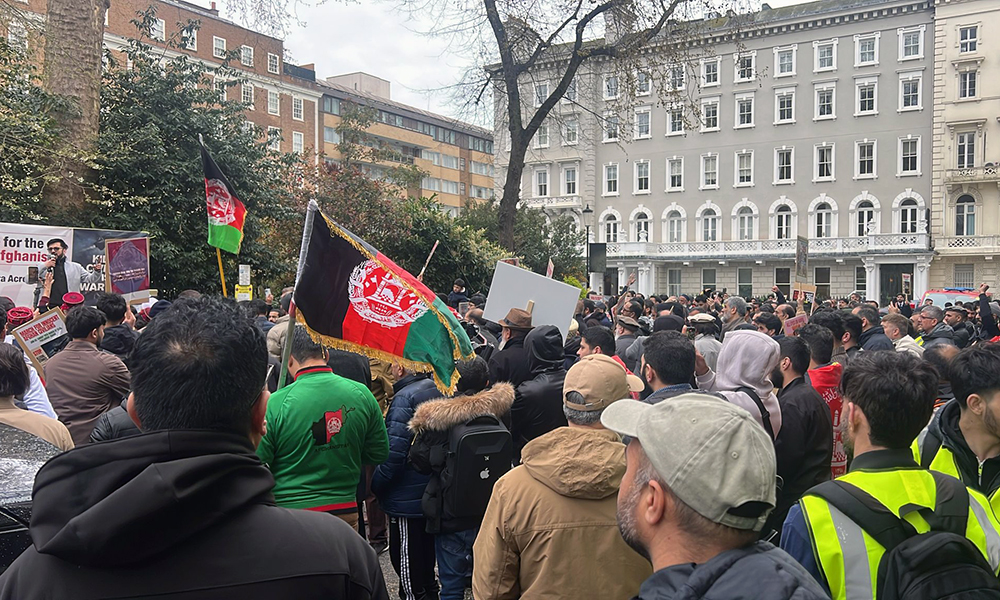
Hundreds of Afghans living abroad staged protests in the cities of London and Oslo over the weekend, condemning what they described as continued military attacks by Pakistan that have led to rising civilian casualties in eastern Afghanistan.
In London, demonstrators marched through central streets, chanting slogans against the strikes and urging global powers to take urgent action.
Protesters highlighted the deteriorating security situation along the disputed Durand Line, warning that repeated shelling risks further destabilizing already fragile communities. Many called for independent investigations and greater international pressure to prevent escalation.
At the same time, members of the Afghan community in Oslo gathered outside the Norwegian Parliament, where they denounced the attacks and called for accountability.
Protest organizers said a formal resolution was submitted to Norwegian authorities, as well as to the United Nations and the International Criminal Court, urging immediate steps to halt the violence and ensure the protection of civilians.
The demonstrations come amid renewed tensions between Afghanistan and Pakistan, where clashes and artillery exchanges have periodically flared along the Durand Line.
Disputes over the legitimacy of the frontier, militant activity, and cross Durand Line security operations have long strained relations between the two neighbors.
According to Afghan officials, the latest incident occurred in Asadabad, the capital of Kunar Province, where Pakistani forces allegedly fired mortars and heavy weapons into residential areas on Sunday evening.
Hamdullah Fitrat, deputy spokesman for the Islamic Emirate, said Pakistan targeted rural communities on the outskirts of the city at around 5 pm local time. Preliminary reports indicate that at least 16 civilians—mostly women and children—were injured, while one person was killed.
Fitrat condemned the incident as a continuation of attacks against Afghan civilians, while local residents described panic and damage to homes caused by the shelling.
There has been no immediate detailed response from Pakistani authorities regarding the latest allegations. However, Islamabad has previously maintained that its military actions along the Durand Line are aimed at countering militant threats and securing its frontier regions.
The protests in Europe reflect growing concern within the Afghan diaspora over the humanitarian impact of the ongoing tensions, with calls mounting for diplomatic engagement to prevent further civilian harm and escalation along the Durand Line.
International Sports
Amnesty International raises alarm over deportations, protests ahead of FIFA World Cup
The rights watchdog said the situation is most acute in the US under President Donald Trump, where it says a “human rights emergency” is unfolding due to aggressive immigration enforcement policies.
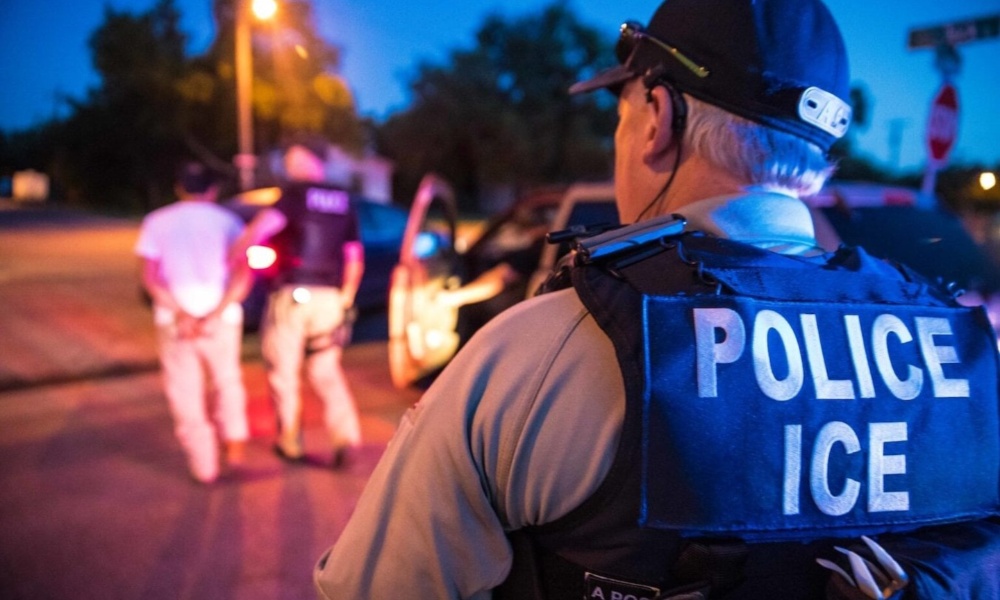
A new report released on Monday, 30 March, by Amnesty International has warned that the 2026 FIFA World Cup could expose millions of fans to serious human rights risks, particularly in the United States, where the majority of matches will be held.
The report, titled Humanity Must Win: Defending rights, tackling repression at the 2026 FIFA World Cup, highlights concerns across all three host nations—United States, Canada and Mexico—including threats to freedom of expression, peaceful protest, and the safety of local communities.
According to Amnesty International, the situation is most acute in the United States under President Donald Trump, where it says a “human rights emergency” is unfolding due to aggressive immigration enforcement policies.
The organization cited mass detentions, arbitrary arrests, and widespread deportations carried out by agencies such as US Immigration and Customs Enforcement (ICE) and US Customs and Border Protection.
Amnesty International’s Head of Economic and Social Justice, Steve Cockburn, said more than 500,000 people were deported from the United States in 2025 alone, warning that the erosion of due process has created “a climate of fear” that could affect both residents and visiting fans during the tournament.
The report also raises concerns about the impact of these policies on World Cup host cities, noting that local authorities in cities such as Dallas, Houston and Miami have entered agreements with federal immigration agencies, increasing the risk of racial profiling and undermining trust in law enforcement.
In addition, Amnesty International highlighted previous federal deployments of thousands of National Guard troops to Los Angeles in response to protests against immigration raids, warning that similar measures during the World Cup could threaten civil liberties.
Beyond the United States, the report points to risks in the other host countries. In Mexico, the deployment of around 100,000 security personnel—including military forces—has raised fears that protests could be suppressed, particularly by activists planning demonstrations linked to disappearances and social justice issues in Mexico City.
In Canada, Amnesty International warned that preparations for the tournament could worsen an already deepening housing crisis, citing concerns that people experiencing homelessness may be displaced, echoing the legacy of the 2010 Winter Olympics in Vancouver.
The organization also flagged travel restrictions that could prevent fans from several countries, including Côte d’Ivoire, Haiti, Iran and Senegal, from entering the United States, alongside proposals for intrusive screening measures such as social media vetting.
Amnesty International further warned that restrictions on freedom of expression and peaceful assembly across all three host nations could undermine the inclusive spirit of the tournament. It noted that protests—often a feature of global sporting events—risk being repressed, with recent examples including crackdowns on demonstrations in North America.
With just weeks to go before the tournament begins, Amnesty International urged FIFA and host governments to take immediate action to safeguard human rights.
“This World Cup is no longer the ‘medium risk’ tournament that FIFA once judged it to be,” said Cockburn.
“Urgent steps are needed to ensure fans, players, workers and communities are protected, and that the tournament lives up to its promise of being safe, inclusive and respectful of human rights,” he said.
Amnesty International added that while FIFA stands to generate record revenues from the competition, the rights and safety of those involved must remain at the centre of the event.


Tahawol: Pakistani military shelling in Kunar

Saar: Impact of Middle East conflict on Afghanistan

NASA set for first crewed moon return in over half a century

TAPI gas pipeline advances 25 km in Afghanistan

Tiny Persian Gulf oil hub at centre of high-stakes military calculations

Prominent Muslim scholar issues fatwa calling for Afghanistan-Pakistan ceasefire

Afghan air force strikes key Pakistani military installations in retaliatory operation

IEA Supreme Leader issues Eid-ul-Fitr message urging unity and support for Islamic system

14 Pakistani soldiers killed after military post falls along Durand line: MoD

Ronaldo’s private jet flies out of Saudi Arabia following US Embassy drone strike in Riyadh
Tahawol: Pakistani military shelling in Kunar
Saar: Impact of Middle East conflict on Afghanistan

Tahawol: Efforts for Kabul-Islamabad de-escalation

Saar: Restrictions on girls’ education in Afghanistan discussed

Tahawol: Concerns over spread of Middle East crisis discussed
-
 Latest News5 days ago
Tajikistan shifts stance on Afghanistan amid rising border tensions
-
 Latest News4 days ago
Russia deems US military presence in Afghanistan unacceptable
-
 Latest News3 days ago
IEA says Iranian drivers no longer need visas to enter Afghanistan
-
 Latest News3 days ago
Afghan defense forces stand ready to protect national sovereignty: MoD
-
 Sport4 days ago
Myanmar trump Afghanistan 2-1 in Asian Cup Qualifier
-
 Sport5 days ago
Afghanistan to face Myanmar in crucial AFC clash
-
 Latest News5 days ago
Torkham crossing reopens for returning Afghan migrants
-

 International Sports2 days ago
Injury concerns mount ahead of FIFA World Cup 2026 as stars sidelined