
World
Kazakhstan government’s resignation fails to quell protests

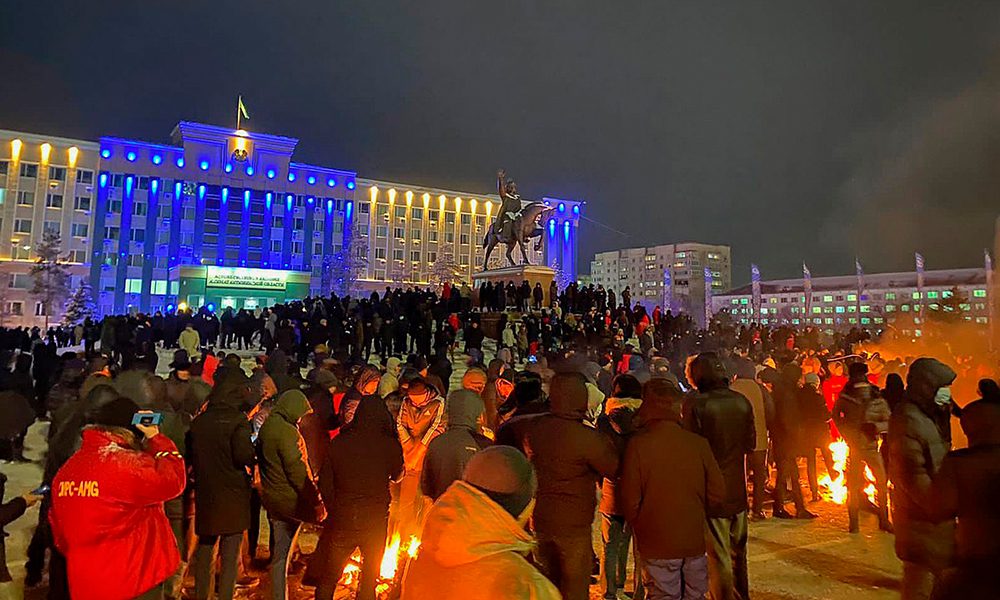
Protesters stormed public buildings in Kazakhstan‘s biggest city on Wednesday as security forces struggled to impose control after the government resigned in response to popular anger over a fuel price increase.
An Instagram live stream by a Kazakh blogger showed a fire blazing in the mayor’s office in the city of Almaty, with gunshots audible nearby. Videos posted online also showed the nearby prosecutor’s office burning.
Protesters appeared to have broken through security forces’ cordons even though the latter deployed stun grenades whose explosions could be heard throughout the city center.
Kazakhstan is a tightly controlled former Soviet republic that cultivates an image of political stability, helping it attract hundreds of billions of dollars of foreign investment in its oil and metals industries.
President Kassym-Jomart Tokayev accepted the government’s resignation on Wednesday, a day after police used tear gas and stun grenades to drive hundreds of protesters out of the main square in Almaty.
On Wednesday a Reuters correspondent saw thousands of protesters pressing ahead towards Almaty city center, some of them on a large truck, after security forces failed to disperse them with tear gas and flashbang grenades.
Atameken, Kazakhstan‘s business lobby group, said its members were reporting cases of attacks on banks, stores, and restaurants.
The city health department said 190 people had sought medical help, including 137 police. City authorities urged residents to stay home.
The interior ministry said that government buildings were also attacked in the southern cities of Shymkent and Taraz overnight, with 95 police wounded in clashes. Police have detained more than 200 people.
A video posted online showed police using a water cannon and stun grenades against protesters in front of the mayor’s office in Aktobe, the capital of another western province
The protests began after the government lifted price controls on liquefied petroleum gas at the start of the year. Many Kazakhs have converted their cars to run on LPG because of its low cost.
The government said the regulated price was causing losses for producers and needed to be liberalized. The president said it had botched the move.
Speaking to acting cabinet members, Tokayev ordered them and provincial governors to reinstate price controls on LPG, and broaden them to gasoline, diesel, and other “socially important” consumer goods.
He also ordered the government to develop a personal bankruptcy law and consider freezing utility prices and subsidizing rent payments for poor families.
He said the situation was improving in protest-hit cities and towns, including Almaty and the surrounding province, where the authorities declared a state of emergency.
In addition to replacing the prime minister, Tokayev also appointed a new first deputy head of the National Security Committee who replaced Samat Abish, a nephew of powerful ex-president Nursultan Nazarbayev.
Nazarbayev, 81, a Soviet-era Communist Party boss, ran Kazakhstan for almost 30 years before resigning abruptly in 2019 and backing Tokayev as successor. Nazarbayev retains sweeping powers as the chairman of the security council; he has not convened the council or commented on this week’s violence.
The protests began in the oil-producing western province of Mangistau on Sunday, after LPG prices more than doubled following the lifting of caps.
A source familiar with the situation said some workers at Mangistaumunaigas, a Kazakh-Chinese oil-producing joint venture based in the Mangistau province, were on strike, although this was not affecting output so far.
Tokayev declared the emergency in Almaty and Mangistau and has said that domestic and foreign provocateurs were behind the violence.
Almaty mayor Bakytzhan Sagintayev said the situation in the city was under control and security forces were detaining “provocateurs and extremists”.
Kazakhstan‘s dollar-denominated sovereign bonds suffered sharp falls with the 2045 issue falling around 3 cents in the dollar and many dropping to levels last seen in 2020, Tradeweb data showed.
Like many emerging and developing economies, Kazakhstan has grappled with rising price pressures in recent years. Inflation was closing in on 9% year-on-year late last year – its highest level in more than five years – forcing the central bank to raise interest rates to 9.75%.
Some analysts said the protests – the most serious in the country in at least a decade – pointed to more deep-rooted issues.
“I think there is an underlying undercurrent of frustrations in Kazakhstan over the lack of democracy,” said Tim Ash, emerging market strategist at BlueBay Asset Management.
“Young, internet-savvy Kazakhs, especially in Almaty, likely want similar freedoms as Ukrainians, Georgians, Moldovans, Kyrgyz, and Armenians, who have also vented their frustrations over the years with authoritarian regimes.”





World
▶️Saudi Arabia, Turkey, Pakistan activate Mecca defense pact
The three countries said the measures would be implemented under approved arrangements and in accordance with the national laws of each country.
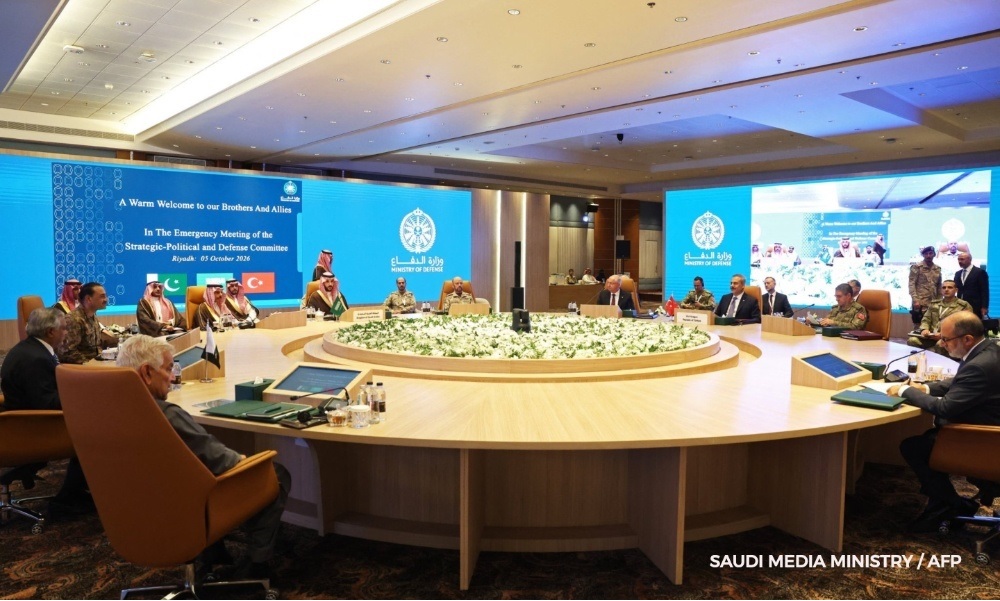
Saudi Arabia, Turkey and Pakistan have agreed to immediately implement their collective defence commitments, including the rapid deployment of agreed military forces and capabilities to Saudi Arabia.
The decision was reached on Monday during an emergency meeting of the Mecca Defence Alliance in Riyadh, according to a joint statement issued by Pakistan’s foreign ministry.
The three countries said the measures would be implemented under approved arrangements and in accordance with the national laws of each country.
Saudi Defence Minister Khalid bin Salman said the meeting reaffirmed the three countries’ “solidarity and unity” in responding to what he described as attacks against Saudi Arabia and Islamic holy sites.
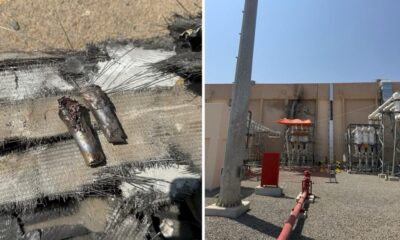
The move follows a reported attack on a power distribution station in Medina. The Saudi-led coalition fighting Yemen’s Iran-aligned Houthi group said the attack targeted a facility supplying electricity to the Prophet’s Mosque, one of Islam’s holiest sites.
Saudi Arabia, Pakistan and Turkey signed the Mecca Joint Defence Agreement in August. Under the pact, an armed attack against one of the three members is considered an attack against all.
The agreement initially provided few details on the specific military commitments or defence obligations of each country.
The latest announcement marks a move from the framework of the agreement towards its practical implementation, with the three countries now agreeing to put arrangements for the deployment of military capabilities into effect.
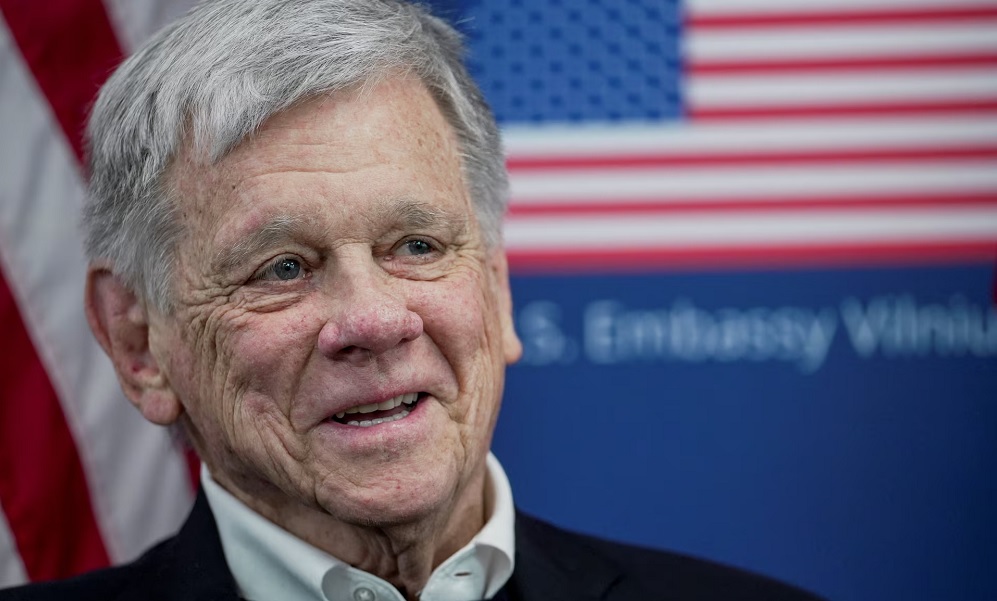
US President Donald Trump said on Sunday that lawyer and current Belarus envoy John Coale, who has been credited with the release of hundreds of prisoners, would be his special presidential envoy for hostage affairs.
Belarusian President Alexander Lukashenko pardoned 15 prisoners last month after talks with Coale, who has been talking to Minsk for more than a year, Reuters reported.
“John has already secured the return of over 65 Americans and Allied Citizens from Belarus over the last year, and negotiated the release of more than 800 political prisoners from multiple countries in Eastern Europe,” Trump wrote in a post on Truth Social.
Coale will replace Adam Boehler, who Trump said had brought back 196 hostages. Boehler, who in August helped to secure the release of a former American marine from Russia, will continue to assist in other matters as a senior adviser, Trump added.
World
Passengers foil bid to crash Dubai-Tel Aviv flight, Israel says, after co-pilot stabs pilot
The incident sharpened concerns about global aviation security in a region scarred by years of conflict, prompting Israel to tighten checks on pilots flying into the country.
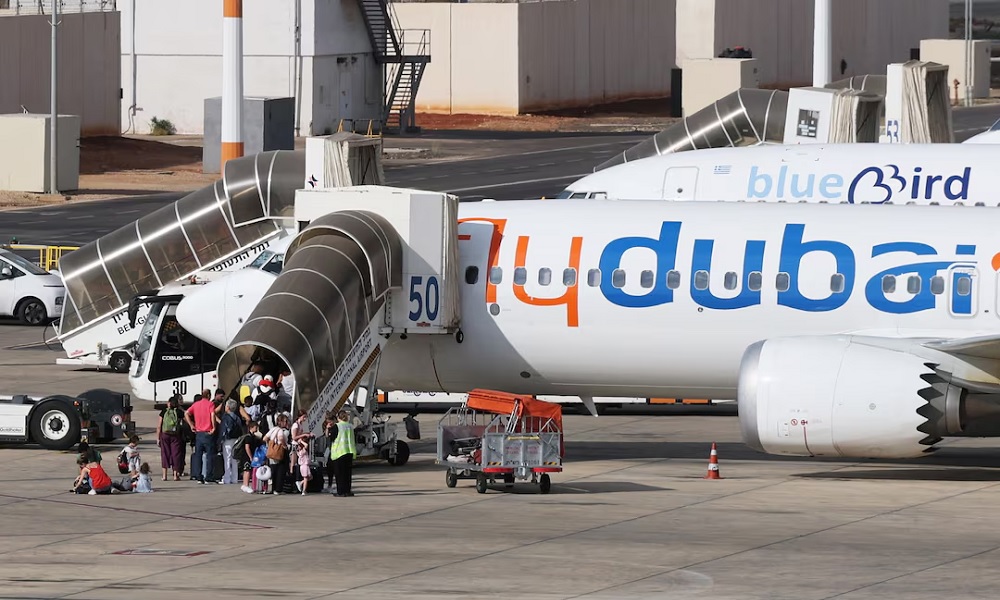
Passengers on a flydubai flight reached Israel safely on Wednesday after customers and crew foiled a co-pilot’s attempt to crash the aircraft, Israeli officials said, in a struggle that began when he stabbed the pilot and sent the jet plunging nearly 14,000 feet in less than 30 seconds.
Passengers and crew entered the cockpit, overpowered the co-pilot and enabled a second pair of flydubai pilots who were aboard the flight to land the jet safely in Tabuk, Saudi Arabia, Israeli officials said, Reuters reported.
More than 10 hours later, the passengers arrived at Tel Aviv’s Ben Gurion Airport aboard a flydubai replacement aircraft, with several describing the episode as a miracle and recounting a frantic struggle to prevent a catastrophe.
Israeli officials said the attacker’s motive aboard flight FZ1073 from Dubai to Tel Aviv remained under investigation. Israel and the United Arab Emirates, which includes Dubai, signed the Abraham Accords normalizing relations in 2020.
The incident sharpened concerns about global aviation security in a region scarred by years of conflict, prompting Israel to tighten checks on pilots flying into the country.
“I just can say that it was a miracle. It was awful, crazy, and we thank God that we survived it, we didn’t think we will make it but thank God we are in Israel. We are back home. And we are happy to see everyone here,” passenger Lital Shachaf said.
Israel’s ambulance service said a 51-year-old man was taken to an Israeli hospital to be treated for injuries to his upper body. The man was in a “mild condition,” it said.
Describing the event as “a serious security incident,” Prime Minister Benjamin Netanyahu said Saudi authorities would interrogate the co-pilot.
Flydubai said in a statement that the underlying reasons for the event remained unknown and warned against “premature speculation.” An Israeli official identified the co-pilot as an Omani national. There was no immediate comment from Oman.
Israeli officials applauded the passengers, who they credited with avoiding a much more serious disaster. Netanyahu said there were 174 people on board the flight from Dubai, most of them Israeli nationals.
US President Donald Trump said he spoke “at length” with Netanyahu on Wednesday about the incident. He proceeded to give reporters in the Oval Office a detailed account of what happened, adding: “This is the story that I heard — I don’t know if it’s true, but that’s the story that I got from Bibi (Netanyahu).”
‘SOMETHING YOU DO WITHOUT THINKING’
A Netanyahu spokesperson told Reuters that the wounded captain, identified by the Israeli leader’s office as Smit Machchhar, an Indian national, was covered with blood on the floor when he managed to click the release to open the cockpit door. Passengers who entered found the co-pilot bashing at the plane’s control panel, the spokesperson said.“This is something you do without thinking, just running to save your daughter’s life, your family’s life,” said Asaf Rajuan, one of the passengers who helped restrain the attacker. He spoke with a forehead still bloodied from the struggle.
Netanyahu’s office released a video showing the prime minister at Ben Gurion Airport giving a hug to another passenger, Yaniv Hayun, who his office said “broke into” the cockpit. “I see you and I see a lion – a big hero,” Netanyahu told the man, who was still wearing the blood-stained shirt he had on during the flight.
Flydubai operates daily return flights between Dubai and Tel Aviv, a route that is popular among Israeli nationals. The flight path normally uses airspace over Saudi Arabia and Jordan.
It is not the first time a flight between Israel and the UAE has landed in Saudi Arabia. A flydubai flight from Dubai to Tel Aviv made an emergency landing in Riyadh in September 2025 due to a medical incident, Israeli media reported at the time.
Saudi Arabia’s Tabuk airport, where the plane landed, said both pilots had been hospitalised after sustaining injuries.
The incident heightened security fears in Israel weeks before Israelis vote in the first election since the Hamas-led October 7, 2023, attacks, with Israel’s security figuring prominently in the campaigning.
Responding to the incident on X, far-right security minister Itamar Ben-Gvir wrote, “Terrorism is a devil with whom no agreement must be reached”.
ISRAEL TO TIGHTEN CHECKS ON PILOTS FLYING TO ISRAEL
Israeli media published conflicting reports on the incident, with some outlets reporting that a pilot had tried to crash the passenger plane in an alleged suicide attempt. Some Israeli media outlets initially identified the pilots as Omani and Emirati nationals, while others said they were Russian and Ukrainian.
“Every pilot that is going to be flying into Israel, we are going to know the pilots’ identities, know who they are, and do some type of security check,” Doron Spielman, a Netanyahu spokesperson, told Reuters.
Netanyahu met on Sunday with UAE President Sheikh Mohamed bin Zayed Al Nahyan during a rare visit to the Gulf country. Israel and the UAE have forged close security, military and economic ties since establishing diplomatic ties.
Israel provided the UAE earlier this year with Iron Dome air-defence systems and Israeli personnel to operate them, helping defend against Iranian attacks launched after Israel and the US began strikes on Iran.
The UAE government had yet to comment on the flydubai incident, while the Dubai state-owned airline said an “altercation” occurred in the cockpit and the flight subsequently diverted to Tabuk, where it landed safely. The UAE’s aviation regulator, the GCAA, said the flight “experienced a security incident that was brought under control”.


Tahawol: Discussion on outcome of Moscow Format meeting

ACL: Sarbaz Yashlar and Khurasan Faryab play out goalless draw

Saar: Expansion of relations between Kabul and Moscow discussed

Aino Mina Kandahar defeat Istiqlal Kabul 3–2

Muttaqi and Shoigu discuss regional security and Afghanistan-Russia cooperation

Saudi energy group signs major Afghanistan deals covering gas exploration and pipeline plans

Khalilzad: Afghanistan ready to attract major investment

UAE firm eyes investment in Salang’s second tunnel and pharmaceutical factories

US Treasury ratchets up pressure on Iran with sweeping new aviation sanctions

AI could pose ‘existential’ risk to humanity, UN rights chief warns
Tahawol: Discussion on outcome of Moscow Format meeting
Saar: Expansion of relations between Kabul and Moscow discussed

Tahawol: Afghanistan-Iran: shared opportunities and challenges discussed

Saar: Pakistan’s hostile policy toward Afghanistan discussed

Tahawol: Doha process seeks new cooperation opportunities
-

 Sport2 days ago
Cricket Bonanza: Afghanistan set for packed international schedule
-
 Sport4 days ago
ACB announces Afghanistan squads for Bangladesh, Zimbabwe series
-
 Latest News5 days ago
Russia expects to ease Afghanistan-Pakistan tensions at Moscow Format meeting
-

 International Sports5 days ago
Afghanistan to face Pakistan, India and Australia at 2027 Cricket World Cup
-
 Regional5 days ago
Saudi-led coalition says Houthis attacked power station for Prophet’s Mosque in Medina
-
 Regional5 days ago
Cargo stacks up as Pakistan seizes containers to block capital routes
-
 Latest News4 days ago
Kazakhstan, Uzbekistan and UAE sign MoU on CASA railway project via Afghanistan
-
 Regional4 days ago
Pakistan says Mecca pact members to hold emergency talks on engaging Houthis