
Latest News
Kabul hospitals receive more children suffering from malnutrition

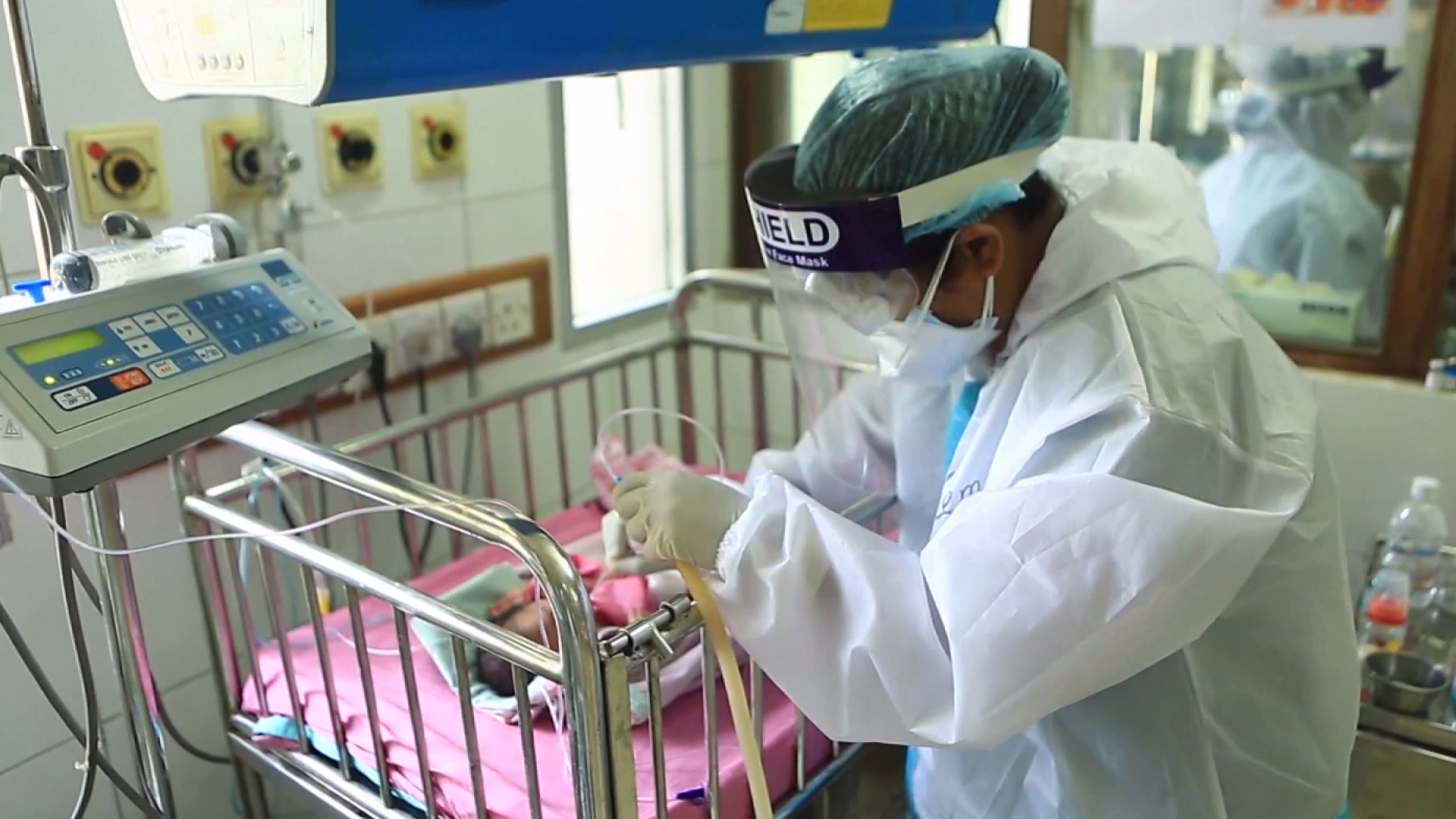
Hospitals in Kabul are receiving more child patients suffering from malnutrition, as the humanitarian crisis worsens in the country amid conflicts and economic collapse.
About 20 children, many below five years old, are currently receiving treatment in the Kabul Children’s Hospital, one of the children’s medical centers in the city offering free medical services for Afghan people.
The hospital has opened a special area for the treatment of malnutrition as the number of malnourished child patients keeps increasing.
Three wards are full of children with pale faces and dull eyes. Some of them are relying on oxygen to maintain the faint breath, and others look puffy and swollen as they suffer oedema caused by severe deficiency of protein and other nutriment.
“Most of the malnourished patients here come from the countryside. As it starts to snow and the weather becomes cold, it will be difficult for them to go to the clinic or come here for treatment. The number of malnourished patients is likely to increase,” said Latif Baher, director of the hospital.
In an interview with China Central Television, Latif said the hospital is being expanded to receive more malnourished child patients. A special building will be established to accommodate about 100 malnourished children.
Latif said prolonged conflicts and the poor living environment have resulted in the malnutrition among people.
“Afghans are living in a bad situation. The adults in the family cannot get enough food, and they cannot provide enough nutrition such as protein or carbohydrates to their children,” he said.
Without reliable access to water, food and basic health and nutrition services, Afghan children and their families are bearing the brunt of years of conflict and the current economic crisis, according to the United Nations Children’s Fund (UNICEF).
The fund reported last month that about 14 million people in Afghanistan are facing acute food insecurity, and an estimated 3.2 million children under the age of five are expected to suffer from acute malnutrition by the end of the year. At least 1 million of these children are at risk of dying due to severe acute malnutrition without immediate treatment.





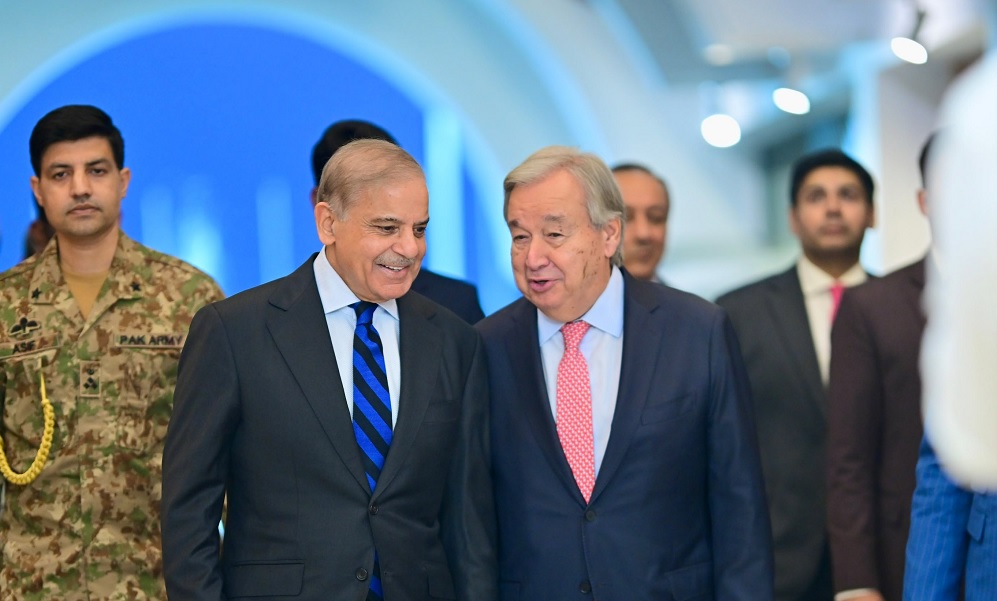
Pakistan Prime Minister Shehbaz Sharif has stressed that a peaceful and stable Afghanistan is in Pakistan’s interest, while calling for “concrete and verifiable” action against terrorist groups that Islamabad alleges are operating from Afghan territory.
Pakistan’s Prime Minister’s Office said Sharif made the remarks on Wednesday during a meeting with UN Secretary-General António Guterres in Islamabad.
The Pakistani prime minister expressed serious concern over what he described as “terrorism originating from Afghanistan.”
He said Pakistan wants a peaceful and stable Afghanistan, but stressed the need for concrete action against groups that Islamabad accuses of carrying out attacks from Afghan territory.
Separately, Guterres met with Pakistan army chief, Syed Asim Munir who also raised terrorism concerns.
The meetings come amid heightened tensions between Pakistan and Afghanistan, with Islamabad repeatedly accusing armed groups of using Afghan territory to launch attacks against Pakistan. Officials of the Islamic Emirate have repeatedly rejected the allegations and said Afghanistan’s territory will not be used against other countries.
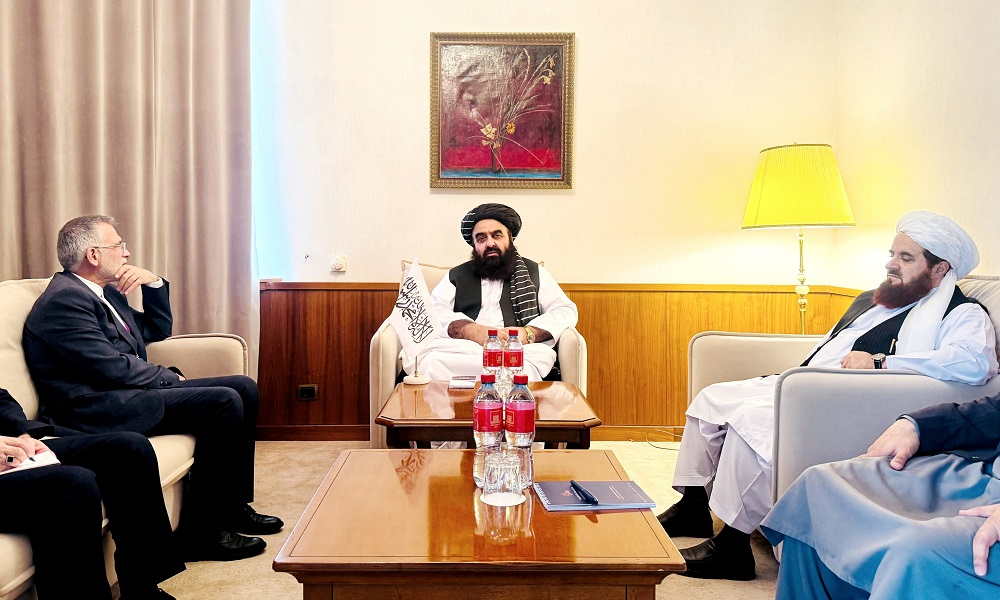
Amir Khan Muttaqi, Minister of Foreign Affairs, met on Wednesday with Mohammad Reza Bahrami, a representative of Iran’s Ministry of Foreign Affairs, on the sidelines of the eighth meeting of the Moscow Format and discussed ways to expand bilateral relations.
The Ministry of Foreign Affairs said the two sides exchanged views on Afghanistan-Iran relations, regional developments, and ways to strengthen mutual cooperation between the two countries.
Muttaqi expressed appreciation for Iran’s engagement with Afghanistan and its constructive participation in regional meetings, emphasizing the need to further expand relations between Kabul and Tehran.
Meanwhile, Mohammad Reza Bahrami stressed the importance of relations between the two countries and shared Iran’s views on regional cooperation, stability, and expanding economic engagement between Afghanistan and Iran.
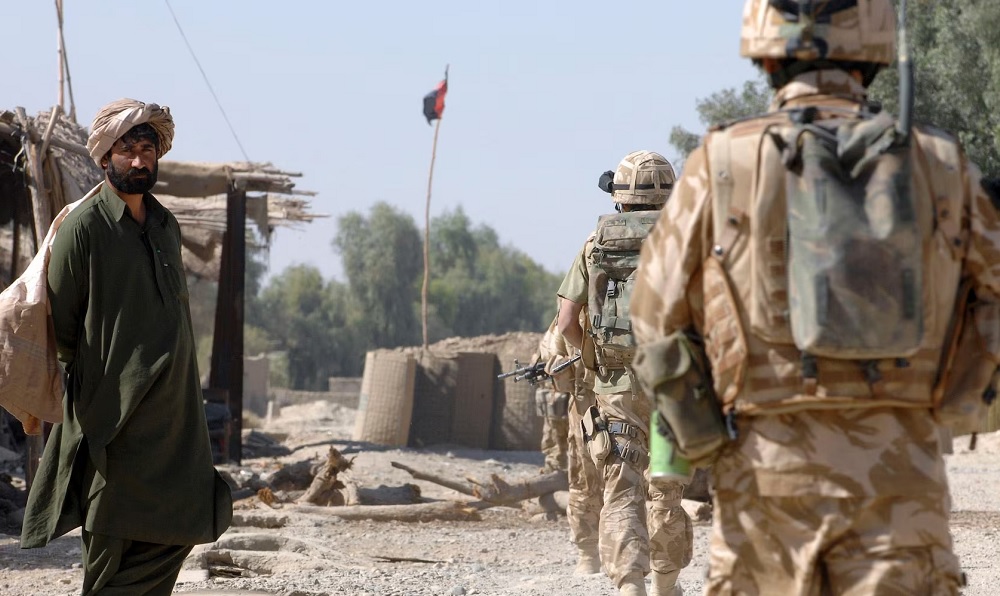
The UK Ministry of Defence identified material suggesting that British service personnel may have committed “serious offences” in Afghanistan, including possible murder, manslaughter and grievous bodily harm, a High Court hearing in London was told.
The information was referred by UK Special Forces (UKSF) to the Defence Serious Crime Command earlier this year, The Independent reported.
According to the court, any criminal investigation into the allegations has been paused pending the outcome of the Afghanistan Inquiry.
The inquiry, chaired by Lord Justice Haddon-Cave, is examining allegations that UK special forces unlawfully killed people during operations in Afghanistan between 2010 and 2013, as well as claims of a subsequent cover-up.
It is also investigating allegations of inadequate investigations by the Royal Military Police.
The latest court proceedings relate to a senior British soldier, identified only as Witness IIA126, who is challenging the inquiry’s decision to restrict his and his lawyers’ access to certain evidence.
His lawyer, Kate Grange KC, argued that the restrictions had prevented the soldier from reviewing evidence concerning an allegation that a person was shot in the head while possibly asleep during a “deliberate detention operation.”
The inquiry is opposing the legal challenge, arguing that the restrictions were necessary to protect the identities of witnesses whose evidence was considered highly sensitive.
Jonathan Glasson KC, representing the inquiry, told the court that the discovery of material potentially indicating serious offences did not mean that any particular individual would necessarily face criminal charges.
The inquiry is expected to continue its examination of the allegations, with a written judgment on the latest legal challenge due at a later date.


Pakistan PM, army chief raise security concerns in meetings with UN chief

Denmark says Russia has conducted sabotage attacks against its defense firms

Tahawol: Consequences of US war in Afghanistan reviewed

Saar: Expulsion of Afghan refugees from Pakistan discussed

Kohi shines as Toofan Herat beat Abu Muslim Farah 2–0

UAE firm eyes investment in Salang’s second tunnel and pharmaceutical factories

US Treasury ratchets up pressure on Iran with sweeping new aviation sanctions

EU and FAO launch €5m programme to strengthen Afghanistan’s agrifood sector

Omar Zawak, Toofan Herat secure victories in Afghanistan Champions League

Crystal Palace cruise into EFL Cup fourth round
Tahawol: Consequences of US war in Afghanistan reviewed
Saar: Expulsion of Afghan refugees from Pakistan discussed

Tahawol: Discussion on outcome of Moscow Format meeting

Saar: Expansion of relations between Kabul and Moscow discussed

Tahawol: Afghanistan-Iran: shared opportunities and challenges discussed
-

 Sport3 days ago
Cricket Bonanza: Afghanistan set for packed international schedule
-
 Regional4 days ago
India, Pakistan summon top diplomats over border incident
-
 Latest News4 days ago
Afghanistan inaugurates 121 km Wakhan road to China border
-
 Sport5 days ago
Rashid Khan plans to build cricket academy and stadium in Nangarhar
-

 Sport4 days ago
ACL: Sorkh Poshan extend perfect run with 1-0 win over Khurasan
-
 Sport3 days ago
Afghanistan U19 to face Bangladesh, Oman in Youth ODIs
-
 Sport4 days ago
ACL: Toofan Herat crush Sarsabz Yashlar 3-0
-

 Latest News5 days ago
Iran’s Qaani: We must strengthen the belt of defense and dignity from Afghanistan to Yemen