
Latest News
Jeff Bezos, world’s richest man, carries out inaugural space voyage

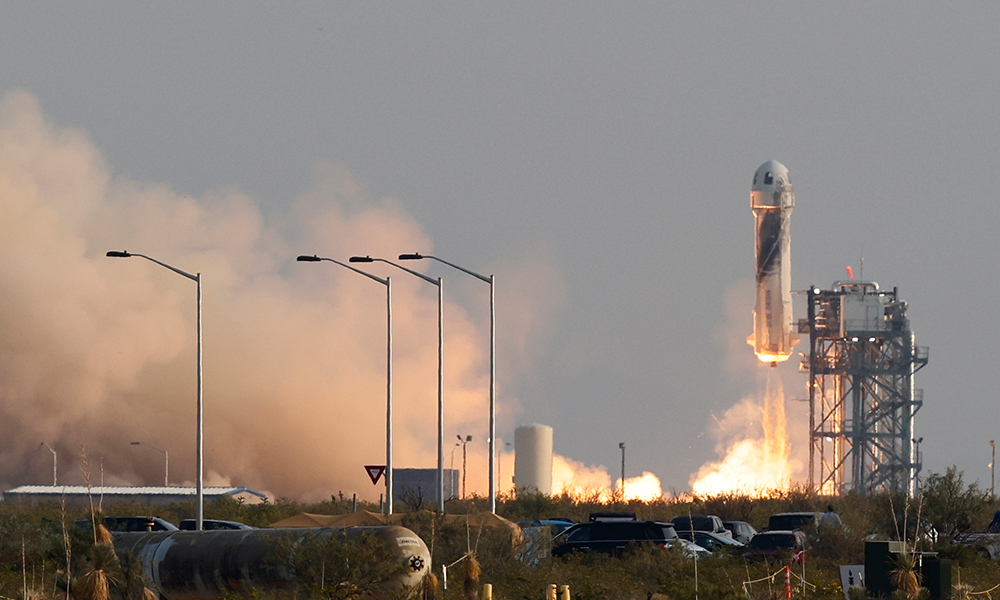
Jeff Bezos, the world’s richest man, and three crewmates soared high above the Texas desert aboard his space venture Blue Origin‘s New Shepard launch vehicle on Tuesday and returned safely to Earth, a historic suborbital flight that helps to inaugurate a new era of private commercial space tourism.
The spacecraft ignited its BE-3 engines for a liftoff from Blue Origin’s Launch Site One facility about 20 miles (32 km) outside the rural town of Van Horn, flying about 66.5 miles (107 km) above the planet’s surface. There were generally clear skies with a few patchy clouds on a cool morning for the launch.
The 57-year-old American billionaire flew on a voyage lasting about 10 minutes and 20 seconds to the edge of space, nine days after Briton Richard Branson was aboard his competing space tourism company Virgin Galactic’s successful inaugural suborbital flight from New Mexico.
New Shepard was designed to hurtle at speeds upwards of 2,200 miles (3,540 km) per hour to an altitude beyond the so-called Kármán line – 62 miles (100 km) – set by an international aeronautics body as defining the boundary between Earth’s atmosphere and space.
After the capsule separates from the booster, the crew was due to have unbuckled for a few minutes of weightlessness. Then the capsule returned to Earth under parachutes, using a last-minute retro-thrust system that expelled a “pillow of air” for a soft landing in the Texas desert.

Bezos gave a thumbs-up sign from inside the capsule after landing on the desert floor before stepping out, wearing a cowboy hat and blue flight suit, and giving company employees high fives.
The mission was part of a fiercely competitive battle between Bezos’ Blue Origin and fellow billionaire Richard Branson’s Virgin Galactic to tap a potentially lucrative space tourism market the Swiss bank UBS estimates will be worth $3 billion annually in a decade.
Bezos and the other passengers climbed into an SUV vehicle for a short drive to the launch pad before walking up a tower and getting aboard the gleaming white spacecraft, with a blue feather design on its side. Each passenger rang a shiny bell before boarding the craft’s capsule.
Branson got to space first, but Bezos was due to fly higher – 62 miles (100 km) for Blue Origin compared to 53 miles (86 km) for Virgin Galactic – in what experts call the world’s first unpiloted space flight with an all-civilian crew. It represents Blue Origin’s first crewed flight to space.
Bezos, founder of ecommerce company Amazon.com Inc, and his brother Mark Bezos, a private equity executive, were joined by two others. Pioneering female aviator Wally Funk, 82, and recent high school graduate Oliver Daemen, 18, become the oldest and youngest people to reach space.
Bezos embraced Funk after the landing.
The flight coincides with the anniversary of Americans Neil Armstrong and Edwin “Buzz” Aldrin becoming the first humans to walk on the moon, on July 20, 1969. New Shepard is named for Alan Shepard, who in 1961 became the first American in space.
Funk was one of the so-called Mercury 13 group of women who trained to become NASA astronauts in the early 1960s but was passed over because of her gender. Daemen, Blue Origin’s first paying customer, is set to study physics and innovation management in the Netherlands. His father, who heads investment management firm Somerset Capital Partners, was on site to watch his son fly to space.
The launch was witnessed by members of the Bezos family and Blue Origin employees, and a few spectators gathered along the highway before dawn. Spectators applauded during the flight.
MINUTES OF WEIGHTLESSNESS
New Shepard is a 60-foot-tall (18.3-meters-tall) and fully autonomous rocket-and-capsule combo that cannot be piloted from inside the spacecraft. It is completely computer-flown and had none of Blue Origin’s staff astronauts or trained personnel onboard.
Virgin Galactic used a spaceplane with a pair of pilots on board.
The reusable Blue Origin booster had previously flown twice to space.
The launch represented another step in the race to establish a space tourism sector that Swiss investment bank UBS estimates will reach $3 billion annually in a decade. Another billionaire tech mogul, Elon Musk, plans to send an all-civilian crew on a several-day orbital mission on his Crew Dragon capsule in September.
On Twitter, Musk wished the Blue Origin crew “best of luck” hours before the launch.
Blue Origin aims for the first of two more passenger flights this year to happen in September or October.
Blue Origin appears to have a reservoir of future customers. More than 6,000 people from at least 143 countries entered an auction to become the first paying customer. The auction winner, who made a $28 million bid, dropped out of Tuesday’s flight, opening the way for Daemen. Virgin Galactic has said 600 people have booked reservations, priced at about $250,000 per ticket.
Branson has said he aims ultimately to lower the price to about $40,000 per seat.
Bezos has a net worth of $206 billion according to the Bloomberg Billionaires. He stepped down this month as Amazon CEO but remains its executive chairman.








Latest News
India condemns Pakistani airstrikes on Afghanistan
Afghan officials said the strikes killed three civilians and injured four others, and damaged structures including houses and shops.

India on Tuesday condemned Pakistan’s airstrikes on border areas of Afghanistan, which Afghan officials said killed civilians, warning that such “aggression” against a sovereign neighbour threatens regional peace and security.
“We strongly condemn the attacks from Pakistan, the air strikes which were launched on Afghanistan in Kunar and Paktika provinces. In these air strikes, several civilians have been killed,” Indian External Affairs Ministry spokesperson Randhir Jaiswal said.
“Such instances of aggression against a sovereign neighbour is something that goes against regional peace and security,” he added.
Jaiswal also reaffirmed India’s support for Afghanistan’s independence, sovereignty and territorial integrity, and expressed condolences for those killed and hopes for the recovery of the injured.
Afghan officials said the strikes killed three civilians and injured four others, and damaged structures including houses and shops. Pakistan’s information ministry, however, said the strikes killed 28 militants.
The strikes were reportedly carried out in retaliation for a militant attack on a police facility in northwestern Pakistan that killed 24 people on Friday. Islamic Emirate of Afghanistan (IEA) spokesperson Zabihullah Mujahid said Kabul would respond to what he described as Pakistani aggression.
Latest News
UN reiterates call for respect for international law after Kunar airstrikes
The victims included a man, a woman and a girl, according to UNAMA.

The United Nations has reiterated its call on all parties to respect international humanitarian law after at least three civilians were killed and four others injured in apparent airstrikes in Afghanistan’s eastern Kunar province.
UN spokesperson Stéphane Dujarric said at the UN Daily Press Briefing on Monday that the UN Assistance Mission in Afghanistan (UNAMA) had confirmed the civilian casualties following the reported strikes early Monday.
The victims included a man, a woman and a girl, according to UNAMA.
“We reiterate our call for respect for international humanitarian law to prevent civilian casualties,” Dujarric said, adding that the United Nations continues to monitor the situation closely.
Dujarric also said the UN Office for the Coordination of Humanitarian Affairs (OCHA) had received reports of airstrikes in Barmal district of Paktika province, where residential structures were reportedly damaged. No serious civilian casualties had been reported there, he added.
The UN said UNAMA has documented more than 1,100 civilian deaths and injuries in Afghanistan so far this year linked to cross-border armed violence.
The comments followed Pakistan’s announcement that it had carried out what it described as “calibrated” strikes against militant targets along the border with Afghanistan. Pakistan said 28 militants were killed and claimed the targets included militant hideouts and a training facility.
Afghan authorities have condemned the strikes. Afghanistan’s Foreign Ministry summoned Pakistan’s chargé d’affaires in Kabul and lodged a formal protest, while Afghan officials have rejected Pakistan’s allegations that attacks inside Pakistan are being carried out from Afghan territory.
The latest escalation has renewed concerns over the impact of cross-frontier hostilities on civilians in Afghanistan’s border provinces, with the UN again stressing the need for all parties to uphold their obligations under international humanitarian law and take measures to protect civilians.
Latest News
22 Russian tourists arrive in Badakhshan’s Wakhan
The visitors are expected to explore several of Badakhshan’s natural landscapes and tourism sites during their stay.
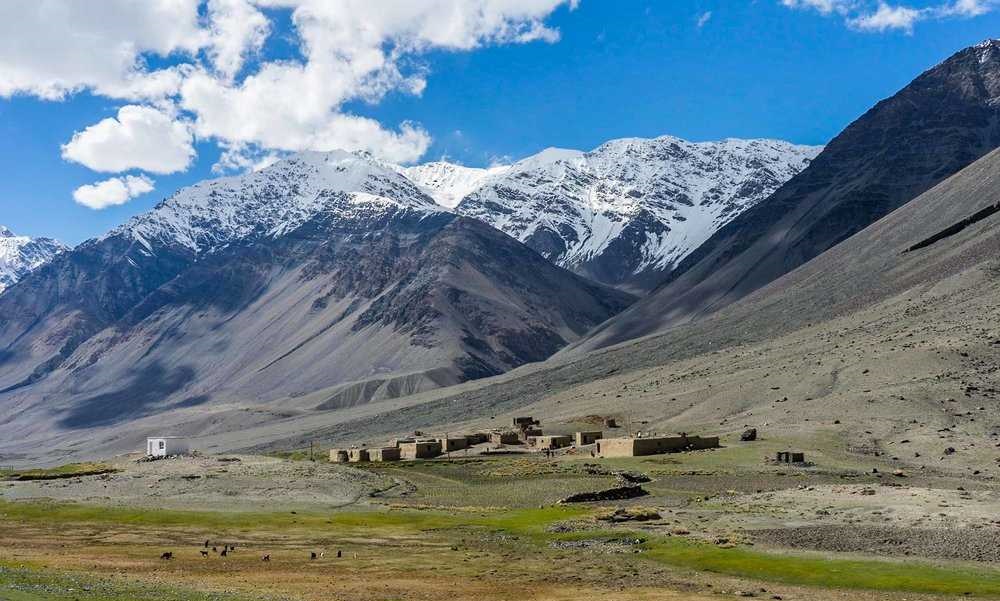
A group of 22 Russian tourists has arrived in Afghanistan’s northeastern Badakhshan province to explore the scenic Wakhan District and other major tourist attractions in the region.
According to Zohurullah Fakhri, an official with the state-run Afghan Tour company in Badakhshan, the group entered the province through Panjshir and Kiran wa Manjan district before travelling toward Wakhan.
The visitors are expected to explore several of Badakhshan’s natural landscapes and tourism sites during their stay.
The arrival comes as the Islamic Emirate seeks to expand Afghanistan’s tourism sector and attract more international visitors. The Ministry of Information and Culture has said it is working to improve tourism facilities and services, standardise the sector and promote Afghanistan’s natural, historical and cultural attractions.
Officials have also reported a rise in foreign visitors to Badakhshan. State-owned Afghan Tour said it facilitated visits by over 150 foreign tourists to the province during the second quarter of 2026, with visitors travelling to historical, archaeological and natural attractions.
Wakhan Corridor
The Wakhan Corridor is a narrow, remote strip of northeastern Afghanistan that extends eastward through Badakhshan to Afghanistan’s border with China. It lies between Tajikistan to the north and Pakistan to the south and forms part of the historic routes linking Central and South Asia.
The region is characterised by rugged mountains, high-altitude valleys, glaciers, rivers and wide open landscapes. The Hindu Kush and Pamir mountain systems meet in the area, which is also known for its distinctive wildlife, including Marco Polo sheep, ibex and snow leopards.
Wakhan has historically been one of Afghanistan’s most isolated regions because of its difficult terrain and limited road access. In May, Afghanistan’s Ministry of Rural Rehabilitation and Development said basic construction work on the Wakhan road had been completed, providing a direct land connection between Afghanistan and China, although further work remained under way.
The combination of its dramatic mountain scenery, wildlife and location along an ancient Central Asian route has made Wakhan one of Afghanistan’s emerging destinations for adventure and nature tourism.


US and Iran hold first talks since June after Trump’s ‘annihilation’ threat

Trump warns in UN speech he could ‘annihilate’ Iran without peace deal

Afghanistan, Turkmenistan agree to establish joint road transport commission

India condemns Pakistani airstrikes on Afghanistan

ACL: Sorkh Poshan Khafi maintain top spot after fourth straight win

Saudi energy group signs major Afghanistan deals covering gas exploration and pipeline plans

ATN secures exclusive rights to broadcast T20I series in India across Afghanistan

Afghanistan squad announced for three-match T20I series against India

China evacuates thousands as Typhoon Narra brings torrential rain

Trump floats idea of renaming Atlantic or Pacific Ocean

Tahawol: Reactions to Pakistan’s attacks on Afghanistan discussed

Saar: Uncertain fate of Afghanistan’s seat at UN discussed

Tahawol: Uncertain future of Afghanistan’s permanent UN seat

Saar: Pakistan military strikes Afghan provinces discussed

Tahawol: Impact of middle East war on Afghanistan
-

 World4 days ago
US and Denmark reach deal on Greenland, Trump says
-
 Latest News3 days ago
Pakistan says Kohat attackers had roots in Afghanistan
-
 Latest News4 days ago
Afghanistan condemns mosque attack in Khyber Pakhtunkhwa
-
 Latest News3 days ago
OIC to hold Afghanistan Contact Group meeting on sidelines of UN General Assembly
-

 Sport2 days ago
Afghanistan to face Japan and Nepal in Asian Games cricket group stage
-
 Latest News4 days ago
Afghan official meets Iranian oil minister to discuss energy cooperation
-
 Regional5 days ago
At least 15 killed in blast near mosque in Khyber Pakhtunkhwa
-
 Regional3 days ago
Flames, smoke seen near Riyadh airport; Houthis claim attacks on Saudi capital